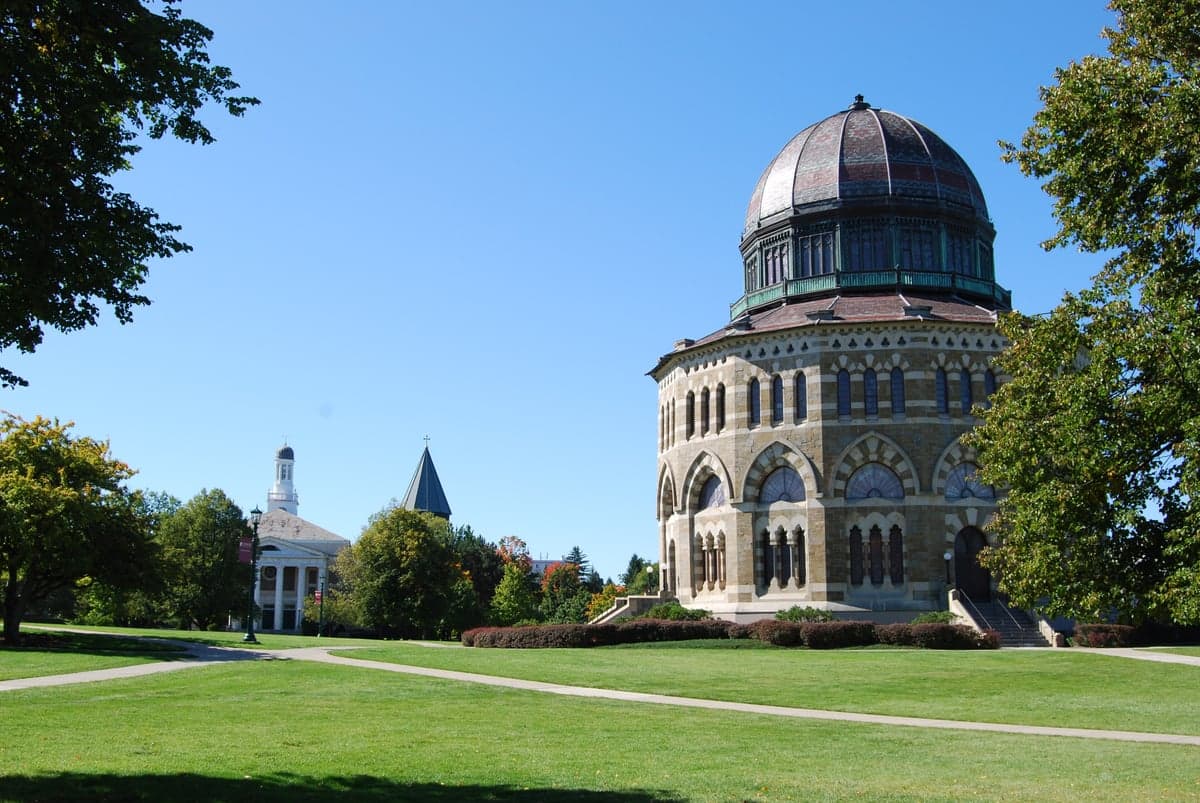
Photo: Wikipedia
Quality of Life in Schenectady County
A livable area that tracks near national norms for affordability, walkability, and neighborhood health.
What does Quality of Life tell us?
Quality of Life measures an area by evaluating factors like cost of living, nearby amenities, country club access, airport proximity, socioeconomic signals and neighborhood character. For large states, this is a general average — quality of life can vary dramatically between metro areas, suburbs, and rural communities within the same state.
What does this tell us?
Quality of Life measures an area by evaluating factors like cost of living, nearby amenities, country club access, airport proximity, socioeconomic signals and neighborhood character. For large states, this is a general average — quality of life can vary dramatically between metro areas, suburbs, and rural communities within the same state.
Cost of Living
9% below national average
121%
The Real Cost of Living in Schenectady County for 2026
| Tier | Individual | Family (4) |
|---|---|---|
| Survival | $18k | $35k |
| Comfortable | $43k | $64k |
| Luxury | $128k+ | $199k+ |
| Elite (Top 5%) | $151k+ | $234k+ |
Quality-of-Life Analysis
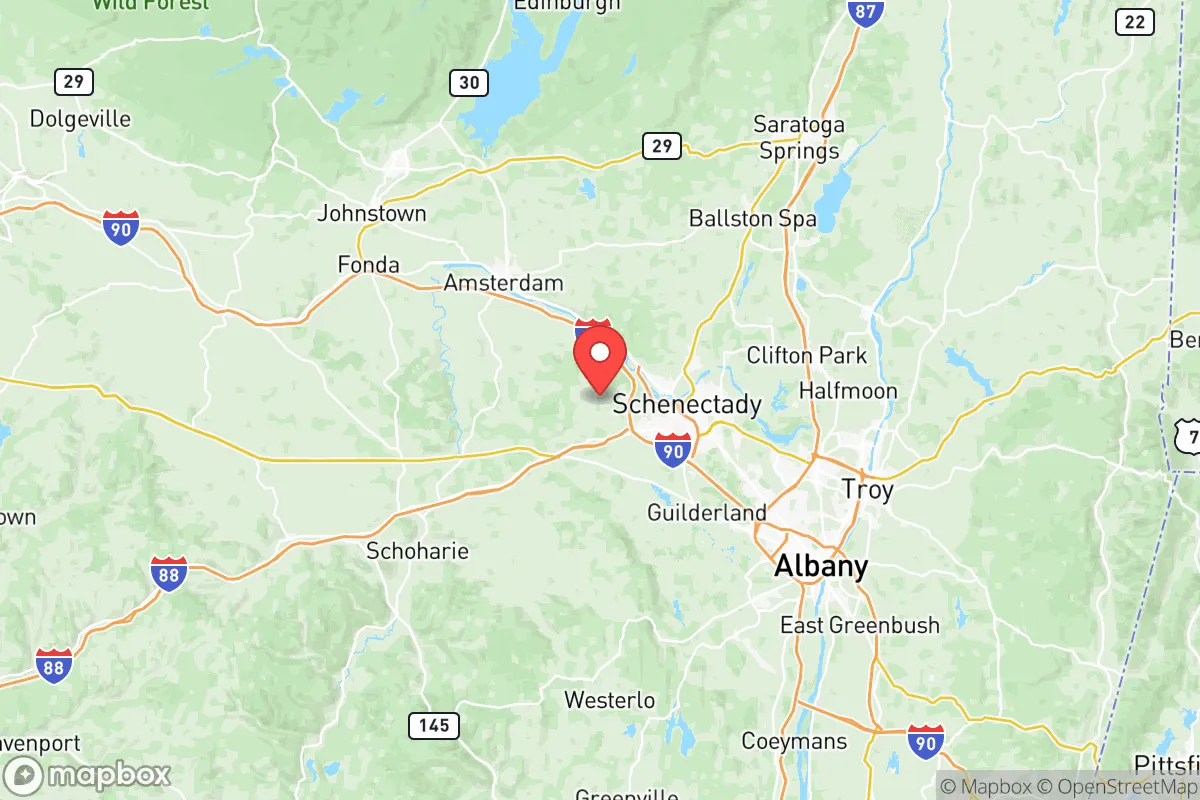
Schenectady County offers a distinct quality-of-life spectrum that ranges from the historic, walkable urban core of its largest city to quiet, rural hamlets where farmland and forest dominate. With a cost of living index of 91 — well below the national average of 100 — the county attracts a mix of state government workers, college faculty, manufacturing employees, and remote professionals seeking affordable housing within commuting distance of Albany. The median home value of $223,100 and median rent of $1,159 make the county one of the more accessible options in the Capital Region, though lifestyle and amenities shift noticeably depending on whether one chooses the city of Schenectady, a suburban town like Niskayuna, or a rural pocket like Duanesburg.
Largest town(s) & population centers
The city of Schenectady is the county's primary population center, home to roughly 67,000 residents and the historic Stockade district, which features 17th- and 18th-century architecture and a walkable downtown. Daily life here centers around the General Electric legacy campus, the growing Albany Medical Center satellite facilities, and the State University of New York at Schenectady County Community College. The city offers a dense, urban feel with a mix of renovated lofts, older single-family homes, and rental apartments. Just south of the city, Niskayuna (pop. ~23,000) is the county's largest suburban town, known for its top-rated Niskayuna Central School District and proximity to the Mohawk River. Daily life in Niskayuna is car-dependent but family-oriented, with large-lot homes, strip malls along Balltown Road, and easy access to the Mohawk-Hudson Bike-Hike Trail. Rotterdam (pop. ~21,000) functions as a middle-ground suburb with a mix of older ranch homes, newer subdivisions, and commercial corridors along Route 7, appealing to commuters who work in Schenectady or Albany.
Smaller towns & rural pockets
Outside the urban-suburban corridor, the county opens into smaller communities and genuinely rural areas. Glenville (pop. ~29,000) straddles the line between suburban and semi-rural, with the eastern half resembling a typical Capital Region suburb and the western half giving way to farmland and woods along the Mohawk River. Duanesburg (pop. ~6,000) is the county's most rural town, characterized by rolling hills, working farms, and the historic Quaker Street hamlet. Residents here often commute 25–30 minutes to Schenectady or Albany but enjoy lower property taxes and larger acreage. Princetown (pop. ~2,100) is a sparsely populated town with no real commercial center, offering a quiet, agricultural lifestyle. The hamlet of Mariaville, within the town of Duanesburg, is an unincorporated area where homes sit on multi-acre lots and the nearest grocery store is a 15-minute drive. These rural pockets appeal to those who prioritize space, privacy, and a slower pace over walkable amenities.
Cost & lifestyle range
The cost of living varies significantly across the county, even within the same housing market. At the high end, Niskayuna commands median home values around $350,000–$400,000, driven by its school district and proximity to Albany. Rentals in Niskayuna typically exceed the county median of $1,159, with two-bedroom apartments often listed at $1,400–$1,600. At the low end, the city of Schenectady itself offers median home values near $180,000 and rents below $1,000 for one-bedroom units, particularly in neighborhoods like Mont Pleasant or the Hamilton Hill area. Rotterdam and Glenville sit in the middle, with home values around $220,000–$260,000 and rents close to the county average. The average commute across the county is just under 23 minutes, which is notably shorter than the national average of 27 minutes, making even the rural towns of Duanesburg and Princetown feasible for daily drives to Albany or Schenectady. Property taxes are a key consideration: Schenectady County's effective tax rate is roughly 2.5–3.0% of assessed value, with the city of Schenectady having the highest rates and Duanesburg the lowest.
This county works best for people who want affordable access to the Capital Region's job market without sacrificing either urban energy or rural quiet. Remote workers, young families priced out of Albany's suburbs, and retirees seeking lower housing costs all find viable options here. The trade-off is clear: choose the city or Niskayuna for walkability and schools, or choose Duanesburg or Princetown for land and lower taxes — but not both in the same package.

Crime in Schenectady County
Crime rates similar to the national median for U.S. locations.
Violent CrimeViolent Crime Analysis
Property CrimeProperty Crime Analysis
Crime Analysis
Schenectady County presents a mixed safety picture that demands careful attention from potential residents. With a violent crime rate of 362.1 per 100,000 residents and a property crime rate of 1,536.7 per 100,000, the county's overall statistics place it above national averages, though conditions vary dramatically between the urban core of the city of Schenectady and its more suburban towns. The county's proximity to Albany and its status as part of New York's Capital District mean that crime patterns are influenced by regional socioeconomic factors and, notably, by the progressive criminal justice policies enacted at the state level that have reshaped prosecution and sentencing practices in recent years.
Crime in context
Schenectady County's violent crime rate of 362.1 per 100,000 exceeds the national average of approximately 380 per 100,000 by a modest margin, but the comparison becomes starker when isolating the city of Schenectady itself. The city's violent crime rate is significantly higher than the county average, driven largely by incidents in the Hamilton Hill, Mont Pleasant, and Central State Street corridors. By contrast, the suburban towns of Niskayuna and Glenville report violent crime rates well below both the county and national averages, often registering under 100 per 100,000. The property crime rate of 1,536.7 per 100,000 is elevated compared to the national figure of roughly 1,954 per 100,000, but this aggregate number masks the fact that property crime in the city of Schenectady runs considerably higher, while communities like Rotterdam and Scotia experience rates closer to state averages. The progressive policies of the Schenectady County District Attorney's office, which has emphasized diversion programs and reduced incarceration for nonviolent offenses, have been cited by local law enforcement as contributing to repeat property crime offenses and a perception that consequences for theft and burglary are insufficient.
What residents experience
Daily life for residents of Schenectady County is shaped heavily by which municipality they call home. In the city of Schenectady, residents frequently report concerns about car break-ins, package theft, and occasional gun violence, particularly in the downtown and Hamilton Hill neighborhoods. The city's police department has struggled with staffing shortages, leading to slower response times for non-emergency property crimes. In Niskayuna, by contrast, residents describe a safe suburban environment where violent crime is rare and property crime typically involves unlocked vehicles or shed burglaries. Glenville and Rotterdam offer similar experiences, with most crime being opportunistic rather than violent. The town of Duanesburg, the county's most rural municipality, reports the lowest crime rates overall, with many years passing between violent incidents. Residents across the county express frustration with the state-level bail reform laws enacted in 2019, which eliminated cash bail for most misdemeanors and nonviolent felonies, a policy that local law enforcement and many residents believe has led to a revolving door for repeat property crime offenders in the county.
Neighborhood-level variation within Schenectady County is extreme and should be a primary consideration for anyone relocating to the area. The city of Schenectady's Upper Union Street and Stockade Historic District areas are relatively safe, with crime rates comparable to suburban communities, while the Hamilton Hill and Mont Pleasant neighborhoods experience violent crime rates several times the county average. The suburban towns of Niskayuna, Glenville, Rotterdam, and Scotia all offer substantially lower crime rates, with Niskayuna consistently ranking among the safest communities in the Capital District. The progressive judicial philosophy prevalent in Schenectady County's court system, which prioritizes rehabilitation over punishment, has created a bifurcated experience: residents in safer suburbs see little direct impact, while those in higher-crime city neighborhoods bear the brunt of policies that critics argue prioritize offender outcomes over public safety and victim justice.
* Values derived from national, state, county, city and local statistics and may differ in a specific area. Last updated: 2026-06-22T16:33:10.000Z
Narrative content on this page is AI-generated and may contain mistakes. Verify any details that matter before acting on them.
ReloMaps may earn a commission from affiliate links at no extra cost to you.

