Photo: Wikipedia
Political ClimatePolitical Climate in Columbia County
Showing district-level results — no local-only data available.
Local Political AnalysisPolitical Analysis of Columbia County
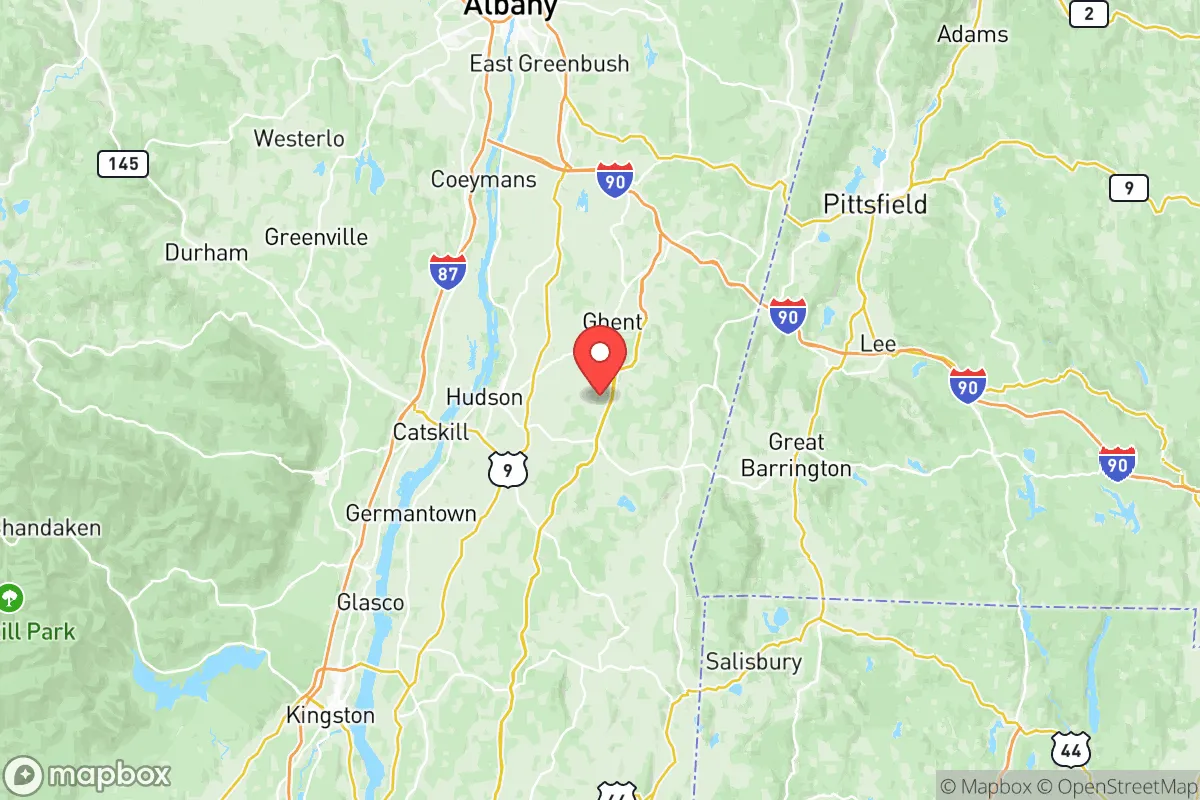
Columbia County, New York, sits politically at a fascinating crossroads. With a Cook Partisan Voting Index (PVI) of D+1, it’s a true swing county—just a hair more Democratic than the nation as a whole, but far more conservative than New York City. This isn’t a deep-blue stronghold; it’s a place where the rural, upstate character clashes with a growing influx of former city dwellers, creating a political landscape that shifts with every election cycle. The county has been trending slightly left over the past decade, but that trend is uneven, with some towns doubling down on red while others turn a deeper shade of blue.
How it compares
Compared to New York, NY, Columbia County is a political universe apart. Manhattan’s Cook PVI is estimated at D+40 or higher, making it one of the most reliably Democratic areas in the country. In Columbia County, you can drive 15 minutes from the liberal hub of Hudson—where you’ll find Bernie Sanders signs and farm-to-table co-ops—to the deeply red town of Claverack, where Trump flags fly on pickup trucks and the local gun club is a social hub. The swing precincts are often in the more suburban or exurban towns like Kinderhook and Chatham, where moderate voters decide races. In 2020, Biden won the county by about 5 points, but down-ballot races for sheriff and county legislature often go to Republicans, reflecting a split-ticket mentality that’s rare in New York City.
What this means for residents
For a conservative resident, Columbia County offers a much more comfortable environment than New York City. You can find churches, gun-friendly policies, and a local GOP that still holds seats on the county board. Property taxes are high—around 2.5% of assessed value—but that’s a statewide issue, not a local one. For a liberal resident, the county provides a progressive enclave in Hudson, with a thriving arts scene and a vocal activist community, but you’ll still encounter conservative neighbors at the grocery store or town hall. The practical effect is that local politics are often about compromise: zoning debates, school budgets, and land-use fights rarely break down along pure party lines. The county’s D+1 lean means neither side can dominate without building coalitions.
Culturally, the divide is stark. Hudson’s weekend farmers market and antique shops feel like a Brooklyn transplant, while towns like Valatie and Philmont hold onto a quieter, more traditional upstate identity. Policy-wise, the county has resisted some of New York City’s more aggressive housing mandates, and the debate over short-term rentals (Airbnb) has pitted liberal newcomers against long-time residents of all stripes. The trajectory suggests the county will continue to purple, with Hudson’s influence growing but never fully overtaking the rural vote. For anyone moving here, the key takeaway is simple: you’ll find your tribe, but you’ll also have to talk to the other side—and that’s exactly what makes Columbia County politically interesting.

State Political ClimatePolitical Climate in New York
State Political AnalysisPolitical Environment in the State
New York State has been a solidly Democratic stronghold for decades, but the political reality is far more complex than the state’s overall blue hue suggests. The Democratic coalition is powered by a massive, liberal-leaning New York City metroplex, while the rest of the state—from the Hudson Valley to the Great Lakes—has been trending redder, creating one of the sharpest urban-rural divides in the country. Over the past 20 years, the state has shifted left on social and economic policy at the state level, but the 2024 presidential election saw Donald Trump win 45% of the vote statewide, up from 37% in 2016, signaling that the conservative minority is growing louder and more organized, especially in the suburbs and exurbs.
Urban vs. rural divide
The political map of New York is a tale of two worlds. New York City and its immediate suburbs—Westchester, Nassau, and Suffolk counties—drive the state’s Democratic majority, with the five boroughs alone delivering over 2 million votes for Joe Biden in 2020. But drive an hour north or west, and the landscape flips. Erie County (Buffalo) is a Democratic bastion, but the surrounding counties of Niagara, Genesee, and Wyoming are deeply red. Monroe County (Rochester) is a blue island in a sea of red, with the city itself voting 80% Democratic while the suburbs lean conservative. The real action is in the Hudson Valley and Capital Region: counties like Dutchess, Orange, and Saratoga have been trending rightward, with Orange County flipping from Obama to Trump in 2016 and staying red. Long Island’s Nassau and Suffolk counties are classic swing suburbs—they voted for Biden in 2020 but elected a Republican county executive in 2021 and sent two GOP House members to Congress in 2024. The Southern Tier (Binghamton, Elmira, Jamestown) and North Country (Plattsburgh, Watertown) are reliably Republican, with Trump winning some of those counties by 30+ points. The divide isn’t just geographic—it’s cultural: upstate residents often feel ignored by Albany, while downstate voters see upstate as a drag on progressive priorities.
Policy environment
New York’s policy environment is a mixed bag that reflects its Democratic supermajority in the legislature. On taxes, the state has a progressive income tax with rates up to 10.9% for top earners, plus a property tax cap (2% annual growth limit) that has kept a lid on runaway levies in the suburbs. Sales tax varies by county, averaging around 8.5%. The regulatory posture is heavy: New York has strict rent control laws in NYC and some suburbs, a ban on fracking since 2014, and a Climate Leadership and Community Protection Act mandating 70% renewable energy by 2030. Education policy is dominated by the Board of Regents, which sets curriculum standards; the state has adopted Common Core and mandates sex education, which has sparked parental rights battles in conservative districts. Healthcare is heavily regulated, with the state running its own health insurance exchange (NY State of Health) and expanding Medicaid under the ACA. Election laws are among the most liberal: no-excuse absentee voting, early voting, automatic voter registration, and same-day registration. Gun laws are among the strictest in the nation, including a 2013 SAFE Act (expanded background checks, assault weapons ban) and a 2022 law requiring a permit to carry in public, which was partially upheld by the Supreme Court in NYSRPA v. Bruen.
Recent policy direction
Over the past five years, Albany has moved aggressively left on several fronts. In 2019, the state passed the Reproductive Health Act, codifying abortion rights up to viability and allowing nurse practitioners to perform procedures. In 2021, it legalized recreational marijuana with the MRTA, creating a regulated market that has been slow to launch due to licensing disputes. On gun rights, the 2022 Concealed Carry Improvement Act (CCIA) banned firearms in “sensitive locations” like Times Square and subways, and required social media background checks—prompting a federal lawsuit. On education, the state banned religious exemptions for school vaccine mandates in 2019 and passed the Parental Bill of Rights in 2023, which requires schools to notify parents of curriculum changes but stops short of a “don’t say gay” law. On property rights, the state passed the Good Cause Eviction Law in 2024, limiting rent increases and evictions for non-payment in NYC and some upstate cities. On voting, the state enacted the John R. Lewis Voting Rights Act in 2022, requiring pre-clearance for local election changes in counties with a history of discrimination. For a conservative relocator, the key takeaway is that the state is expanding government’s role in daily life—from what you can carry to how much you can be charged for rent—while also protecting certain individual liberties like abortion and marijuana use.
Civil unrest & political movements
New York has been a flashpoint for political activism on both sides. The Black Lives Matter protests in summer 2020 were massive, especially in NYC, Buffalo, and Rochester, leading to the passage of police reform laws like the Eric Garner Anti-Chokehold Act and the repeal of 50-a (which had shielded police disciplinary records). On the right, the Second Amendment sanctuary movement has spread to over 30 counties, with sheriffs in places like Allegany and Chenango counties refusing to enforce the CCIA. The parental rights movement has been strong in suburban districts like Williamsville (near Buffalo) and Smithtown (Long Island), where school board meetings have become battlegrounds over critical race theory and LGBTQ curriculum. Immigration politics are heated: New York is a sanctuary state under the 2017 “Green Light” law, which allows undocumented immigrants to get driver’s licenses, and NYC has seen a surge of asylum seekers bused from Texas, straining shelters and sparking backlash in working-class neighborhoods. Election integrity has been a persistent issue: the 2020 election saw widespread mail-in voting, and while no major fraud was found, conservative groups have pushed for stricter ID laws, which have been blocked by the Democratic legislature. A visible flashpoint for newcomers is the congestion pricing plan for Manhattan below 60th Street, set to start in 2025, which has divided suburban commuters and city residents alike.
Projection
Over the next 5-10 years, New York’s political trajectory points toward continued polarization and a slow rightward drift in the suburbs and exurbs. The state is losing population—about 500,000 residents since 2020—with most departures going to Florida, Texas, and the Carolinas, which tends to drain liberal-leaning young professionals and retirees. In-migration is modest, with some newcomers from high-cost states like California, but not enough to offset the losses. The 2024 census reapportionment cost New York a House seat, and the trend is likely to continue. Demographically, the state is aging and becoming more diverse, but the growth is concentrated in NYC, while upstate counties are shrinking. The Republican Party is gaining ground in the Hudson Valley and on Long Island, and could flip the House delegation to a 50-50 split by 2028 if national trends hold. However, the state legislature is gerrymandered to favor Democrats, so a GOP takeover of Albany is unlikely. What a new resident can expect in a decade: higher taxes to fund pension obligations and infrastructure, continued gun restrictions, a growing marijuana industry, and a political climate where your vote matters more in local races than in presidential ones. The state will remain a blue state, but the margins will tighten, especially in the suburbs where many relocators will settle.
For a conservative-leaning relocator, the bottom line is that New York offers a high-cost, high-regulation environment that rewards those who can afford the taxes and navigate the bureaucracy. You’ll find like-minded communities in the suburbs of Buffalo, Rochester, and the Hudson Valley, but you’ll also face state-level policies that may clash with your values on guns, education, and taxes. If you’re moving for a job in finance, tech, or healthcare, the trade-offs might be worth it—just know that your vote will be a drop in a blue bucket, and your real influence will be at the town board and school board level. If you’re looking for a place where your political voice carries weight, consider the Southern Tier or North Country, but be prepared for a slower economy and fewer amenities. New York is a state of stark contrasts: the city that never sleeps and the farm country that votes red, all under one capitol dome in Albany.
* Values derived from national, state, county, city and local statistics and may differ in a specific area. Last updated: 2026-09-08T12:50:19.000Z
Narrative content on this page is AI-generated and may contain mistakes. Verify any details that matter before acting on them.
ReloMaps may earn a commission from affiliate links at no extra cost to you.

