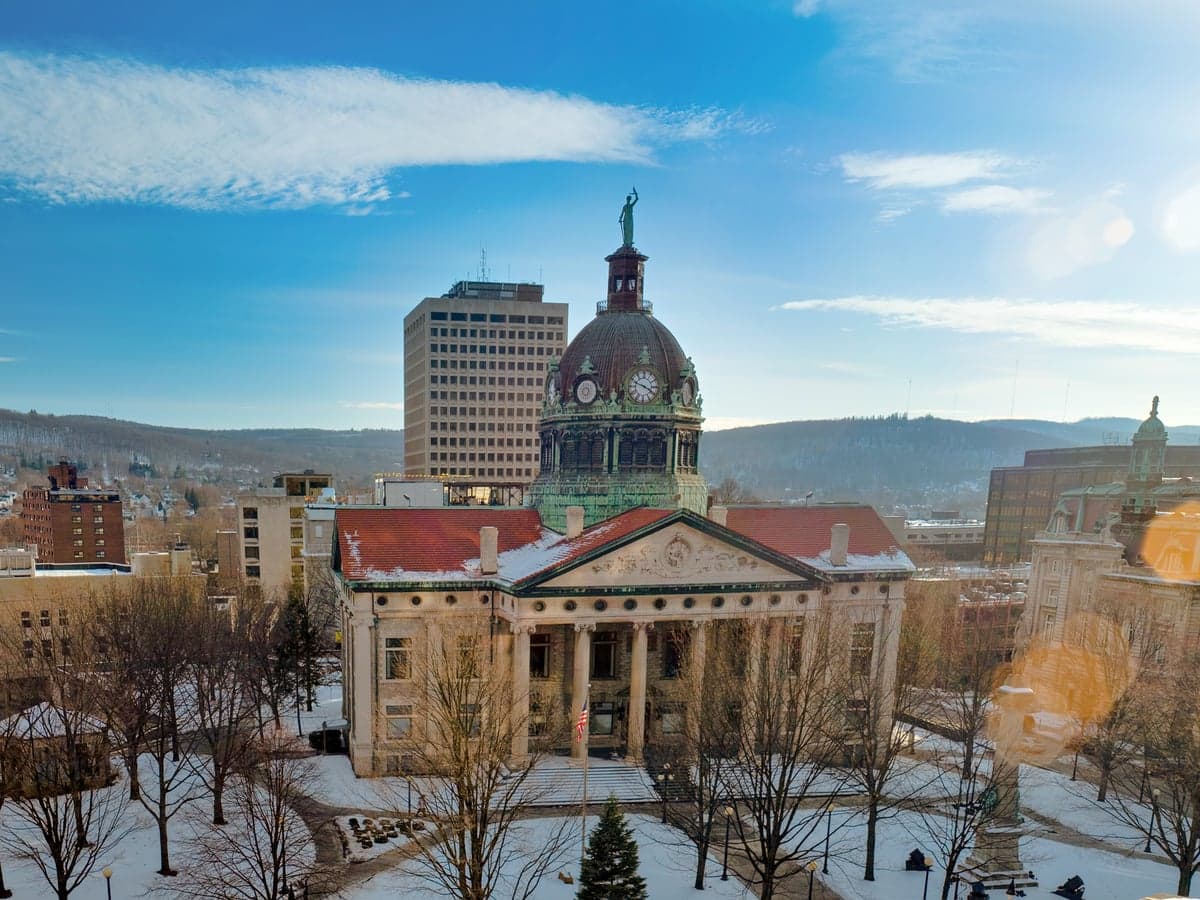
Photo: Wikipedia
Find The Best Places To Live in Broome County
PRO TIP! You can paste a Zillow or Redfin link to get info on that property.
Best Places to Live in Broome County
Cities & Towns in Broome County
Cities in Broome County
What It's Like Living in Broome County, NY
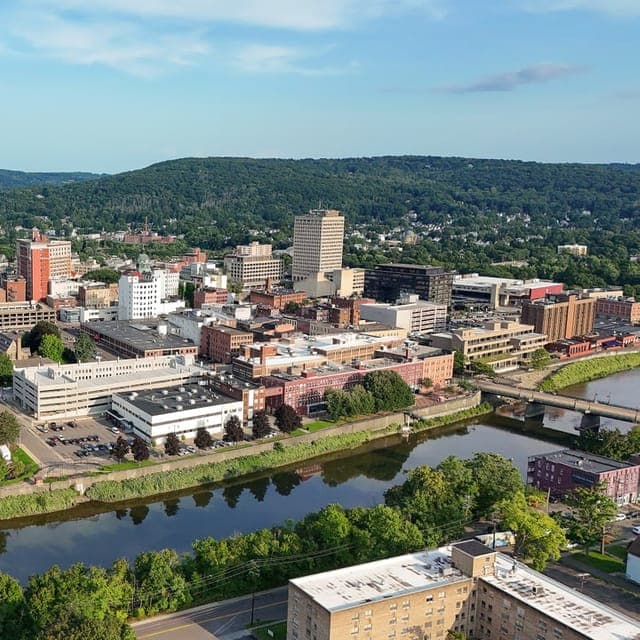
Living in Broome County means settling into a place that feels a bit like a well-kept secret—a mix of old industrial grit, college-town energy, and genuine rural quiet, all within a 20-minute drive. The county’s anchor, Binghamton, gives the region its heartbeat, but the real character comes from the constellation of smaller towns—Endicott, Johnson City, Vestal, and Chenango Forks—each with its own distinct flavor. You’ll find people here who appreciate that their dollar stretches further, with a cost of living index of 68 (well below the national average) and a median home value of just $145,100, but who also quietly acknowledge that the job market hasn’t fully bounced back from the manufacturing exodus of the 1990s.
The Daily Rhythm: Work, Commute, and Weekend Rituals
For most residents, daily life revolves around a short, predictable commute—the average is just under 20 minutes, which means you can live in a quiet corner of Vestal and be at your desk in downtown Binghamton before your coffee cools. The biggest employers are Binghamton University (part of the SUNY system) and the region’s two major health systems, Lourdes and UHS. A notable chunk of the workforce still commutes to Endicott, where IBM was born and where a smaller but steady tech presence remains. Weekends often mean a trip to the Binghamton Farmers Market on Upper Front Street, a hike at Aquatic Park in Chenango Forks, or a drive out to Otsiningo Park for a soccer game. The median age here is 39.4, which skews a bit older than the national average—you’ll see plenty of families with school-aged kids, but also a solid contingent of empty-nesters who stayed because the cost of living lets them retire comfortably.
Dining out is a local sport. Spiedie’s (the region’s signature sandwich—marinated meat on a roll) is a must-try, and you’ll find arguments over which spot does it best: Lupo’s in Endicott or Sharkey’s in Binghamton. For a nicer night, Remlik’s Grille & Oyster Bar in Johnson City draws a crowd, while The Colonial in Binghamton serves up craft cocktails in a restored 1920s ballroom. The weather shapes everything: winters are long and gray, with lake-effect snow piling up from the Finger Lakes, but summers are genuinely pleasant, with July highs in the low 80s and a string of festivals that make up for the cold months.
Sports, Community, and the College Factor
Sports here are a big deal, but not in the way you might expect. There’s no major pro team, but Binghamton University’s Bearcats (Division I) draw solid crowds for basketball and soccer, and the Binghamton Rumble Ponies (the Mets’ Double-A affiliate) pack Mirabito Stadium on summer nights—it’s cheap, family-friendly, and the hot dogs are good. High school sports are a genuine community anchor, especially in towns like Chenango Forks and Maine-Endwell, where Friday-night football games are a social event that pulls in parents, alumni, and neighbors. The Broome County Veterans Memorial Arena hosts concerts, monster trucks, and the occasional minor-league hockey game, but the real cultural heartbeat is the Binghamton Philharmonic and the Tri-Cities Opera, both of which have loyal followings.
The presence of Binghamton University (about 18,000 students) injects a youthful, slightly progressive energy into a county that otherwise leans conservative. That tension is part of the local identity—you’ll find Trump signs in rural Colesville and Bernie bumper stickers on cars near campus, and most people just shrug and get along. The university also drives the local arts scene: the Binghamton University Art Museum is free, and the Anderson Center for the Performing Arts brings in national acts.
What Frustrates Locals and What Keeps Them Here
The honest downsides: the violent crime rate of 362.1 per 100,000 is higher than the national average, and it’s concentrated in parts of downtown Binghamton and the West Side—most suburban and rural areas feel very safe. The job market is thin for white-collar professionals outside of healthcare and education; if you’re not in those fields, you may need to commute to Syracuse or Scranton for better opportunities. The median household income of $61,059 is below the national median, and while the low cost of living offsets that, it also means fewer high-end retail options—you’ll drive to the Vestal Parkway for the big-box stores and chain restaurants, and that’s about it.
What keeps people here is the pace. Traffic is almost nonexistent outside of the 5 PM rush on Route 17. You can own a house on an acre of land for what a one-bedroom apartment costs in a city like Albany. The schools are solid—Vestal Central School District and Chenango Forks Central School District both have strong reputations—and the outdoor access is underrated: the Susquehanna River runs right through Binghamton, and the Chenango Valley State Park offers camping, hiking, and a 9-hole golf course. The kind of person who fits here is someone who values affordability and space over career velocity and nightlife. If you’re a family looking for a safe, slow place to raise kids, or a retiree who wants a low-stress life with a decent hospital nearby, Broome County makes a lot of sense. If you need a thriving tech scene or a packed social calendar, you’ll probably feel the limits.

* Values derived from national, state, county, city and local statistics and may differ in a specific area. Last updated: 2026-06-16T00:36:40.000Z
Narrative content on this page is AI-generated and may contain mistakes. Verify any details that matter before acting on them.
ReloMaps may earn a commission from affiliate links at no extra cost to you.

