
Photo: Wikipedia
Quality of Life in Broome County
A livable area that tracks near national norms for affordability, walkability, and neighborhood health.
What does Quality of Life tell us?
Quality of Life measures an area by evaluating factors like cost of living, nearby amenities, country club access, airport proximity, socioeconomic signals and neighborhood character. For large states, this is a general average — quality of life can vary dramatically between metro areas, suburbs, and rural communities within the same state.
What does this tell us?
Quality of Life measures an area by evaluating factors like cost of living, nearby amenities, country club access, airport proximity, socioeconomic signals and neighborhood character. For large states, this is a general average — quality of life can vary dramatically between metro areas, suburbs, and rural communities within the same state.
Cost of Living
32% below national average
147%
The Real Cost of Living in Broome County for 2026
| Tier | Individual | Family (4) |
|---|---|---|
| Survival | $15k | $27k |
| Comfortable | $28k | $41k |
| Luxury | $110k+ | $171k+ |
| Elite (Top 5%) | $137k+ | $213k+ |
Quality-of-Life Analysis
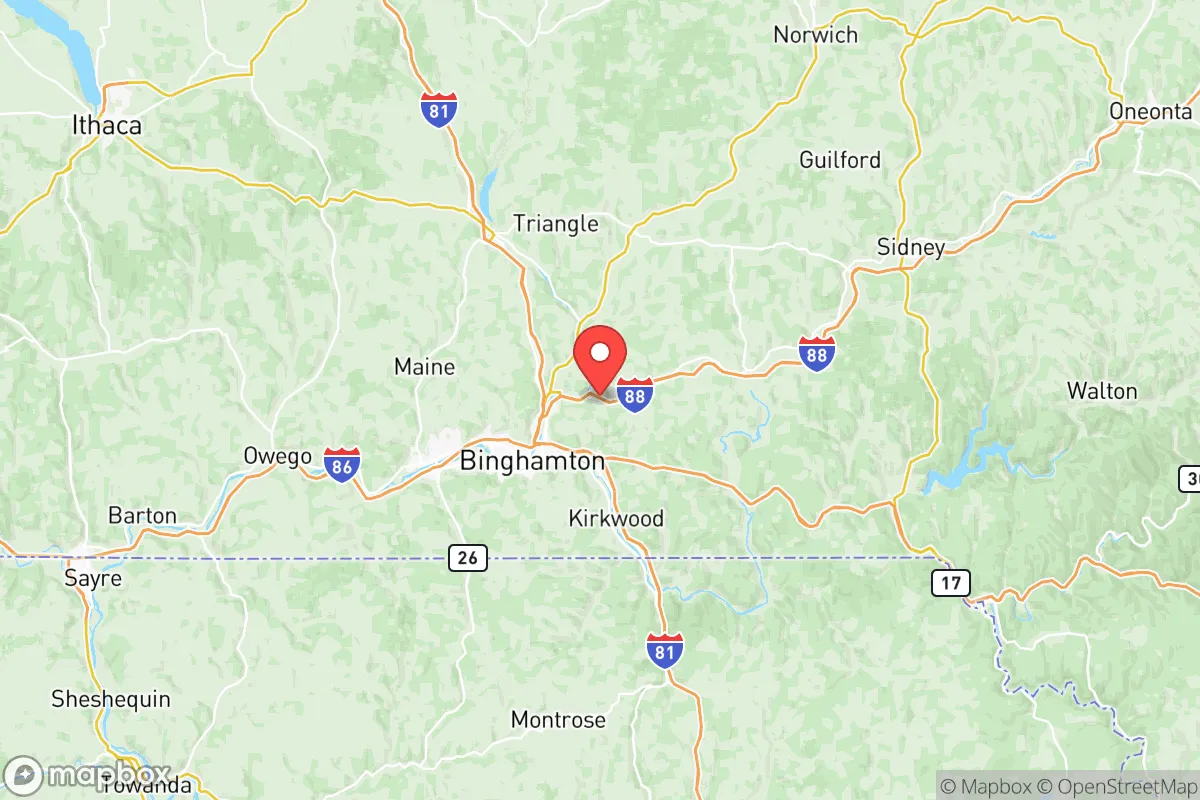
Broome County, New York, offers a quality-of-life spectrum that ranges from the walkable, amenity-rich urban core of Binghamton to quiet, rural hamlets and lakeside communities, drawing everyone from university students and young professionals to retirees and outdoor enthusiasts. The county’s character is defined by this contrast: the Susquehanna and Chenango River valleys concentrate population and commerce, while the rolling hills and farmland to the north and south provide a slower, more private pace of life. With a cost of living index of 68 (well below the national average of 100), a median home value of $145,100, and a median rent of $914, the county is one of the most affordable in the Northeast, making it accessible to a wide range of incomes and lifestyles.
Largest town(s) & population centers
The county’s largest population center is the city of Binghamton, home to roughly 44,000 residents and the anchor of the region. Daily life here is defined by the presence of Binghamton University and SUNY Broome Community College, which bring a youthful, academic energy to the downtown area, with coffee shops, breweries, and cultural venues like the Binghamton Philharmonic and the Roberson Museum. The adjacent town of Vestal (population ~28,000) offers a more suburban experience, with the sprawling Vestal Parkway corridor filled with big-box retailers, chain restaurants, and the Oakdale Mall. Johnson City (population ~15,000) and Endicott (population ~11,000) are historic village centers that once anchored the IBM and Endicott-Johnson shoe empires; today they feature walkable main streets, older housing stock, and a mix of light industrial and service jobs. The average commute across the county is just 19.5 minutes, meaning even those living in the outer towns can reach Binghamton’s employment and entertainment hubs quickly.
Smaller towns & rural pockets
Beyond the urbanized river valleys, Broome County contains a network of smaller towns and unincorporated hamlets that offer a distinctly rural lifestyle. Chenango Forks, straddling the county line, is a tight-knit community centered on its school district and the Chenango River. Whitney Point, in the northern part of the county, sits at the confluence of the Otselic and Tioughnioga Rivers and is known for its annual summer fair and access to the Whitney Point Reservoir for fishing and boating. Deposit, on the western edge near the Delaware County line, is a small village (population ~1,600) with a historic downtown and strong ties to the surrounding Catskill foothills. Windsor, east of Binghamton, offers a mix of riverfront homes and farmland, with a popular town park and a strong sense of local identity. Kirkwood, Conklin, and Sanford are largely residential towns with scattered farms, woods, and creeks, where residents often commute into the urban core but enjoy privacy and lower property taxes.
Cost & lifestyle range
The cost of living and amenities vary significantly across the county, creating clear trade-offs. At the higher end of the spectrum, Vestal and parts of Endwell (in the Town of Union) feature newer subdivisions, higher home values (often $200,000–$350,000), and top-rated school districts, attracting families and professionals. At the lower end, Binghamton’s First Ward and parts of Johnson City offer homes under $100,000 and rents below $800, appealing to students, first-time buyers, and those on fixed incomes. Rural areas like Sanford or Deposit offer the cheapest land (often under $50,000 for a building lot) but require longer drives to grocery stores, hospitals, and employment centers. The median home value of $145,100 means a typical mortgage payment (with 20% down) is roughly $800–$900 per month, often less than rent. Property taxes in Broome County are moderate by New York standards (around 2.5–3.5% of assessed value), but vary by municipality; rural towns generally have lower mill rates than Binghamton city.
Broome County is best suited for those who value affordability and a short commute over urban density or coastal amenities. Young families thrive in Vestal or Endwell for the schools, while retirees and remote workers find peace and low costs in Whitney Point or Windsor. Students and creatives are drawn to Binghamton’s West Side and downtown for walkability and culture. The county’s mix of river valleys, farmland, and small cities means that a resident can choose between a downtown loft, a suburban cul-de-sac, or a 10-acre homestead—all within a 20-minute drive of each other.

Crime in Broome County
Crime rates similar to the national median for U.S. locations.
Violent CrimeViolent Crime Analysis
Property CrimeProperty Crime Analysis
Crime Analysis
Broome County, anchored by the city of Binghamton, presents a mixed safety picture that requires careful attention from prospective residents. The county's violent crime rate of 362.1 per 100,000 residents and property crime rate of 1,536.7 per 100,000 both exceed national averages, though the distribution of crime is far from uniform across the county's towns and villages. Understanding where these incidents concentrate and how local justice policies shape public safety is essential for anyone considering a move to the Southern Tier region.
Crime in context
Broome County's violent crime rate of 362.1 per 100,000 is roughly 25% higher than the national average of approximately 290 per 100,000, while its property crime rate of 1,536.7 per 100,000 sits about 15% above the national figure of roughly 1,340 per 100,000. Compared to New York State as a whole, which benefits from relatively low crime rates outside New York City, Broome County's numbers are notably elevated. The disparity is most pronounced when comparing Binghamton to safer suburban towns like Vestal and Endwell, where crime rates drop significantly. The county's position as a regional hub for services, combined with economic challenges in parts of the city, contributes to these above-average figures.
What residents experience
Daily life in Broome County varies dramatically by location. In the city of Binghamton, residents contend with a concentration of both violent and property crime, particularly in neighborhoods near the downtown core and along the Susquehanna River's north side. The Binghamton Police Department reports that a significant portion of violent incidents involve disputes among individuals known to each other, rather than random attacks on strangers. Property crime, including vehicle break-ins and package thefts, is a persistent concern in Binghamton and the adjacent village of Johnson City. However, in towns like Chenango and Fenton, residents report far fewer incidents, with many neighborhoods experiencing crime rates well below the county average. The Broome County District Attorney's Office, operating under progressive leadership in recent years, has faced criticism for plea-bargaining rates that some argue reduce accountability for repeat offenders. This judicial philosophy, while intended to reduce incarceration, can result in criminals returning to the streets more quickly, potentially undermining public confidence in the justice system. Residents in safer areas often express frustration that the county's overall crime statistics are dragged upward by policies they feel do not adequately prioritize victim protection.
Neighborhood-level variation
The safest residential options in Broome County are found in the suburban and rural towns that ring Binghamton. Vestal, home to Binghamton University's main campus, consistently reports the lowest crime rates in the county, with violent crime below 100 per 100,000 in many census tracts. Endicott, while historically an industrial hub, has seen property crime rates decline in its western neighborhoods, though the village center still experiences occasional theft and vandalism. Maine and Nanticoke, both rural towns, offer very low crime environments but require longer commutes to employment centers. The most significant safety concerns cluster in Binghamton's First Ward and the areas around the city's public housing complexes, where property crime rates can exceed 2,500 per 100,000. Prospective residents should prioritize visiting specific neighborhoods at different times of day and reviewing local crime maps, as the difference between a safe block and a high-crime block in Broome County can be just a few streets apart.
* Values derived from national, state, county, city and local statistics and may differ in a specific area. Last updated: 2026-06-16T00:36:40.000Z
Narrative content on this page is AI-generated and may contain mistakes. Verify any details that matter before acting on them.
ReloMaps may earn a commission from affiliate links at no extra cost to you.

