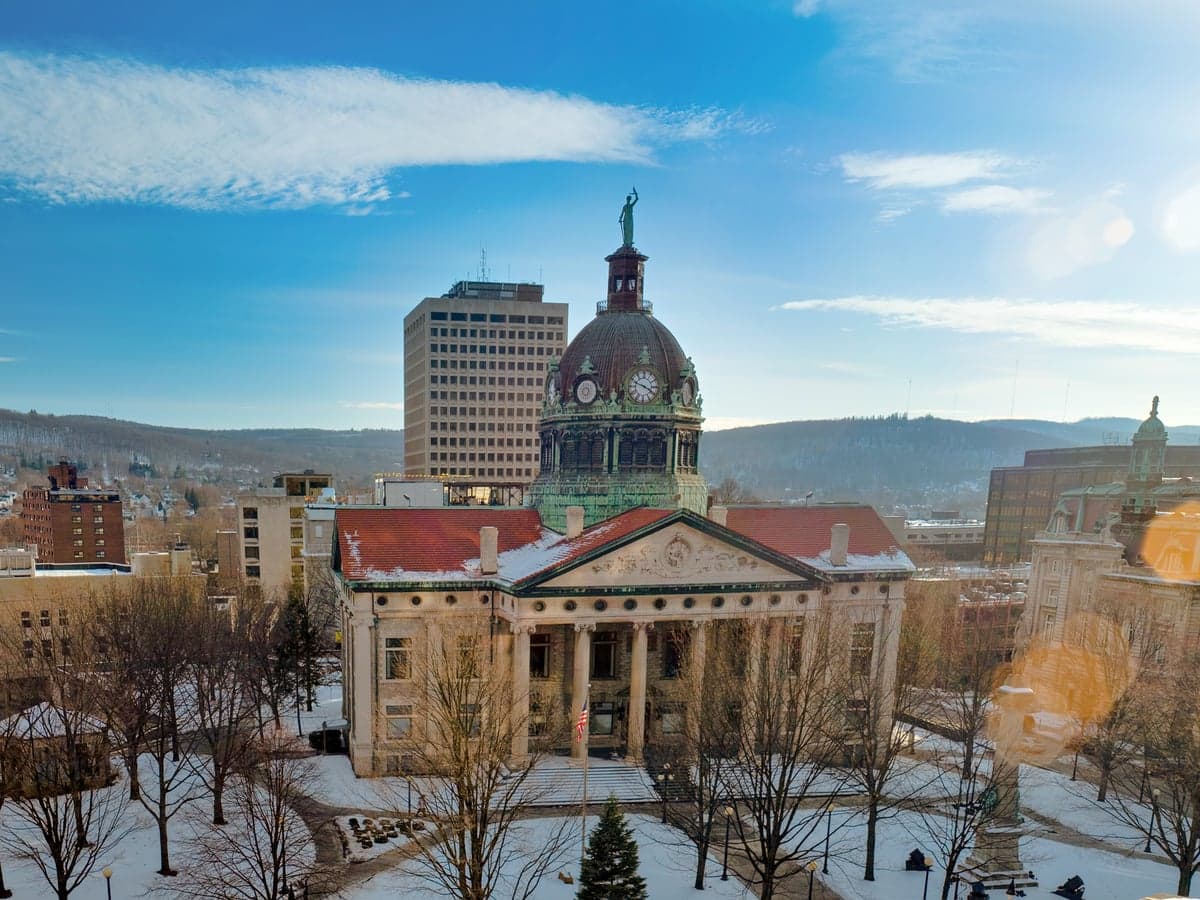
Photo: Wikipedia
Personal Sovereignty in Broome County
Moderate friction. Expect trade-offs in some aspect of personal liberty and independence.
What does Personal Sovereignty tell us?
Personal Sovereignty measures your capacity for self-reliance and independence with minimal government friction. Higher scores mean fewer barriers between you and the way you want to live... but it assumes you have the space you need and good neighbors.
What does this tell us?
Personal Sovereignty measures your capacity for self-reliance and independence with minimal government friction. Higher scores mean fewer barriers between you and the way you want to live... but it assumes you have the space you need and good neighbors.
State Policy
Energy independence: Importer (12% of energy produced in-state)
Personal Liberty
Homesteading

Personal Liberty Analysis
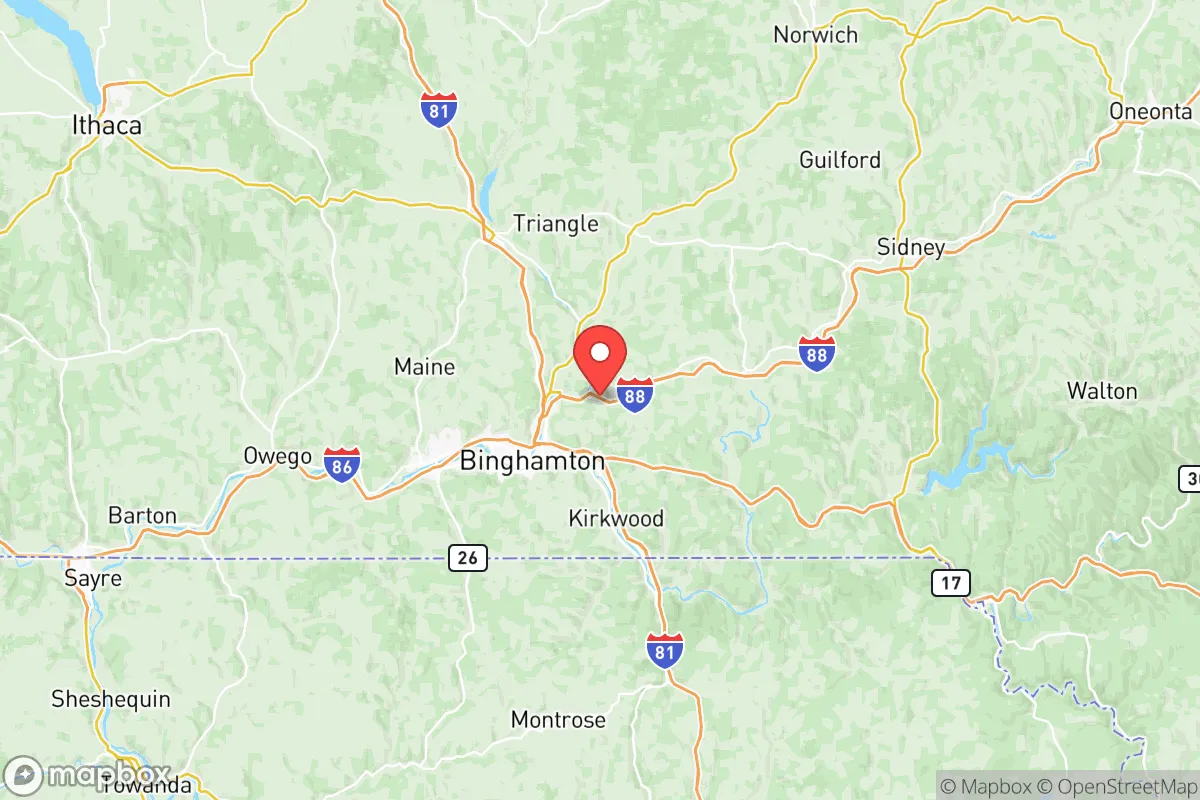
Broome County, New York, offers a nuanced personal sovereignty environment that balances Upstate New York’s traditional self-reliance with the state’s broader regulatory framework. While New York State imposes significant constraints on certain personal liberties—particularly in firearms and taxation—Broome County’s rural character, lower population density, and local governance create pockets of greater autonomy compared to downstate regions. For individuals and families prioritizing independence, the county’s mix of small cities, villages, and unincorporated townships provides varying degrees of freedom, with places like Vestal and Endicott offering more suburban oversight, while Sanford, Windsor, and Colesville afford more room for self-directed living.
Tax burden and regulatory posture in Broome County
New York’s tax burden is among the highest in the nation, and Broome County reflects that reality. The combined state and local sales tax rate is 8.0% (4.0% state, 4.0% county), and property taxes are substantial—the median effective property tax rate in Broome County is approximately 2.3% of home value, well above the national average of 1.1%. However, the county’s median home value of roughly $140,000 keeps annual tax bills around $3,200, lower than in downstate suburbs. Regulatory posture is mixed: the county’s zoning is generally permissive in rural townships, but New York State’s building codes, environmental review processes (State Environmental Quality Review Act, or SEQRA), and energy mandates (e.g., the Climate Leadership and Community Protection Act) add layers of compliance. For example, Binghamton’s city government enforces stricter rental registration and property maintenance codes, while Chenango and Nanticoke townships have minimal zoning, allowing more flexibility for home-based businesses and accessory structures. The county’s economic development arm, the Broome County Industrial Development Agency, offers tax abatements for new construction in designated zones, but these are targeted at commercial projects, not individual homesteaders.
Self-defense and gun law specifics in Broome County
New York’s gun laws are among the most restrictive in the United States, and Broome County operates under the same state framework. The 2022 Concealed Carry Improvement Act (CCIA) requires a permit to carry a concealed handgun, mandates a 16-hour training course, and designates “sensitive locations” (including public parks, libraries, and restaurants serving alcohol) where firearms are prohibited. Open carry is generally illegal for handguns without a permit, and long guns are subject to the state’s SAFE Act, which bans certain semi-automatic rifles defined as “assault weapons.” Broome County’s pistol permit office, located in the county clerk’s office in Binghamton, processes applications with typical wait times of 6–12 months, though renewal is faster. Local sentiment is more gun-friendly than downstate: the Broome County Sheriff’s Office has publicly stated it will not enforce certain CCIA provisions deemed unconstitutional by federal courts, though this stance is advisory and not legally binding. In rural towns like Windsor and Sanford, firearm ownership for hunting and sport shooting is common, and private property use is largely unrestricted. However, transporting firearms across county lines or into Binghamton requires strict adherence to state law. For those prioritizing self-defense, the county’s rural areas offer practical freedom, but the legal overhead is high compared to states like Pennsylvania or Texas.
Self-reliance and homesteading viability in Broome County
Homesteading and off-grid living are viable in Broome County’s rural townships, though state regulations impose limits. Minimum lot sizes vary: Colesville and Sanford require 2–5 acres for new residential construction, while Windsor allows 1-acre lots in some zones. Zoning in unincorporated areas is generally permissive for agricultural uses, including livestock, beekeeping, and small-scale farming. Off-grid feasibility is constrained by New York’s building codes: the state requires a permanent foundation and connection to a septic system for habitable structures, and solar panels must comply with the Uniform Fire Prevention and Building Code. Rainwater collection is legal but must not interfere with groundwater recharge, and composting toilets are allowed only with a state-approved system. The county’s soil quality is good for gardening, with many areas in the Susquehanna River valley having fertile loam. However, the growing season is short (roughly 150 frost-free days), limiting year-round food production. Wood heating is common, and firewood permits on state land are available for $20 per cord. For those seeking true self-reliance, Nanticoke and Maine townships offer the most permissive environments, with minimal zoning enforcement and large tracts of undeveloped land. In contrast, Vestal and Endwell have suburban covenants that restrict livestock and outbuildings.
Personal liberties in Broome County: parental rights, medical autonomy, speech, and property
Parental rights in Broome County are shaped by New York State law, which mandates comprehensive sex education in public schools (starting in kindergarten under the 2023 guidance) and requires parental notification for certain medical procedures, but not for reproductive health services. The county’s school districts—including Binghamton, Vestal, and Chenango Valley—vary in their implementation: Maine-Endwell and Whitney Point districts have more conservative school boards that have resisted certain state mandates, while Binghamton’s district follows state guidelines closely. Medical autonomy is limited by New York’s vaccine mandates for school attendance and healthcare workers, though exemptions exist for medical and religious reasons. Speech is protected under the First Amendment, but New York’s hate crime laws and social media regulations (e.g., the 2023 SAFE for Kids Act) add layers of restriction. Property rights are strong in rural areas: landowners can generally build, harvest timber, and operate home businesses without permits, provided they meet state environmental standards. However, the state’s eminent domain authority is broad for infrastructure projects, and the county’s tax foreclosure process is aggressive—properties with three years of unpaid taxes are auctioned annually. In Binghamton, short-term rental regulations (Airbnb) require a permit and occupancy limits, while rural townships have no such rules.
Overall, Broome County offers a moderate level of personal sovereignty relative to other areas in New York State, but it falls short of the autonomy found in states like New Hampshire or Texas. The county’s rural townships—particularly Sanford, Colesville, and Nanticoke—provide a lighter regulatory touch, lower property costs, and practical freedom for homesteading and self-defense, while Binghamton and its suburbs impose more oversight. For a conservative-leaning individual or family, the trade-off is clear: Broome County offers a lower cost of entry and a more community-oriented lifestyle than downstate, but the state’s tax burden and gun laws remain significant constraints. Those willing to navigate New York’s regulatory landscape will find a viable environment for self-reliance, particularly in the county’s eastern and northern townships, where local governance is more aligned with personal liberty.

* Values derived from national, state, county, city and local statistics and may differ in a specific area. Last updated: 2026-06-16T00:36:40.000Z
Narrative content on this page is AI-generated and may contain mistakes. Verify any details that matter before acting on them.
ReloMaps may earn a commission from affiliate links at no extra cost to you.

