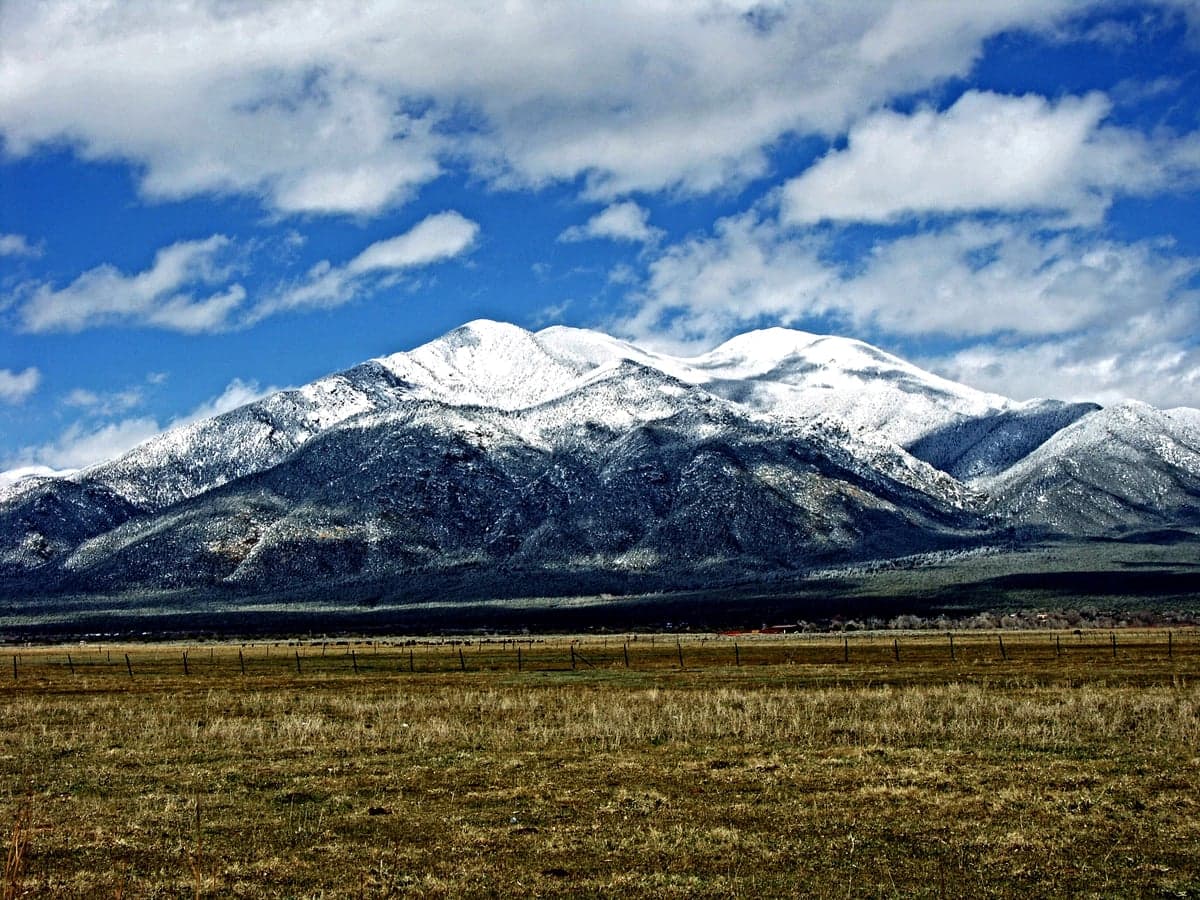
Photo: Wikipedia
Personal Sovereignty in Taos County
Viable for self-reliance. Generally workable, though some barriers may limit total independence.
What does Personal Sovereignty tell us?
Personal Sovereignty measures your capacity for self-reliance and independence with minimal government friction. Higher scores mean fewer barriers between you and the way you want to live... but it assumes you have the space you need and good neighbors.
What does this tell us?
Personal Sovereignty measures your capacity for self-reliance and independence with minimal government friction. Higher scores mean fewer barriers between you and the way you want to live... but it assumes you have the space you need and good neighbors.
State Policy
Energy independence: Net exporter (250% of energy produced in-state)
Personal Liberty
Homesteading

Personal Liberty Analysis
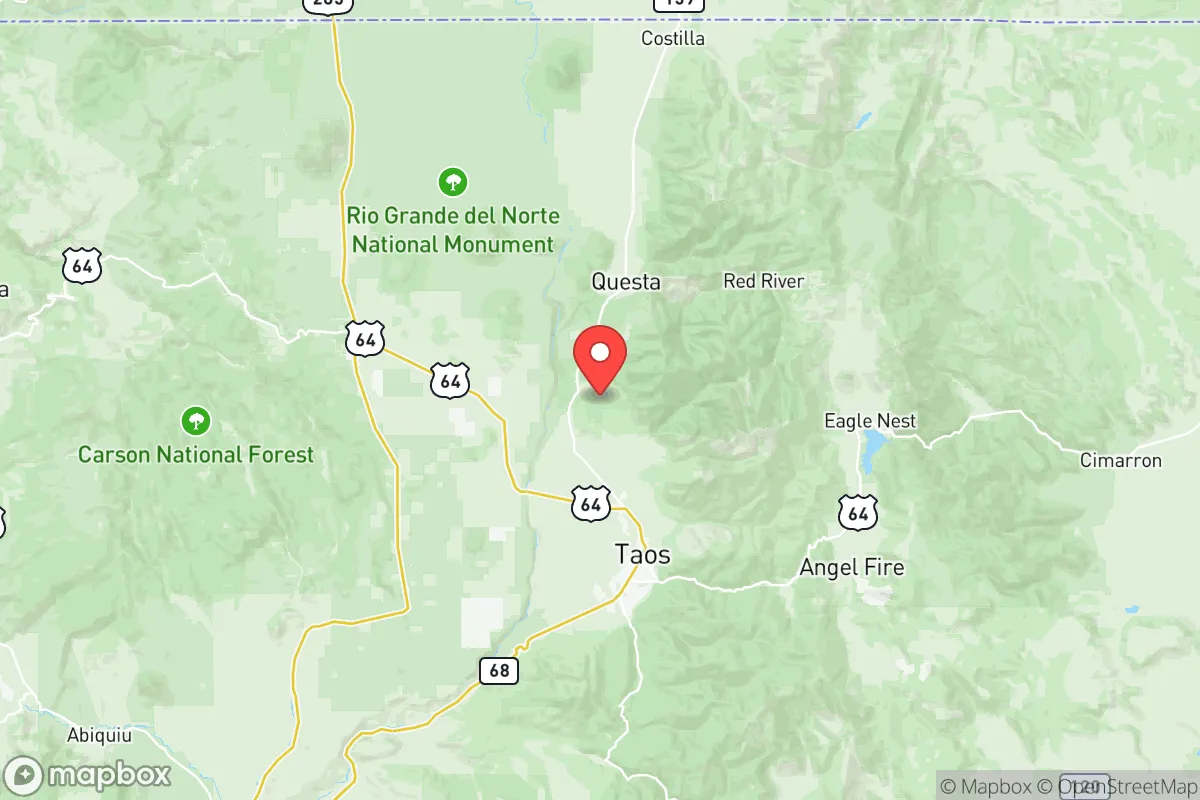
Taos County, New Mexico, offers a distinctive environment for personal sovereignty that blends a deep-rooted Western independence ethos with the practical realities of a high-desert, rural landscape. While the state of New Mexico imposes a moderate regulatory framework, the county's remote geography and small population create a de facto atmosphere of greater personal autonomy, particularly for those who are self-sufficient. For a conservative-leaning individual or family prioritizing freedom from overreach, Taos County presents a mixed but generally favorable picture, where the primary constraints are often natural (water availability, wildfire risk) rather than governmental, though specific local ordinances in the town of Taos and the village of Taos Ski Valley can differ markedly from the more permissive unincorporated areas like Arroyo Hondo, Ranchos de Taos, and El Prado.
Tax burden and regulatory posture in Taos County
New Mexico's overall tax burden is moderate, ranking in the middle of states nationally, which provides a baseline of fiscal freedom. There is no state-level inheritance or estate tax, a significant plus for those looking to pass property to the next generation. The state's gross receipts tax (GRT), which functions similarly to a sales tax, is the primary revenue source, and in Taos County, the combined rate is approximately 8.4375% (as of 2026), which is higher than some rural counties but standard for the region. Property taxes are notably low, a major draw for landowners. The effective property tax rate in Taos County is roughly 0.6% to 0.8% of a property's assessed value, which is well below the national average. This low rate is a direct result of the state's constitutional cap and the county's relatively low property valuations. Regulatory posture is a tale of two jurisdictions. The town of Taos itself has more active zoning and building codes, particularly in its historic district. However, in the unincorporated areas—such as the sprawling communities of Arroyo Seco, Talpa, and the rural stretches of the Rio Grande Gorge—county-level regulation is light. There are no county-wide zoning ordinances for most agricultural and residential uses, meaning that building a workshop, keeping livestock, or operating a small home-based business is generally straightforward, provided you meet basic state health and safety codes. The permitting process for new construction is less onerous than in many Western states, though a building permit is still required for any structure over 200 square feet.
Self-defense and gun law specifics in a New Mexico context
New Mexico is a shall-issue state for concealed carry permits, and as of 2021, it became a permitless (constitutional) carry state for law-abiding residents and non-residents aged 21 and over. This means that in Taos County, you can carry a concealed firearm without a permit, a strong affirmation of the Second Amendment. The state preempts local firearm ordinances, so the town of Taos cannot enact stricter gun laws than the state, ensuring a uniform standard across the county. There are no magazine capacity restrictions, no assault weapon bans, and no state-level red flag law as of 2026, though such legislation is periodically debated. The gun culture in Taos County is robust but not aggressive; it is a place where hunting, target shooting, and personal protection are common and socially accepted. Local gun shops and shooting ranges are present, and the county sheriff's office is generally supportive of gun rights. The primary practical consideration for self-defense is the rural nature of the area—response times from law enforcement in the more remote parts of the county, such as the areas around Questa or the remote reaches of the Carson National Forest, can be 30 minutes or more. This reality reinforces the need for personal preparedness and makes the permissive carry laws a practical necessity for many residents.
Self-reliance and homesteading viability: lot sizes, zoning, and off-grid feasibility
Taos County is one of the more viable locations in the Southwest for a self-reliant, off-grid lifestyle, but success depends heavily on location and water access. Minimum lot sizes in unincorporated areas are generally one acre, though many parcels are far larger, with 5- to 40-acre tracts being common in areas like San Cristobal and the foothills of the Sangre de Cristo Mountains. Zoning is minimal; there are no county-wide restrictions on keeping chickens, goats, or horses on residential property, and many residents run small-scale farms or market gardens. Off-grid living is legal and practiced widely. There is no county requirement to connect to a municipal power grid; solar panels with battery storage are the norm for many remote homes. The critical factor is water. Taos County is in a high desert, and water rights are a complex, legally binding issue. A property without a permitted well or a valid water right can be extremely difficult to develop. Rainwater harvesting is legal and encouraged, but it cannot be the sole source of potable water for a permanent dwelling under state law. Composting toilets and greywater systems are permitted, making it possible to live without a septic system in some cases, but a permit is still required. The county's building department is pragmatic but expects compliance with basic safety and health codes. For the truly self-reliant, the areas north of Taos, near the Colorado border, and the remote valleys west of the Rio Grande offer the greatest freedom, but they also demand the highest level of personal capability in terms of road maintenance, fire mitigation, and winter access.
Personal liberties: parental rights, medical autonomy, speech, and property
New Mexico's legal framework provides a generally supportive environment for personal liberties, though it is not a libertarian stronghold. Parental rights are strong in practice, with no state-level mandates for school curriculum that override local control, though the state does set educational standards. The homeschooling environment is favorable, with minimal reporting requirements and no state-level testing mandates for homeschooled students, making it a viable option for families in the county. Medical autonomy is a mixed picture. New Mexico has legalized recreational cannabis, and the town of Taos has several dispensaries, reflecting a permissive attitude toward personal choice. However, the state has a relatively high vaccination rate and public health infrastructure, and there are no specific "medical freedom" laws that exempt individuals from public health orders, though enforcement in rural areas is often lax. Freedom of speech and assembly are protected under the state constitution, and the county's artistic and countercultural history ensures a tolerant atmosphere for diverse viewpoints. Property rights are generally strong, with no county-wide rent control or restrictive land-use policies that would prevent an owner from using their land as they see fit, within the bounds of state environmental and health laws. The primary threat to property rights in Taos County is not government overreach but the high cost of wildfire insurance and the increasing difficulty of obtaining it, which is a market-driven constraint on land use.
Overall, Taos County offers a high degree of personal sovereignty relative to many other parts of the United States, particularly the urbanized coasts and the Front Range of Colorado. The combination of low property taxes, permitless carry, minimal zoning in unincorporated areas, and a culture of self-reliance creates an environment where an individual or family can live largely on their own terms. The trade-offs are real: the remoteness that enables freedom also means limited access to services, a challenging climate, and the need for significant personal capability. For a conservative-leaning person who values autonomy over convenience, Taos County is a strong contender, offering a level of practical freedom that is increasingly rare in the modern West.

* Values derived from national, state, county, city and local statistics and may differ in a specific area. Last updated: 2026-07-01T22:06:06.000Z
Narrative content on this page is AI-generated and may contain mistakes. Verify any details that matter before acting on them.
ReloMaps may earn a commission from affiliate links at no extra cost to you.

