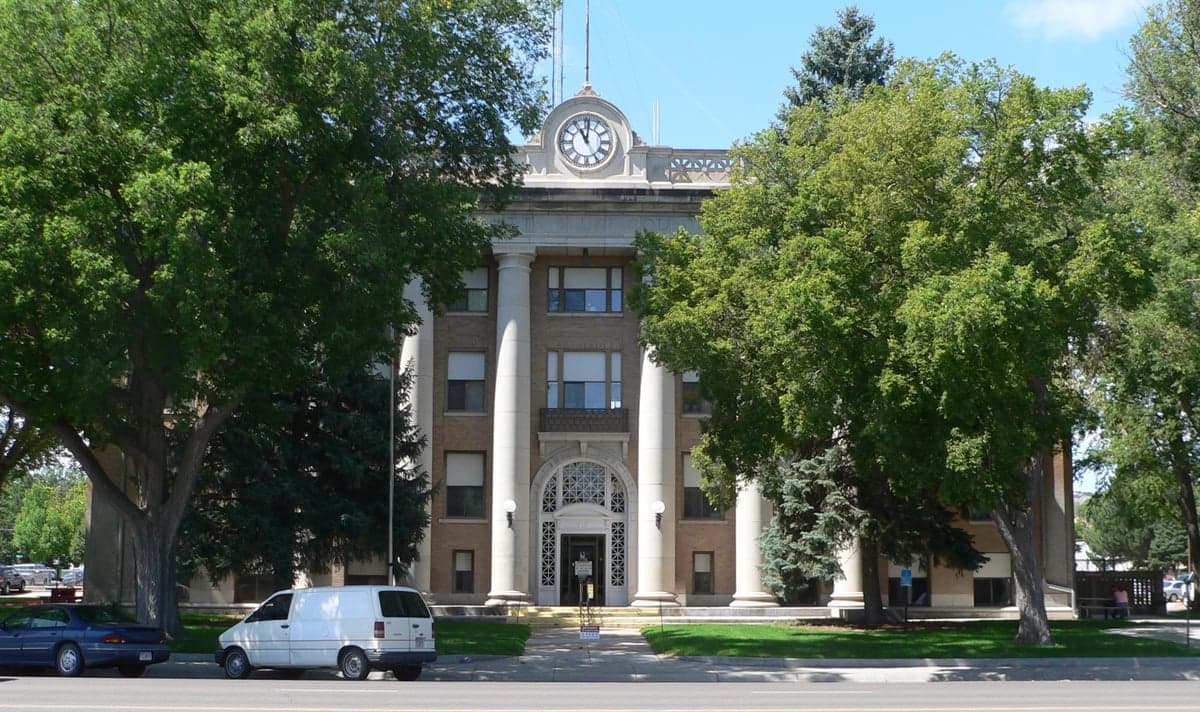
Photo: Wikipedia
Personal Sovereignty in Scotts Bluff County
Moderate friction. Expect trade-offs in some aspect of personal liberty and independence.
What does Personal Sovereignty tell us?
Personal Sovereignty measures your capacity for self-reliance and independence with minimal government friction. Higher scores mean fewer barriers between you and the way you want to live... but it assumes you have the space you need and good neighbors.
What does this tell us?
Personal Sovereignty measures your capacity for self-reliance and independence with minimal government friction. Higher scores mean fewer barriers between you and the way you want to live... but it assumes you have the space you need and good neighbors.
State Policy
Energy independence: Importer (35% of energy produced in-state)
Personal Liberty
Homesteading

Personal Liberty Analysis
Scotts Bluff County, Nebraska, offers a notably high degree of personal sovereignty, grounded in a state-level legal framework that prioritizes individual autonomy over collective mandates. The county’s regulatory environment is light-touch, its tax burden is among the lowest in the nation, and its culture strongly supports self-reliance, from gun ownership to homesteading. For individuals and families seeking to minimize government interference in daily life, the area presents a compelling option, though the degree of freedom varies between the urban core of Scottsbluff and Gering and the more rural outlying towns like Mitchell, Morrill, and Lyman.
Tax burden and regulatory posture in Scotts Bluff County
Nebraska’s state-level tax structure is generally favorable to personal sovereignty, and Scotts Bluff County reflects this. The state has no tax on Social Security benefits and offers a 50% deduction on capital gains from Nebraska-based investments. Property taxes in the county are moderate, with a 2024 average levy of approximately 1.5% of assessed value, which is competitive with neighboring states like Colorado and Wyoming. The county’s regulatory posture is light-touch, particularly in unincorporated areas. Zoning is minimal outside the city limits of Scottsbluff and Gering, meaning that residents in towns like Terrytown or Minatare face fewer restrictions on land use, home-based businesses, and accessory structures. The state’s right-to-work law, in effect since 1947, further reinforces individual economic autonomy by prohibiting mandatory union membership or dues as a condition of employment. For a relocation-minded reader, the key takeaway is that the tax and regulatory environment in Scotts Bluff County is designed to let residents keep more of what they earn and make their own decisions about property and business, with the most freedom found outside the incorporated city limits.
Self-defense rights and gun law specifics in western Nebraska
Nebraska is a shall-issue state for concealed carry permits, and Scotts Bluff County’s sheriff’s office processes applications efficiently, typically within 30 days. The state does not require a permit to openly carry a firearm, and as of 2023, permitless (constitutional) carry is legal for residents 21 and older who are legally allowed to possess a firearm. This places Nebraska in the top tier of states for gun rights, and the culture in Scotts Bluff County strongly supports that. In Scottsbluff and Gering, firearm ownership is common, and there are no local ordinances that restrict the sale, possession, or use of firearms beyond state law. The county has a strong hunting tradition, with public access to the Wildcat Hills State Recreation Area and the North Platte River corridor providing ample opportunity for shooting sports. For a reader prioritizing self-defense, the legal environment is unambiguous: the right to keep and bear arms is broadly protected, with no local preemption challenges or restrictive municipal codes to navigate. The only practical limitation is that carrying a concealed firearm without a permit is not valid in certain restricted locations like schools and government buildings, but these are standard exceptions nationwide.
Self-reliance and homesteading viability across the county
Scotts Bluff County is one of the most viable areas in Nebraska for self-reliant living, particularly outside the urbanized areas. In unincorporated parts of the county, such as the rural areas around Morrill and Lyman, lot sizes can be as large as 40 acres or more, and there are no county-level zoning restrictions on raising livestock, building outbuildings, or installing alternative energy systems. Off-grid living is feasible, though residents must comply with state-level building codes for habitable structures. Water access is a key consideration: the county sits atop the Ogallala Aquifer, and well drilling is permitted with a standard permit from the Nebraska Department of Natural Resources, typically costing $500–$1,000. Solar panels and wind turbines are legal without special permitting, and net metering is available through the local utility, though the buyback rate is low. In contrast, within the city limits of Scottsbluff and Gering, zoning is more restrictive, with minimum lot sizes of 6,000–8,000 square feet and limits on the number of livestock. For a family seeking to grow their own food, keep chickens, or install a rainwater catchment system, the rural parts of the county—particularly around Mitchell and Minatare—offer the most freedom. The county’s agricultural heritage means that soil quality is excellent for gardening, and the growing season, while short (approximately 140 days), is sufficient for most cool-season crops.
Personal liberties: parental rights, medical autonomy, and speech
Nebraska law provides strong protections for parental rights, including the right to direct the education and healthcare of minor children. The state does not require parental consent for a minor to obtain an abortion, but the procedure is restricted after 12 weeks of gestation, and the state has a parental notification law for minors seeking the procedure. Medical autonomy is generally respected, with no state-level vaccine mandates for adults and a broad religious exemption for childhood immunizations. In Scotts Bluff County, the local school districts—Scottsbluff Public Schools, Gering Public Schools, and Mitchell Public Schools—have not implemented mask or vaccine mandates beyond state requirements, reflecting the community’s preference for individual choice. Speech and assembly rights are fully protected, and the county has no local ordinances that restrict political expression or signage. Property rights are robust, with Nebraska’s eminent domain laws requiring just compensation and a demonstrated public purpose. For a reader concerned about government overreach, the county’s legal and cultural environment is permissive, with the most significant limitations being those imposed by state law rather than local governance.
Overall, Scotts Bluff County ranks among the most sovereignty-friendly areas in the Great Plains, offering a combination of low taxes, strong gun rights, viable homesteading options, and broad personal liberties. Compared to neighboring states like Colorado, where local preemption of gun laws and restrictive zoning are common, or even eastern Nebraska counties with more urbanized populations, Scotts Bluff County provides a notably light-touch regulatory environment. The primary trade-off is that the most freedom—particularly for off-grid living and self-reliance—exists outside the incorporated city limits, meaning that a relocation decision should carefully consider whether the convenience of Scottsbluff or Gering outweighs the greater autonomy available in the surrounding rural towns. For a family or individual prioritizing personal sovereignty above all else, the unincorporated areas of Scotts Bluff County represent a near-optimal choice within the continental United States.

* Values derived from national, state, county, city and local statistics and may differ in a specific area. Last updated: 2026-06-17T22:17:14.000Z
Narrative content on this page is AI-generated and may contain mistakes. Verify any details that matter before acting on them.
ReloMaps may earn a commission from affiliate links at no extra cost to you.

