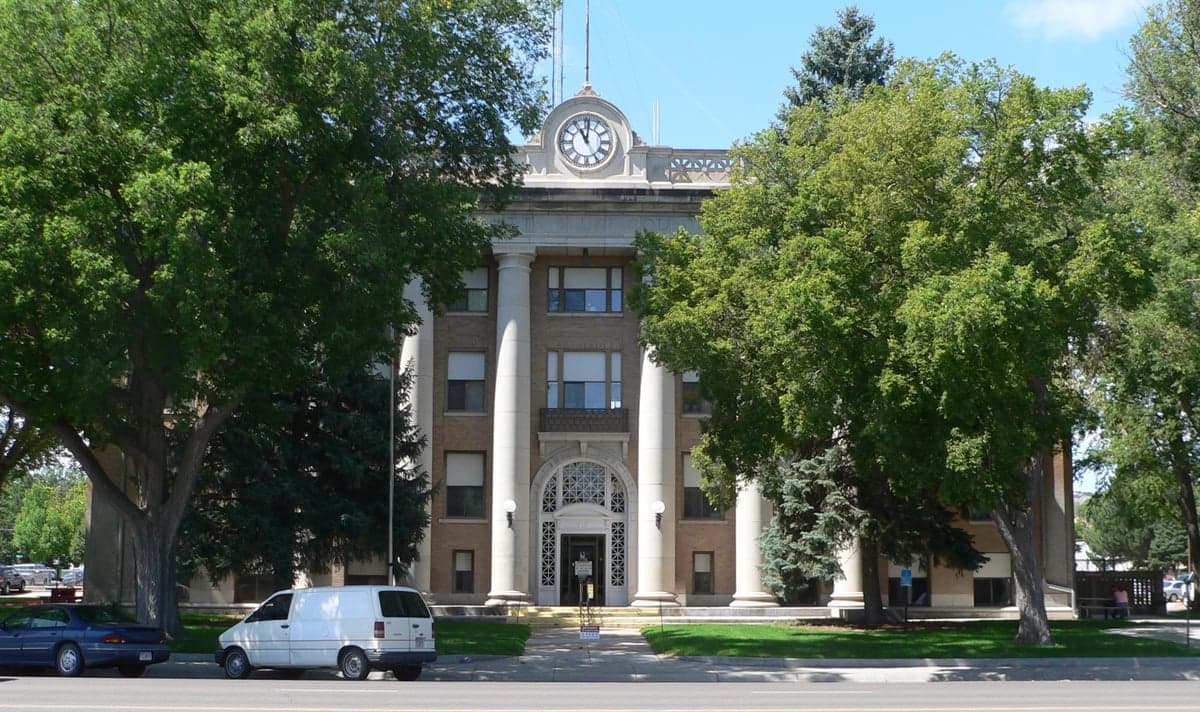
Photo: Wikipedia
Demographics of Scotts Bluff County
Affluence Level in Scotts Bluff County
A below-average socioeconomic profile. Incomes, home values, and educational attainment trail the U.S., with higher poverty and unemployment.
People of Scotts Bluff County
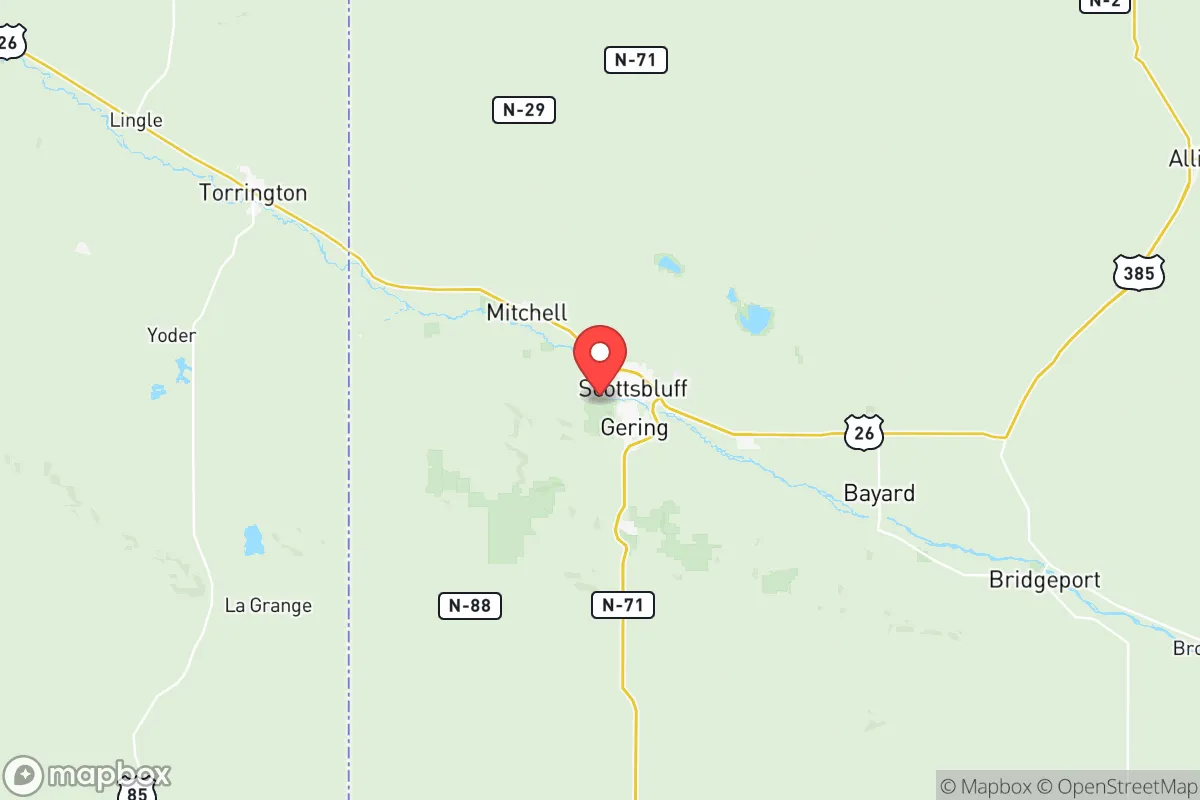
Scotts Bluff County, Nebraska, is a predominantly White and Hispanic community of 35,937 residents, shaped by a history of agricultural settlement and railroad expansion. The county is anchored by the city of Gering and the larger Scottsbluff, which together form the region's economic and cultural hub. With a foreign-born population of just 2.4% and a Hispanic share of 23.4%, the county is notably less diverse than the national average but has seen a steady growth in its Hispanic population over recent decades. The area retains a distinctively rural, conservative character, with a strong sense of place rooted in the pioneer history of the Great Plains.
Settlement & growth (pre-1960)
Before American settlement, the region was inhabited by Indigenous peoples, most notably the Pawnee, Lakota (Sioux), and Cheyenne nations, who used the North Platte River valley for hunting and seasonal camps. The area was part of the vast Louisiana Purchase of 1803, and early European-American exploration came via the Oregon Trail and Mormon Trail, which passed through the future site of Scotts Bluff County. The landmark Scotts Bluff itself served as a crucial landmark for westward emigrants in the 1840s and 1850s, though permanent settlement did not begin until after the Homestead Act of 1862 and the arrival of the railroad.
The first major wave of settlers arrived in the 1880s and 1890s, drawn by the promise of cheap land under the Homestead Act and the expansion of the Burlington and Missouri River Railroad. These early settlers were overwhelmingly of European origin, with the largest groups being German and Scandinavian (primarily Swedish and Danish) immigrants, along with a smaller number of Irish and English homesteaders. The town of Gering, founded in 1887, became the county seat and a center for German-American farming families. Nearby Scottsbluff, founded in 1900, grew more rapidly as a railroad and commercial hub, attracting a more diverse mix of laborers, including a small number of Mexican railroad workers who began arriving in the 1910s and 1920s. Other smaller settlements like Mitchell, Morrill, and Lyman were established as agricultural service towns, each with a predominantly German and Scandinavian population.
The Dust Bowl of the 1930s and the Great Depression caused significant out-migration, but the county's population stabilized and grew modestly through the mid-20th century. The post-World War II era saw the expansion of irrigated agriculture, particularly sugar beet farming, which attracted a new wave of Mexican-American laborers through the Bracero Program (1942-1964). Many of these workers settled permanently in Scottsbluff and Gering, forming the foundation of the county's Hispanic community. By 1960, the county's population was roughly 95% White, with a small but established Hispanic minority concentrated in the agricultural labor force.
Modern era (post-1965)
The 1965 Hart-Cellar Act did not dramatically reshape Scotts Bluff County, as it did in coastal and Sun Belt regions. Immigration to the county remained low, and the foreign-born share today stands at just 2.4%, well below the national average of roughly 14%. The most significant demographic shift since 1965 has been the growth of the Hispanic population, driven primarily by domestic migration from other parts of the United States and by natural increase among families already settled in the region. The Hispanic share of the county's population rose from under 5% in 1970 to 23.4% by the 2020 census, with the majority identifying as Mexican-American. This community is concentrated in Scottsbluff and, to a lesser extent, Gering, where they work in agriculture, meatpacking, and food processing.
The county's White population, which remains the majority at 71.6%, has aged and declined slightly in absolute numbers, reflecting broader rural depopulation trends across the Great Plains. Young adults often leave for college or urban jobs in places like Denver or Lincoln, contributing to a population that is older than the national median. The Black population is negligible at 0.6%, and East/Southeast Asian communities (0.5%) and Indian-subcontinent residents (0.2%) are present only in very small numbers, primarily in professional roles in healthcare and education in Scottsbluff. The county has not experienced significant suburbanization or exurban growth, as the nearest major metropolitan area (Denver) is over three hours away, and the region remains economically tied to agriculture and related industries.
Domestic migration patterns since 2000 have been mixed. The county has seen a modest inflow of retirees and remote workers attracted by low housing costs and a slower pace of life, particularly in smaller towns like Mitchell and Morrill. However, the overall population has remained relatively flat, hovering around 36,000 for the past two decades. The county's cultural identity remains rooted in its agricultural heritage and conservative values, with a growing Hispanic presence adding linguistic and cultural diversity, particularly in the public schools of Scottsbluff and Gering.
The future
Scotts Bluff County is likely to become slightly more diverse over the next 10-20 years, driven by continued growth of the Hispanic population through natural increase and some immigration. The White population is expected to continue its slow decline due to aging and out-migration of younger adults, while the Hispanic share could rise to 30-35% by 2040. The county's small Black, East/Southeast Asian, and Indian populations are unlikely to grow significantly, as the region lacks the economic pull of larger urban centers. New residents are most likely to be domestic migrants seeking affordable housing and a rural lifestyle, with some influx of remote workers and retirees, but the county will not experience rapid growth or major demographic transformation.
The cultural identity of the county is evolving, with the Hispanic community becoming more integrated into civic and economic life, particularly in Scottsbluff and Gering. Bilingualism is increasing, and Hispanic-owned businesses are becoming more visible. However, the county remains politically and socially conservative, and the pace of change is slow. The agricultural economy, including sugar beet farming and cattle ranching, will continue to anchor the region, though automation and consolidation may reduce the number of farm jobs over time.
For someone moving in now, Scotts Bluff County offers a stable, affordable, and safe environment with a strong sense of community, but with limited diversity and economic opportunity compared to larger metropolitan areas. The county is becoming a slightly more multicultural version of its historical self, but it remains fundamentally a rural, White-majority, conservative region where the Hispanic population is a growing and integral part of the social fabric. New residents should expect a place where change comes slowly, and where the pioneer and agricultural heritage still defines daily life.

* Values derived from national, state, county, city and local statistics and may differ in a specific area. Last updated: 2026-06-17T22:17:14.000Z
Narrative content on this page is AI-generated and may contain mistakes. Verify any details that matter before acting on them.
ReloMaps may earn a commission from affiliate links at no extra cost to you.

