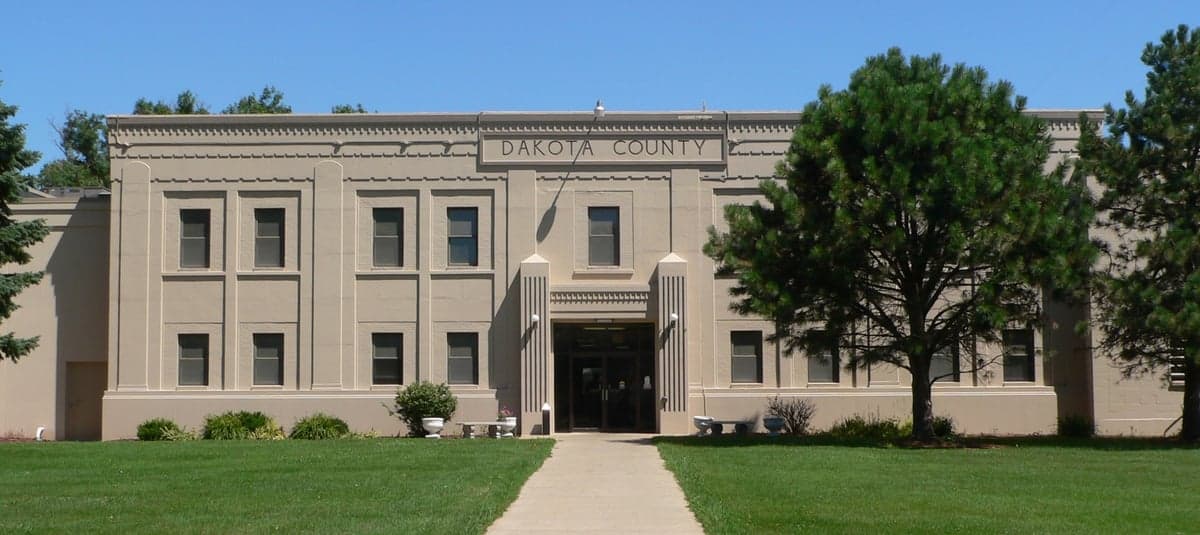
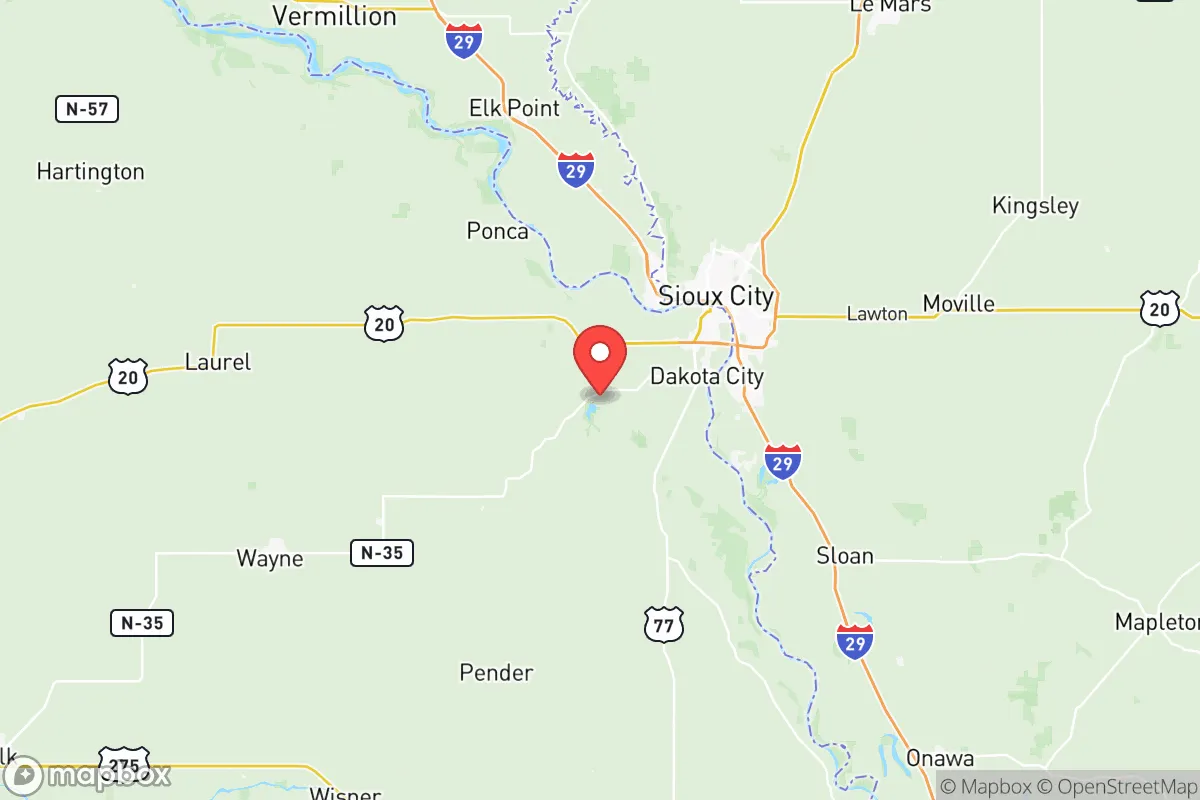
Photo: Wikipedia
Quality of Life in Dakota County
A livable area that tracks near national norms for affordability, walkability, and neighborhood health.
What does Quality of Life tell us?
Quality of Life measures an area by evaluating factors like cost of living, nearby amenities, country club access, airport proximity, socioeconomic signals and neighborhood character. For large states, this is a general average — quality of life can vary dramatically between metro areas, suburbs, and rural communities within the same state.
What does this tell us?
Quality of Life measures an area by evaluating factors like cost of living, nearby amenities, country club access, airport proximity, socioeconomic signals and neighborhood character. For large states, this is a general average — quality of life can vary dramatically between metro areas, suburbs, and rural communities within the same state.
Cost of Living
22% below national average
149%
The Real Cost of Living in Dakota County for 2026
| Tier | Individual | Family (4) |
|---|---|---|
| Survival | $17k | $32k |
| Comfortable | $33k | $48k |
| Luxury | $98k+ | $152k+ |
| Elite (Top 5%) | $115k+ | $179k+ |
Quality-of-Life Analysis
Dakota County, Nebraska, offers a quality-of-life spectrum that ranges from the Mississippi River town of South Sioux City to quiet, unincorporated farming hamlets, drawing everyone from cross-border commuters and manufacturing workers to retirees seeking low property taxes. The county’s overall cost of living index sits at 78 — 22 points below the national average — with a median home value of $168,100 and median rent of $1,053, making it one of the more affordable corners of the Sioux City metro area. The average commute of just 14 minutes means residents can live in a rural setting and still reach work, shopping, or healthcare in under a quarter-hour.
Largest town(s) & population centers
South Sioux City is the county’s economic and demographic hub, home to roughly 13,000 residents. Daily life here centers on the riverfront, the Marina Inn, and the Dakota County Courthouse, with a mix of chain retailers and locally owned restaurants along Dakota Avenue. The town’s school system, South Sioux City Community Schools, serves a diverse student body — over 40% of students are English-language learners — and the district is a major local employer alongside Tyson Foods and the nearby MercyOne Siouxland Medical Center. For recreation, residents use the Missouri River Trail and the 40-acre Prentis Park. South Sioux City’s median home value of $168,100 is roughly $30,000 below the national median, and rents here average $1,053, attracting young families and workers priced out of Sioux City, Iowa, just across the river. Dakota City, the county seat, is a smaller population center of about 1,900 people. It offers a quieter, more government-anchored lifestyle, with the county courthouse, sheriff’s office, and a handful of local businesses along Main Street. Housing here is slightly cheaper than in South Sioux City, with older homes often selling below $150,000.
Smaller towns & rural pockets
Outside the two main towns, Dakota County’s character shifts to agricultural and residential small-town living. Hubbard (population ~230) sits along U.S. Route 77 and is essentially a bedroom community for South Sioux City, with a grain elevator and a few churches as its landmarks. Emerson (population ~380) straddles the Dakota-Thurston county line and offers a classic Nebraska small-town grid, with a post office, a volunteer fire department, and a K-8 school that feeds into the Emerson-Hubbard district. Jackson (population ~150) is the county’s westernmost named community, a quiet crossroads with a handful of homes and a grain operation. Unincorporated areas like Goose Lake and Willow Creek are purely rural, with scattered farmsteads and no commercial services; residents here rely on wells and septic systems and drive 10–15 minutes to South Sioux City for groceries or medical care. These pockets offer the lowest housing costs in the county — some older farmhouses sell for under $100,000 — but come with trade-offs in terms of access to high-speed internet and public transit.
Cost & lifestyle range
The cost-of-life spread across Dakota County is narrow but meaningful. At the low end, rural properties near Jackson or Goose Lake can be had for $80,000–$120,000, with property taxes among the lowest in the state (Nebraska’s effective rate is about 1.4%, but agricultural land valuations keep rural bills modest). At the upper end, newer subdivisions in South Sioux City — such as those near the Dakota Valley High School campus — see homes priced from $250,000 to $350,000, still well below the national median. Renters face a similar spread: a one-bedroom apartment in South Sioux City averages $850–$950, while a comparable unit in Dakota City or Hubbard might run $700–$800. Amenities follow the same gradient: South Sioux City has a Walmart Supercenter, a hospital, and multiple fast-food chains; Dakota City has a grocery store and a few restaurants; Hubbard and Jackson have no retail beyond a gas station. For entertainment, South Sioux City residents cross the river to Sioux City’s casinos, the Orpheum Theatre, or the Sioux City Explorers minor-league baseball games, while rural residents tend to rely on hunting, fishing at the Missouri River, or local church socials.
Dakota County is best suited for people who want a low-cost, low-commute lifestyle within striking distance of a mid-sized metro area. Young families and manufacturing workers thrive in South Sioux City’s schools and job base; retirees and remote workers find the quiet of Hubbard or Jackson appealing for the price; and farmers or hobby-farmers gravitate toward the unincorporated rural pockets. The county’s trade-off is limited nightlife and cultural amenities — but for those who prioritize affordability, short commutes, and a slower pace, it delivers consistently across its entire geographic range.

Crime in Dakota County
Generally safer than 65% of comparable U.S. locations.
Violent CrimeViolent Crime Analysis
Property CrimeProperty Crime Analysis
Crime Analysis
Dakota County, Nebraska, reports a violent crime rate of 219.7 per 100,000 residents and a property crime rate of 1,391.6 per 100,000, placing it in a moderate-risk tier compared to both state and national averages. The county’s safety profile is heavily shaped by its three main municipalities—South Sioux City, Dakota City, and Emerson—each with distinct crime patterns that prospective residents should weigh carefully. While the county is not among Nebraska’s most dangerous, the influence of progressive judicial policies in the region’s court system raises legitimate concerns about recidivism and public safety outcomes.
Crime in context
Dakota County’s violent crime rate of 219.7 per 100,000 is roughly 37% lower than the national average of 380 per 100,000 but sits slightly above Nebraska’s statewide rate of approximately 210 per 100,000. Property crime in the county, at 1,391.6 per 100,000, is about 10% higher than the national average of 1,260 per 100,000 and significantly exceeds Nebraska’s state average of roughly 1,100 per 100,000. The county’s proximity to Sioux City, Iowa, a larger metro area with its own crime challenges, contributes to cross-border property crime, particularly vehicle theft and burglary. South Sioux City, the county’s largest city, accounts for the majority of reported incidents, while smaller communities like Emerson and Jackson report far fewer offenses. The Dakota County Attorney’s Office, which prosecutes cases across all municipalities, has faced scrutiny for a pattern of plea deals and reduced sentences that critics argue embolden repeat offenders.
What residents experience
Residents in Dakota County’s more rural areas, such as Hubbard and Jackson, generally report feeling safe walking at night and leaving doors unlocked, a stark contrast to the experience in South Sioux City’s denser neighborhoods. In South Sioux City, property crime—especially theft from vehicles and residential burglary—is a daily concern, with police logs showing clusters of incidents near the Dakota Avenue corridor and the Missouri River recreational areas. Violent crime, while less frequent, includes aggravated assaults often linked to domestic disputes or alcohol-related incidents, with a notable concentration in the city’s older housing stock near the riverfront. Dakota City, the county seat, sees lower overall crime but has experienced a rise in drug-related offenses tied to methamphetamine trafficking along the Highway 77 corridor. The progressive lean of the local judiciary, including the 1st Judicial District Court, has resulted in diversion programs and deferred judgments for property crime offenders, a policy that reduces jail populations but frustrates victims who see repeat offenders cycling back into their neighborhoods.
Neighborhood-level variation
Neighborhood safety in Dakota County varies sharply by municipality and even by street. In South Sioux City, the area west of Dakota Avenue and north of 4th Street is considered safer, with newer subdivisions and active neighborhood watch programs, while the area east of Dakota Avenue toward the river has higher crime reports. Emerson, a small town of about 900 residents, consistently reports near-zero violent crime and property crime rates below 500 per 100,000, making it the county’s safest option for families. Dakota City’s historic downtown core sees occasional vandalism and petty theft, but the residential streets south of the courthouse are quiet. Prospective residents should prioritize homes in Emerson or the western edges of South Sioux City to minimize exposure to the property crime that plagues the county’s urban core. The lack of a unified county-wide police force—each city maintains its own department—means response times and enforcement priorities differ, with South Sioux City’s PD handling the bulk of serious incidents.
* Values derived from national, state, county, city and local statistics and may differ in a specific area. Last updated: 2026-07-08T02:09:17.000Z
Narrative content on this page is AI-generated and may contain mistakes. Verify any details that matter before acting on them.
ReloMaps may earn a commission from affiliate links at no extra cost to you.

