Photo: Wikipedia
Quality of Life in Cass County
A livable area that tracks near national norms for affordability, walkability, and neighborhood health.
What does Quality of Life tell us?
Quality of Life measures an area by evaluating factors like cost of living, nearby amenities, country club access, airport proximity, socioeconomic signals and neighborhood character. For large states, this is a general average — quality of life can vary dramatically between metro areas, suburbs, and rural communities within the same state.
What does this tell us?
Quality of Life measures an area by evaluating factors like cost of living, nearby amenities, country club access, airport proximity, socioeconomic signals and neighborhood character. For large states, this is a general average — quality of life can vary dramatically between metro areas, suburbs, and rural communities within the same state.
Cost of Living
14% below national average
125%
The Real Cost of Living in Cass County for 2026
| Tier | Individual | Family (4) |
|---|---|---|
| Survival | $16k | $30k |
| Comfortable | $48k | $71k |
| Luxury | $133k+ | $207k+ |
| Elite (Top 5%) | $157k+ | $243k+ |
Quality-of-Life Analysis
Cass County, Nebraska, offers a quality-of-life spectrum that ranges from the suburban commuter hub of Plattsmouth to the quiet agricultural crossroads of towns like Elmwood and Murdock, drawing everyone from Omaha-bound professionals to families seeking small-town schools and retirees looking for affordable acreage. The county’s overall cost-of-living index sits at 86 (14% below the U.S. average), with a median home value of $247,200 and median rent of $987, but those figures mask a wide spread between its riverfront towns and its interior farm communities. The average commute of roughly 29 minutes reflects the county’s role as a bedroom community for Omaha and Lincoln, though residents in the eastern and southern reaches often face longer drives.
Largest town(s) & population centers
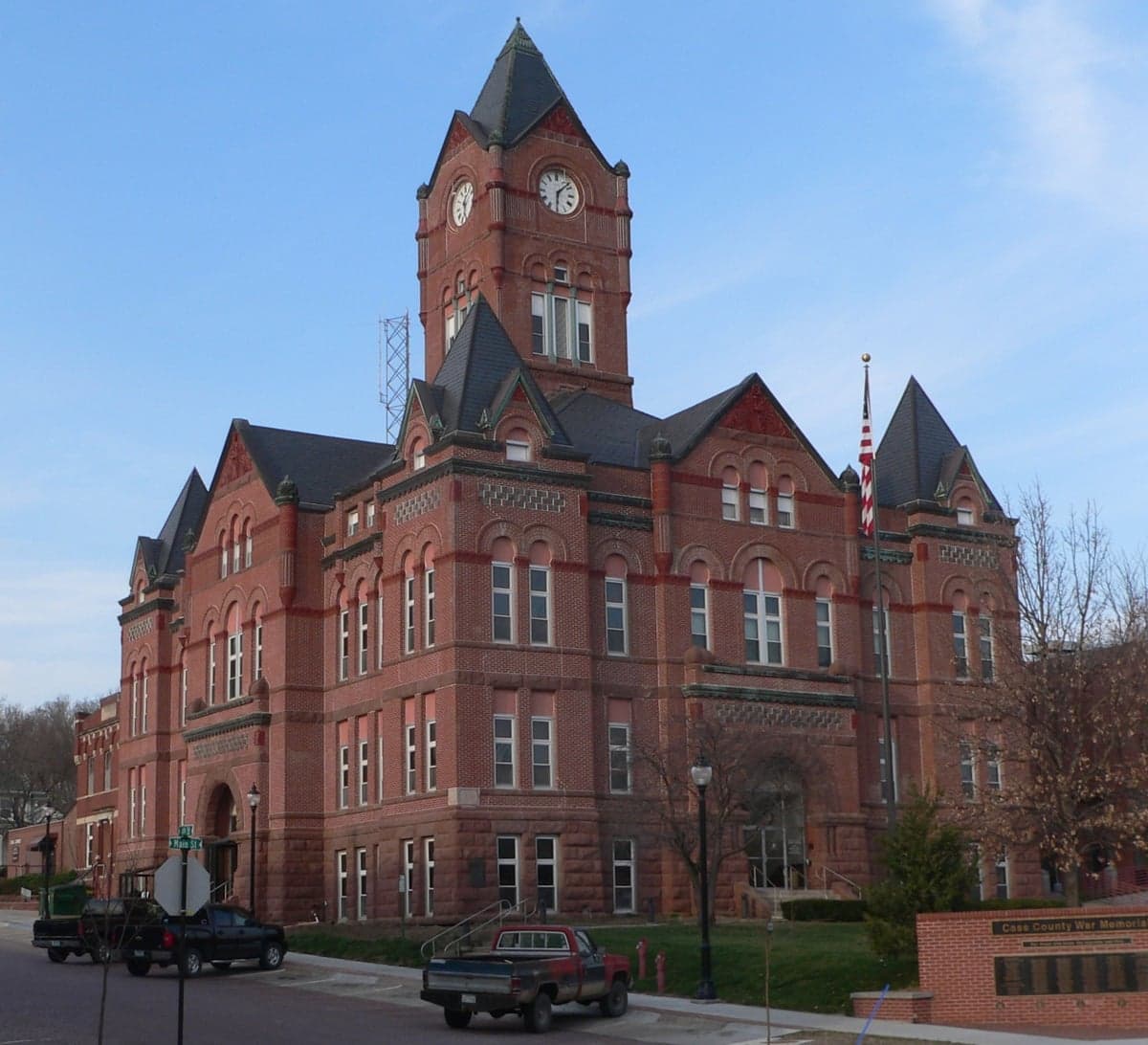
Plattsmouth, the county seat and largest municipality (population roughly 6,500), anchors the county’s eastern edge along the Missouri River. Daily life here centers on a walkable historic downtown with the Cass County Courthouse, local restaurants, and the Plattsmouth Marina, while the Plattsmouth Community Schools system serves roughly 1,600 students. The town’s proximity to Highway 75 makes it a practical choice for commuters to Offutt Air Force Base or downtown Omaha (about 20 minutes north). Louisville (pop. ~1,200), located where the Platte River meets the Missouri, offers a quieter river-town feel with the Louisville State Recreation Area and a small but active Main Street. Weeping Water (pop. ~1,000) sits in the county’s western half and is known for its limestone quarry heritage and the Weeping Water Valley, attracting residents who want a slower pace but still need access to U.S. Highway 34 for commuting to Lincoln (about 30 minutes west).
Smaller towns & rural pockets
Cass County’s smaller communities each carry distinct identities. Elmwood (pop. ~650) and Murdock (pop. ~270) lie in the county’s interior, surrounded by row-crop farmland; both are served by the Elmwood-Murdock Public Schools, a single K-12 district that draws families specifically for its small class sizes and high test scores. Avoca (pop. ~240) and Nehawka (pop. ~200) are unincorporated villages where grain elevators and volunteer fire departments define the landscape, and where a three-bedroom house can still be found for under $150,000. The unincorporated area of Manley (pop. ~170) is little more than a crossroads with a post office, appealing to buyers who want a few acres without being fully isolated. These rural pockets lack retail and dining options — residents drive to Plattsmouth, Weeping Water, or even Nebraska City for groceries and services — but offer land prices and property taxes well below the county median.
Cost & lifestyle range
The cost spread across Cass County is significant. At the higher end, newer subdivisions on Plattsmouth’s north side and lakefront properties near Louisville’s Lake 1 and Lake 2 push home values above $350,000, with some custom-built homes exceeding $500,000; these areas attract professionals who want a rural feel with a 25-minute commute to Omaha. At the lower end, fixer-uppers in Nehawka or Avoca can sell for $80,000 to $120,000, and rental rates in those villages often fall below the county’s $987 median rent. Property taxes in Cass County are moderate by Nebraska standards (roughly 1.7% of assessed value), but the levy varies by school district — Elmwood-Murdock and Weeping Water districts tend to have slightly lower mill levies than Plattsmouth’s. Amenities follow the same gradient: Plattsmouth and Louisville offer grocery stores, pharmacies, and fast food, while residents of Elmwood or Avoca rely on convenience stores and weekly trips to larger towns. Internet access also varies — fiber is available in Plattsmouth and parts of Louisville, but rural addresses east of Weeping Water may still rely on DSL or fixed wireless.
Cass County best suits buyers and renters who want Nebraska’s lowest cost-of-living tier without sacrificing access to a major metro area. Commuters who can tolerate a 30-minute drive, families seeking a specific small school district, and retirees looking for a quiet river town or a few acres of farmland all find a niche here. The county’s trade-off is clear: lower housing costs and open space in exchange for fewer local jobs and a longer drive to shopping, healthcare, and entertainment.

Crime in Cass County
Generally safer than 65% of comparable U.S. locations.
Violent CrimeViolent Crime Analysis
Property CrimeProperty Crime Analysis
Crime Analysis
Cass County, Nebraska, presents a mixed safety profile for prospective residents. The county’s violent crime rate of 219.7 per 100,000 residents is notably lower than the national average, but its property crime rate of 1,391.6 per 100,000 exceeds both state and national benchmarks. This means that while the risk of a violent encounter is relatively low, the likelihood of theft, burglary, or vehicle break-ins is a tangible concern, particularly in areas with easier access to the Omaha metro corridor.
Crime in context
To understand Cass County’s numbers, it helps to compare them directly. The national violent crime rate sits at roughly 380 per 100,000, making Cass County’s 219.7 figure about 42% lower — a statistically significant margin. However, the property crime picture is less reassuring. The national property crime rate is approximately 1,954 per 100,000, so Cass County’s 1,391.6 is below that national figure. But when measured against Nebraska’s statewide property crime rate of roughly 1,200 per 100,000, Cass County runs about 16% higher. This discrepancy is driven largely by incidents in the county’s more populated nodes like Plattsmouth and Louisville, where proximity to Interstate 80 and commuter traffic creates more opportunity for theft from vehicles and storage sheds. In contrast, rural towns like Elmwood and Murdock report far fewer property incidents, though their small populations mean a single burglary can spike the per-capita rate.
What residents experience
Daily life in Cass County is shaped by this property-crime reality. Residents in unincorporated areas and smaller villages like Nehawka and Avoca often leave vehicles and outbuildings unlocked, a habit that carries risk. The Cass County Sheriff’s Office, which patrols most of the county outside Plattsmouth’s city limits, emphasizes target-hardening: locking doors, installing motion lights, and logging serial numbers. Violent crime is rare and typically domestic in nature, not random. The county’s judicial district, part of Nebraska’s Second Judicial District, has not adopted the progressive prosecutorial policies seen in some urban jurisdictions. Local judges and the county attorney maintain a conventional approach to sentencing, which means offenders convicted of burglary or theft face meaningful consequences. This is a meaningful distinction from nearby Douglas County (Omaha), where a more progressive district attorney’s office has drawn criticism for declining to prosecute certain low-level property offenses, effectively exporting criminal activity into surrounding counties like Cass.
Neighborhood-level variation
Safety varies noticeably within Cass County. Plattsmouth, the county seat and largest town, sees the bulk of reported property crime, concentrated around the downtown commercial corridor and the Highway 34/75 junction. The historic residential districts east of the Missouri River bluff are quieter but not immune. Louisville, with its popular state recreation area, experiences seasonal spikes in vehicle break-ins and campsite theft during summer months. The safest pockets are the unincorporated farming communities and the village of Greenwood, where population density is low and neighborly watchfulness is high. For families considering relocation, the key takeaway is that Cass County offers a generally safe environment for raising children, provided newcomers adopt basic property-security habits and remain aware that the county’s proximity to Omaha’s progressive justice system can attract property criminals seeking softer targets.
* Values derived from national, state, county, city and local statistics and may differ in a specific area. Last updated: 2026-07-09T20:35:10.000Z
Narrative content on this page is AI-generated and may contain mistakes. Verify any details that matter before acting on them.
ReloMaps may earn a commission from affiliate links at no extra cost to you.

