Photo: Wikipedia
Political ClimatePolitical Climate in Cass County
Showing district-level results — no local-only data available.
Local Political AnalysisPolitical Analysis of Cass County
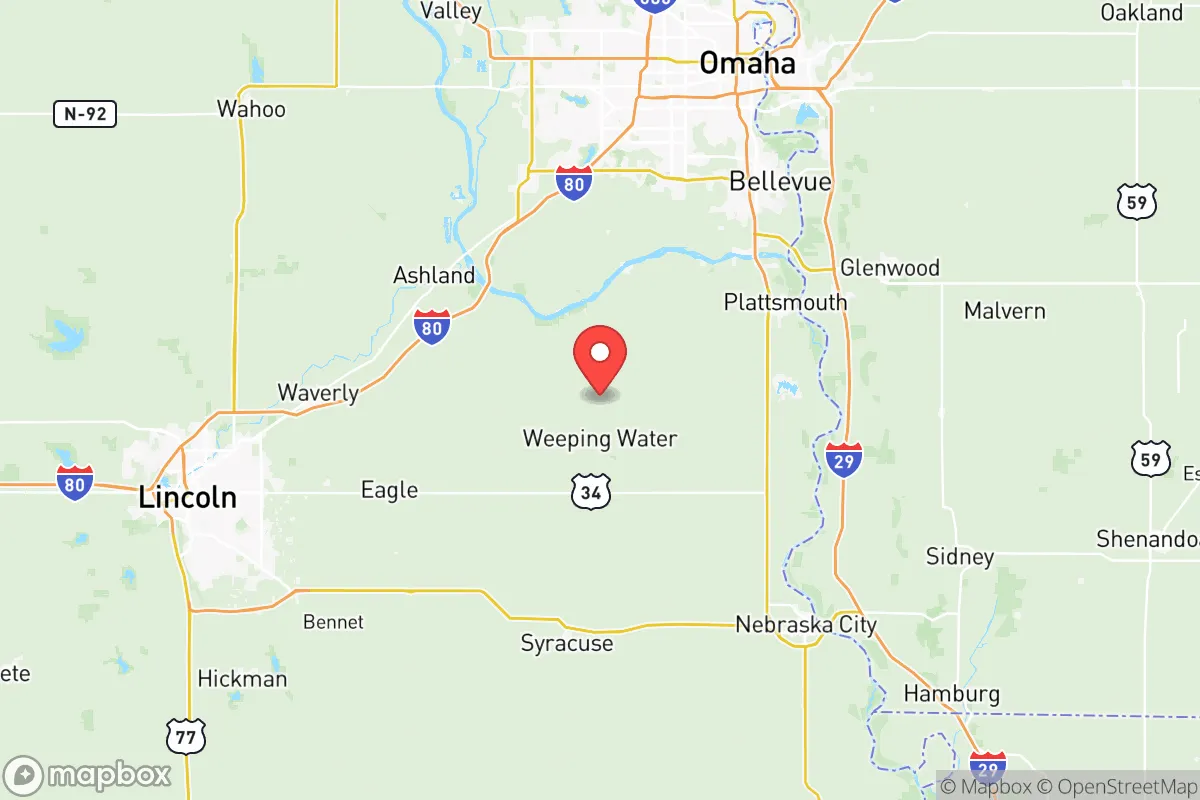
Cass County, Nebraska, has a political climate that is reliably Republican but notably more moderate than the deep red of the state as a whole. With a Cook Partisan Voting Index (PVI) of R+6, the county leans Republican by about 4 points less than Nebraska’s statewide PVI of R+10. This isn’t a fluke of one election — it reflects a long-standing trend where Cass County acts as a subtle blue dot on Nebraska’s red map, driven largely by its proximity to Omaha’s Douglas County and the influx of commuters who bring more independent and Democratic-leaning views. The county has been slowly edging leftward over the past decade, especially in precincts near the Sarpy County line and along the Highway 75 corridor.
How it compares
Nebraska as a whole is one of the most solidly Republican states in the Union, with its rural western counties voting upwards of 80% for GOP presidential candidates. Cass County, by contrast, is more mixed. The eastern towns — particularly Plattsmouth, the county seat, and Louisville — show the most Republican strength, often delivering 65-70% of the vote for GOP candidates. But as you move west toward the growing communities of Eagle, Elmwood, and the bedroom suburb of Weeping Water, the margins tighten significantly. In 2024, precincts around Greenwood and South Bend actually swung slightly toward Democratic candidates, a rare occurrence in rural Nebraska. The county’s R+6 rating, compared to the state’s R+10, means a Democrat running a strong suburban campaign can expect about 46-47% of the vote here in a good year — think Ben Nelson’s Senate runs — while a statewide Republican typically loses 7-9% of their base in Cass County compared to, say, Lincoln County or Dawson County. This isn’t a true battleground, but it’s the kind of place where non-partisan local races (school board, county commission) can genuinely be competitive if a moderate Democrat or independent picks the right issues.
What this means for residents
For conservative residents, Cass County remains a comfortable place to live politically. Republicans hold every countywide office, and local GOP events in Plattsmouth draw strong crowds. State representatives from the county consistently vote with the conservative majority in the unicameral legislature. But there’s a notable absence of the hardline rhetoric you’d hear in western Nebraska — candidates here tend to focus more on property taxes, local infrastructure, and school funding than on cultural flashpoints. For liberal residents, it’s not easy, but it’s not hostile either. An active Democratic Party presence exists in the county, especially around Louisville and Weeping Water, where a handful of progressive-leaning precincts can flip close county commissioner races. The real divide isn’t between conservative and liberal — it’s between the traditional rural mindset of towns like Plattsmouth and the newer suburban ethos spreading from Gretna and Papillion into the western half of the county. Those newer arrivals tend to be moderate to liberal on social issues but still fiscally cautious, which is why the county’s PVI has moved from R+11 a decade ago to R+6 today. If that trend continues, Cass County could be a true tossup county by the early 2030s — though that’s a long way off.
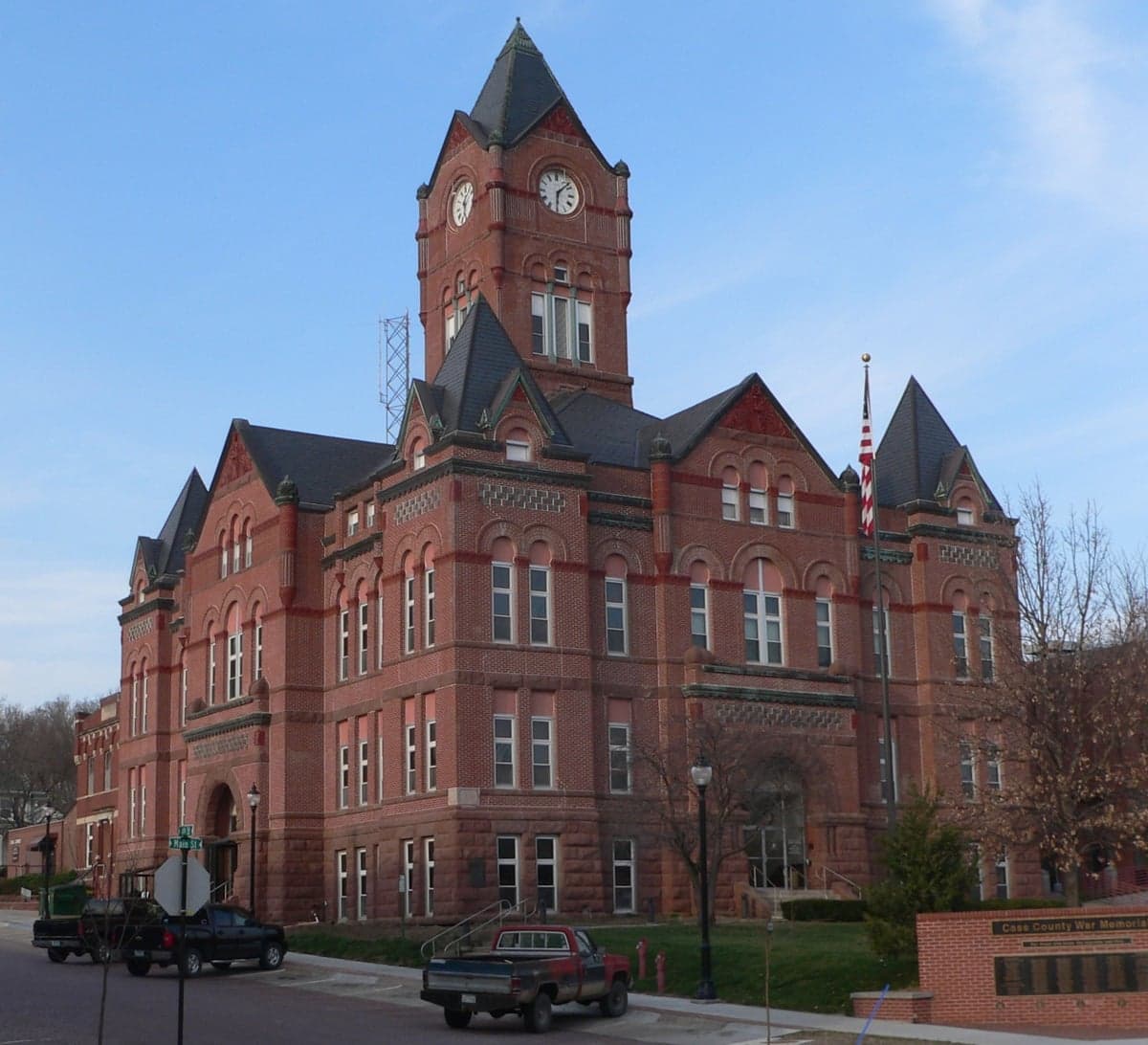
Culturally, the political climate is influenced by the county’s identity as an eastern Nebraska transition zone. You’ll see “In God We Trust” signs on the courthouse lawn, but also “Black Lives Matter” signs on some front porches in Weeping Water. The county has resisted the “Second Amendment sanctuary” movement that swept western Nebraska, and local school boards have avoided most curriculum wars. For a resident, the practical effect is that politics rarely dominates daily life; people vote, but they still wave to each other at the Plattsmouth farmer’s market regardless of bumper stickers. The big policy distinction is property taxes — Cass County’s reliance on agricultural land valuation means Republican and Democratic officials alike push for income tax cuts over property tax relief, a nuance that grates on homeowners but keeps the political temperature low. Overall, Cass County represents Nebraska’s moderate, face-to-face political tradition in a state that’s increasingly divided by geography and ideology.

State Political ClimatePolitical Climate in Nebraska
State Political AnalysisPolitical Environment in the State
Nebraska is a comfortably Republican state with a Cook Partisan Voting Index of R+10, meaning it typically votes about 10 points more Republican than the nation as a whole. The dominant coalition is a mix of rural conservatives, agricultural interests, and suburban voters in and around Omaha and Lincoln, but the state has shown a notable rightward shift over the past two decades — it voted for Donald Trump by 19 points in 2020 and by 25 points in 2024, a stark contrast to the 12-point margin George W. Bush won it by in 2004. The GOP controls every statewide executive office, holds a supermajority in the Nebraska Legislature (a unique nonpartisan unicameral), and reliably sends two Republican senators to Washington, though the state’s 2nd Congressional District (Omaha metro) has been competitive and flipped between parties since 2012.
Urban vs. rural divide
The political map of Nebraska is sharply divided between the two major metro anchors and the vast rural expanse. Omaha (Douglas County) is the state’s Democratic stronghold, powering the blue lean of the 2nd District; it voted for Joe Biden by 3 points in 2020 and for Kamala Harris by 5 in 2024. Lincoln (Lancaster County) is more moderate but still leans blue, voting for Biden by 7 points in 2020 and flipping for Harris by 2 in 2024 — a sign of its Democratic shift as the University of Nebraska-Lincoln grows. Beyond the Platte River, the entire state outside these two counties is deeply red. Scottsbluff and the Panhandle counties routinely vote 70-80% Republican, while Grand Island (Hall County) and Columbus (Platte County) are solidly conservative and drive the state’s agricultural coalition. The only notable exception is Thurston County (home to the Winnebago and Omaha reservations), which leans Democratic due to Native American voting patterns. The suburbs immediately around Omaha — think Sarpy County (Bellevue, Papillion) and western Douglas County — trend Republican but have gotten slightly more competitive as Omaha’s urban center pushes outward.
Policy environment
Nebraska’s policy environment is straightforward and conservative. There is no state income tax on Social Security benefits, and the state has been aggressively cutting its top income tax rate — currently 5.58% and dropping to a flat 3.99% by 2027 under LB 754 passed in 2023. Property taxes are high (among the top 10 in the nation as a percentage of home value), which is a perennial complaint. There is no sales tax on groceries. The regulatory posture is business-friendly: Nebraska is a right-to-work state with no state minimum wage above the federal floor (though a 2022 ballot initiative raised it to $15 by 2026). Education policy is decentralized; the state has a strong school choice movement, with a new Education Savings Account program (LB 753, 2023) allowing $1,000 in state funds per student for private school expenses. Election laws are standard: no-excuse absentee voting, voter ID (implemented in 2024 after a 2022 ballot measure), and early voting periods. Healthcare policy is mixed: the state did not expand Medicaid through traditional means but did so via a 2018 ballot initiative (Medicaid expansion took effect in 2020). Abortion is currently legal until fetal viability (about 20 weeks) under a 2023 legislative compromise (LB 574), which also banned gender-affirming surgery for minors. Gun laws are permissive: permitless carry for adults, no state-level assault weapons ban, and a "stand your ground" standard under common law (codified in 2023 via LB 77, which also lowered the concealed carry age to 18).
Recent policy direction
The trajectory of Nebraska’s recent legislation shows a clear conservative push, particularly on social and cultural issues. Gun and self-defense law: LB 77 (2023) made Nebraska a permitless carry state and codified "stand your ground" — no duty to retreat in any place you are lawfully present. Parental and education rights: LB 753 (2023) created the ESA program, and in 2024 the legislature passed a "Parents’ Bill of Rights" (LB 1215) requiring schools to notify parents of curriculum changes and health services. Speech: In 2021 Nebraska banned critical race theory in K-12 schools (LB 390), but the law is largely symbolic with no enforcement mechanism. Privacy and surveillance: No major state-level privacy law akin to California’s; the state relies on federal standards. Medical and bodily autonomy: LB 574 (2023) banned abortion after 12 weeks (with exceptions for rape, incest, and maternal health) and banned gender-affirming surgeries for minors; a subsequent 2024 attempt to ban abortion entirely was filibustered to death. Property rights: Nebraska is a "closed shop" for wind and solar development — counties can regulate renewable energy siting, but no statewide preemption. Carbon pipeline projects (like the controversial Summit Carbon Solutions line through the eastern part of the state) have faced heavy local opposition, with regulatory authority vested in the Nebraska Public Service Commission. Taxation: LB 754 (2023) set the path to a flat income tax by 2027, and a 2024 property tax relief bill (LB 388) added a $1 billion credit over two years. Voting and ballot access: The 2022 voter ID amendment passed with 65% support; implementing legislation (LB 514) required a valid government ID for in-person or mail voting, with free ID available from the DMV. The state also banned ballot harvesting (only the voter or a family member may return a ballot) and requires all mail ballots to be received by election day rather than postmarked.
Civil unrest & political movements
Nebraska has been relatively quiet compared to coastal states, but there have been notable flashpoints. George Floyd protests in 2020 saw moderate demonstrations in Omaha (including a confrontation at the Douglas County Courthouse) and smaller rallies in Lincoln, but they were not sustained or destructive. Rural resistance to carbon pipelines has been the most active political movement in recent years — landowners in eastern Nebraska (especially Stanton County) have formed the "Nebraskans for Property Rights" group, suing to prevent Summit Carbon Solutions from using eminent domain on private land. This has unified both conservative and left-leaning landowners against the project. Immigration politics has been a low-key issue; the state does not have a sanctuary city policy, and Omaha’s growing immigrant community (driven by Sudanese, Mexican, and Salvadoran populations) has not generated major political conflict. Election integrity: After the 2020 election, a Nebraska-based group called "Nebraska Fight" pushed for a forensic audit in a handful of red counties, but none resulted in substantial changes. The 2024 voter ID law saw no major issues during its first implementation. Pro-choice activism: After LB 574 passed, a "Women’s March on the Capitol" drew about 2,000 people in Lincoln — notable but not disruptive. Right-wing militias: A small Oath Keepers presence exists in western Nebraska, but no major incidents.
Projection
Over the next 5-10 years, expect Nebraska to continue its rightward drift, but the exact pace depends on two demographic patterns. First, in-migration from deep-blue states is increasing in Omaha’s suburbs (especially Sarpy County and Gretna), but these newcomers are often moderate Republicans or families seeking lower costs, not left-leaning transplants — they reinforce the GOP. Second, rural depopulation continues, with the Panhandle and Sandhills counties losing population, reducing their electoral weight. The net effect is that the rural-urban balance stays stable, but the urban counties (Douglas and Lancaster) may grow slightly faster, possibly making the 2nd District more competitive in the long run — though the state’s structural bias is baked in. The biggest wildcard is the carbon pipeline fight: if the legislature bans eminent domain for private pipelines (a bill is pending in 2025), it could hurt Republican state legislative incumbents who favor the project. Otherwise, expect more cuts to income taxes, continued school choice expansion, and a slow push on abortion restrictions — but a total ban seems unlikely with the 12-week compromise in place. A new resident moving in now should expect a state that remains solidly Republican, with a practical, moderate-conservative governance style, but where city dwellers in Omaha and Lincoln will feel increasingly isolated from the statewide political culture.
Bottom line for a new resident: If you’re a conservative, you’ll find Nebraska deeply aligned with your values — low taxes (and getting lower), strong firearm rights, school choice, and a state government that moves in your direction. If you’re a liberal, you’ll find a state that is politically hostile but not oppressive — Omaha and Lincoln offer blue islands with cultural amenities, but state-level policy will frustrate you, and you’ll need to accept that your vote matters mostly in the 2nd District. Either way, expect a state that favors personal freedom in terms of property and economics, but leans into social conservatism on education and health. The practical reality is that politics doesn’t dominate daily life here the way it does in swing states — most Nebraskans just want to be left alone, and the government largely obliges.
* Values derived from national, state, county, city and local statistics and may differ in a specific area. Last updated: 2026-07-09T20:35:10.000Z
Narrative content on this page is AI-generated and may contain mistakes. Verify any details that matter before acting on them.
ReloMaps may earn a commission from affiliate links at no extra cost to you.

