Photo: Wikipedia
Demographics of Cass County
Affluence Level in Cass County
A middle-class area roughly in line with national averages across income, home values, education, and employment.
People of Cass County
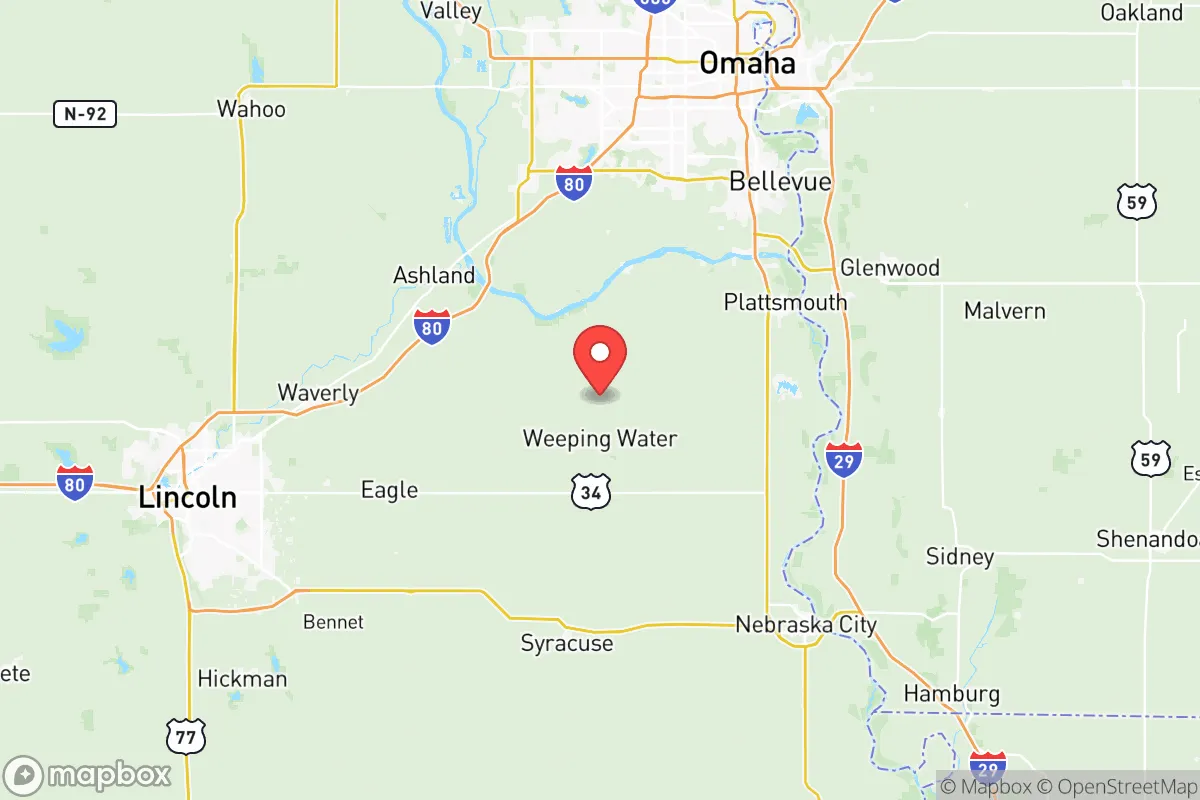
Cass County, Nebraska, today is a predominantly white, rural-suburban community of 26,963 residents where 91.1% of the population identifies as white and only 0.5% are foreign-born. The county’s character is defined by its position as a quiet bedroom community for Omaha and Lincoln commuters, with a distinctly conservative-leaning, family-oriented culture centered in towns like Plattsmouth, Weeping Water, and Louisville. Unlike Nebraska’s more diverse urban counties, Cass County remains one of the state’s least ethnically varied areas, with a Hispanic population of just 3.9% and negligible Black (0.2%), East/Southeast Asian (0.3%), and Indian subcontinent (0.0%) communities. The county’s identity is rooted in its 19th-century pioneer settlement patterns, and its modern growth is driven almost entirely by domestic migration from nearby metropolitan areas rather than international immigration.
Settlement & growth (pre-1960)
Before American settlement, the land that is now Cass County was inhabited by the Omaha, Otoe-Missouria, and Pawnee nations, who used the Platte and Missouri river valleys for hunting and seasonal agriculture. The area was part of the Louisiana Purchase of 1803, and the first permanent American presence came with the establishment of Fort Atkinson (just north of present-day Fort Calhoun) in 1819, though Cass County itself saw little Euro-American activity until the 1850s. The county was formally organized in 1855, carved from territory ceded by the Omaha Tribe in the 1854 Treaty with the Omaha, which opened the region to homesteading.
The first major wave of settlers arrived in the 1850s and 1860s, primarily from the Upper Midwest and the Ohio River Valley. These were largely of English, Scots-Irish, and German stock, drawn by the promise of fertile farmland along the Missouri River floodplain and the Platte River valley. Plattsmouth, founded in 1855 as the county seat, became the primary landing point for riverboat traffic and the hub of early commerce. The town’s location at the confluence of the Platte and Missouri rivers made it a natural gateway for settlers moving west, and by 1880 Plattsmouth had grown to over 2,000 residents, serving as a steamboat stop and railroad junction for the Burlington and Missouri River Railroad.
German immigrants formed a distinct cluster in the county’s interior. Weeping Water, settled in the 1860s, became a center for German Lutheran and Catholic families who farmed the rolling hills and established limestone quarries that would later define the town’s economy. The German influence remains visible today in Weeping Water’s architecture, church steeples, and the annual Weeping Water Valley Festival. Similarly, Louisville, founded in 1857 along the Platte River, attracted a mix of German and Irish settlers who built a thriving agricultural community centered on corn, wheat, and livestock. The town’s name itself reflects the Kentucky origins of some early settlers, though the German presence was dominant by the 1870s.
A smaller but notable wave of Czech and Polish immigrants arrived in the 1880s and 1890s, drawn by railroad construction jobs and the availability of cheaper land in the county’s southern townships. Greenwood, founded as a railroad stop in 1869, became a modest Czech settlement, with families establishing small farms and a Catholic parish that served the community until the mid-20th century. Elmwood, settled in the 1860s, attracted a mix of English and German farmers, but its growth remained slow due to its distance from major rail lines. By 1900, Cass County’s population had reached roughly 21,000, almost entirely white and native-born, with foreign-born residents making up less than 10% of the total.
The early 20th century brought little demographic change. The county’s population peaked at around 22,000 in 1910 and then began a slow decline as agricultural consolidation and the Dust Bowl pushed younger generations toward Omaha and Lincoln. Murray, a small farming community founded in the 1870s, saw its population shrink from 600 in 1920 to under 400 by 1950. Avoca, settled by Swedish and German families in the 1860s, similarly declined as the railroad era waned. The post-World War II period saw a modest rebound as returning veterans took advantage of the GI Bill to buy farms, but the county remained overwhelmingly rural and white through the 1960 census, which recorded a population of 23,900 with a foreign-born share of just 1.2%.
Modern era (post-1965)
The 1965 Hart-Cellar Act had virtually no impact on Cass County. Unlike Nebraska’s urban counties—Douglas (Omaha) and Lancaster (Lincoln)—which saw modest increases in Asian and Hispanic immigration after 1965, Cass County remained almost entirely untouched by post-1965 immigration flows. The county’s foreign-born population today stands at just 0.5%, one of the lowest rates in the state and a fraction of the national average of 13.7%. The few foreign-born residents who do live in Cass County are primarily European-born (German, British, and Canadian retirees) or Hispanic migrants working in agriculture and meatpacking, though the latter group remains very small at 3.9% of the total population.
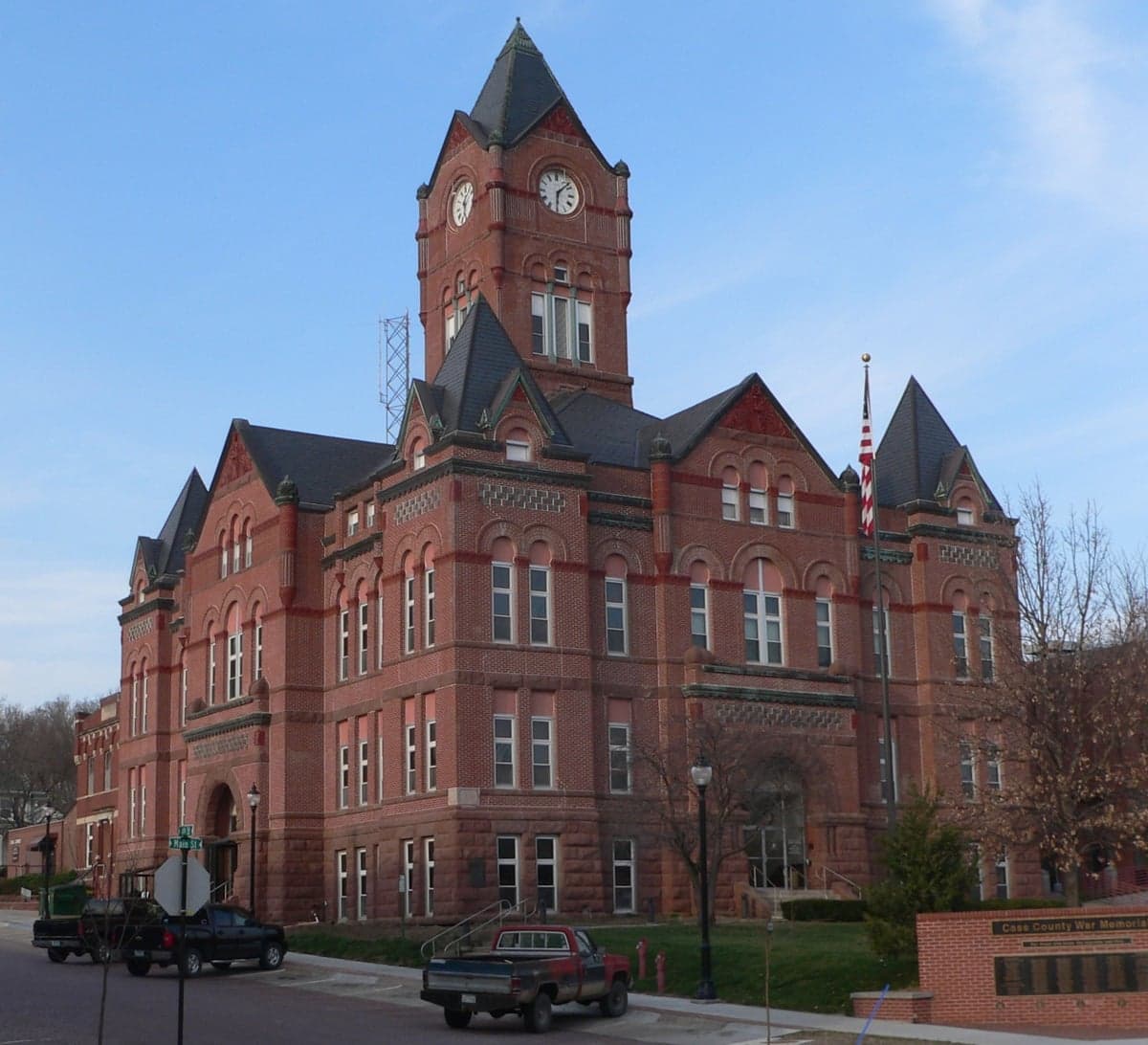
The major demographic shift in Cass County since 1965 has been domestic, not international. Beginning in the 1970s, the county began attracting white, middle-class families from Omaha and Lincoln who sought larger lots, lower taxes, and a slower pace of life while still maintaining access to urban jobs. Plattsmouth became the primary beneficiary of this suburbanization, growing from 4,900 residents in 1970 to 6,500 by 2000, as new subdivisions replaced farmland along Highway 34 and Highway 75. The town’s historic downtown, with its 19th-century brick storefronts and courthouse square, became a selling point for families looking for small-town charm with Omaha just 25 minutes away.
Louisville and Weeping Water experienced more modest growth, each adding a few hundred residents between 1970 and 2000, as their distance from Omaha (30-40 minutes) limited commuter appeal. Instead, these towns retained their agricultural character, with many residents working in farming, the nearby limestone quarries, or the ethanol plant in Mead (just across the Saunders County line). Eagle, a tiny village of 400 people in the county’s northwest corner, saw a small influx of Lincoln commuters after the completion of Highway 77 in the 1990s, but its growth was constrained by the lack of municipal water and sewer infrastructure.
The 2000s and 2010s brought a second wave of suburbanization, this time driven by Omaha’s expanding exurbs. South Bend, a village of just 100 people in 2000, doubled in size by 2020 as new subdivisions sprouted along the Platte River south of Omaha. Alvo, a tiny community of 130 residents, saw similar growth as families sought affordable land within 30 minutes of Omaha’s jobs. However, this growth has been almost entirely white and native-born. The county’s Black population remains negligible at 0.2%, and its East/Southeast Asian population is just 0.3%, concentrated in a handful of families in Plattsmouth and Louisville who are mostly second- and third-generation descendants of Chinese and Vietnamese refugees who initially settled in Omaha.
The Hispanic population, while still small at 3.9%, has grown from near-zero in 1990, driven primarily by Mexican and Central American workers in the county’s agricultural and construction sectors. Most of these families live in Plattsmouth or in rural mobile home parks near the county’s limestone quarries and gravel pits. The community is dispersed rather than concentrated in a single enclave, and there is no Spanish-language church or ethnic grocery store in the county, reflecting the group’s small size and recent arrival. The Indian subcontinent population is effectively zero, with no recorded residents in the 2020 census.
The future
Cass County’s population is projected to grow slowly over the next 10-20 years, reaching roughly 28,000-30,000 by 2040, driven entirely by domestic migration from Omaha and Lincoln. The county’s racial and ethnic composition is unlikely to change dramatically. The white share of the population, currently 91.1%, will likely decline slightly to around 85-87% as the Hispanic share grows to 6-8% and the East/Southeast Asian share edges up to 1-2%, primarily through second-generation families moving from Omaha’s urban core. The foreign-born share will remain below 2%, as the county lacks the industrial or agricultural labor demand that draws immigrants to Nebraska’s western counties (e.g., meatpacking plants in Lexington or Grand Island).
The most significant demographic trend is the aging of the county’s existing population. Cass County’s median age of 42.3 is higher than the national median of 38.8, and the share of residents over 65 (19.2%) is growing as younger adults move to Omaha and Lincoln for college and careers. Towns like Weeping Water and Louisville are seeing their school enrollments decline, while Plattsmouth is adding younger families in new subdivisions, creating a demographic split between the county’s aging rural villages and its growing suburban fringe. The county’s cultural identity is likely to remain conservative, family-oriented, and predominantly white, with little pressure toward the diversity seen in Nebraska’s urban counties.
For someone moving in now, Cass County offers a stable, low-crime, low-tax environment with strong schools in Plattsmouth and Louisville, easy access to Omaha’s jobs and amenities, and a population that is overwhelmingly native-born and English-speaking. The trade-off is a lack of ethnic diversity, limited cultural amenities, and a social fabric that can feel insular to newcomers who are not white or not Christian. The county is not becoming more diverse in any meaningful sense; it is slowly suburbanizing while retaining its 19th-century demographic character. For families seeking a quiet, safe, and homogeneous community within commuting distance of a major city, Cass County fits that description precisely. For those seeking diversity or international influences, it does not.

* Values derived from national, state, county, city and local statistics and may differ in a specific area. Last updated: 2026-07-09T20:35:10.000Z
Narrative content on this page is AI-generated and may contain mistakes. Verify any details that matter before acting on them.
ReloMaps may earn a commission from affiliate links at no extra cost to you.

