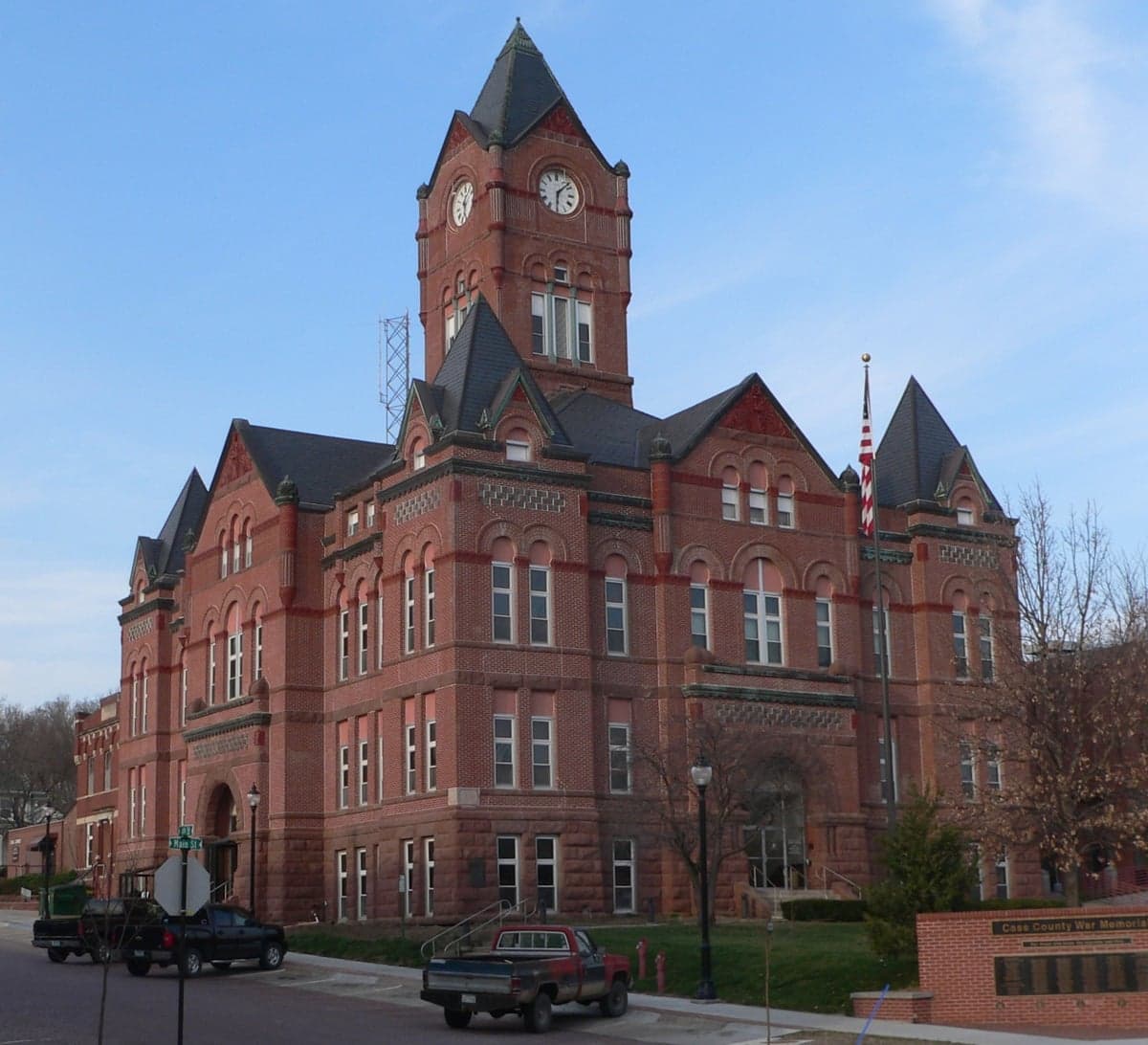
Photo: Wikipedia
Personal Sovereignty in Cass County
Viable for self-reliance. Generally workable, though some barriers may limit total independence.
What does Personal Sovereignty tell us?
Personal Sovereignty measures your capacity for self-reliance and independence with minimal government friction. Higher scores mean fewer barriers between you and the way you want to live... but it assumes you have the space you need and good neighbors.
What does this tell us?
Personal Sovereignty measures your capacity for self-reliance and independence with minimal government friction. Higher scores mean fewer barriers between you and the way you want to live... but it assumes you have the space you need and good neighbors.
State Policy
Energy independence: Importer (35% of energy produced in-state)
Personal Liberty
Homesteading

Personal Liberty Analysis
Cass County, Nebraska, offers a notably high degree of personal sovereignty, particularly for those seeking a lower regulatory burden than what is found in the state's urban cores like Omaha or Lincoln. The county's political culture leans conservative, with a strong emphasis on local control, limited government intervention, and individual responsibility. For single individuals and families prioritizing autonomy, Cass County presents a landscape where self-reliance is not just tolerated but expected, with tax policies, gun laws, and land-use regulations that generally favor personal freedom over collective mandates.
Tax burden and regulatory posture: How Cass County compares to Nebraska's urban centers
Nebraska's state-level tax burden is moderate, but Cass County benefits from a relatively light local regulatory touch compared to Douglas or Lancaster counties. The county's property tax rate, while not the lowest in the state, is competitive, and there is no local income tax beyond the state levy. Sales tax rates in unincorporated areas and smaller towns like Plattsmouth and Louisville are lower than in larger cities, as these communities often opt out of additional local option sales taxes. Zoning regulations are minimal outside of incorporated towns; in rural areas of the county, such as near Elmwood or Weeping Water, land use is governed by a county-level comprehensive plan that is far less restrictive than urban codes. Building permits are required for new structures but are generally processed quickly and without the bureaucratic hurdles common in metro areas. Business licensing is straightforward, with no special occupational taxes or onerous local fees for home-based enterprises, making the county attractive for entrepreneurs and remote workers seeking a low-friction environment.
Self-defense and gun law specifics: What the Second Amendment landscape looks like in Cass County
Nebraska is a shall-issue state for concealed carry permits, and Cass County's sheriff's office processes applications efficiently, with no local ordinances that exceed state law. The county is home to several shooting ranges and gun clubs, particularly around Plattsmouth and Murray, reflecting a strong firearms culture. Open carry is legal without a permit for individuals 18 and older, and the county has no additional restrictions on magazine capacity or firearm types beyond state statutes. Stand-your-ground laws apply statewide, meaning there is no duty to retreat in any place where a person is lawfully present. For families, this legal framework provides a clear and predictable environment for self-defense, with no local surprises or municipal-level gun control measures. The proximity to Nebraska's more restrictive urban areas makes Cass County a practical choice for gun owners who want to live under a consistent, permissive legal regime while still having access to city amenities within a short drive.
Self-reliance and homesteading viability: Lot sizes, zoning, and off-grid feasibility in Cass County
Cass County is one of the more viable areas in eastern Nebraska for homesteading and off-grid living, particularly in its unincorporated stretches. Minimum lot sizes in agricultural zones are typically 5 to 10 acres, and many parcels near Avoca and Nehawka are available at prices far below those in the Omaha metro. The county's zoning code does not prohibit alternative energy systems like solar panels or wind turbines, though grid-tied setups are more common due to net metering policies from the local electric cooperative. Rainwater collection is legal and unregulated, and composting toilets are permitted with a septic system variance. The county health department requires a standard septic system for any dwelling, but there are no blanket bans on outhouses or graywater systems for non-potable uses. For those seeking a more independent lifestyle, the area around South Bend offers a mix of wooded lots and open farmland, with minimal homeowner association restrictions. The main limitation is the lack of a robust local market for off-grid supplies, meaning most specialized equipment must be sourced from Omaha or Lincoln, but the regulatory environment itself is accommodating.
Personal liberties: Parental rights, medical autonomy, speech, and property in Cass County
Cass County's political culture strongly supports parental rights in education and healthcare decisions. The local school districts, including Plattsmouth Community Schools and Louisville Public Schools, have maintained conservative curricula and have not adopted controversial health or sex education mandates. Medical autonomy is generally respected, with no county-level vaccine mandates or restrictions on alternative treatments, though state-level licensing laws apply to practitioners. Free speech is robustly protected, with no local ordinances limiting political expression or public assembly. Property rights are a cornerstone of the county's identity; eminent domain is rarely used, and there are no rent control measures or burdensome landlord regulations. The county's planning department is known for a "yes, if" rather than "no, because" approach to development, meaning property owners have significant latitude to use their land as they see fit, provided they meet basic safety and health codes. This combination of factors creates an environment where individuals and families can make personal choices with minimal government interference.
Overall, Cass County ranks among the more sovereignty-friendly areas in Nebraska, offering a balance of low taxes, permissive gun laws, and accommodating land-use policies that support self-reliance. While it does not match the extreme libertarian environments of some western states, it provides a practical and accessible option for those who want to live with a high degree of personal freedom while remaining within commuting distance of Omaha and Lincoln. For single individuals and families who prioritize autonomy over convenience, Cass County represents a solid middle ground where personal responsibility is the default, and government intervention is the exception rather than the rule.

* Values derived from national, state, county, city and local statistics and may differ in a specific area. Last updated: 2026-07-09T20:35:10.000Z
Narrative content on this page is AI-generated and may contain mistakes. Verify any details that matter before acting on them.
ReloMaps may earn a commission from affiliate links at no extra cost to you.

