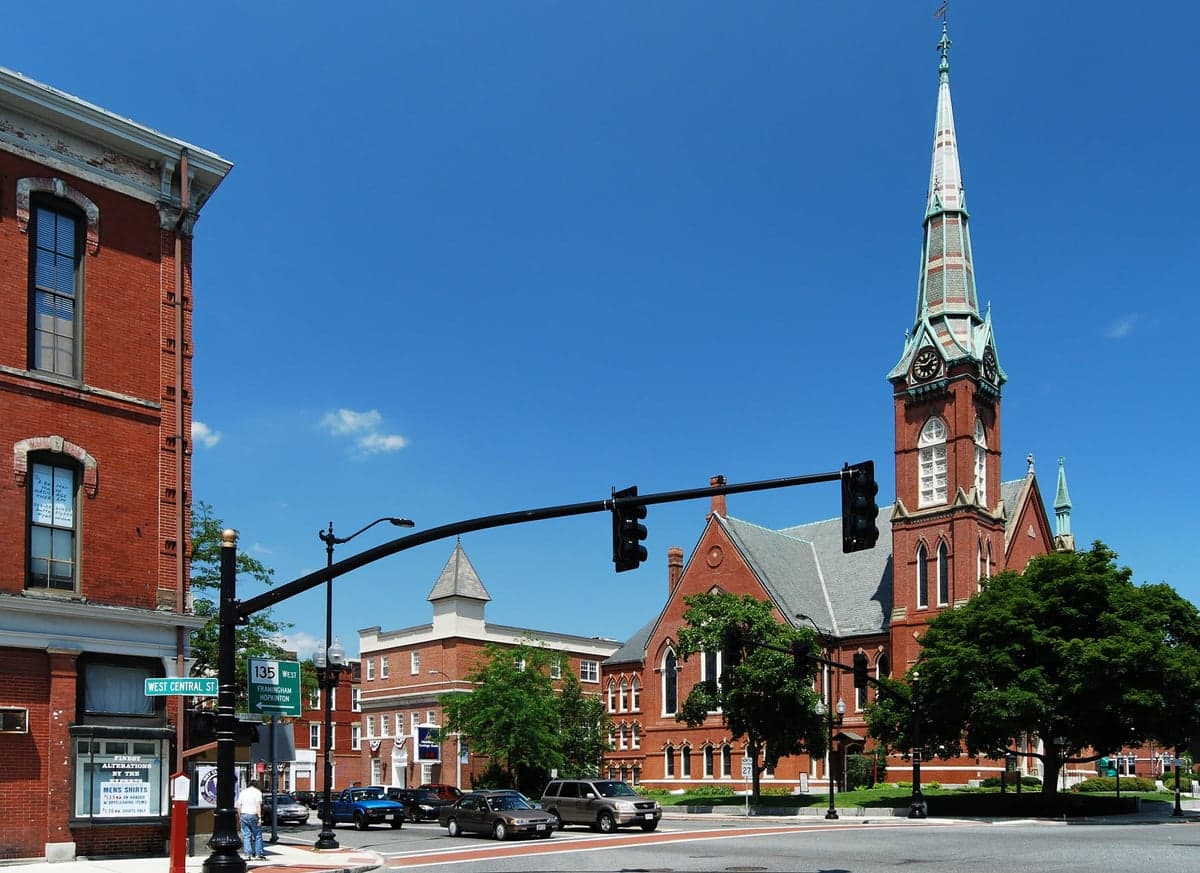
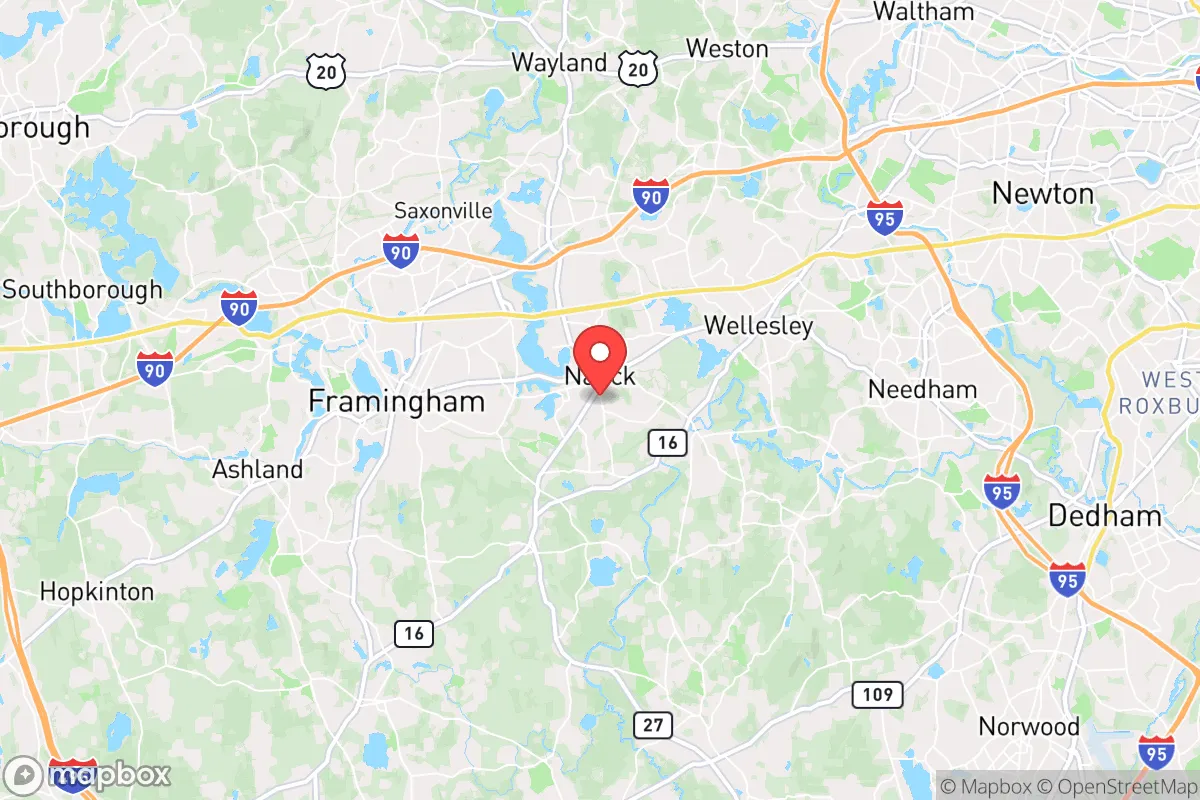
Photo: Wikipedia
Quality of Life in Natick, MA
A high quality of life with strong walkability, manageable living costs, healthy neighborhood signals, and solid amenity access.
What does Quality of Life tell us?
Quality of Life blends cost of living, nearby amenities, socioeconomic signals, and neighborhood character. City-level scores represent the whole municipality; individual neighborhoods can differ.
What does this tell us?
Quality of Life blends cost of living, nearby amenities, socioeconomic signals, and neighborhood character. City-level scores represent the whole municipality; individual neighborhoods can differ.
Cost of Living
81% above national average
The Real Cost of Living in Natick, MA for 2026
| Tier | Individual | Family (4) |
|---|---|---|
| Survival | $23k | $43k |
| Comfortable | $129k | $190k |
| Luxury | $189k+ | $294k+ |
| Elite (Top 5%) | $223k+ | $345k+ |
59%
The Area Signal
A metric tracking the socioeconomic signals of the area.
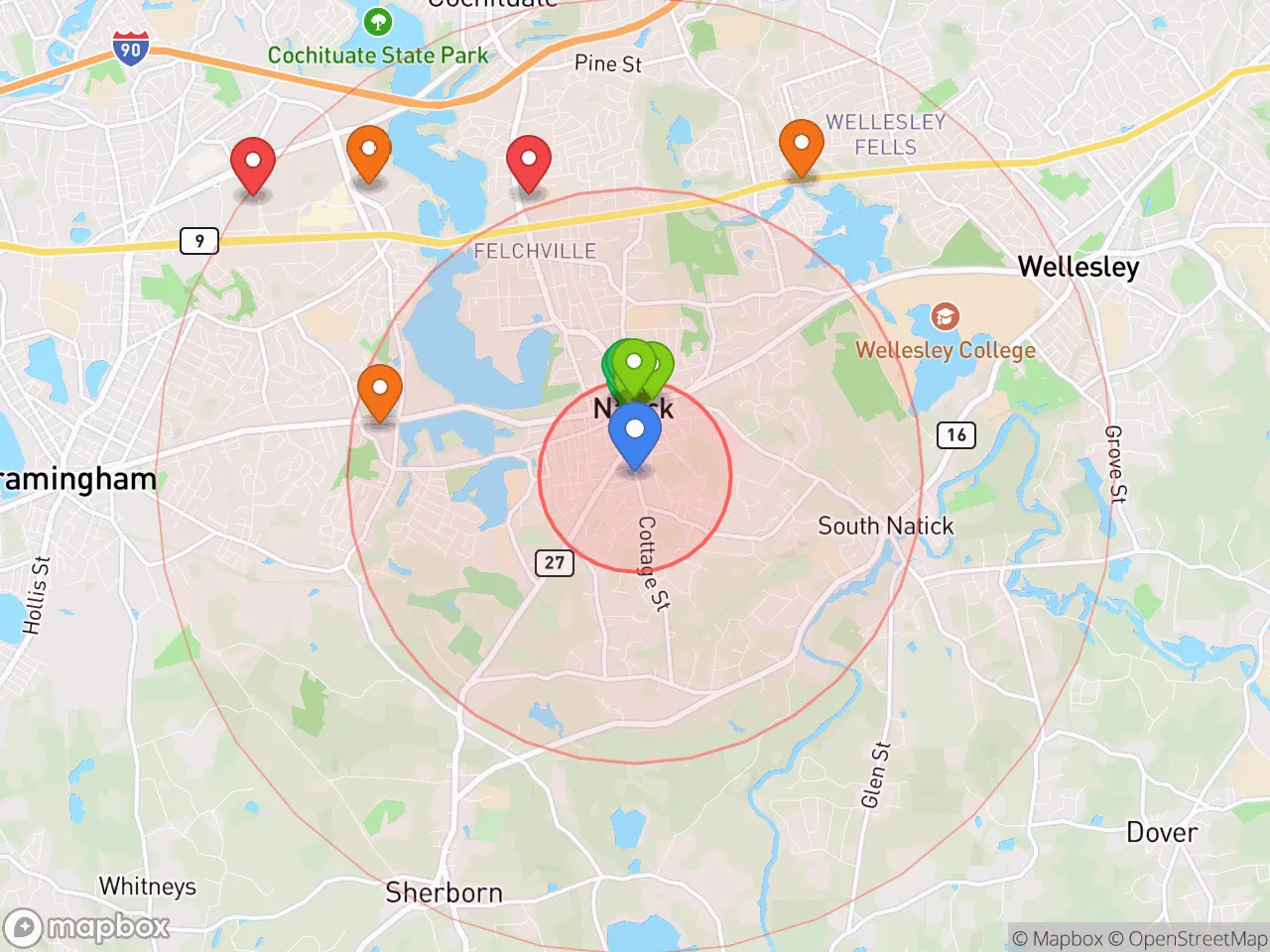
Hobbies
Explore the areaGroceries
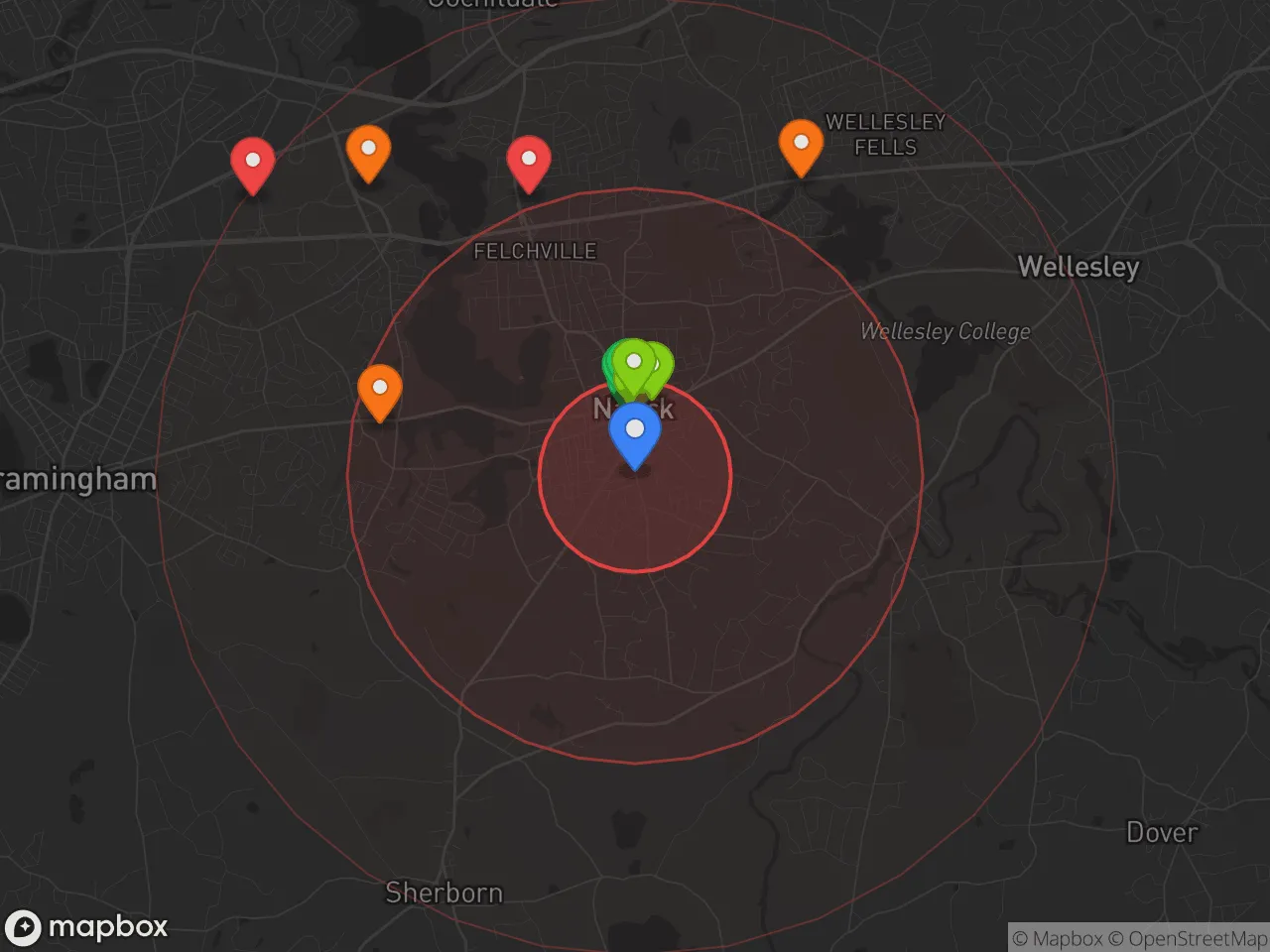
8 within 10 miles
Gas
20 within 10 miles
Hospital
20 within 20 miles
Airport
PDX — Portland International Jetport
Post Office
USPS — 18 Huron Drive, Natick
Critical Amenities
Quality-of-Life Analysis
Natick, Massachusetts, is an affluent Boston suburb where the cost of living index sits at 181—81 percent above the national average—reflecting a community of professionals, executives, and families drawn by top-tier schools and proximity to the Route 128 tech corridor. With a median home value of $755,500 and a median rent of $1,432, the town attracts buyers and renters who prioritize education and commute efficiency over low housing costs. The average commute of roughly 34 minutes places Natick squarely within the outer ring of Greater Boston’s daily workforce, making it a practical choice for those working in Cambridge, Waltham, or downtown Boston.
Cost of living, housing, and affordability compared to neighboring towns
Natick’s cost of living is high by national standards but competitive within MetroWest. The median home value of $755,500 is notably lower than in adjacent Wellesley (median above $1.5 million) or Weston (above $1.8 million), yet higher than in Framingham (median around $520,000). Renters face a median of $1,432, which is below the Boston metro average of roughly $2,100, partly because Natick’s rental stock includes older garden-style apartments and two-family homes. Property taxes in Natick run about $8,500 annually on a median-priced home—moderate for the region—and the town’s overall COL index of 181 is driven primarily by housing (roughly 2.5x the national average) and transportation costs. For buyers, the trade-off is clear: pay a premium for Natick’s school system and commute access, or save 20–30 percent by moving west to Hudson or Marlborough.
What daily life is like for families: schools, amenities, and commute reality
Daily life in Natick revolves around its highly rated public schools—Natick High School ranks among the top 10 percent in Massachusetts—and a walkable downtown centered on Natick Center, which hosts a farmers’ market, the Morse Institute Library, and seasonal events. The town’s 34-minute average commute is realistic for those working along the I-90/I-95 interchange or taking the MBTA Commuter Rail’s Framingham/Worcester line from Natick Center Station into Boston’s South Station (about 35–45 minutes). Amenities include the Natick Mall, one of New England’s largest shopping centers, and the 600-acre Cochituate State Park for kayaking and hiking. The rhythm is suburban but not sleepy: weekday mornings see a steady flow of commuters to the train station, while evenings bring families to the town’s 20+ public parks and the Natick Community Organic Farm. Restaurants like Juniper and The Local serve as neighborhood anchors, and the town’s low violent crime rate (roughly 0.5 per 1,000 residents) reinforces its reputation as a safe, family-oriented community.
Natick is best suited for professionals and families who value school quality, short commutes to MetroWest employment hubs, and a walkable downtown over lower housing costs. Empty-nesters downsizing from larger single-family homes also find traction here, drawn to the town’s condominiums near the commuter rail and the cultural programming at the TCAN (Center for the Arts). Those on a tight budget or seeking a more urban, 24-hour environment will likely find Natick too expensive and quiet; but for households earning $120,000 or more who want a proven school system and a 34-minute door-to-door commute, Natick delivers a reliable, high-quality suburban lifestyle.

Crime in Natick, MA
Lower crime rates than 81% of comparable U.S. locations.
Violent CrimeViolent Crime Analysis
Property CrimeProperty Crime Analysis
Crime Analysis
Natick, Massachusetts, is a generally safe community with crime rates that fall below national averages, though residents should remain aware of property crime trends. The town's violent crime rate of 211.7 incidents per 100,000 residents is significantly lower than the U.S. average of roughly 380 per 100,000, while its property crime rate of 1,026.3 per 100,000 is also below the national figure of approximately 1,950 per 100,000. However, as a suburb of Boston within the broader Middlesex County area, Natick is part of a region where progressive judicial policies and district attorney practices have raised concerns among some residents about overall public safety and accountability.
Crime in context
When compared to statewide data, Natick performs well. Massachusetts as a whole reports a violent crime rate of about 300 per 100,000 and a property crime rate near 1,100 per 100,000, meaning Natick is safer than the state average on both counts. The town's violent crime rate is roughly 45% lower than the national benchmark, while property crime is about 47% lower. These figures place Natick among the safer suburbs in the Boston metro area, though it is not immune to the broader regional challenges. Critics point out that the Middlesex County District Attorney's office, like many in progressive-leaning jurisdictions, has emphasized diversion programs and reduced sentencing for non-violent offenders, which some argue can lead to repeat offenses and a diminished deterrent effect. This ideological approach, while intended to reduce incarceration, may contribute to a perception that property crimes—such as theft from vehicles and package theft—are not taken as seriously as they should be.
What residents experience
In daily life, Natick residents are far more likely to encounter property crime than violent crime. Larceny-theft, including shoplifting at the Natick Mall and vehicle break-ins, accounts for the majority of reported incidents. Violent crimes like assault and robbery are rare but do occur, often concentrated in commercial areas or near transit hubs. The town's police department maintains a visible presence and engages in community policing, but the underlying judicial environment in Massachusetts means that even when arrests are made, outcomes can be unpredictable. Progressive bail reform laws and district attorney policies have led to the release of repeat offenders without cash bail, a pattern that frustrates many residents who feel the system prioritizes offender rehabilitation over victim protection. This dynamic is especially noticeable in property crime cases, where offenders may cycle through the system quickly.
Neighborhood-level variation in Natick is modest but worth noting. Areas closer to the Natick Mall and the Golden Triangle commercial district see higher rates of property crime, particularly theft and shoplifting. Residential neighborhoods like South Natick and the areas around Lake Cochituate are generally quieter and report fewer incidents. However, because Natick is a relatively compact town with good highway access (I-90 and I-95), transient crime—where offenders travel from nearby cities—is a factor across all neighborhoods. Residents should take standard precautions: lock vehicles, secure packages, and report suspicious activity. While Natick remains a safe choice overall, the broader regional justice system's progressive tilt is a legitimate consideration for those prioritizing strict law enforcement and victim-centered policies.
* Values derived from national, state, county, city and local statistics and may differ in a specific area. Last updated: 2026-10-12T21:22:36.000Z
Narrative content on this page is AI-generated and may contain mistakes. Verify any details that matter before acting on them.
ReloMaps may earn a commission from affiliate links at no extra cost to you.

