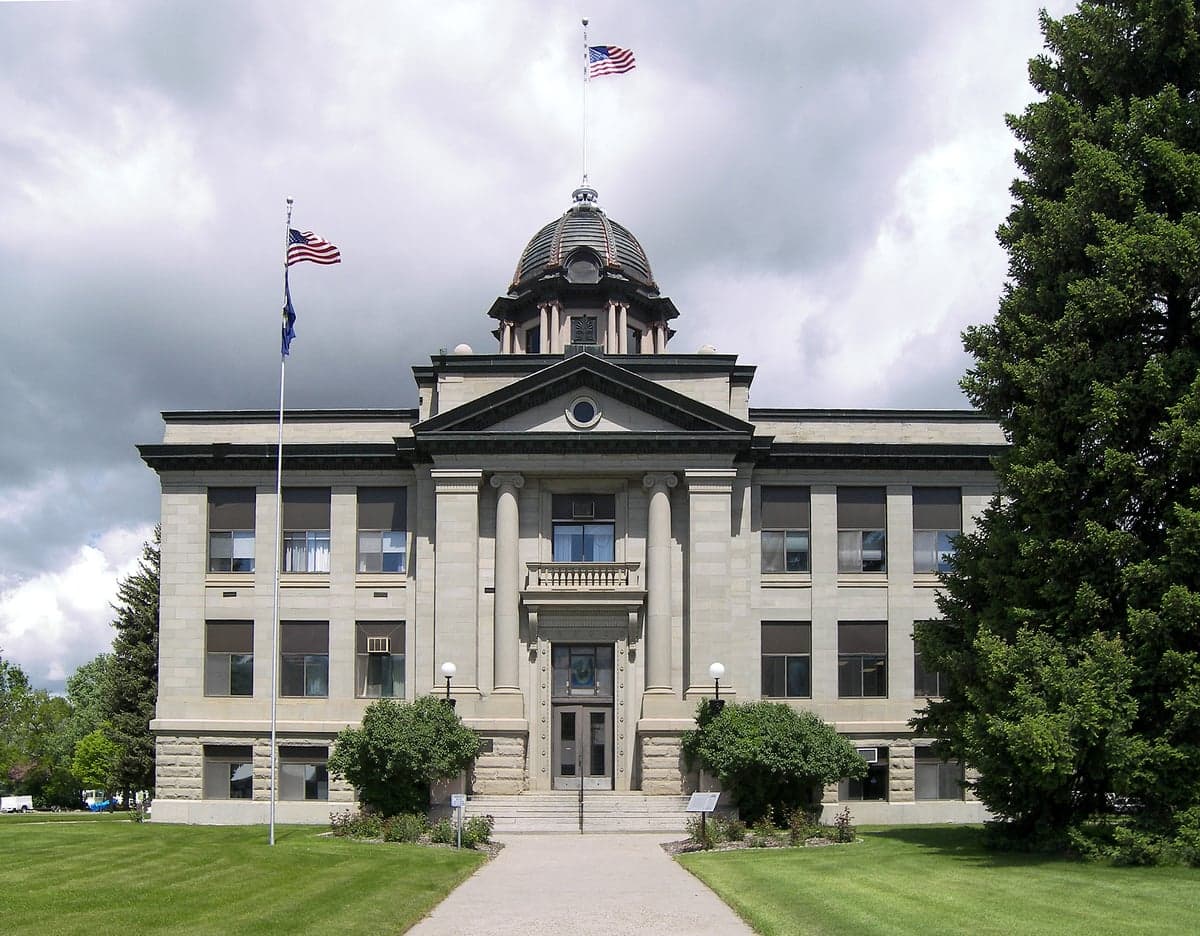
Photo: Wikipedia
Personal Sovereignty in Rosebud County
Viable for self-reliance. Generally workable, though some barriers may limit total independence.
What does Personal Sovereignty tell us?
Personal Sovereignty measures your capacity for self-reliance and independence with minimal government friction. Higher scores mean fewer barriers between you and the way you want to live... but it assumes you have the space you need and good neighbors.
What does this tell us?
Personal Sovereignty measures your capacity for self-reliance and independence with minimal government friction. Higher scores mean fewer barriers between you and the way you want to live... but it assumes you have the space you need and good neighbors.
State Policy
Energy independence: Net exporter (120% of energy produced in-state)
Personal Liberty
Homesteading

Personal Liberty Analysis
Rosebud County, Montana offers a notably high degree of personal sovereignty, grounded in Montana's strong constitutional protections for individual rights and a light-touch local regulatory environment. The county's rural character and low population density naturally limit government intervention in daily life, making it a viable destination for those prioritizing autonomy over convenience. While state law provides a broad framework for self-defense, property rights, and tax restraint, the practical experience of personal freedom varies between the county seat of Forsyth and smaller communities like Colstrip, Ashland, and Lame Deer, each with its own local dynamics.
Tax burden and regulatory posture in Rosebud County
Montana imposes no state sales tax, which directly benefits residents of Rosebud County by keeping the cost of goods and services lower than in neighboring states. Property taxes are the primary local revenue source, and Rosebud County's rates are moderate by Montana standards, with the county's mill levy reflecting its limited service demands. The regulatory posture is decidedly light-touch: there is no county-wide zoning ordinance in unincorporated areas, meaning that in places like Forsyth and Colstrip, residents can build, fence, and operate small businesses on their land without navigating a thicket of permits. However, incorporated towns like Forsyth do have basic municipal codes governing building setbacks and nuisance properties, so buyers should verify local ordinances before purchasing. The state's business climate is similarly restrained, with no corporate income tax on pass-through entities and a flat 6.75% corporate rate, making Rosebud County attractive for entrepreneurs seeking to operate with minimal bureaucratic overhead.
Self-defense and gun law specifics in Montana
Montana is a constitutional carry state, meaning that any adult who can legally possess a firearm may carry it openly or concealed without a permit. Rosebud County's sheriff's office, based in Forsyth, is known for a pro-Second Amendment stance, and local gun culture is deeply embedded in the community. There are no county-level restrictions on firearm ownership beyond state and federal law, and the county does not impose waiting periods, magazine capacity limits, or assault weapon bans. The state's "stand your ground" law, codified in Montana Code Annotated 45-3-110, eliminates any duty to retreat before using force in self-defense when lawfully present. For those living in more remote areas like Ashland or Lame Deer, where law enforcement response times can exceed 30 minutes, the practical ability to defend oneself and one's property is a significant factor in daily life. The county also has a robust network of private shooting ranges and public lands where target practice is permitted without special permits.
Self-reliance and homesteading viability in Rosebud County
Rosebud County's vast, sparsely populated landscape makes it one of Montana's most viable areas for off-grid living and homesteading. In unincorporated areas, there are no county-level restrictions on rainwater collection, composting toilets, or alternative energy systems like solar panels and wind turbines. Minimum lot sizes in the county's rural zoning districts are typically 20 acres, though many parcels available for sale in areas like Biddle and Mizpah are 40 acres or larger, providing ample space for gardens, livestock, and privacy. The county does not require building permits for agricultural structures or fences, and the permitting process for a primary residence is streamlined compared to more populated Montana counties. Water rights are a critical consideration: while surface water and groundwater are available, new appropriations require a permit from the Montana Department of Natural Resources and Conservation, and senior water rights holders in the Yellowstone River basin can affect availability. Off-grid feasibility is high, but prospective homesteaders should budget for well drilling (typically $15,000–$30,000) and septic system installation, as municipal utilities are limited to the towns of Forsyth and Colstrip.
Personal liberties in Rosebud County: parental rights, medical autonomy, and property
Montana law provides strong protections for parental rights, including the right to direct a child's education and medical care, and Rosebud County's school districts in Forsyth and Colstrip generally defer to parental decisions regarding curriculum and health matters. The state does not mandate COVID-19 or other non-routine vaccines for school attendance, and parents may opt out of sex education or specific health screenings without penalty. Medical autonomy is further supported by Montana's broad scope of practice for naturopathic physicians and the absence of state-level restrictions on alternative treatments, though access to specialized care is limited in the county itself. Property rights are robust: Montana's "right to farm" law protects agricultural operations from nuisance lawsuits, and the county does not enforce restrictive covenants on land use in unincorporated areas. However, mineral rights are often severed from surface ownership in Rosebud County due to the region's coal and oil deposits, so buyers must verify that they are acquiring both surface and mineral rights, or at least understand the implications of a split estate. The county's culture of personal responsibility means that neighbors generally respect each other's boundaries, and disputes are rarely escalated to formal legal action.
Overall, Rosebud County ranks among the more sovereignty-friendly areas in Montana, particularly for those who value minimal government interference in daily life. The combination of no state sales tax, constitutional carry, permissive land-use regulations, and strong property rights creates an environment where self-reliance is not just possible but expected. Compared to more regulated counties in western Montana or the Front Range, Rosebud County offers a lighter regulatory touch and lower cost of entry for homesteaders and freedom-minded individuals. The trade-offs are real: limited access to healthcare, fewer employment options outside of energy and agriculture, and long distances to urban amenities. For those who prioritize personal autonomy over convenience, however, Rosebud County provides a legal and cultural foundation that supports a genuinely independent lifestyle.

* Values derived from national, state, county, city and local statistics and may differ in a specific area. Last updated: 2026-07-16T18:28:30.000Z
Narrative content on this page is AI-generated and may contain mistakes. Verify any details that matter before acting on them.
ReloMaps may earn a commission from affiliate links at no extra cost to you.

