Photo: Wikipedia
Demographics of Rosebud County
Affluence Level in Rosebud County
A low-income area with significant economic hardship. Household wealth and educational attainment are well below national averages.
People of Rosebud County
Rosebud County, Montana, is home to roughly 8,236 residents, making it one of the state's more sparsely populated rural counties. The population is characterized by a significant Native American presence, primarily from the Northern Cheyenne Tribe, alongside a white majority that traces its roots to homesteaders and railroad workers. With a foreign-born population of just 0.7% and a college attainment rate of 18.9%, the county's identity is deeply tied to its agricultural and energy industries, as well as the distinct cultural heritage of the Cheyenne people.
Settlement & growth (pre-1960)
Long before European settlement, the area now known as Rosebud County was the ancestral and seasonal hunting ground of several Native American nations, most notably the Crow, Cheyenne, and Lakota Sioux. The region's rolling plains and river valleys, particularly along the Yellowstone River and its tributaries like Rosebud Creek, provided abundant bison and game. The Northern Cheyenne, in particular, established a deep connection to the area, and their forced removal and eventual return is a central chapter in the county's history. Following the Battle of the Little Bighorn in 1876 and subsequent conflicts, the U.S. government confined the Northern Cheyenne to a reservation, which today occupies a large portion of southern Rosebud County, centered around the communities of Lame Deer and Busby.
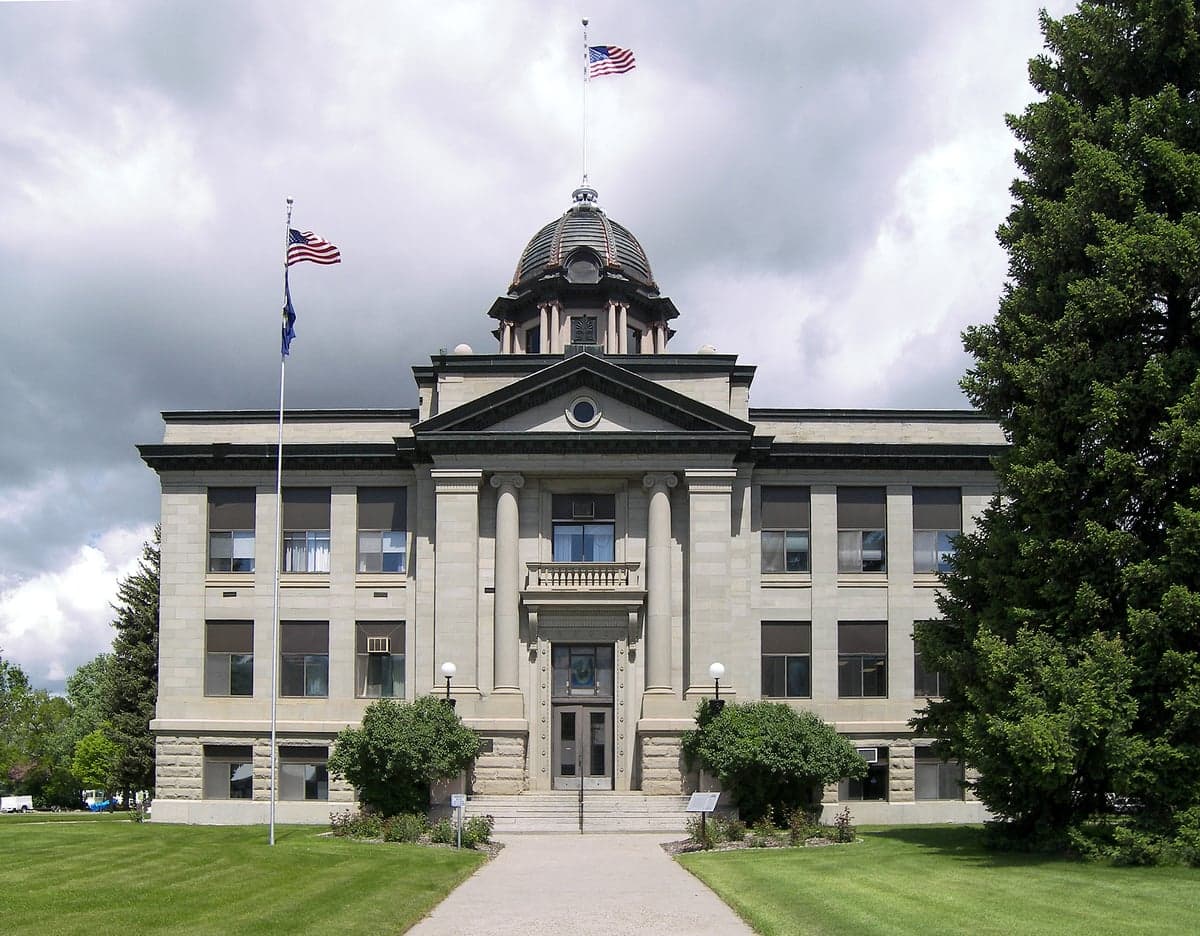
The first major wave of non-Native settlement began in the late 1870s and 1880s, driven by the expansion of the Northern Pacific Railroad. The railroad laid tracks through the Yellowstone Valley, establishing depots that became the nuclei of new towns. Forsyth, the county seat, was founded in 1876 as a railroad camp and quickly grew into a supply and shipping hub for the surrounding ranches. The promise of cheap land under the Homestead Act of 1862 drew a second, larger wave of settlers between 1900 and 1920. These homesteaders were predominantly of Northern European descent—German, Scandinavian, and Irish families—who filed claims on 160- to 320-acre parcels. They established small farming communities like Rosebud, Ingomar, and Vananda, attempting to dry-land farm wheat and raise cattle. The harsh climate, drought, and the Dust Bowl conditions of the 1930s forced many of these homesteaders off the land, leading to a population decline that reshaped the county. By 1940, the population had dropped significantly from its 1920 peak, and many of the smaller towns faded into ghost towns or became tiny crossroads.
Post-World War II, the county's economy and settlement patterns shifted toward energy extraction. The discovery of oil and natural gas fields in the 1950s brought a new, smaller wave of workers to areas around Colstrip, though the major coal boom would come later. The Northern Cheyenne Reservation remained a distinct, largely rural enclave, with its population maintaining a separate cultural and political identity from the surrounding white communities. By 1960, Rosebud County's population was overwhelmingly white and Native American, with the white population concentrated in Forsyth and the railroad towns, and the Native population centered on the reservation.
Modern era (post-1965)
The post-1965 era in Rosebud County has been defined less by new international immigration and more by domestic migration patterns and the economic pull of energy development. The Hart-Cellar Act of 1965 had a negligible effect on the county; its foreign-born population remains at just 0.7%, one of the lowest rates in the nation. Instead, the major demographic event of the modern era was the construction and expansion of coal-fired power plants and coal mines near Colstrip in the 1970s and 1980s. This energy boom drew a wave of domestic migrants—skilled tradesmen, engineers, and laborers—from other parts of Montana and the broader Rocky Mountain region. Many of these workers were white, and they settled primarily in Colstrip and Forsyth, creating a small but stable middle-class enclave tied to the energy industry.
Simultaneously, the Northern Cheyenne Tribe experienced a period of cultural and political resurgence. The Indian Self-Determination and Education Assistance Act of 1975 allowed the tribe to assume greater control over its own affairs, including schools, health care, and law enforcement on the reservation. This strengthened the tribal identity and slowed out-migration, though economic opportunities on the reservation remain limited. The population on the reservation, concentrated in Lame Deer, Busby, and Ashland, has remained predominantly Native American, with a small number of non-Native residents, often married into the community or working in tribal services.
Racially, the county's composition has remained relatively stable since 1965. The white population, at 52.7%, is slightly below the statewide average, while the Native American population makes up the vast majority of the remaining share. Hispanic residents account for 3.5% of the population, a small but growing presence, often working in agriculture or the service industry. East and Southeast Asian residents represent 0.5%, and the Black population is 0.2%. There is no measurable Indian subcontinent population. The county has not experienced the suburbanization or exurban sprawl seen in Montana's faster-growing counties like Gallatin or Missoula. Instead, population has slowly declined from a peak of around 10,000 in the 1980s, as the energy sector has automated and consolidated.
The future
Rosebud County's population is projected to continue a slow decline or remain flat over the next 10 to 20 years. The county is not becoming more diverse in the way that urban Montana is; the racial and ethnic composition is likely to remain predominantly white and Native American. The Hispanic population may grow modestly, driven by agricultural labor demand, but is unlikely to exceed 5-6% of the total. The Northern Cheyenne population is relatively young compared to the white population, which is aging, meaning the Native share of the county could increase slightly over time. The energy sector, centered on Colstrip, faces an uncertain future due to national shifts away from coal, which could accelerate out-migration if plants close. Conversely, the county's low cost of living and wide-open spaces may attract a small number of remote workers or retirees seeking solitude, though this trend is far weaker here than in western Montana. The cultural identity of the county will likely remain bifurcated: a rural, ranching, and energy-based white community centered on Forsyth and Colstrip, and a sovereign Native nation centered on the reservation.
For someone moving in now, Rosebud County offers a place where community ties are strong, the pace of life is slow, and the landscape is vast and unspoiled. It is not a place of rapid change or demographic upheaval. The county's future is tied to the resilience of its two main populations—the ranching families and the Northern Cheyenne—and to the uncertain economics of coal. New residents will find a place where history is still very much alive, and where the population's character is defined by endurance rather than growth.

* Values derived from national, state, county, city and local statistics and may differ in a specific area. Last updated: 2026-07-16T18:28:30.000Z
Narrative content on this page is AI-generated and may contain mistakes. Verify any details that matter before acting on them.
ReloMaps may earn a commission from affiliate links at no extra cost to you.

