Photo: Wikipedia
Political ClimatePolitical Climate in Phillips County
Showing district-level results — no local-only data available.
Local Political AnalysisPolitical Analysis of Phillips County
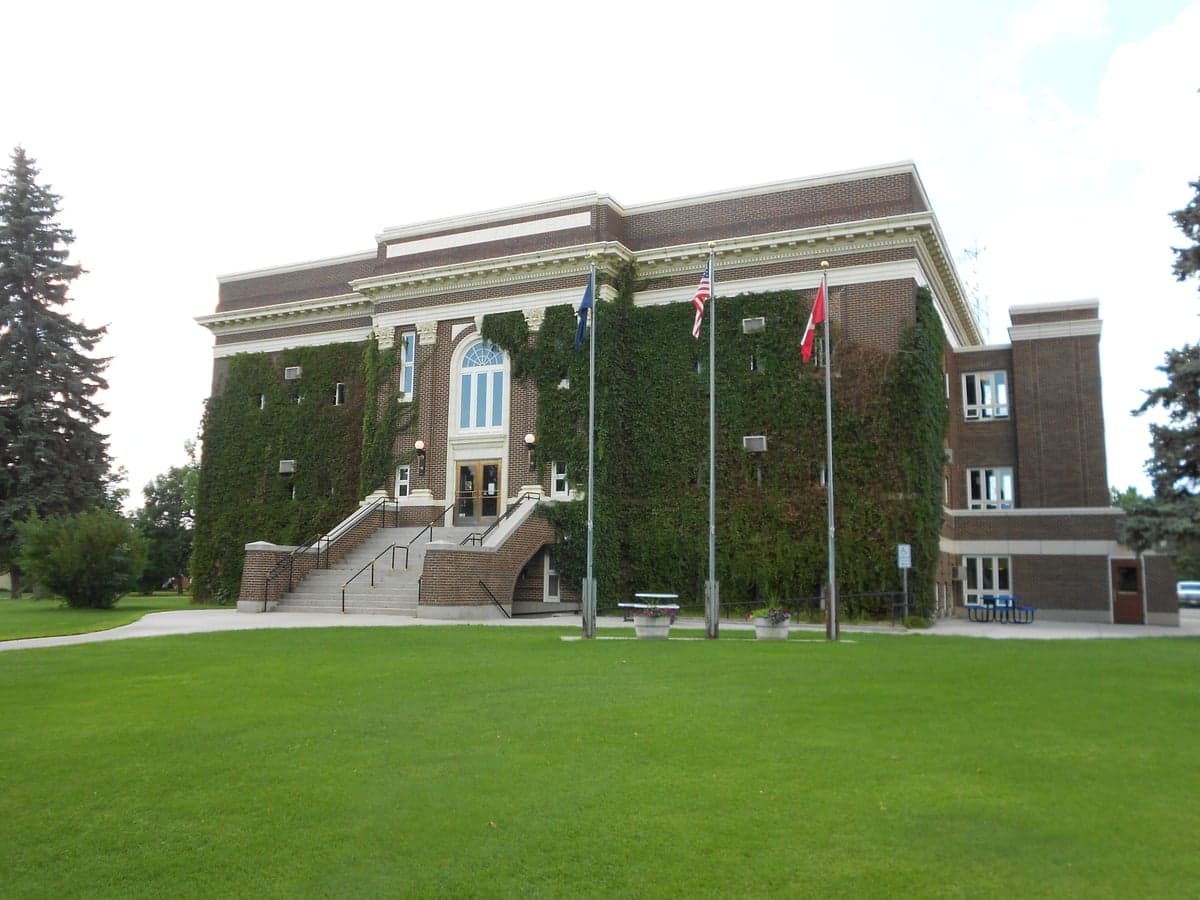
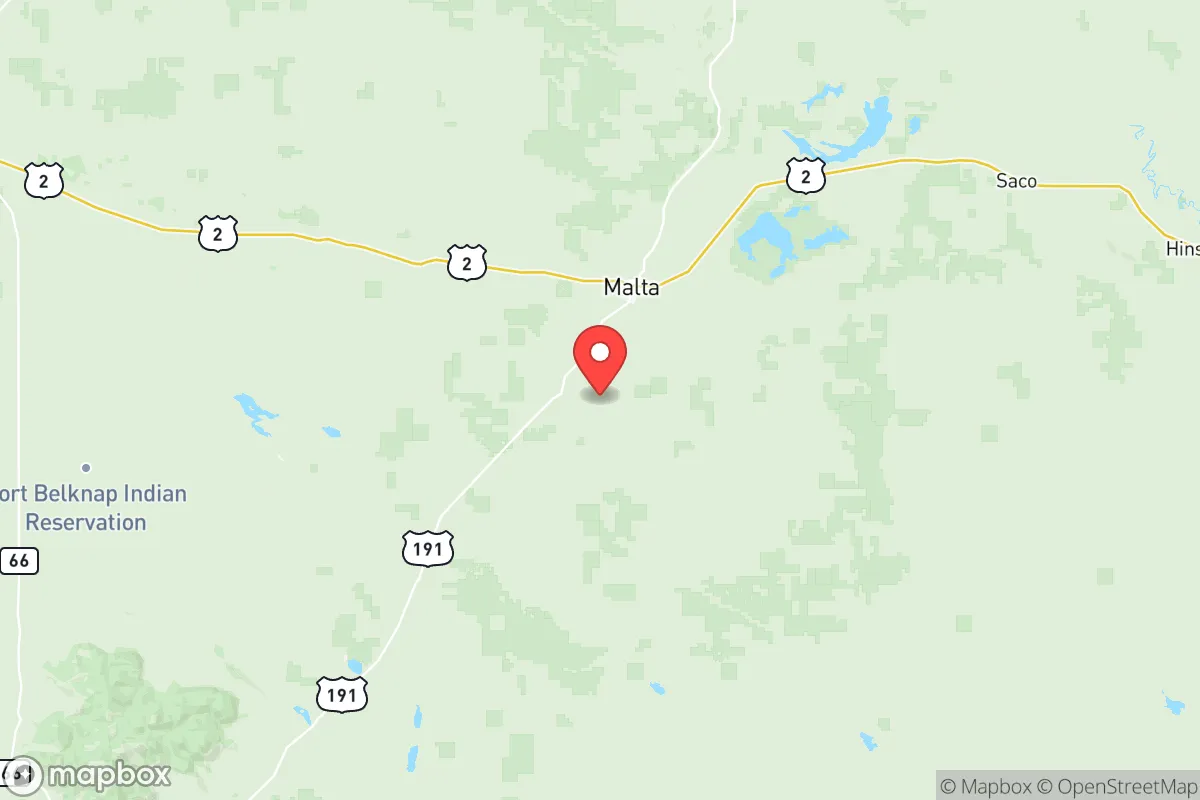
Phillips County, Montana, is a deeply conservative area with a Cook PVI of R+15, making it significantly more Republican than the state of Montana as a whole, which sits at R+10. This isn't a new development; the county has been a reliable red stronghold for decades, but the intensity of that lean has solidified in recent years. The shift is most noticeable when you compare the county seat, Malta, to the smaller, more isolated communities like Saco, Whitewater, and Dodson — the latter three are even more uniformly Republican, while Malta has a small but persistent pocket of Democratic voters centered around the hospital and school district employees.
How it compares
Montana's R+10 rating already places it among the most Republican states in the nation, but Phillips County's R+15 is a full five points redder. To put that in perspective, the difference between Phillips County and the state average is roughly the same as the gap between Texas and Oklahoma. In practice, this means that while statewide races in Montana can be competitive — especially in the more populous Gallatin and Missoula counties — Phillips County almost always delivers a landslide for Republican candidates. In the 2024 presidential election, for example, the county voted for Donald Trump by a margin of roughly 78% to 19%, compared to the statewide split of about 58% to 39%. The swing precincts aren't really swing precincts in the traditional sense; instead, the variation is between "very red" and "deep red." The Malta precincts near the Hi-Line and the agricultural co-ops tend to be the most conservative, while the precincts around the hospital and the Malta High School show slightly more moderate numbers, occasionally breaking 30% for Democratic candidates.
What this means for residents
For conservative residents, Phillips County feels like a natural fit. Local government, school board meetings, and county commission decisions generally reflect a small-government, pro-agriculture, and pro-energy development worldview. There's little friction in daily life for someone who aligns with the dominant political culture. For liberal or moderate residents, the reality is more nuanced. You won't find a visible Democratic Party presence, and openly progressive views are rare in public discourse. However, the community is small enough that personal relationships often override political labels — your neighbor might disagree with you on national politics but will still help you fix a fence or plow a driveway. The practical effect is that political conversations tend to stay local: it's more about water rights, school funding, and county road maintenance than national culture wars. That said, the social pressure to conform is real, and many non-Republican residents simply avoid discussing politics in public settings.
Culturally, Phillips County is distinct from the rest of Montana in a few key ways. The Hi-Line region has a strong ranching and Native American heritage — the Fort Belknap Indian Reservation borders the county to the south — which introduces a layer of complexity to local politics that you don't see in, say, Bozeman or Billings. Tribal sovereignty issues, land use disputes, and the economic challenges of rural depopulation are constant topics. Policy-wise, the county has been a vocal supporter of expanded oil and gas development in the Bakken formation, which has brought some economic activity but also environmental concerns. The local newspaper, the Phillips County News, still covers county commission meetings in detail, and the biggest political fights in recent memory have been over the closure of the local hospital's obstetrics unit and the consolidation of rural schools. In short, the political climate here is less about party labels and more about survival — keeping the community alive on the vast, windswept plains of north-central Montana.

State Political ClimatePolitical Climate in Montana
State Political AnalysisPolitical Environment in the State
Montana has been a reliably Republican state for decades, with a Cook PVI of R+10, but the nature of that conservatism has shifted dramatically. The state’s political center of gravity is still anchored by the rural, ranching, and resource-extraction counties, but a wave of in-migration—particularly to the western mountain valleys and the Flathead region—has introduced a more libertarian-leaning, property-rights-focused strain of conservatism that sometimes clashes with the old-school GOP establishment. Over the last 10-20 years, the state has moved from a sleepy, low-turnout Republican stronghold to a more energized, nationally-aligned battleground for conservative policy experiments, while Democrats have been squeezed into a handful of college towns and the remaining union strongholds in the mining districts.
Urban vs. rural divide
The political map of Montana is a textbook case of the urban-rural split, but with a twist. The state’s largest population center, the Billings metro area (Yellowstone County), is a solid Republican base, voting about 60% for Trump in 2020. But the real engine of the state’s rightward shift is the explosive growth in the Flathead Valley—Kalispell, Whitefish, and Columbia Falls—where Flathead County has gone from a swing county to a reliably red one, with Trump winning by 20 points in 2020. Missoula County, home to the University of Montana, is the state’s lone Democratic stronghold, voting for Biden by 20 points, but it’s surrounded by deep-red rural counties like Ravalli and Granite. The Gallatin Valley, anchored by Bozeman, is the most interesting battleground: it’s gone from purple to light red as tech workers and remote professionals have flooded in, but the city itself is increasingly liberal, creating a sharp divide between the university-adjacent neighborhoods and the sprawling exurbs toward Belgrade and Manhattan. The rural eastern plains—counties like McCone, Garfield, and Petroleum—are among the most Republican in the nation, often voting 85-90% for the GOP, but they have so few people that their electoral weight is shrinking relative to the booming western valleys.
Policy environment
Montana’s policy environment is defined by a low-tax, low-regulation posture that appeals to both traditional conservatives and libertarian-leaning newcomers. The state has no sales tax, a flat income tax rate of 5.9% (recently cut from 6.75%), and property taxes that are moderate but rising fast in high-growth areas like Gallatin and Flathead counties. The regulatory climate is business-friendly, with no state-level minimum wage above the federal $7.25 and a right-to-work law that has weakened union influence outside of the public sector and the remaining mines. Education policy is a flashpoint: the state has a robust school choice movement, with a new tax-credit scholarship program for private schools, but rural districts often oppose vouchers for fear of losing funding. Healthcare is a mixed bag—Montana expanded Medicaid under the Affordable Care Act, a decision that has been renewed by the legislature, but the state also has some of the most restrictive abortion laws in the nation, with a near-total ban after 20 weeks and a 2023 law that effectively bans the procedure after cardiac activity is detected. Election laws have tightened: the state now requires a photo ID to vote, has eliminated same-day voter registration, and has purged inactive voters from the rolls, moves that Republicans say ensure integrity and Democrats say suppress turnout.
Recent policy direction
The last five years have seen Montana lurch sharply to the right on a broad front. On gun and self-defense law, the state passed constitutional carry in 2021, allowing permitless concealed carry, and has preempted local gun ordinances, meaning cities like Missoula cannot enact their own restrictions. Parental and education rights have been a major focus: the 2023 session passed a bill banning the teaching of "divisive concepts" like critical race theory in K-12 schools, and a separate law requires parental notification for any student health services, including mental health counseling. On speech and privacy, the state has enacted a law prohibiting social media platforms from censoring political speech, though it’s currently tied up in court. Medical and bodily autonomy is the most contested area: the 2023 abortion ban includes exceptions for rape, incest, and life of the mother, but has already led to a lawsuit and a temporary block by the state supreme court. Property rights are a sacred cow—the state has strong eminent domain protections and a 2021 law that requires compensation for any regulation that reduces property value by more than 30%. Taxation is trending downward: the 2023 session cut the top income tax rate and expanded the earned income tax credit, but local governments are struggling as property tax revenues lag behind inflation. Voting and ballot access have been tightened, but the state still allows absentee voting by mail for any reason, a practice that expanded during COVID and has remained popular even among Republicans.
Civil unrest & political movements
Montana is not a state known for street protests, but there have been notable flashpoints. The Yellowstone County militia movement has a long history, with groups like the Montana Militia and the Three Percenters maintaining a visible presence, particularly in the rural counties east of the Rockies. In 2021, there were large protests in Helena against COVID-19 mandates, with armed demonstrators occupying the state capitol rotunda. The immigration politics are relatively quiet—Montana has a tiny foreign-born population (about 2%), but the state has passed laws prohibiting sanctuary cities and requiring local law enforcement to cooperate with federal immigration authorities. Election integrity controversies have been muted compared to states like Arizona or Georgia, but the 2020 election saw a few counties, including Flathead, pass resolutions questioning the results, and the legislature has since created a special election integrity committee. The most visible political movement is the property rights and land-use backlash in the western valleys, where long-time residents and newcomers are clashing over zoning, short-term rentals, and development. In Bozeman, a group called "Gallatin for Responsible Growth" has fought against high-density housing projects, while in Whitefish, the debate over vacation rentals has split the community between libertarian-leaning property owners and locals worried about affordability.
Projection
Over the next 5-10 years, Montana is likely to become more Republican, but also more internally divided. The in-migration from California, Washington, and Oregon is accelerating, and while many of these newcomers are conservative-leaning, they bring a different flavor of conservatism—more focused on individual liberty, property rights, and low taxes, and less concerned with social issues like abortion or gun control. This will create tension with the older, more socially conservative rural base, particularly on issues like land use and local control. The Democratic Party will continue to shrink, confined to Missoula, parts of Bozeman, and the Butte-Anaconda union strongholds, but they may gain some ground in the growing suburbs of Billings and Kalispell as those areas become more diverse. The biggest wildcard is water rights and climate change: as the Missouri and Yellowstone rivers face increasing pressure from drought and development, the state will have to make hard choices that could fracture the traditional Republican coalition between ranchers (who want water for agriculture) and developers (who want it for housing). A relocator moving in now should expect a state that is politically stable at the macro level—solidly red, low-tax, and business-friendly—but increasingly contentious at the local level, especially in the booming western valleys where growth is reshaping the landscape and the politics.
For a new resident, the bottom line is that Montana offers a high degree of personal freedom and low taxes, but that freedom comes with trade-offs. You’ll have wide latitude on guns, property use, and homeschooling, but you’ll also face limited public services, a strained healthcare system in rural areas, and a political environment that can feel like a constant culture war between the old ranching families and the new tech migrants. If you’re conservative, you’ll find a state that largely aligns with your values, but be prepared for local fights over growth and zoning. If you’re liberal, you’ll find a few blue islands—Missoula, Bozeman’s downtown, parts of Helena—but the state government will be actively working against your priorities on abortion, education, and voting rights. Either way, Montana is a place where politics is personal, and your neighbors will expect you to show up at the county commission meeting if you want a say in how things run.
* Values derived from national, state, county, city and local statistics and may differ in a specific area. Last updated: 2026-07-17T01:49:45.000Z
Narrative content on this page is AI-generated and may contain mistakes. Verify any details that matter before acting on them.
ReloMaps may earn a commission from affiliate links at no extra cost to you.

