Photo: Wikipedia
Demographics of Phillips County
Affluence Level in Phillips County
A below-average socioeconomic profile. Incomes, home values, and educational attainment trail the U.S., with higher poverty and unemployment.
People of Phillips County
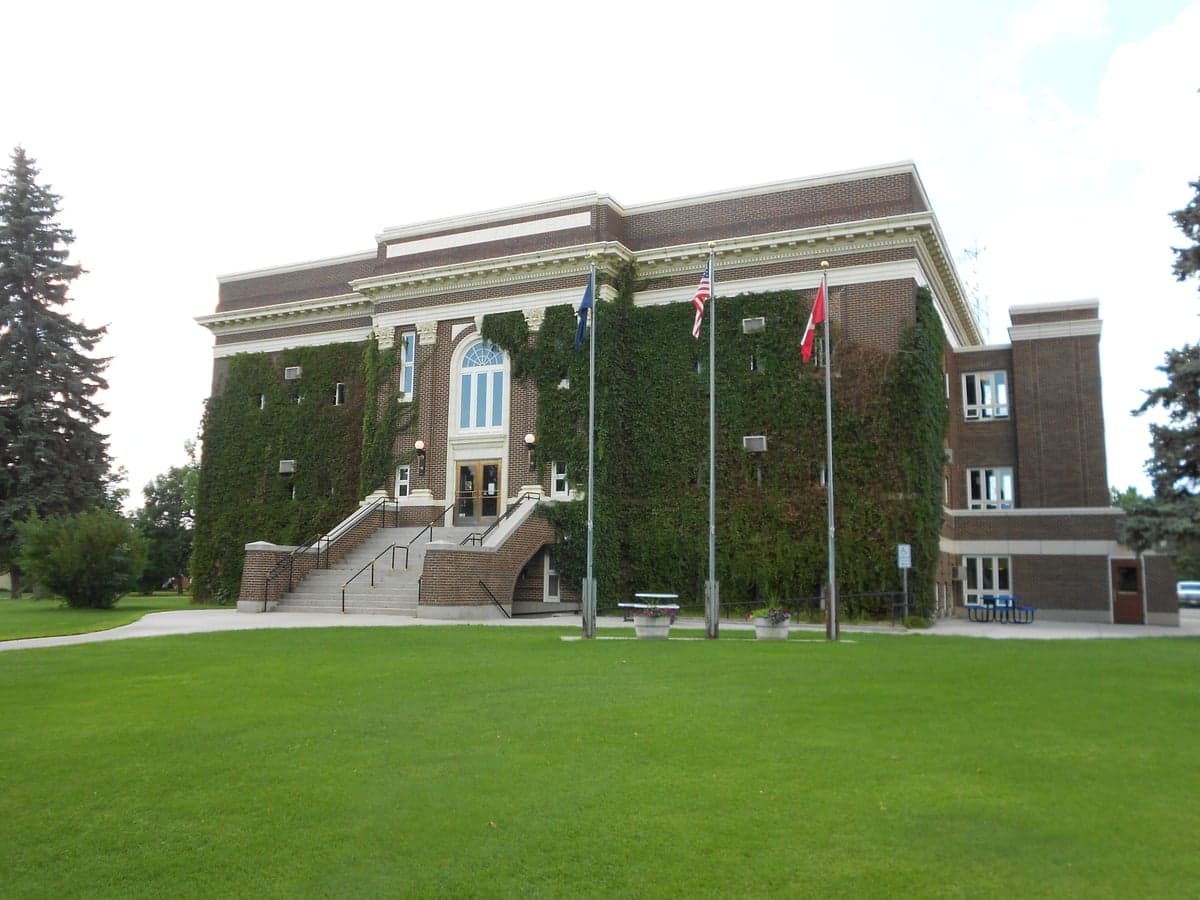
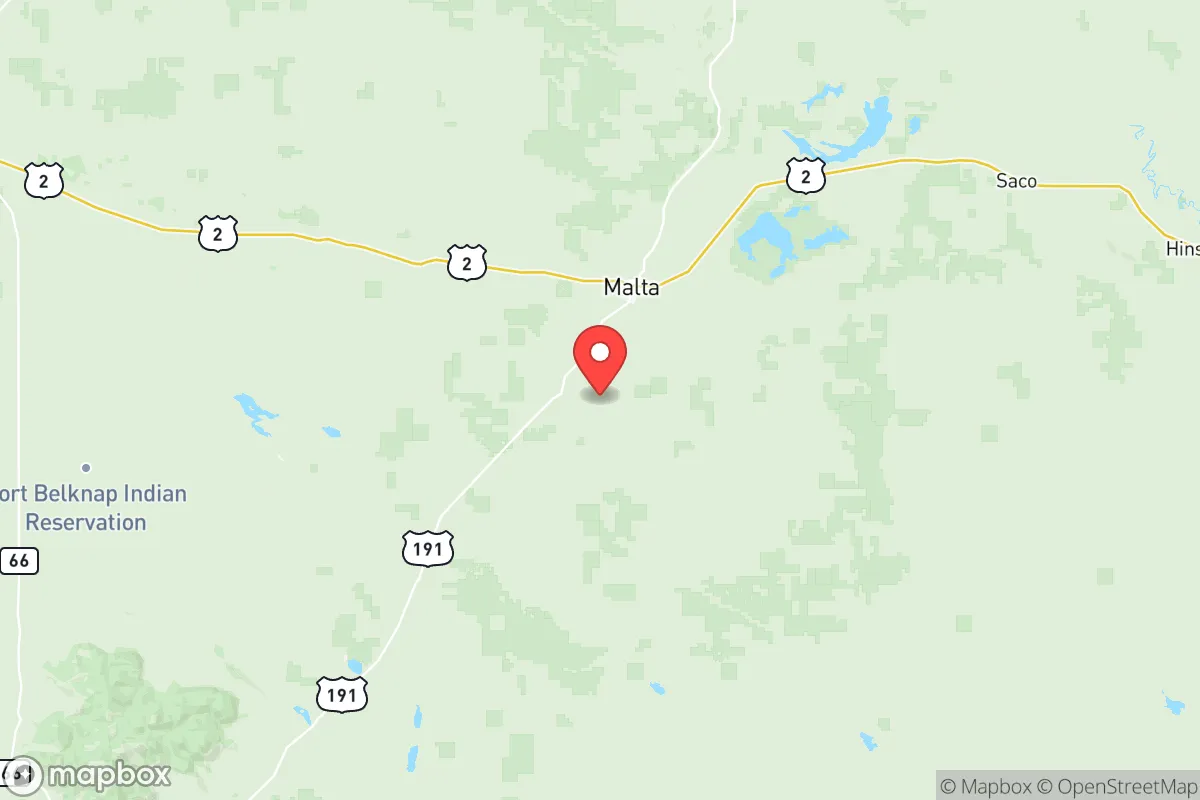
Phillips County, Montana, is home to roughly 4,224 residents, making it one of the state's most sparsely populated areas, with a character defined by its deep-rooted ranching heritage and a population that is overwhelmingly white (81.9%) and native-born (99.0% U.S.-born). The county's identity is shaped by the small, isolated communities of Malta (the county seat and largest town), Dodson, Sacred Heart, and Whitewater, where a strong sense of self-reliance and a conservative, agrarian worldview prevail. With a foreign-born population of just 1.0% and a college attainment rate of 20.6%, the county remains one of Montana's most homogeneous and least globally connected regions, a place where the human story is one of endurance, boom-and-bust cycles, and a slow, steady demographic decline.
Settlement & growth (pre-1960)
Long before European settlement, the area now known as Phillips County was the domain of nomadic Plains Indian tribes, primarily the Assiniboine and Gros Ventre (Atsina) nations. These groups followed the vast bison herds across the high plains, with seasonal camps near the Milk River and its tributaries, including areas around present-day Malta and Loring. The 1851 Fort Laramie Treaty recognized these lands as part of the Assiniboine and Gros Ventre territory, but the arrival of the transcontinental railroad in the 1880s shattered that order.
The first major wave of American settlement came with the extension of the Great Northern Railway through the region in 1887. The railroad platted towns along its route, most notably Malta (founded 1888), which became the commercial and transportation hub. The initial settlers were a mix of Anglo-American cattle ranchers from Texas and the Midwest, drawn by the open range and the promise of cheap land under the Homestead Act. These early ranchers established massive spreads, with names like the N Bar Ranch and the Lazy HL, that still define the county's landscape.
A second, larger wave arrived during the Homestead Boom of the 1910s. The Enlarged Homestead Act of 1909 offered 320 acres to settlers who could "prove up" the land, and promotional campaigns by the railroad and state government lured thousands of farmers from the Upper Midwest—particularly Norwegian, German, and Swedish immigrants, as well as native-born farmers from Minnesota, Iowa, and the Dakotas. These homesteaders clustered in small farming communities like Dodson (founded 1913), Sacred Heart, and Whitewater, where they attempted dryland wheat farming. The boom was short-lived; a severe drought in 1917-1919, followed by the collapse of wheat prices in the 1920s, drove many homesteaders off the land. The county's population peaked at 9,311 in 1930, then began a long decline as the Dust Bowl and agricultural mechanization pushed families toward larger towns or out of state entirely.
The post-World War II era saw a modest stabilization, as returning veterans took advantage of the GI Bill to buy ranches, and the construction of the Fort Peck Dam (completed 1940) brought some economic activity to the region's southern edge. However, the trend was clear: the county was losing people to the cities, and the small towns that had once dotted the landscape—places like Loring, Hiland, and Morgan—began to shrink or disappear.
Modern era (post-1965)
The 1965 Hart-Cellar Act, which reshaped immigration patterns across the United States, had virtually no impact on Phillips County. The county's foreign-born population has remained below 1.5% for decades, and the 2020 census recorded it at just 1.0%. Unlike urban Montana or the booming counties of the state's western third, Phillips County did not attract new immigrant communities from Latin America, Asia, or Africa. The county's demographic story in the modern era is one of domestic out-migration and aging in place.
Since 1965, the county has lost roughly 40% of its population, dropping from over 7,000 residents to today's 4,224. The primary driver has been the rural exodus of young adults seeking education and employment in larger Montana cities like Billings, Great Falls, and Missoula, or out of state entirely. The ranching economy, while still dominant, has consolidated into fewer, larger operations, requiring less labor. The small towns of Dodson (population ~120) and Whitewater (population ~60) have become bedroom communities for Malta or are largely depopulated, with many homes standing empty or used as seasonal hunting cabins.
The county's racial and ethnic composition has remained remarkably stable. The white population share has actually increased slightly since 2000 (from 79.5% to 81.9%), as the small Native American population (primarily Assiniboine and Gros Ventre descendants, many with ties to the Fort Belknap Indian Reservation just south of the county line) has also declined. The Hispanic population is minimal at 1.4%, and the Black and Asian populations are statistically negligible. The county has not experienced the "New West" migration of amenity-seekers and remote workers that has transformed places like Bozeman or Missoula; its harsh winters, lack of recreational amenities, and distance from major airports have kept it off the radar for most newcomers.
The future
Phillips County's demographic trajectory points toward continued slow decline and aging. The median age has risen to over 50, well above the national average, and the school-age population has shrunk by roughly 15% since 2010. Without a significant economic catalyst—such as a major energy development, a large-scale agricultural innovation, or a shift in remote work patterns—the county is unlikely to reverse its population loss. The small towns of Dodson and Sacred Heart may continue to lose residents, while Malta will likely retain its role as a service center for the surrounding ranches, albeit with a smaller tax base and fewer services.
There is a faint possibility of a modest influx of climate refugees or lifestyle migrants from more crowded or fire-prone states, drawn by the county's low cost of land and relative isolation. However, this would likely be a trickle, not a wave, and would not significantly alter the county's cultural or demographic character. The county is not becoming more diverse; if anything, it is becoming slightly less so, as the small non-white populations age and younger generations leave. The cultural identity of Phillips County—rooted in ranching, self-sufficiency, and a conservative, rural worldview—is likely to persist, but with a smaller and older population to carry it forward.
For someone moving in now, Phillips County offers a place where the pace of life is slow, the community is tight-knit, and the land is wide open. It is a place for those who value solitude, hard work, and a connection to the land, and who are comfortable with limited amenities, long distances to services, and a population that is both shrinking and aging. It is not a place of demographic dynamism or cultural change, but of continuity—a living remnant of the homesteading era that shaped the American West.

* Values derived from national, state, county, city and local statistics and may differ in a specific area. Last updated: 2026-07-17T01:49:45.000Z
Narrative content on this page is AI-generated and may contain mistakes. Verify any details that matter before acting on them.
ReloMaps may earn a commission from affiliate links at no extra cost to you.

