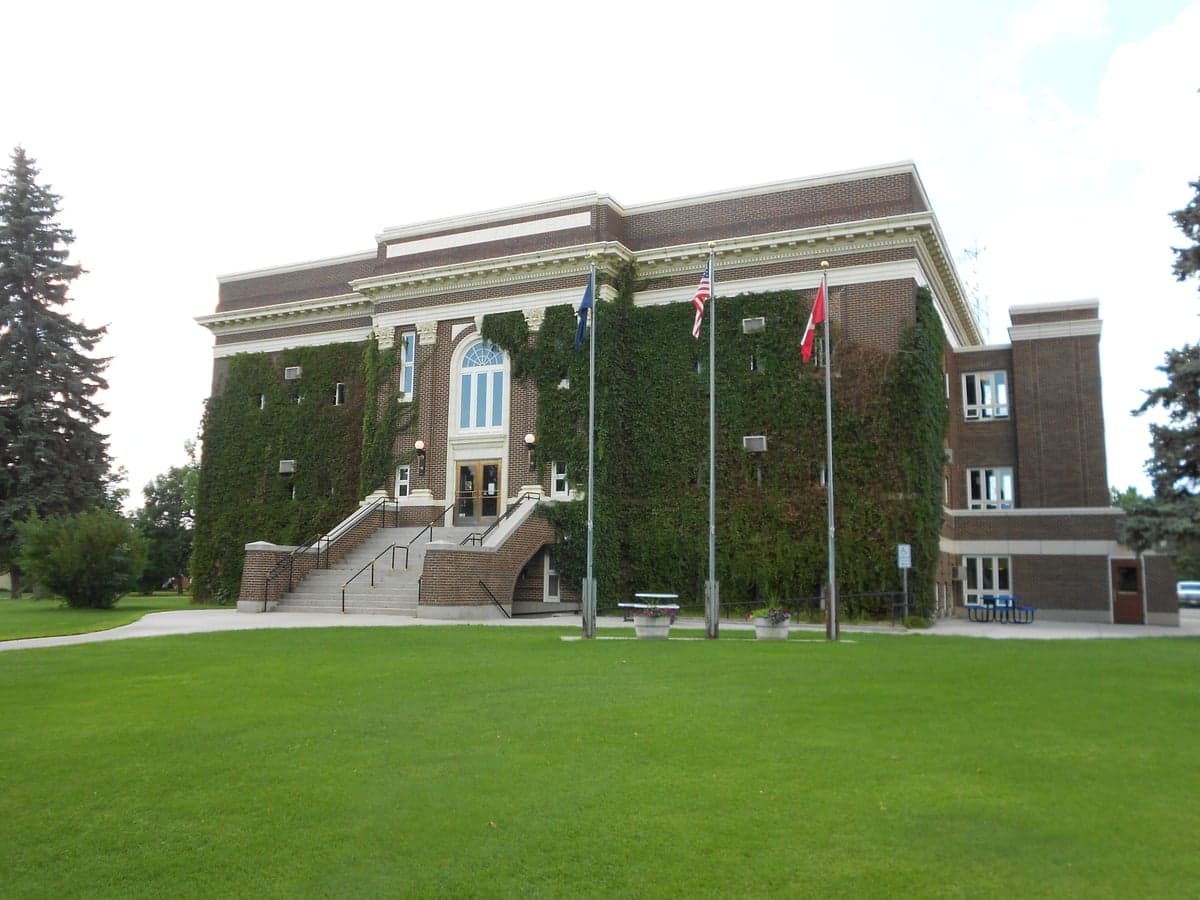
Photo: Wikipedia
Personal Sovereignty in Phillips County
Viable for self-reliance. Generally workable, though some barriers may limit total independence.
What does Personal Sovereignty tell us?
Personal Sovereignty measures your capacity for self-reliance and independence with minimal government friction. Higher scores mean fewer barriers between you and the way you want to live... but it assumes you have the space you need and good neighbors.
What does this tell us?
Personal Sovereignty measures your capacity for self-reliance and independence with minimal government friction. Higher scores mean fewer barriers between you and the way you want to live... but it assumes you have the space you need and good neighbors.
State Policy
Energy independence: Net exporter (120% of energy produced in-state)
Personal Liberty
Homesteading

Personal Liberty Analysis
Phillips County, Montana, offers one of the most permissive personal sovereignty environments in the lower 48, with a regulatory posture that consistently defers to individual choice over government mandate. The county’s vast geography—over 5,000 square miles with fewer than 4,000 residents—creates a de facto autonomy that is rare even by Montana standards. For relocation researchers focused on personal freedom, the area presents a near-total alignment of state law, county enforcement, and cultural expectation around self-reliance, though practical access to services and markets imposes its own constraints.
Tax burden and regulatory posture: How light is the government footprint?
Montana imposes no state sales tax, and Phillips County’s property tax rates are among the lowest in the state. The effective property tax rate on residential real estate in the county hovers around 0.65% of assessed value, roughly half the national average. There is no state-level income tax on wages, and the state’s corporate income tax is a flat 6.75%, but most small businesses and sole proprietors in the county operate under pass-through entities that face no corporate tax at all. The county government maintains a deliberately minimal footprint: there is no county-wide building code outside of Malta’s limited town ordinances, no zoning overlay for unincorporated areas, and no business license requirement for most home-based enterprises. The Montana Department of Environmental Quality regulates septic systems and well water, but enforcement is complaint-driven and sparse. For a single individual or family seeking to minimize tax and regulatory interference, Phillips County ranks in the top decile nationally for light-touch governance.
Self-defense and gun law specifics: What the Second Amendment looks like on the ground
Montana is a constitutional carry state, meaning no permit is required to carry a concealed firearm for anyone legally allowed to possess one. Phillips County Sheriff’s Office issues permits for those who want reciprocity with other states, but the process is shall-issue with no discretionary denial. The county has no local ordinances restricting firearm possession, storage, or carry in public spaces beyond state preemption. Open carry is lawful without a permit. Stand-your-ground law applies statewide, with no duty to retreat in any place where the individual is lawfully present. The county’s culture is heavily armed: hunting is a primary recreation and food source, and firearm ownership is near-universal among households. Malta, the county seat, has a single gun shop and multiple shooting ranges within a 20-minute drive. The nearest city with any restrictive gun policy is Great Falls, over 150 miles south. For a reader prioritizing self-defense autonomy, Phillips County offers the maximum legal latitude available under current federal law.
Self-reliance and homesteading viability: Lot sizes, zoning, and off-grid feasibility
Unincorporated Phillips County has no zoning whatsoever, allowing property owners to build, fence, and use land with virtually no county oversight. Minimum lot sizes for rural parcels are typically 20 acres under state subdivision law, but existing larger tracts can be split through simple survey without county approval. Off-grid living is entirely legal: there are no county requirements for grid-tied electricity, and the Montana Department of Environmental Quality permits alternative wastewater systems (composting toilets, incinerating toilets) on a case-by-case basis. Solar and wind installations face no permitting hurdles outside of building code for structural safety. The town of Malta enforces a modest set of building codes within its limits—requiring permits for new construction and septic—but the surrounding communities of Dodson, Whitewater, and Loring have no municipal ordinances at all. Water access is the primary constraint: most rural parcels require a drilled well (typically 100-300 feet deep, costing $8,000-$15,000), and surface water rights are fully appropriated. For a family seeking to build a self-sufficient homestead with minimal government interaction, the area between Malta and the Missouri River breaks offers the most permissive environment in the county.
Personal liberties: Parental rights, medical autonomy, speech, and property
Montana law strongly protects parental rights in education and healthcare decisions. The state has no vaccine mandate for school attendance, and parents may opt children out of any curriculum component without penalty. Medical autonomy is broad: Montana does not require a prescription for most over-the-counter medications, and the state’s Right to Try law allows terminally ill patients access to experimental treatments without FDA approval. The Montana Constitution explicitly protects the right to privacy, which the state supreme court has interpreted to include medical decision-making. Speech protections are robust, with no state-level hate speech laws or restrictions on political expression. Property rights are secured by Montana’s takings law, which requires compensation for any regulatory action that diminishes property value by more than 30%. The county’s small population means that neighbor disputes are typically resolved informally or through civil court, not through code enforcement. For a reader concerned about government overreach into family and personal decisions, Phillips County’s legal framework is among the most protective in the nation.
Compared to other high-autonomy areas like northern Idaho or rural Alaska, Phillips County offers a superior balance of legal protection and practical livability. The absence of sales tax, constitutional carry, no zoning, and strong parental rights create a sovereignty environment that is both legally codified and culturally enforced. The trade-offs are real—limited healthcare access, harsh winters, and distance from major markets—but for a single individual or family whose primary relocation criterion is personal freedom, Phillips County, Montana, represents one of the last places in the contiguous United States where the government truly stays out of daily life.

* Values derived from national, state, county, city and local statistics and may differ in a specific area. Last updated: 2026-07-17T01:49:45.000Z
Narrative content on this page is AI-generated and may contain mistakes. Verify any details that matter before acting on them.
ReloMaps may earn a commission from affiliate links at no extra cost to you.

