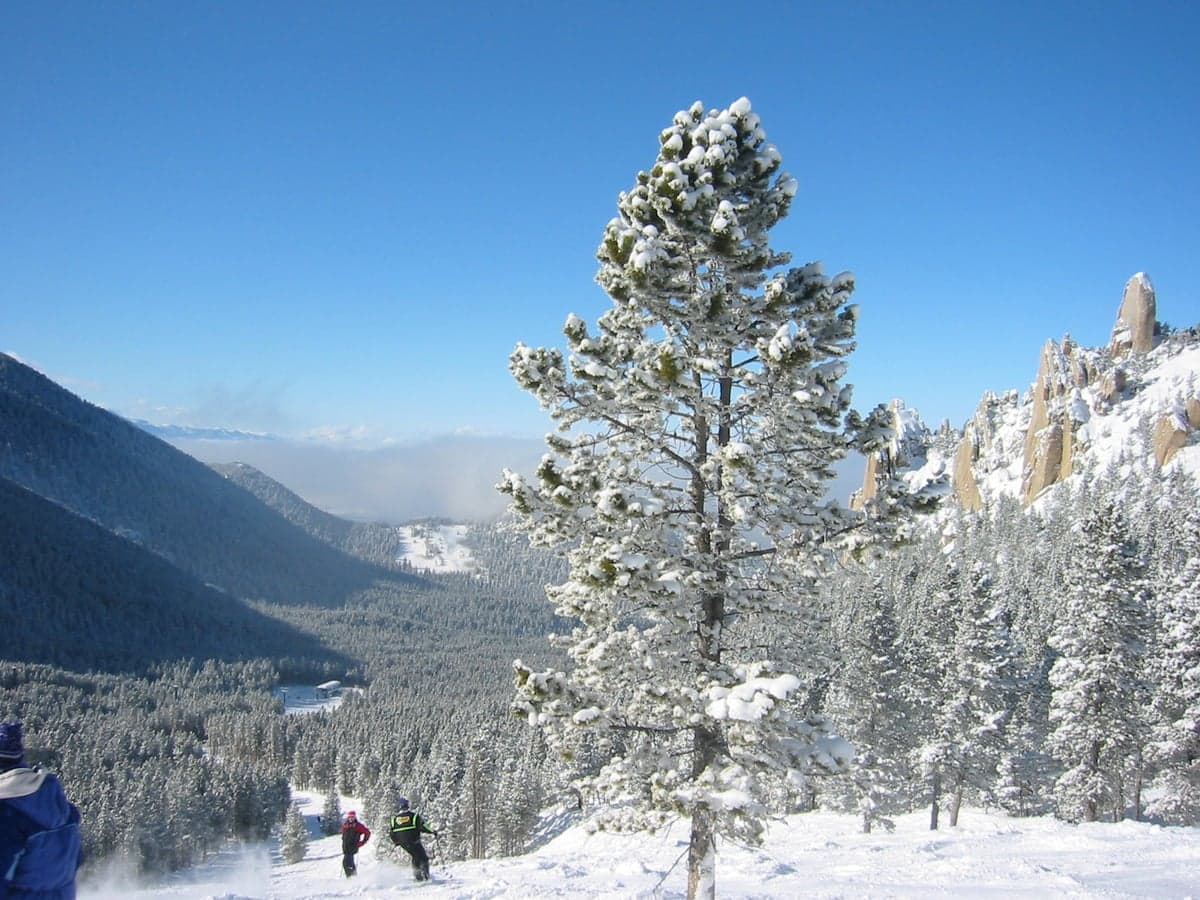
Photo: Wikipedia
Political ClimatePolitical Climate in Carbon County
Showing district-level results — no local-only data available.
Local Political AnalysisPolitical Analysis of Carbon County
Carbon County, Montana, is a reliably Republican stronghold with a Cook PVI of R+15, making it significantly more conservative than the state of Montana as a whole, which sits at R+10. This isn't a new development; the county has voted for the GOP presidential candidate in every election since 2000, often by margins exceeding 30 points. However, the political landscape isn't a monolith, and the real story is in the growing divide between the county's traditional agricultural and resource-extraction communities and its newer, amenity-driven enclaves.
How it compares
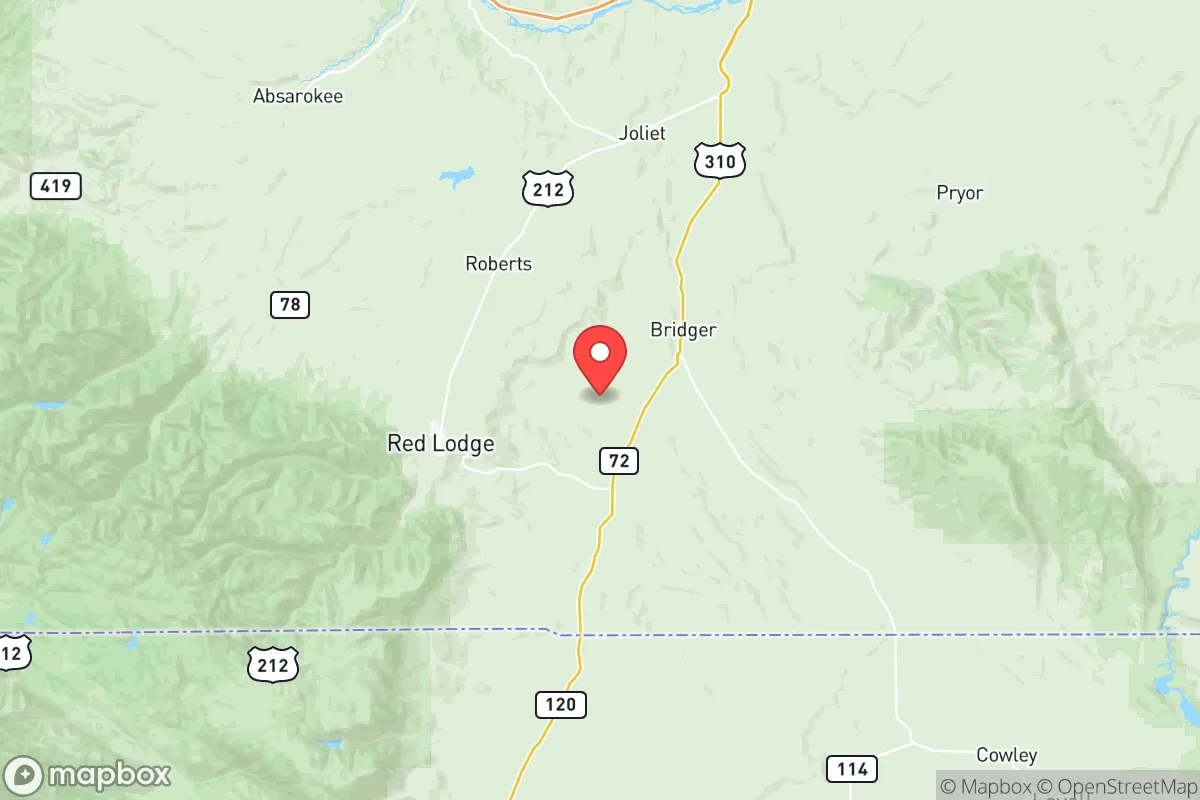
The R+15 rating means Carbon County is about five points more Republican than the state average, a gap that has widened slightly in recent cycles. To put that in perspective, while Montana as a whole has trended redder over the past decade, Carbon County has held steady or even deepened its conservative lean. The most telling contrast is within the county itself. The town of Red Lodge, a popular tourist gateway to the Beartooth Highway and a growing hub for out-of-state transplants, is the county's blue dot. Precincts in and around Red Lodge often vote Democratic or are competitive, driven by a mix of younger residents, artists, and service-industry workers. In the 2022 gubernatorial race, Red Lodge precincts broke roughly 55-45 for the Democrat, while the rest of the county, including Bridger, Joliet, and Fromberg, went 75-25 or higher for the Republican. The swing precincts are the rural areas immediately outside Red Lodge, where ranchers and newer landowners with libertarian leanings sometimes split tickets.
What this means for residents
For conservative residents, Carbon County is a comfortable place where their values are reflected in local policy. The county commission is solidly Republican, and issues like property rights, gun access, and resistance to federal land management are mainstream positions. You'll see plenty of Trump signs and "Don't Tread on Me" flags in Bridger and Joliet. For liberal residents, the reality is more nuanced. They are a clear minority, but they have a real, if limited, voice in Red Lodge. The town council there often debates progressive issues like short-term rental regulations and affordable housing, and the local Democratic club is active. Outside of Red Lodge, however, liberals often feel politically isolated. The key cultural distinction is the tension between the county's traditional extractive economy—coal mining near Bearcreek and agriculture—and the growing tourism and second-home economy centered on Red Lodge. This isn't just a partisan split; it's a clash over growth, land use, and the very identity of the county.
Looking ahead, the trajectory is toward a more polarized Carbon County. Red Lodge is growing faster than the rest of the county, attracting more out-of-state residents who tend to be more moderate or liberal. This is slowly shifting the county's overall political center of gravity, but the rural precincts are becoming more entrenched in their conservatism as a reaction. The practical effect for residents is a community where you can find your tribe, but you'll have to drive to find it. A conservative in Red Lodge might feel outnumbered at the farmers market, while a liberal in Bridger might feel the same at the local diner. The county's politics are a microcosm of the broader Western trend: a rural-urban divide that is deepening, with the old economic and social ties that once bridged the gap fraying a little more each year.

State Political ClimatePolitical Climate in Montana
State Political AnalysisPolitical Environment in the State
Montana has long had a Republican lean, with its Cook PVI of R+10 making it a reliably red state in presidential elections. However, that headline number masks a complex and fast-changing reality. Over the last 10-20 years, the state has become more polarized — the rural eastern and central counties have hardened into deep red territory, while a handful of fast-growing western counties, particularly around Missoula and Bozeman, have shifted toward the Democrats. The net result is a state that still votes Republican statewide but now does so with a much narrower margin than it did in the 2000s, when Republicans routinely won by double digits. In 2020, Donald Trump still carried Montana by 16 points, but down-ballot races have grown closer, and the state’s legislative and congressional maps are now subject to frequent legal battles over gerrymandering and representation.
Urban vs. rural divide
The political map of Montana is defined by a stark urban-rural split. The two largest population centers — Missoula and Bozeman — have become Democratic strongholds. Missoula County went for Joe Biden in 2020 by about 11 points, a dramatic shift from 2004 when it voted for George W. Bush by a slim margin. Bozeman’s Gallatin County, once a reliable Republican bastion, has trended left as tech and remote workers moved in; it voted for Biden in 2020 by a 2-point margin, a historic flip. Meanwhile, the rest of the state — places like Billings, Great Falls, and the vast eastern plains — remains deeply Republican. The rural counties of Phillips, McCone, and Sheridan regularly vote 75-80% Republican. This urban-rural gulf is also visible at the legislative level: Democrats hold nearly all seats in Missoula and Bozeman, while Republicans dominate everywhere else. A new resident moving to Missoula will find a politically active, progressive-leaning community with a strong environmental focus, while someone settling in Billings or Great Falls will encounter a more conservative, pro-business environment.
Policy environment
Montana’s policy environment is broadly conservative, though with a distinctive libertarian streak. The state has no general sales tax, relying instead on property and income taxes, which keeps the overall tax burden moderately low. The state legislature, under Republican control since 2011, has passed significant tax cuts, including a flat 5.9% income tax rate that was phased in starting 2024. Regulatory posture is light, especially for agriculture, energy, and timber. Education policy is a flashpoint: the state has a burgeoning school choice movement, with a universal school voucher bill narrowly defeated in 2023, but a version for rural and below-benchmark schools passed in 2025. Election laws are moderately restrictive: Montana has no-excuse absentee voting, same-day registration, and a voter ID law requiring a photo ID or a signed affidavit. The state limits campaign contributions but allows dark money through independent expenditure groups. For healthcare, Montana expanded Medicaid under the Affordable Care Act in 2015 and has not repealed it, though the state imposes work requirements for able-bodied adults. The state’s medical marijuana program is robust, but recreational cannabis remains illegal, with a heavily regulated medical-only market.
Recent policy direction
The last three legislative sessions have pushed Montana in a more conservative direction, especially on social and cultural issues. In 2023, the legislature passed a near-total ban on abortion after 20 weeks gestation, with exceptions only for life and rape, and a parental consent law for minors. Gun laws remain among the most permissive in the country: Montana has no permit requirement for open or concealed carry, no waiting periods, and a preemption law that bars local gun ordinances. The state passed a constitutional carry law in 2021. Parental rights have been strengthened with a law requiring schools to notify parents of any material changes in a child’s health or well-being, including gender expression. A "Don't Say Gay" law, similar to Florida’s, was debated but did not pass as of 2026. Privacy and surveillance are a mixed bag: the state has a broad government records law that makes police body camera footage largely public, but also a 2022 law limiting warrantless drone surveillance. On medical autonomy, Montana debated but did not pass a law banning gender-affirming care for minors, though a 2023 law bans such care for those under 18 in state custody. Property rights are strong: the state has a right-to-farm law protecting agricultural operations from nuisance suits, and a controversial 2023 "takings" law that compensates landowners when a regulation reduces property value by more than 30%. Taxation continues to drift downward: the 2023 legislative session cut the top marginal income tax rate from 6.9% to 5.9% and increased the earned income tax credit. Voting access was tightened with a 2021 law requiring a government-issued photo ID for in-person voting, though mail ballots still require only the last four digits of a Social Security number. The state also adopted independent redistricting commissions, though the current maps were drawn by a commission with partisan appointees, leading to court challenges.
Civil unrest & political movements
Montana has not seen large-scale civil unrest like some states, but political movements are active and visible. Environmental activism is a major force, particularly around the Yellowstone region and in Missoula, where groups like the Montana Environmental Information Center regularly protest mining, logging, and pipeline proposals. In 2023, a large protest over grizzly bear delisting drew thousands to Helena. On the right, the Montana Freedom Caucus has become a powerful force in the legislature, pushing for school choice, gun rights, and stricter election laws. The state saw a brief but intense election integrity controversy after the 2020 election, with a Republican-led audit of election machines in Lake County that found no evidence of fraud but became a partisan rallying point. Immigration is a low-salience issue in Montana, given its small foreign-born population, but the state passed a 2024 law requiring local law enforcement to cooperate with ICE. There is no significant secession movement, though a 2021 resolution calling for a constitutional convention of states was debated. A new resident in Helena will see frequent protests at the capitol on both sides of the abortion and environmental issues, but these are typically orderly and small by national standards.
Projection
Over the next 5-10 years, Montana is likely to continue its slow drift toward a purple status, driven by in-migration from left-leaning states and the growth of Missoula and Bozeman. The state’s population has grown by over 12% since 2010, with the fastest growth in Gallatin County (Bozeman) and Missoula County. This will make statewide elections increasingly competitive. The Republican control of the legislature is not at immediate risk, but the margin is likely to narrow. Demographically, the state is becoming older (median age 40.2) and whiter, but the new arrivals are more educated and more likely to vote Democratic. The ongoing housing crisis — with median home prices in Bozeman above $700,000 — may slow in-migration, but the overall trend is clear. In a decade, expect Montana to have one or two competitive congressional districts, possibly a purple Senate seat, and a state legislature that is more evenly divided. For a conservative relocator, the state will remain a good bet for low taxes and strong property rights, but the social policy debates will become more heated. For a liberal relocator, the urban centers will offer a supportive community, but you will still be living in a state where your vote carries less weight in statewide contests.
In practical terms, moving to Montana means trading a lower tax burden and more personal liberty on guns and speech for a state that is often contentious on social issues and where local governance can swing wildly based on county. If you land in Missoula or Bozeman, expect a politically active, polarized environment with strong left-leaning protests and right-leaning legislative pushback. If you choose Billings or Great Falls, you will find a more uniformly conservative community with fewer flashpoints. Either way, the state’s politics are in flux, and the next decade will decide whether Montana remains a reliably red state or becomes a true battleground.
* Values derived from national, state, county, city and local statistics and may differ in a specific area. Last updated: 2026-06-29T01:40:08.000Z
Narrative content on this page is AI-generated and may contain mistakes. Verify any details that matter before acting on them.
ReloMaps may earn a commission from affiliate links at no extra cost to you.

