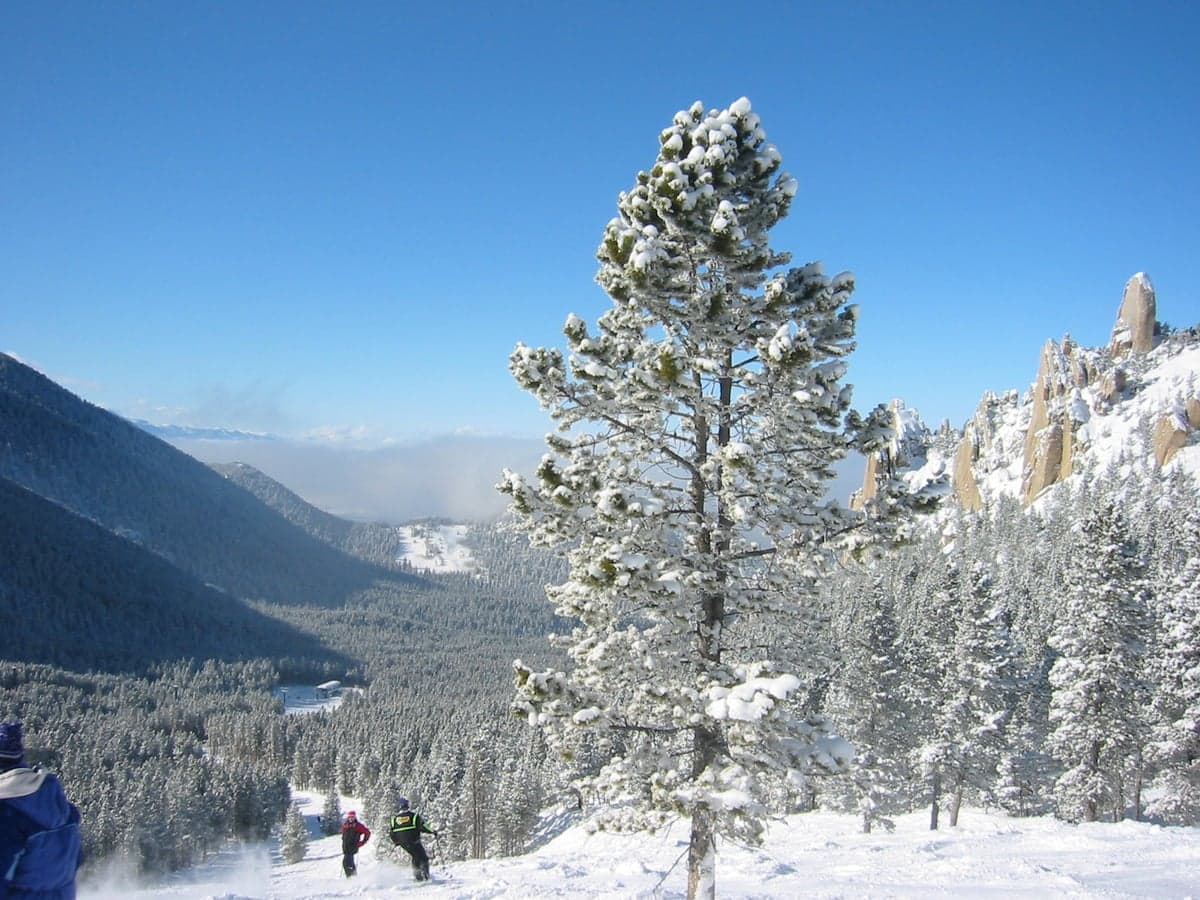
Photo: Wikipedia
Demographics of Carbon County
Affluence Level in Carbon County
A middle-class area roughly in line with national averages across income, home values, education, and employment.
People of Carbon County
The 10,877 residents of Carbon County, Montana, are an overwhelmingly white, native-born population characterized by deep-rooted family histories in the northern Rockies. With a foreign-born share of just 0.8%—a figure far below the Montana state average of 2.2%—and a white non-Hispanic population of 91.6%, the county today feels notably more ethnically homogenous than much of the nation. The population’s identity is shaped by a ranching, mining, and railroad past that began in earnest in the late 19th century, producing a culture that prizes self-reliance, private land ownership, and a conservative social ethos, visible in places like Red Lodge and Absarokee.
Settlement & growth (pre-1960)
Long before European settlement, the Carbon County area was part of the territory of the Crow (Apsáalooke) and Cheyenne nations, who used the Beartooth Mountains and the Yellowstone River valley for seasonal hunting. The Crow in particular held treaty rights to much of the region through the 1851 Fort Laramie Treaty, though their presence was gradually displaced by westward expansion after the 1868 treaty restricted them to a reservation north of the county. There was no substantial Spanish, French, or Russian colonial presence here; the first non-Native incursions were fur trappers and traders in the early 1800s, followed by the U.S. Army’s establishment of Fort C.F. Smith on the Bighorn River in 1866.
The first meaningful settlement wave came in the 1880s with the arrival of the Northern Pacific Railway. The railroad drove the founding of Red Lodge in 1884 as a coal-mining company town, and it quickly became the county’s commercial and population anchor. The coal boom from 1890 to 1920 drew a diverse but still largely native-born and Northern European workforce: English, Irish, German, and Scandinavian immigrants (especially Swedes and Norwegians) came to work the mines and build the railroad. Smaller numbers of Italian and Finnish laborers also arrived. By 1900, Red Lodge was a rough-edged mining camp of about 3,000 people, but Bearcreek, Joliet, and Bridger also grew as coal-shipping and agricultural service centers.
After the mines began to decline in the 1920s, the county’s population shifted toward dryland farming and ranching, with homesteaders—many from the Upper Midwest and Great Plains—taking up parcels under the Enlarged Homestead Act of 1909. Small communities like Fromberg and Belfry emerged in this period as grain and livestock shipping points. The Great Depression and the Dust Bowl sent some displaced farmers into the county, but Carbon County’s population peaked at just under 13,000 in 1920 and then began a slow decline that would continue into the 1970s as coal mechanization and farm consolidation reduced the need for labor. The Japanese internment camps of World War II had no direct presence here, and the county saw no significant wartime-driven migration.
Modern era (post-1965)
Following the 1965 Hart-Cellar Act, which opened immigration from Asia and Latin America, Carbon County experienced virtually none of the resulting demographic change seen in urban or agricultural areas of the U.S. The foreign-born population today of 0.8% is one of the lowest in Montana, and the 2.9% Hispanic population is smaller than the state’s 4.7% average. Much of that Hispanic share is concentrated in farm-labor families—largely of Mexican descent—who work in the county’s sugar beet and hay fields around Bridger and Fromberg, though the numbers are small enough to lack a formal enclave. The 0.5% East/Southeast Asian population (mostly Southeast Asian refugees resettled by the state in the 1980s) is scattered, with no single neighborhood concentration. The 0.5% Black population and 0.0% Indian subcontinent population reflect the area’s historical lack of pull for immigrants or domestic migrants from those groups.
The most significant modern population shift has been domestic migration rather than immigration. Starting in the 1990s, retirees and remote workers from the Rocky Mountain Front Range and the Pacific Northwest began settling in Red Lodge, attracted by the Beartooth Mountains, lower property taxes, and a slower pace of life. This “amenity migration” accelerated after 2010: Red Lodge added roughly 200 new homes between 2010 and 2020, and its median home price rose from $220,000 to $450,000 over that decade. The town’s historic district and ski tourism have also drawn second-home buyers from Billings and the West Coast. Joliet and Absarokee, more agricultural, have seen slower growth but have absorbed spillover from Red Lodge’s housing crunch. The county’s population grew from 9,752 in 2010 to 10,877 in 2024, a 12% gain—driven almost entirely by native-born whites.
The future
The next 10 to 20 years will likely see Carbon County become modestly older and marginally more diverse, but it will remain a dramatically white, native-born landscape. The 30.3% college-educated rate—above the U.S. median for non-metro counties—suggests the incoming amenity migrants are relatively educated and politically moderate, but they are not diversifying the population in a meaningful way. The county’s Hispanic share may inch up to 4–5% as farm labor demand continues, but housing costs in Red Lodge (now the seventh most expensive housing market in Montana) will likely push younger families and service workers into Bridger and Fromberg, where land is cheaper. The closure of the last underground coal mine at Bearcreek in 2010 ended an era, but tourism and remote work are the new economic drivers—meaning the population will continue to be dominated by white arrivals from elsewhere in the U.S., not from abroad or from other racial groups.
Bottom-line: Carbon County is becoming an Appalachian-West hybrid—a formerly extractive economy remade by recreation and amenity migration, but without the racial diversification seen in many Western counties. For a conservative-leaning individual or family moving in now, the county offers a like-minded social environment, low crime, and strong property rights, but also a high and rising financial barrier to homeownership in its most desirable town. The county’s future population will be older, wealthier, and whiter than the national average—a choice, rather than an accident of immigration policy.

* Values derived from national, state, county, city and local statistics and may differ in a specific area. Last updated: 2026-06-29T01:40:08.000Z
Narrative content on this page is AI-generated and may contain mistakes. Verify any details that matter before acting on them.
ReloMaps may earn a commission from affiliate links at no extra cost to you.

