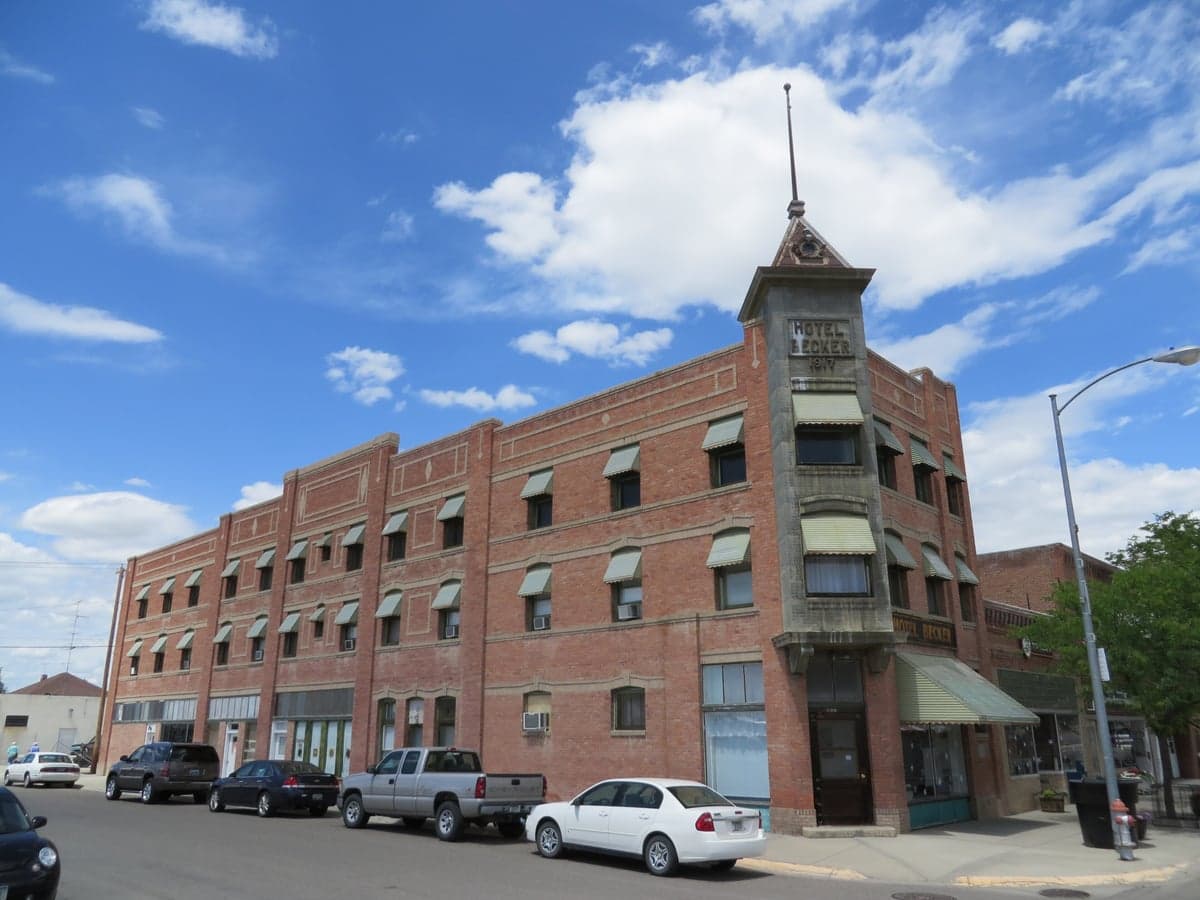
Photo: Wikipedia
Political ClimatePolitical Climate in Big Horn County
Showing district-level results — no local-only data available.
Local Political AnalysisPolitical Analysis of Big Horn County
Big Horn County is a fascinating political outlier in Montana, a deep red R+15 county on the Cook PVI that sits in a state that itself leans R+10. But that number doesn't tell the whole story. The county is a genuine battleground, with a political reality that shifts dramatically depending on whether you're in the county seat of Hardin, the small town of Lodge Grass, or the rural ranchlands outside of Crow Agency. The county's overall Republican lean is driven by the ranching and energy communities, but it's a much closer race than the PVI suggests because of the large Native American population, which votes overwhelmingly Democratic.
How it compares
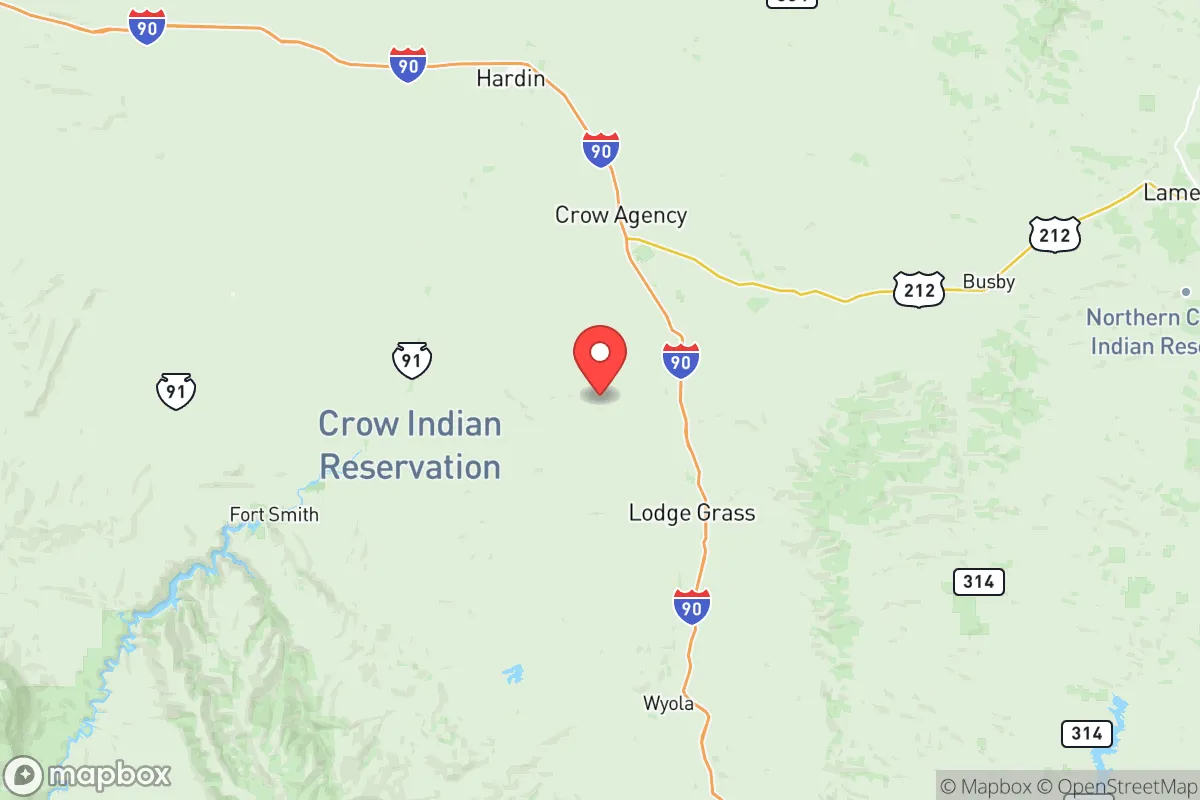
Montana as a whole is reliably Republican, but Big Horn County is a microcosm of the state's internal divides. The state's R+10 PVI means Republicans typically win statewide races by comfortable margins, but Big Horn County's R+15 is actually a bit of a mirage. The county's Republican edge comes almost entirely from the white, rural precincts around Hardin and the northern part of the county. In contrast, the towns of Crow Agency and Lodge Grass, both on the Crow Reservation, are reliably Democratic strongholds. In the 2020 presidential election, for example, the precincts around Crow Agency and Lodge Grass voted for Joe Biden by margins of 60-70%, while the Hardin-area precincts went for Donald Trump by similar margins. The swing precincts are the small, mixed-population areas like Wyola and Busby, where the vote can flip depending on turnout and local issues. This makes Big Horn County one of the few places in Montana where a Democratic candidate can actually win a precinct, let alone a county-level race.
What this means for residents
For conservative residents, especially those in the ranching and energy sectors around Hardin, the county's Republican lean means their values are generally reflected in local policy. The county commission is Republican-controlled, and property taxes and land-use regulations tend to favor agricultural and energy interests. For liberal residents, particularly in Crow Agency and Lodge Grass, the political reality is more complex. They are a clear minority in county-wide elections, but they hold significant influence in local tribal governance and in state-level races where the Native vote can tip the balance. The practical effect is that you'll see a lot of "Trump 2024" signs on the highway between Hardin and Crow Agency, but you'll also see "Re-elect the Democratic candidate" signs in the tribal communities. It's a place where political conversations are often about water rights, coal mining, and tribal sovereignty, not just national culture wars.
The cultural and policy distinctions are stark. Big Horn County is one of the few places in Montana where the debate over the proposed Tongue River Railroad and coal development is a daily reality, not an abstract issue. The county is also home to the Little Bighorn Battlefield National Monument, a site that draws tourists but also serves as a constant reminder of the region's complex history. The county's political climate is less about partisan labels and more about the tension between economic development (often tied to coal and agriculture) and the preservation of tribal lands and cultural heritage. For a new resident, the key takeaway is that Big Horn County is not a monolith. You'll find deep red and deep blue pockets, and the real political action happens at the local level, where decisions about land use, water, and education have a direct impact on daily life.

State Political ClimatePolitical Climate in Montana
State Political AnalysisPolitical Environment in the State
Montana has long been a reliably Republican state at the presidential level, carrying a Cook PVI of R+10, but its political reality is far more nuanced than a simple red-state label suggests. Over the past 20 years, the state has shifted from a purple-trending battleground—where Democrats like Max Baucus and Jon Tester held Senate seats and the state voted for Bill Clinton in 1992—to a solidly conservative stronghold, driven by rural realignment and an influx of out-of-state transplants. However, that in-migration is now creating new fault lines, with fast-growing counties like Gallatin (Bozeman) and Missoula trending blue, while the eastern plains and western mining towns remain deeply red.
Urban vs. rural divide
The political map of Montana is essentially a story of three distinct regions. The western mountain valleys—Missoula, Bozeman, and to a lesser extent Helena—are the state's liberal anchors, with Missoula County voting +20 Democratic in recent cycles and Gallatin County flipping blue in 2020 for the first time in decades. Meanwhile, the eastern two-thirds of the state, including Great Falls, Billings, and the Hi-Line, vote overwhelmingly Republican, often by 30-40 point margins. The real battleground is the suburban and exurban fringe around these growing cities: places like Belgrade (outside Bozeman) and Kalispell in the Flathead Valley are seeing rapid growth and political tension, with newcomers often more moderate than the deeply conservative ranching families who've been there for generations. The result is a state where the legislature is supermajority Republican, but the governor's office and one U.S. Senate seat have been held by Democrats as recently as 2020.
Policy environment
Montana's policy environment is defined by a low-tax, low-regulation posture that appeals strongly to conservative relocators. There is no state sales tax, and the top marginal income tax rate was cut from 6.9% to 5.9% in 2023, with further reductions scheduled. Property taxes are moderate but vary significantly by county—Gallatin County's rapid appreciation has pushed effective rates higher than in rural Phillips County. The state has a Republican-controlled legislature that has consistently passed pro-business tort reform and maintained a right-to-work law since 1947. Education policy is locally controlled, with no state-level curriculum mandates beyond basic standards, and Montana has one of the most permissive charter school laws in the region. Healthcare policy is more mixed: the state expanded Medicaid under a 2015 law that was reauthorized in 2023 with work requirements, a compromise that reflects the legislature's libertarian streak. Election laws are moderately restrictive—voter ID is required, same-day registration is available, and mail-in voting is universal by default, a system that enjoys broad bipartisan support.
Recent policy direction
Over the past three legislative sessions, Montana has moved decisively in a conservative direction on nearly every front a relocator might care about. On gun rights, the state passed permitless carry in 2021 and preempted all local firearm ordinances, meaning Missoula and Bozeman cannot enact their own restrictions. Parental rights in education were strengthened by a 2023 law requiring schools to notify parents of any curriculum involving sexual content and to obtain consent before students can participate. On speech and privacy, Montana passed one of the nation's strongest data privacy laws in 2023 (the Montana Consumer Data Privacy Act) and banned TikTok on state devices. Medical and bodily autonomy saw a near-total abortion ban in 2023, currently blocked by the state Supreme Court, and a 2022 law restricting gender-affirming care for minors. Property rights were bolstered by a 2021 law limiting eminent domain for carbon pipelines, a flashpoint in the rural-urban divide. Tax policy continues trending downward, with the 2023 session passing a flat income tax structure that will phase in by 2027. Ballot access remains stable, though the legislature has tightened signature requirements for third-party candidates.
Civil unrest & political movements
Montana's political movements are less about street protests and more about organized legislative activism. The most visible flashpoint in recent years has been the conflict over public land access and the "land use" battles in the Gallatin Valley, where new subdivisions have sparked clashes between growth-oriented conservatives and preservation-minded liberals. The Yellowstone Club and Big Sky area have become symbols of out-of-state wealth driving local politics. On the right, the Montana Freedom Caucus has pushed hard on election integrity and school choice, while the left has organized around abortion access and climate policy, particularly after the 2023 youth-led climate lawsuit (Held v. Montana) that made national headlines. Immigration politics are relatively quiet—Montana has a tiny foreign-born population—but the state has passed laws prohibiting sanctuary cities and requiring E-Verify. There is a small but vocal secessionist movement in eastern Montana, tied to the "Greater Idaho" proposal, though it has no serious political traction. Election integrity controversies have been minimal compared to other states, largely because Montana's universal mail-in system is trusted across party lines.
Projection
Over the next 5-10 years, Montana's political trajectory will be defined by demographic churn. The state is growing faster than almost any other, and that growth is concentrated in the blue-trending western valleys—Bozeman, Missoula, and the Flathead. If current trends hold, Gallatin County will become solidly Democratic, and Missoula County will deepen its blue lean, while the rest of the state remains deeply red. This could flip one or two state legislative districts and make the governor's race more competitive, but the state's overall R+10 lean is unlikely to change because the rural counties that vote 80% Republican are not losing population. The real wildcard is the Flathead Valley: Kalispell and Whitefish are growing fast, and if Whitefish's liberal lean spreads, it could make the western third of the state a genuine battleground. A relocator moving in now should expect a state that remains conservative in statewide elections but sees increasing local friction over growth, land use, and school policy.
For a new resident, the bottom line is straightforward: Montana offers a low-tax, high-autonomy environment that strongly favors conservative priorities on guns, education, and property rights, but it is not a monolith. If you move to Bozeman or Missoula, you'll live in a blue bubble with progressive neighbors and local policies that sometimes clash with state law. If you move to Billings or Sidney, you'll find a deeply conservative community where the biggest political fights are about federal land management and water rights. The state's political culture is less about partisan warfare and more about a shared suspicion of government overreach—a libertarian streak that unites left and right in unexpected ways, especially on privacy and land use. Just be prepared for the fact that your county commission and school board will matter a lot more than who's in the White House.
* Values derived from national, state, county, city and local statistics and may differ in a specific area. Last updated: 2026-07-12T06:05:20.000Z
Narrative content on this page is AI-generated and may contain mistakes. Verify any details that matter before acting on them.
ReloMaps may earn a commission from affiliate links at no extra cost to you.

