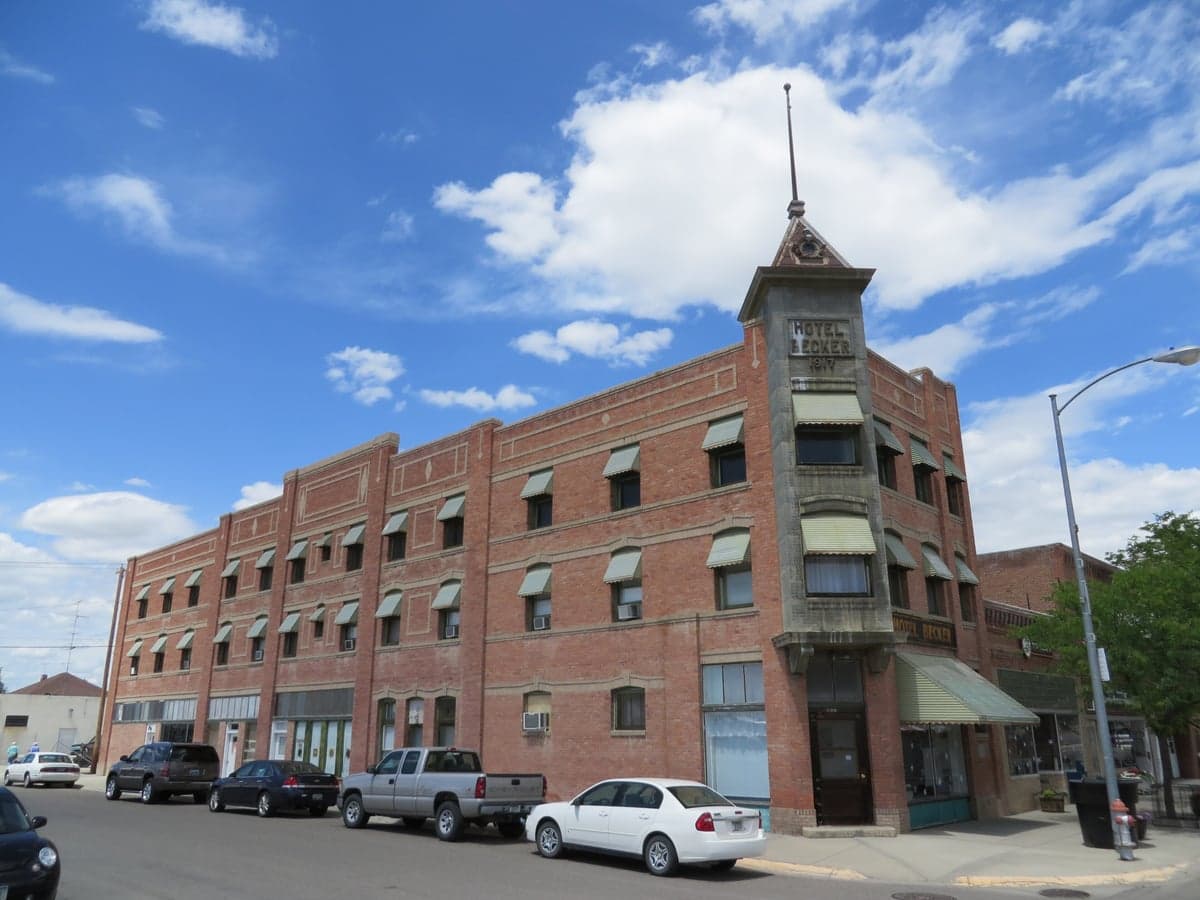
Photo: Wikipedia
Demographics of Big Horn County
Affluence Level in Big Horn County
A below-average socioeconomic profile. Incomes, home values, and educational attainment trail the U.S., with higher poverty and unemployment.
People of Big Horn County
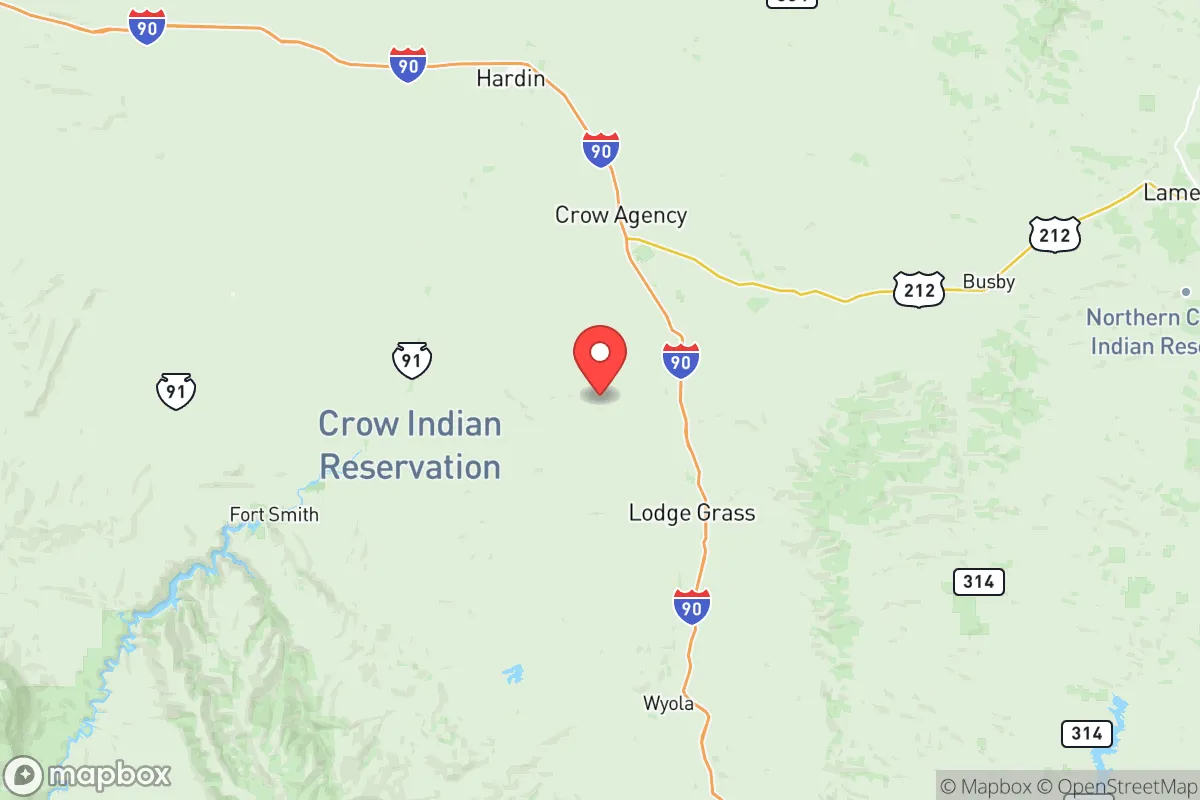
Big Horn County, Montana, is home to 12,963 residents, a population defined by its stark rural character and a demographic profile unlike any other in the state. The county is overwhelmingly Native American, with a white population of just 27.0%, a Hispanic share of 4.6%, and a foreign-born population of only 0.2%. Its identity is rooted in the Crow Indian Reservation, which covers roughly 60% of the county’s land area, and the county seat of Hardin serves as the primary commercial and administrative hub for a dispersed, deeply traditional community.
Settlement & growth (pre-1960)
The human history of Big Horn County begins with the Crow people, who have inhabited the region for centuries. The Crow Nation, known as the Apsáalooke, were historically a nomadic Plains tribe, following bison herds and establishing seasonal camps along the Bighorn and Little Bighorn Rivers. Their territory was vast, but by the 1851 Fort Laramie Treaty and subsequent agreements, they were confined to a reservation that today forms the core of the county. The 1868 Treaty of Fort Laramie formally established the Crow Reservation, and the county itself was created in 1913 from parts of Rosebud and Yellowstone counties.
European-American settlement arrived in the late 19th century, driven by the expansion of the railroad and the promise of open-range cattle ranching. The Chicago, Burlington and Quincy Railroad reached the area in the 1890s, spurring the founding of towns like Hardin (established 1907) and Lodge Grass (settled around 1900). These towns attracted a mix of homesteaders, ranchers, and merchants, primarily of Northern European descent—Scandinavians, Germans, and Irish—who sought land under the Homestead Act. The 1910 census recorded just 4,000 residents, but the population grew steadily as dryland farming and cattle operations expanded. The town of Pryor, located on the reservation, also developed as a trading post and community center for both Crow and white residents.
By the 1930s, the Dust Bowl and the Great Depression slowed migration, but the county’s population continued to grow through natural increase among the Crow population. The Indian Reorganization Act of 1934 allowed the Crow Nation to establish a formal tribal government, solidifying the reservation’s role as a political and cultural anchor. The post-World War II era saw modest growth, with the 1960 census recording 10,032 residents. The town of Busby emerged as a key community within the reservation, while Decker and Fort Smith remained small, unincorporated settlements tied to ranching and coal mining.
Modern era (post-1965)
The 1965 Hart-Cellar Act had minimal direct impact on Big Horn County, as the foreign-born population remains negligible at 0.2%. Instead, the county’s modern demographic story is one of domestic stability and gradual decline. The white population has shrunk from a majority in the 1960s to just 27.0% today, as younger white residents have left for college and jobs in Billings or other Montana cities. Meanwhile, the Native American population—predominantly Crow—has remained the demographic majority, with a birth rate higher than the state average.
The Hispanic population, at 4.6%, is a small but growing presence, concentrated in Hardin and Lodge Grass, where seasonal agricultural work in sugar beet and hay fields has drawn families from Mexico and the Southwest. The Asian population is virtually nonexistent at 0.2%, and the Black population is recorded at 0.0%, reflecting the county’s isolation from major migration corridors. The Indian subcontinent population is also 0.0%.
Suburbanization has not occurred in any meaningful sense; the county remains deeply rural, with no incorporated city larger than Hardin (population roughly 3,800). The Crow Reservation’s governance and land ownership patterns—where much land is held in trust by the federal government—have prevented the kind of speculative development seen elsewhere. The town of Crow Agency, home to the Little Bighorn Battlefield National Monument, remains a focal point for tourism and tribal administration, but its population has stagnated.
Economic shifts have also shaped the modern era. The closure of coal mines in the Decker area in the 2010s, combined with the decline of family ranching, has pushed many residents—both white and Native—to seek work in Billings, 50 miles north. The county’s college-educated share is just 20.9%, well below the national average, reflecting limited local opportunities for white-collar employment.
The future
Big Horn County’s population is projected to remain stable or decline slightly over the next 10-20 years. The Native American share will likely continue to grow as a proportion of the total, given higher birth rates and the out-migration of white residents. The Hispanic population may increase modestly, driven by agricultural labor demand, but will remain a small minority. The county is not becoming more diverse in the conventional sense; rather, it is becoming more uniformly Native American, with the Crow identity deepening as the dominant cultural force.
New communities are unlikely to form in any significant way. The existing towns—Hardin, Lodge Grass, Crow Agency, Pryor, and Busby—will remain the primary population centers, with Hardin potentially seeing modest growth if the proposed coal-to-liquids or carbon-capture projects materialize. The county’s cultural identity is evolving toward a stronger assertion of Crow sovereignty and language preservation, with tribal schools and health services becoming the largest employers.
For someone moving in now, Big Horn County offers a life defined by wide-open spaces, a deep connection to Native American history, and a pace of life far removed from urban America. The trade-offs are clear: limited job diversity, a small and aging white population, and a social fabric where the Crow Nation’s traditions and governance shape daily life. The county is not a destination for those seeking demographic change or economic dynamism, but for those drawn to a place where the past remains powerfully present.

* Values derived from national, state, county, city and local statistics and may differ in a specific area. Last updated: 2026-07-12T06:05:20.000Z
Narrative content on this page is AI-generated and may contain mistakes. Verify any details that matter before acting on them.
ReloMaps may earn a commission from affiliate links at no extra cost to you.

