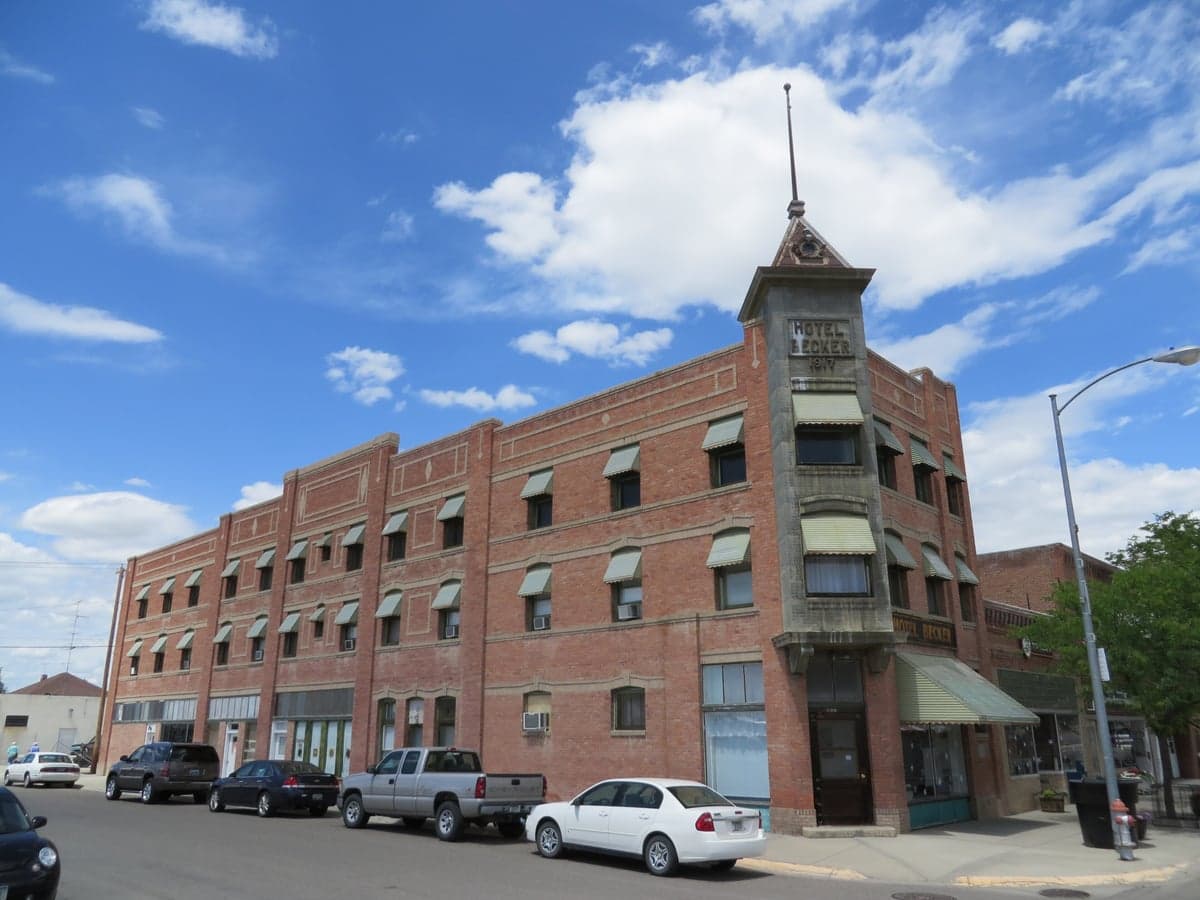
Photo: Wikipedia
Quality of Life in Big Horn County
A livable area that tracks near national norms for affordability, walkability, and neighborhood health.
What does Quality of Life tell us?
Quality of Life measures an area by evaluating factors like cost of living, nearby amenities, country club access, airport proximity, socioeconomic signals and neighborhood character. For large states, this is a general average — quality of life can vary dramatically between metro areas, suburbs, and rural communities within the same state.
What does this tell us?
Quality of Life measures an area by evaluating factors like cost of living, nearby amenities, country club access, airport proximity, socioeconomic signals and neighborhood character. For large states, this is a general average — quality of life can vary dramatically between metro areas, suburbs, and rural communities within the same state.
Cost of Living
44% below national average
134%
The Real Cost of Living in Big Horn County for 2026
| Tier | Individual | Family (4) |
|---|---|---|
| Survival | $11k | $21k |
| Comfortable | $29k | $42k |
| Luxury | $90k+ | $140k+ |
| Elite (Top 5%) | $106k+ | $165k+ |
Quality-of-Life Analysis
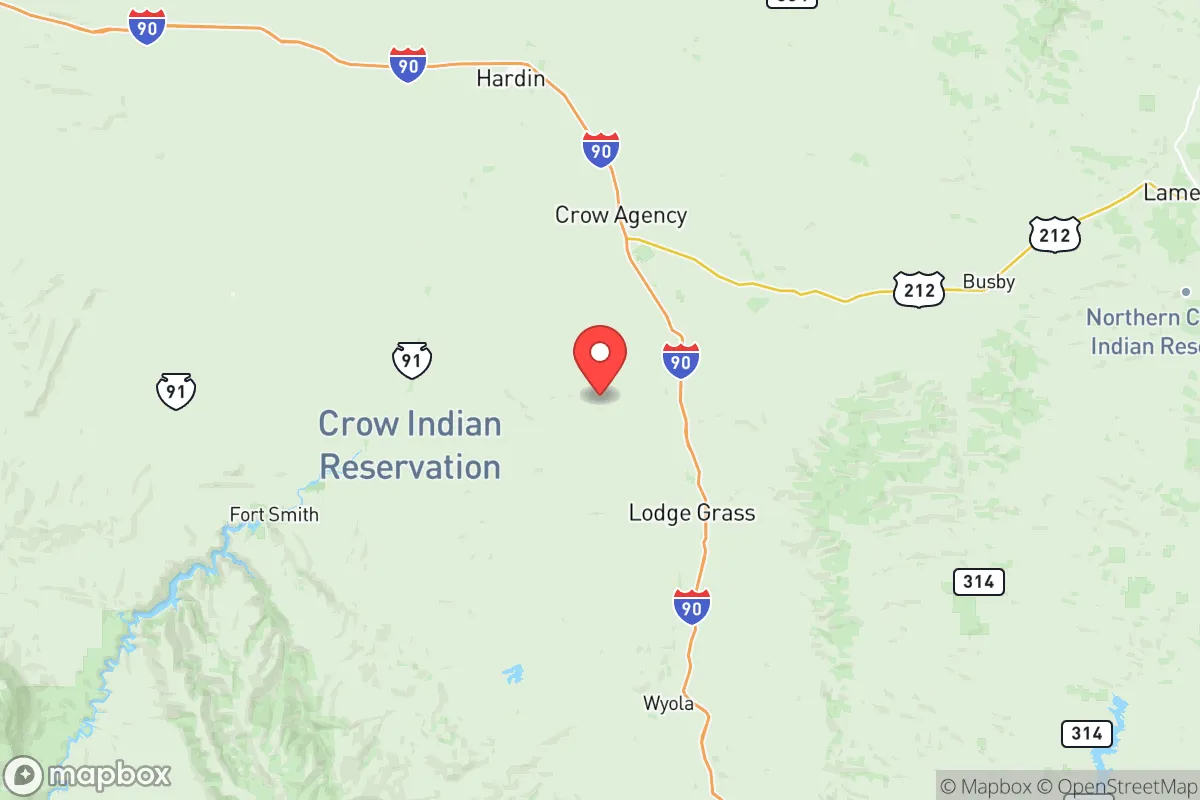
Big Horn County, Montana, offers a spectrum of quality-of-life options that range from the modest commercial hub of Hardin to the remote, unincorporated crossroads of Decker and the vast, sparsely populated ranchlands of the Crow and Northern Cheyenne Indian Reservations. The county’s character is defined by its dual identity: a working agricultural and energy corridor along the Yellowstone River and a deeply rural, culturally significant region anchored by the Crow and Northern Cheyenne nations. People drawn here typically seek low costs, wide-open spaces, and a slower pace, though the specific experience varies dramatically depending on whether one lives in the county seat, a tiny railroad town, or a homestead on the plains.
Largest town(s) & population centers
Hardin, the county seat and largest town with roughly 3,800 residents, is the primary population center and the only place in Big Horn County with a full grocery store, a hospital (Big Horn County Memorial Hospital), and a K-12 school system. Daily life in Hardin revolves around county government, agriculture support services, and the nearby Two Leggins Park along the Bighorn River. The town has a quiet, working-class feel with a historic downtown of brick storefronts, a few fast-food chains, and a Walmart Supercenter that serves as a regional shopping anchor. Commute times average just under 21 minutes countywide, but in Hardin itself, most errands are a 5-10 minute drive. The town also hosts the Little Bighorn Battlefield National Monument 15 miles east, drawing tourists but not fundamentally altering the town’s insular character. Hardin is the only location in the county with rental apartments; the median rent of $686 reflects the lack of high-end housing.
Smaller towns & rural pockets
Beyond Hardin, the county’s smaller communities offer a more isolated, land-based lifestyle. Lodge Grass (pop. ~430) sits on the Crow Reservation and is the largest of the reservation towns, with a small grocery, a health clinic, and a high school. Life here is deeply tied to Crow cultural events, including the annual Crow Fair, and housing is often older manufactured homes or HUD-subsidized units. Pryor (pop. ~600) is a unincorporated community on the Crow Reservation with no commercial services beyond a gas station and a post office; residents commute 40+ minutes to Hardin or Billings for work and shopping. Decker, in the far southeastern corner, is a tiny unincorporated hamlet near the Wyoming line, surrounded by coal mines and cattle ranches. Busby and Lame Deer are the main population centers on the Northern Cheyenne Reservation, with Lame Deer (pop. ~2,000) offering a tribal college (Chief Dull Knife College), a health center, and a small grocery. These areas have significantly lower median home values than the county average of $148,200, often under $80,000, but also lack paved roads, public water in some pockets, and broadband internet.
Cost & lifestyle range
The countywide cost of living index of 56 (well below the U.S. average of 100) masks a wide spread. At the low end, a renter in a rural reservation community like Lame Deer might pay $400-$500 for a two-bedroom house with no central air, while a buyer in Hardin can find a 3-bedroom home for $130,000-$160,000. At the higher end, a newer or renovated home on acreage near the Bighorn River or along the Yellowstone River corridor west of Hardin can reach $250,000-$350,000, still a fraction of Bozeman or Missoula prices. Amenities follow the same gradient: Hardin has a hospital, a library, a swimming pool, and a few restaurants; Lodge Grass has a clinic and a school; Decker and Pryor have essentially no public amenities. Property taxes are among the lowest in Montana, with the county’s mill levy keeping annual tax bills on a $150,000 home around $1,200-$1,500. The trade-off is limited employment—the largest private employers are the Spring Creek Coal Mine near Decker and the Absaloka Mine, plus tribal government and the Indian Health Service.
This county is best suited for people who prioritize extreme affordability, land access, and a quiet, self-reliant lifestyle over urban amenities, career diversity, or cultural nightlife. Retirees on fixed incomes, remote workers with satellite internet, ranchers, and tribal members returning to their homelands are the typical residents. Anyone who needs specialized healthcare, frequent air travel, or a wide job market will struggle; the nearest major city, Billings, is 45-90 minutes away depending on location. For those who value space, low cost, and a deep connection to the Northern Plains landscape, Big Horn County offers a quality of life that is increasingly rare in the Lower 48.

Crime in Big Horn County
Generally safer than 57% of comparable U.S. locations.
Violent CrimeViolent Crime Analysis
Property CrimeProperty Crime Analysis
Crime Analysis
Big Horn County, Montana, reports a violent crime rate of 419.9 per 100,000 residents and a property crime rate of 1,463.9 per 100,000, placing it among the higher-crime jurisdictions in the state. These figures are significantly elevated compared to Montana’s statewide averages and the national median, driven largely by conditions in the county’s largest municipality, Hardin, and the nearby Crow Agency community. Residents and prospective movers should understand that safety conditions vary sharply between the county’s small towns and its more remote, unincorporated areas.
Crime in context
Big Horn County’s violent crime rate of 419.9 per 100,000 is roughly 2.5 times the Montana state average of approximately 170 per 100,000 and well above the national rate of about 380 per 100,000. Property crime at 1,463.9 per 100,000 is similarly elevated, exceeding the state average of roughly 1,100 per 100,000. The county’s crime statistics are heavily influenced by Hardin, the county seat and largest town, which has struggled with property theft and drug-related offenses. The Crow Agency, a census-designated place on the Crow Indian Reservation, also reports elevated violent crime rates, including aggravated assault and robbery, which skew the county-wide numbers upward. In contrast, smaller communities like Lodge Grass and Wyola tend to see lower reported crime rates, though data for these areas is less consistently tracked.
What residents experience
Residents in Hardin frequently cite property crime—particularly vehicle theft, burglary, and vandalism—as the most common safety concern. The town’s proximity to Interstate 94 makes it a corridor for transient criminal activity. Violent crime in Hardin is often linked to domestic disputes and alcohol-related incidents, with the Hardin Police Department handling a caseload that is high for a town of roughly 3,700 people. The Crow Agency area, under the jurisdiction of the Bureau of Indian Affairs and the Crow Tribal Police, faces challenges with underreporting and limited law enforcement resources, leading to a perception of impunity for some offenders. Residents in outlying areas like Busby and Decker report fewer incidents overall, but the distance to emergency services can be a concern. The county’s judicial system, overseen by the Montana 22nd Judicial District, has faced criticism for inconsistent sentencing in drug and property cases, which some residents feel undermines deterrence.
Neighborhood-level variation
Safety in Big Horn County is not uniform. The most concentrated crime occurs in Hardin’s downtown core and the residential areas immediately surrounding the Crow Agency administrative buildings. In Hardin, neighborhoods east of the BNSF railroad tracks and near the Hardin High School area see higher police call volumes. Conversely, the rural subdivisions west of Hardin—such as those along State Highway 313—and the agricultural communities around St. Xavier report very low crime rates, often limited to occasional theft from vehicles. The town of Pryor, located on the reservation’s northern edge, has a reputation for being quieter than Crow Agency, though it still faces challenges with underfunded policing. For those considering relocation, the safest housing options are typically found in the unincorporated areas outside Hardin’s city limits, where property crime rates drop to near the state average. However, the trade-off is reduced access to emergency services and longer response times from the Big Horn County Sheriff’s Office.
* Values derived from national, state, county, city and local statistics and may differ in a specific area. Last updated: 2026-07-12T06:05:20.000Z
Narrative content on this page is AI-generated and may contain mistakes. Verify any details that matter before acting on them.
ReloMaps may earn a commission from affiliate links at no extra cost to you.

