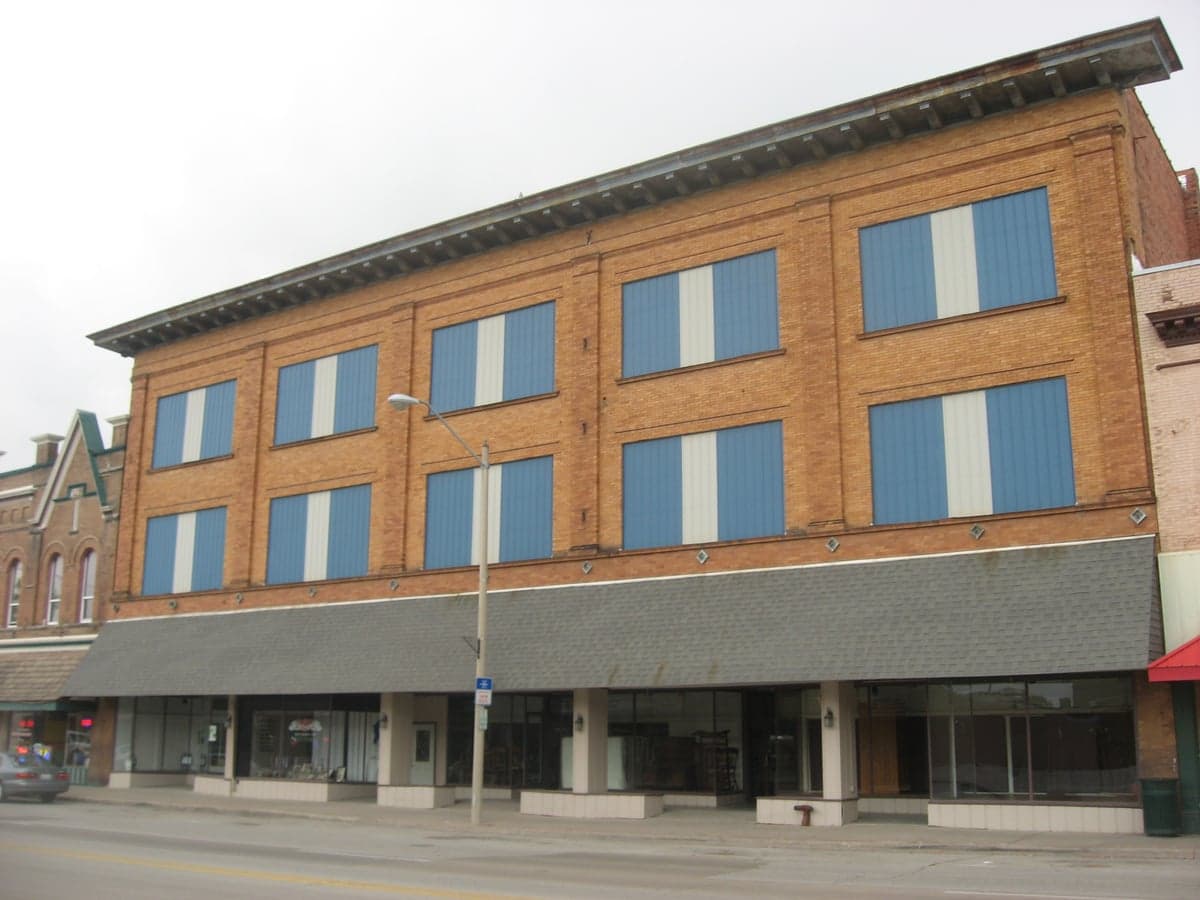
Photo: Wikipedia
Strategic Assessment of Monmouth, IL
Workable tactical position. Some exposure to population density or targets, but generally defensible in a crisis.
What does the Strategic Assessment tell us?
Our Strategic Assessment grades tactical survivability of an area. Major population centers, military targets, fallout zones, natural disasters, and border exposure all drive risk — lower exposure means a more defensible position in a crisis.
This is heavily inspired by Joel Skousen's Strategic Relocation book. Highly recommended you checkout the book ($)What does this tell us?
Our Strategic Assessment grades tactical survivability of an area. Major population centers, military targets, fallout zones, natural disasters, and border exposure all drive risk — lower exposure means a more defensible position in a crisis.
This is heavily inspired by Joel Skousen's Strategic Relocation book. Highly recommended you checkout the book ($)Strategic Pillars
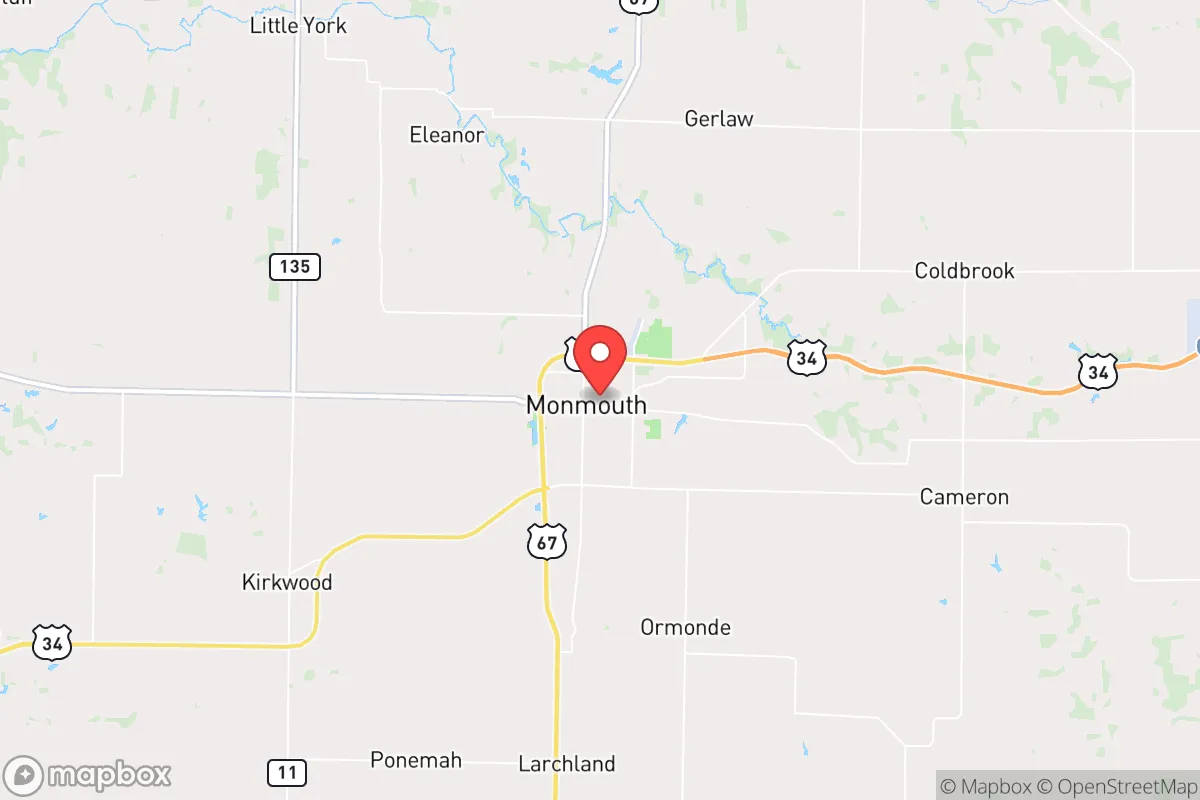
Key Distances
Regional Safe Places
Below is our recommended "safe zones" in Illinois and the surrounding area based on our strategic heuristics. For most people, it's unrealistic to live in a “safe zone” full-time due to work, family or other personal reasons. They tend to be more rural. However, many of these areas are perfect for second homes and retreat properties that double as a vacation home or even a short-term rental.
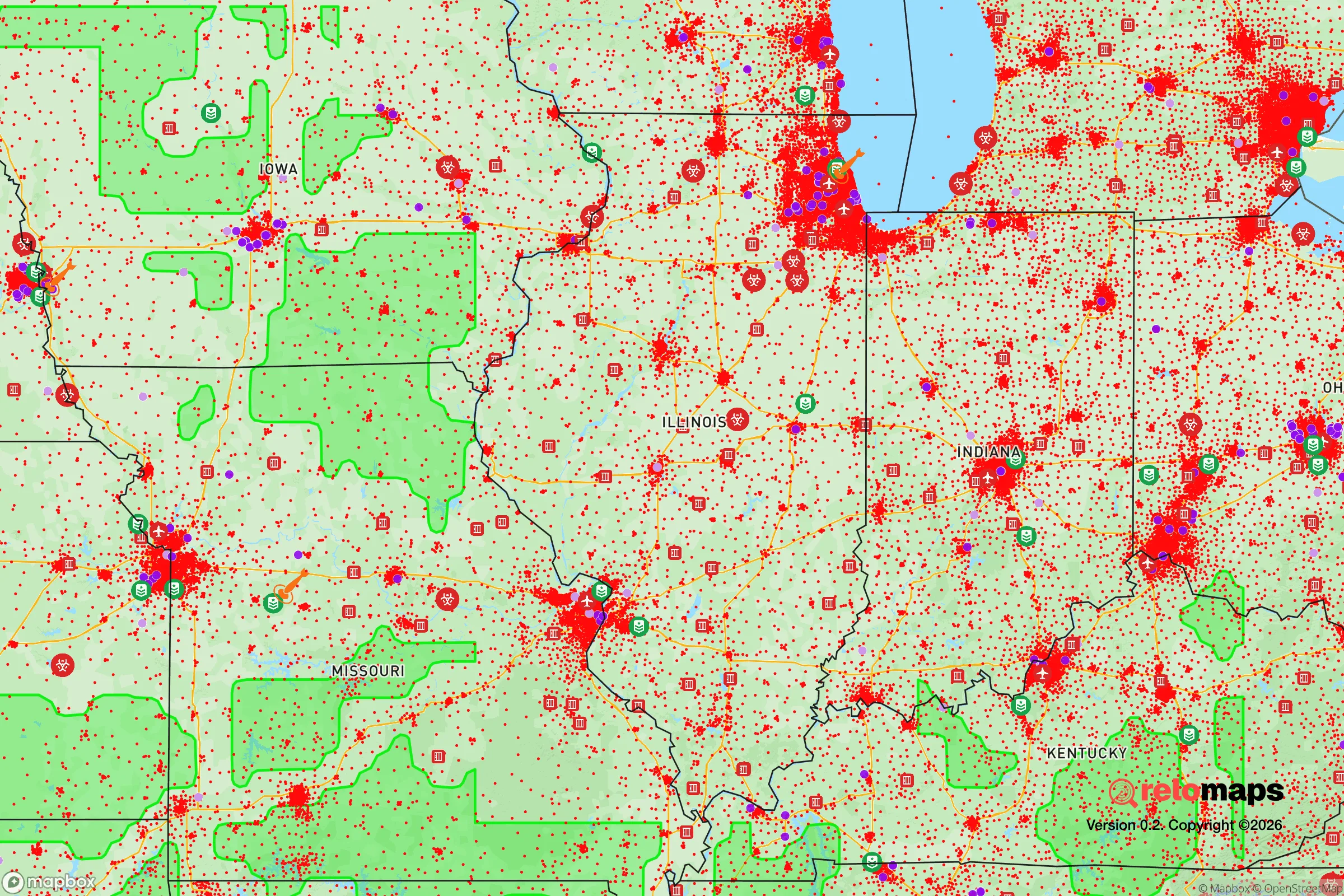
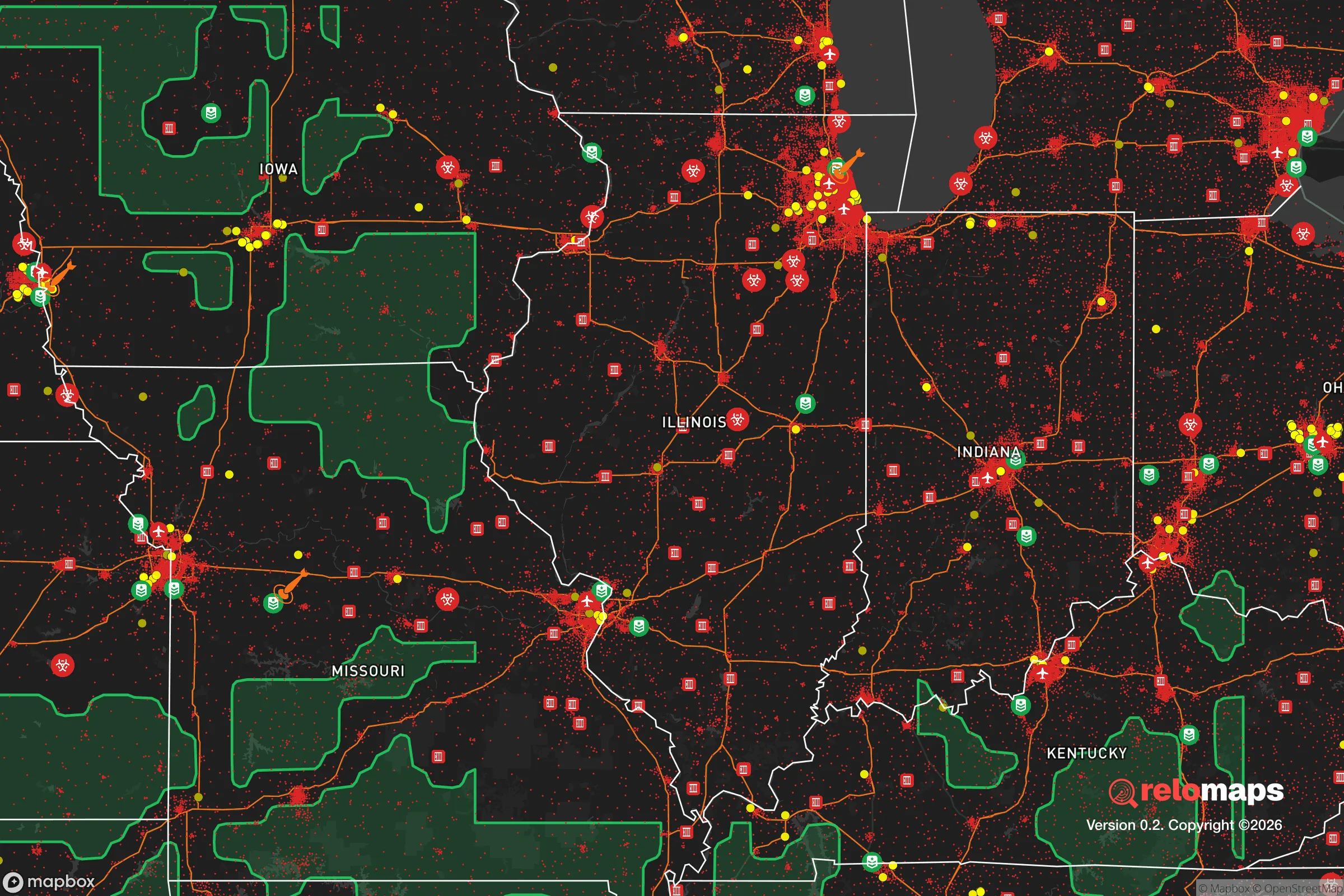


Important Note: For informational purposes only. This does not mean nothing bad ever happens in the green zones. Please use common sense. This is based on public data and modeled with AI. We tried to take a conservative approach but mistakes happen. We update this regularly as new information becomes available.
Solar Generator Recommendations
Backup power matters more here than in safer locations. We've picked three solar generators across budgets and capacity tiers — start with the budget unit if you only need a few essentials, or step up if you want to run a fridge and HVAC for days at a time.
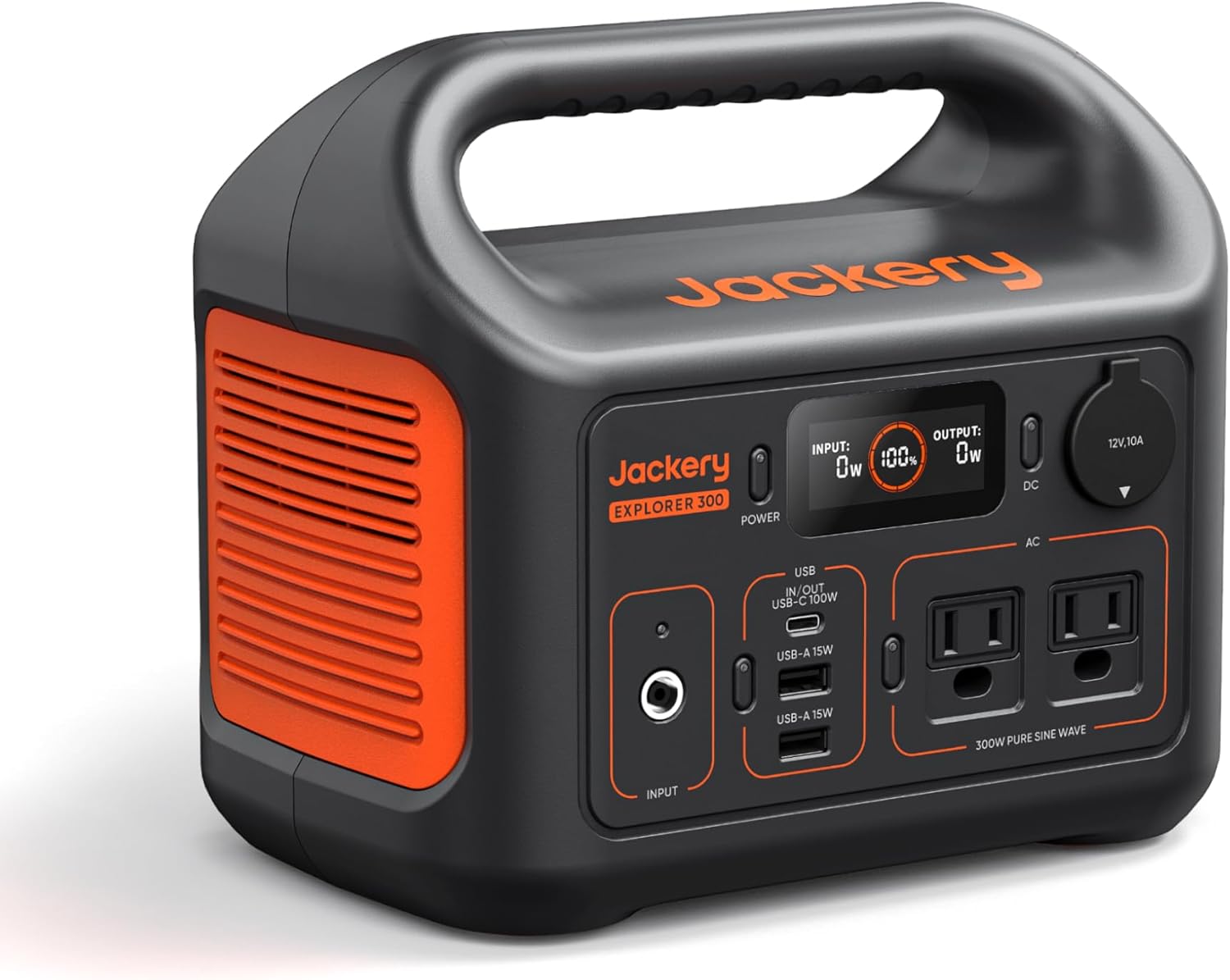
Jackery Portable Power Station Explorer 300
Budget OptionPower on the Go: Weighing only 11 lbs, it's convenient to set up and store with book-sized foldable solar panels

BLUETTI Portable Power Station AC180
Designed for both indoor and outdoor scenarios, AC180 is highly capable as it has a robost capacity and continuous output power.

EF ECOFLOW DELTA Pro Ultra Power Station
Upgraded PickEcoFlow DELTA Pro Ultra is a whole-home energy system designed to grow with your family. Integrated with the Smart Home Panel 2, it scales to meet your evolving energy needs — keeping your home powered, intelligent, and secure through every stage of life.
We earn a commission, at no additional cost to you.
Strategic Assessment Analysis
Monmouth, Illinois, offers a surprisingly strong strategic position for the relocation-minded reader focused on resilience and self-sufficiency, blending the advantages of a small, tight-knit community with a location that is both connected and buffered from major metropolitan risks. Situated in Warren County in western Illinois, roughly 45 miles south of the Quad Cities and 75 miles west of Peoria, the town of roughly 9,000 residents sits on a relatively flat, fertile plain that has historically been a breadbasket. Its resilience profile is defined less by dramatic natural defenses and more by a combination of agricultural abundance, moderate distance from major population centers, and a local economy that has weathered the decline of traditional manufacturing without collapsing. For the reader who values preparedness without wanting to live in a remote, off-grid bunker, Monmouth represents a middle ground—a place where community ties and local resources can provide a meaningful buffer against disruptions, provided one understands the specific risks and limitations of the area.
Geographic position and natural advantages for long-term stability
Monmouth’s primary geographic advantage is its position within the Corn Belt, which provides a built-in food security buffer that few suburban or exurban locations can match. The surrounding Warren County is intensely agricultural, with vast fields of corn and soybeans, and the town itself is home to a strong agricultural service sector. This means that in a prolonged disruption of supply chains, local food production—both from farms and from the many residents who maintain gardens and small livestock—is a tangible, not theoretical, asset. The area is also well-watered, sitting atop the Mahomet Aquifer, one of the largest and most reliable groundwater sources in the Midwest, which supplies the town’s municipal water and many private wells. The terrain is gently rolling, not mountainous, which means no significant landslide or avalanche risk, and the region is far from active seismic zones, major floodplains (the Mississippi River is about 30 miles west), and hurricane-prone coastlines. The climate is continental, with cold winters and hot, humid summers, but it is not prone to the extreme wildfire risk of the West or the hurricane storm surge of the Gulf Coast. Tornadoes are a real, but manageable, threat—the area lies in the traditional "Tornado Alley" zone, and the flat terrain offers little natural shelter from severe storms. However, the town’s building stock is largely older, with many homes lacking basements, which is a specific vulnerability that a relocator should address by seeking a property with a basement or a storm shelter.
Risks, exposures, and proximity to fallout-relevant landmarks
For the reader concerned with man-made risks, Monmouth’s location is a double-edged sword. On the positive side, it is far enough from major metropolitan areas—Chicago is about 200 miles east, St. Louis about 180 miles south—to avoid the immediate fallout from a major urban disaster, whether that be a terrorist attack, a grid-down scenario, or a pandemic-driven collapse of city services. The town is not near any major military installations, nuclear power plants (the closest is the Quad Cities Nuclear Generating Station, about 50 miles north), or obvious high-value targets like large ports, refineries, or government command centers. This relative obscurity is a genuine strategic asset. However, the area is not entirely free from risk. The Mississippi River corridor, with its barge traffic, rail lines, and industrial facilities (including chemical plants and fertilizer storage), is about 30 miles west, and a major accident or intentional disruption there could affect air or water quality. More significantly, Monmouth lies within the general fallout zone of the Quad Cities metro area, which, while not a megacity, is a regional hub with a population of over 380,000. A nuclear detonation or major industrial accident in the Quad Cities could produce fallout that reaches Monmouth, depending on wind patterns. The town is also within a few hours' drive of the National Guard's Camp Lincoln in Springfield and the Rock Island Arsenal, both of which could become focal points in a crisis. The key takeaway is that Monmouth is not a remote, isolated sanctuary, but it is far enough from the highest-risk zones to offer a meaningful buffer, especially if one has a plan for monitoring wind direction and sheltering in place for the first 48-72 hours after a distant event.
Practical resilience for a relocator: food, water, energy, and defensibility
For the relocator focused on practical self-sufficiency, Monmouth offers a mix of strong fundamentals and specific gaps that need to be addressed. Food security is the area's strongest suit. The local farmers' market operates from May through October, and there are several U-pick orchards and vegetable farms within a 15-minute drive. The town also has a strong network of home gardeners and a few small-scale livestock operations. For long-term storage, the local grocery stores (County Market and a Walmart Supercenter) are adequate for normal times, but a relocator should plan to build relationships with local farmers for bulk purchases of grains, meat, and produce. Water security is also good, but not automatic. The municipal water supply from the Mahomet Aquifer is reliable and treated, but a prolonged power outage would shut down the pumps. A well with a hand pump or a backup generator is a significant advantage for any property outside the city limits. Inside town, a rainwater catchment system or a large storage tank (e.g., a 500-gallon IBC tote) is a practical investment. Energy resilience is a weaker point. The local grid is served by Ameren Illinois, and while outages are not frequent, they can occur during severe storms. Solar potential is moderate—the area gets about 200 sunny days per year, which is below the national average but still viable for a grid-tied system with battery backup. Natural gas is available in town, which is a plus for heating and cooking during a power outage, but a wood stove or a propane backup is a wise addition. Defensibility is the most nuanced factor. Monmouth is not a gated community or a natural fortress. The terrain is flat, and the town has multiple entry points via US-34, IL-164, and IL-135. However, the town’s small size and tight-knit social fabric mean that a neighborhood watch or community emergency response team (CERT) could be effective. The Warren County Sheriff's Office and Monmouth Police Department are professional but small, with limited capacity for a large-scale crisis. A relocator should prioritize a home on a dead-end street or a cul-de-sac, with good visibility of approaches, and should invest in basic security measures (fencing, lighting, a dog) rather than expecting the town to provide a defensive perimeter. The local hospital, OSF Holy Family Medical Center, is a small critical-access facility with limited trauma capability, so a serious medical emergency would require a 45-minute drive to the Quad Cities or Peoria—a factor to consider in a grid-down scenario.
The overall strategic picture for Monmouth is that of a solid, if unspectacular, resilience location. It is not a prepper's paradise with mountain redoubts and a self-sufficient community, but it is a genuinely livable small town where a prepared individual or family can build a sustainable, low-drama life with a strong local food base and a manageable risk profile. The area’s greatest strength is its agricultural abundance and its distance from the highest-risk urban and industrial targets. Its greatest weakness is the lack of natural defensive terrain and the moderate risk from tornadoes and regional industrial accidents. For the relocator who is willing to invest in a backup water system, a storm shelter, and a good relationship with local farmers, Monmouth offers a realistic, grounded path to greater self-reliance without requiring a complete retreat from modern life. The key is to approach it with clear eyes: it is a place where community and preparation can work together, not a place where geography alone will save you.

* Values derived from national, state, county, city and local statistics and may differ in a specific area. Last updated: 2026-11-21T08:43:05.000Z
Narrative content on this page is AI-generated and may contain mistakes. Verify any details that matter before acting on them.
ReloMaps may earn a commission from affiliate links at no extra cost to you.

