Photo: Wikipedia
Find The Best Places To Live
in Monmouth
PRO TIP! You can paste a Zillow or Redfin link to get info on that property.
Compare Monmouth with another place
What It's Like Living in Monmouth, IL
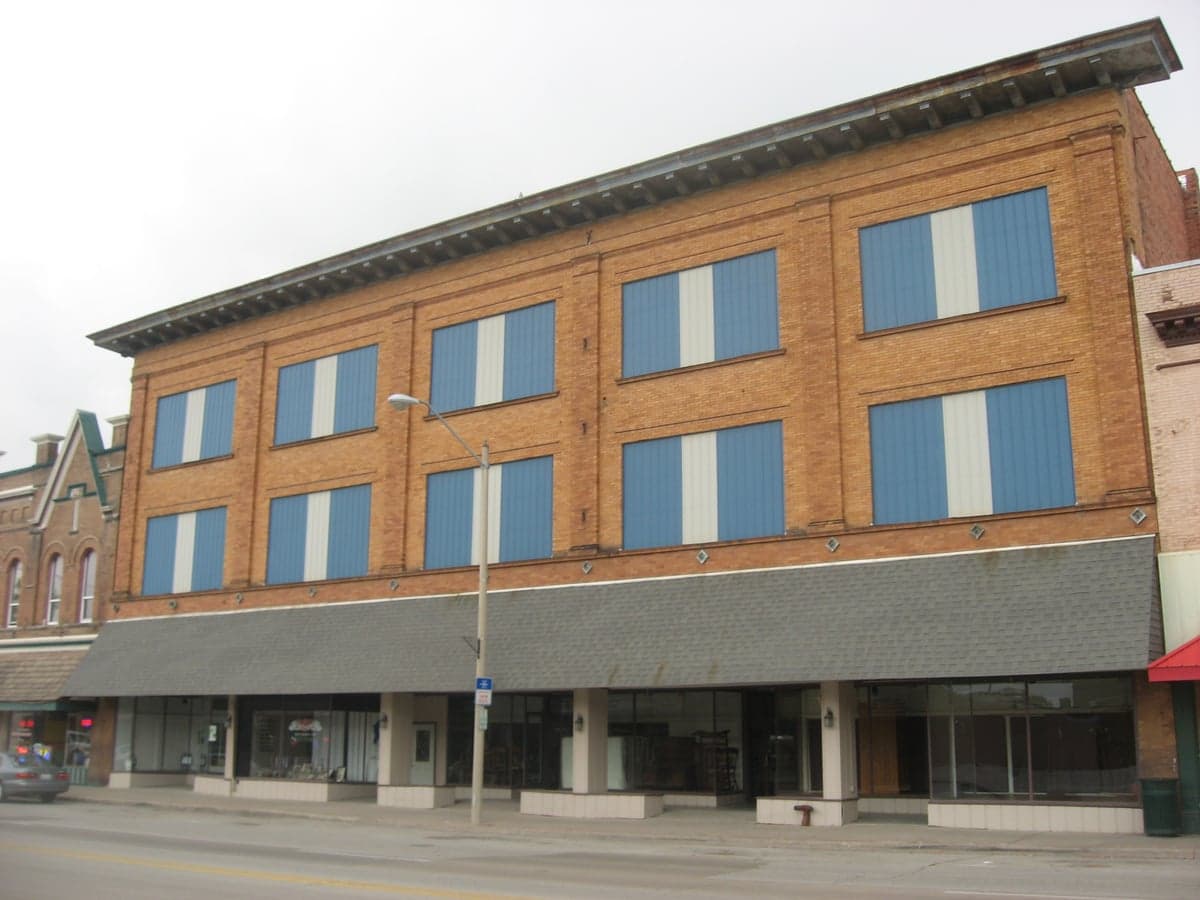
Monmouth, Illinois, is the kind of place where you still get a wave from the driver of the pickup truck you passed on the way to Hy-Vee. It’s a small, working-class town of about 8,800 people that feels both slower and more connected than the suburbs of the Quad Cities or Peoria, each about an hour away. Life here revolves around a few solid employers, Friday night lights, and a genuine sense that people look out for each other — but it also comes with the trade-offs of limited shopping and a quiet social calendar.
The Daily Rhythm: Work, Errands, and the Weekend Wind-Down
For most people, a typical day in Monmouth starts early. The biggest employer in town is Smithfield Foods, the pork processing plant, which draws a significant portion of the workforce, along with Monmouth College and the local school district. The average commute is just over 16 minutes — one of the shortest in the state — so you’re not burning gas or time getting to work. After the workday, errands are quick: you’ve got a Walmart, a County Market, and a solid Hy-Vee for groceries. For anything beyond that — a mall, a Home Depot, or a sit-down chain restaurant — most folks drive 20 minutes east to Galesburg or 40 minutes west to Burlington, Iowa.
Weekends are low-key. You’ll see families at Pattee Park or the Lake Warren area for fishing and walking trails. The local coffee shop, The Brewed Awakening, is a genuine gathering spot on Saturday mornings. There’s no nightlife to speak of — the bars like Bogie’s and The Office are more about a beer after work than a late-night scene. The median household income sits around $59,690, which goes a long way here because the cost of living is absurdly low — about 46% of the national average. A median home value of $88,100 means a young family can actually buy a decent three-bedroom house on a single income, something that’s increasingly rare in Illinois.
Friday Night Lights and Community Pride
High school sports are the heartbeat of Monmouth. The Monmouth-Roseville Titans football games on fall Fridays draw a huge chunk of the town — grandparents, local business owners, and students all pack the stands. Basketball season is almost as big, and the rivalry with Galesburg still gets people talking. There’s no pro or college team in town (Monmouth College’s Fighting Scots play Division III), but the community treats the high school teams like a minor-league event. If you don’t care about sports, you might feel a little left out on game nights — it’s that central to the social fabric.
The other major community anchor is the Warren County Fair in July, which brings carnival rides, livestock shows, and a demolition derby that’s genuinely popular. The Monmouth Heritage Days festival in September is another big deal, with a parade, craft vendors, and live music on the courthouse square. These events are where you’ll see the town’s personality: friendly, a bit old-fashioned, and proud of its agricultural roots.
What’s There to Do — and What’s Missing
Outdoor life is the main draw for recreation. Lake Warren is a 90-acre lake with a beach, boat ramp, and decent fishing for bass and bluegill. The Monmouth Conservation Area has a few miles of hiking and mountain biking trails that see steady use. For a small town, the park system is well-maintained — Pattee Park has a splash pad that’s packed with kids in the summer. Winters are quiet; people spend more time at home or at the Monmouth Public Library, which runs a solid slate of kids’ programs and book clubs.
The honest downside is entertainment. There’s no movie theater (the closest is in Galesburg), no bowling alley, and only a handful of restaurants that aren’t fast food. Baked in Monmouth is a local bakery that does good sandwiches and pastries, and El Zarape serves reliable Mexican food, but you’re not going to find a food scene. For a date night, most people drive to Galesburg for dinner and a movie, or to the Quad Cities for a concert or a night out. The violent crime rate is 198.3 per 100,000 — slightly above the national average, but most of it is tied to domestic incidents, not random street crime. Property crime is more of a nuisance, with occasional car break-ins and shed thefts.
Who Fits In — and Who Might Not
Monmouth works best for people who value affordability and community over convenience and variety. The median age is 35, which is young for a small town, driven largely by families with kids and workers at the plant. Only about 18.7% of adults have a college degree, so this isn’t a place where you’ll find a lot of white-collar transplants or remote workers. It’s a blue-collar, conservative-leaning town where church attendance is still common and people know their neighbors’ names. If you’re looking for a quiet place to raise kids, buy a cheap house, and not deal with traffic, Monmouth is a strong candidate. If you want nightlife, career mobility, or cultural diversity, you’ll probably feel the walls closing in within a year.
The biggest frustration for longtime residents is the lack of local jobs that pay above the median — the plant and the college are the main options, and everything else is retail or service. The schools, Monmouth-Roseville School District, are a mixed bag: they’re the center of community life, but test scores are below state averages, and funding is tight. Still, for the price of entry — a home for under $100K and a commute that’s barely a commute — Monmouth offers a version of the American small town that’s increasingly hard to find.

Similar small towns to Monmouth
* Values derived from national, state, county, city and local statistics and may differ in a specific area. Last updated: 2026-11-21T08:43:05.000Z
Narrative content on this page is AI-generated and may contain mistakes. Verify any details that matter before acting on them.
ReloMaps may earn a commission from affiliate links at no extra cost to you.

