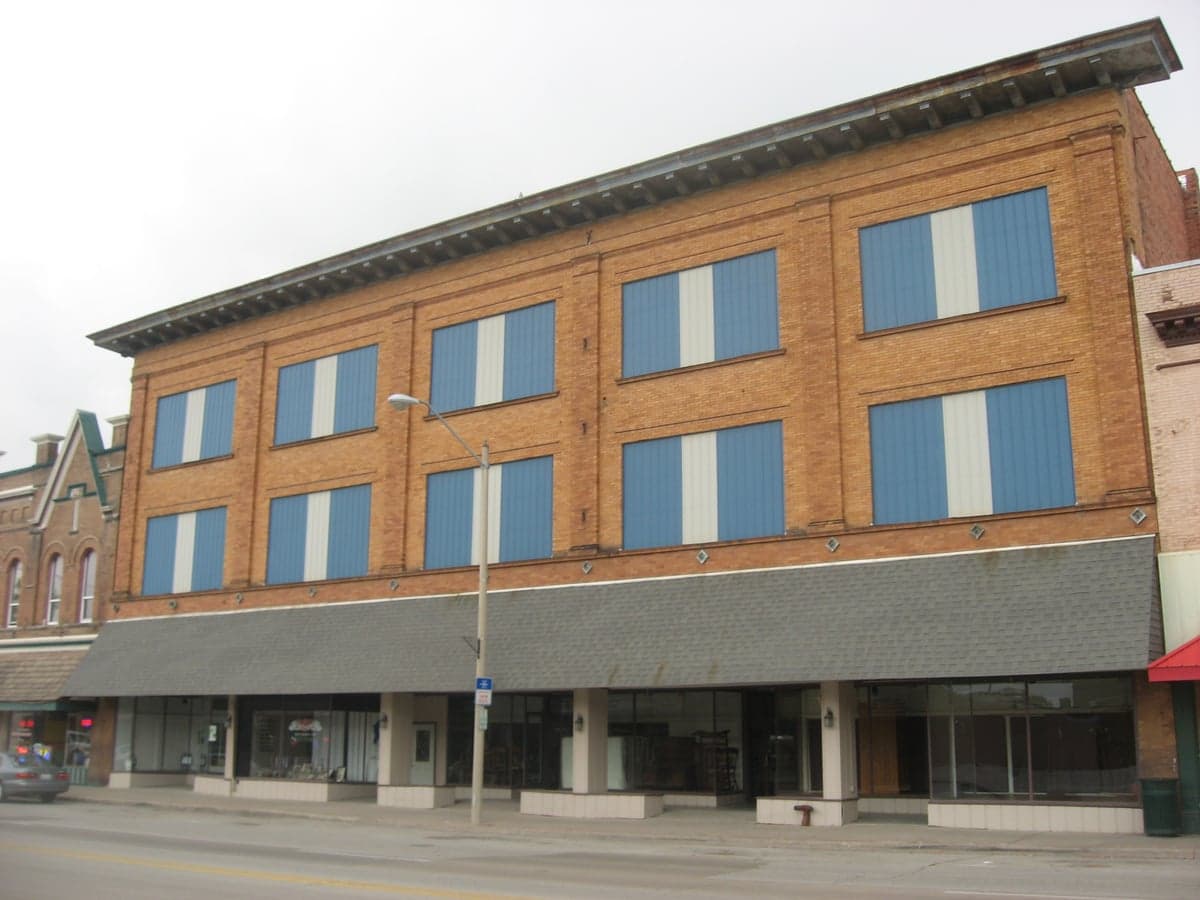
Photo: Wikipedia
Political ClimatePolitical Climate in Monmouth, IL
District shown is the primary district for this city’s centroid. Cities may span multiple districts.
Inherited from parent county — no local data available.
* Lean and PVI are calculated from Monmouth, IL’s own 2020 presidential results (precinct returns summed to the city), with 2024 estimated from the surrounding county’s 2020–2024 shift, Cook-style. Sources: state election offices; VEST 2020 precinct results (CC BY 4.0).
Political rankings in Illinois
- Most Conservative Cities in Illinois
- Most Liberal Cities in Illinois
- Best Liberal-Leaning Towns in the Midwest
- Safest Liberal-Leaning Towns in the Midwest
- Safest Conservative-Leaning Towns in the Midwest
- Affordable Small Towns for Conservatives
- Most Affordable Liberal-Leaning Small Towns in the U.S.
- Safest Conservative-Leaning Cities in the U.S.
- Most Conservative Counties in Illinois
- Most Liberal Counties in Illinois
Local Political AnalysisPolitical Analysis of Monmouth, IL
Monmouth, Illinois, sits in a political reality that feels a world apart from the state it calls home. With a Cook Partisan Voting Index (PVI) of R+12, this Warren County seat is a solidly conservative pocket in a state that leans D+7 overall. That’s a 19-point gap, and you feel it in everything from local elections to the conversations at the coffee shop on Main Street. While Illinois as a whole has been trending blue for decades, Monmouth has held its ground, and if anything, the rural-urban divide has only sharpened since the 2020 election. You won’t find many yard signs for statewide Democratic candidates here, and the local GOP is deeply entrenched.
How it compares
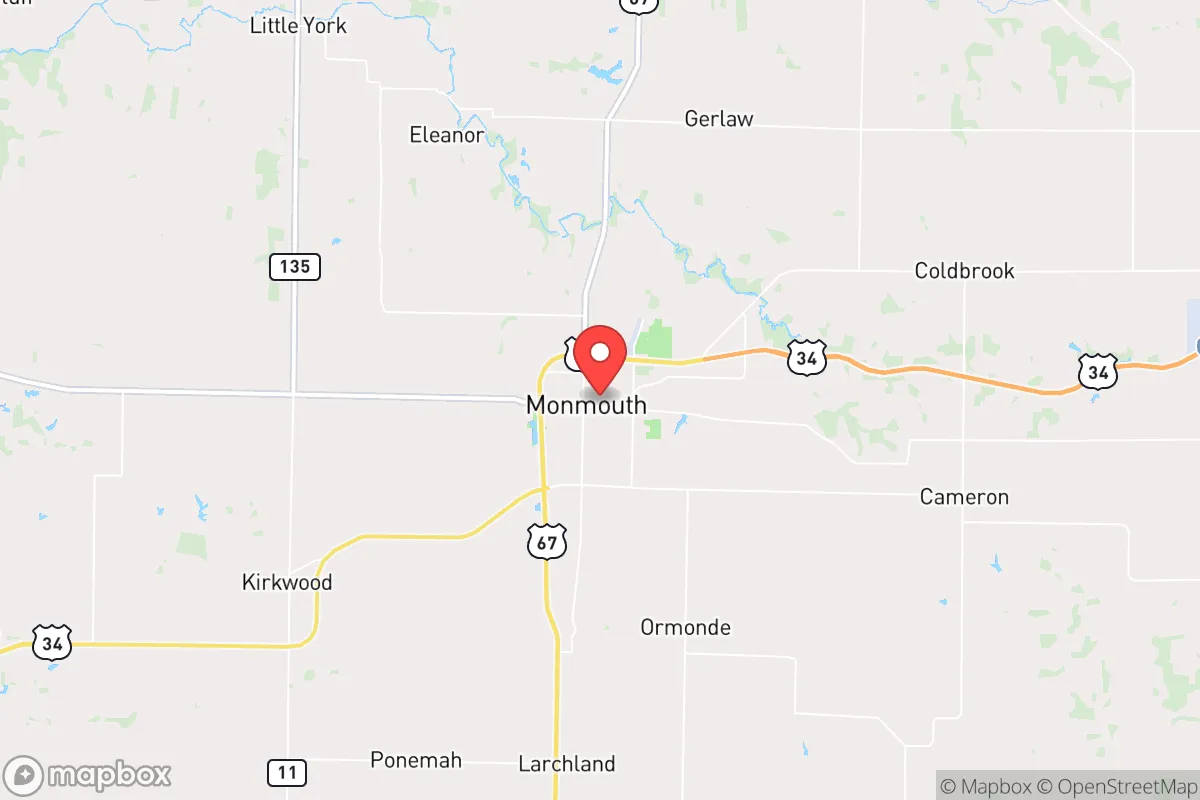
To understand Monmouth’s politics, you have to look at the map. Drive 30 miles east to Galesburg (Knox County, PVI D+5) and you’ll see a more mixed picture, with a stronger union and academic presence from Knox College. Head 45 miles north to the Quad Cities (Rock Island County, PVI D+3) and the politics get even more purple, especially in Moline and Rock Island proper. But Monmouth? It’s surrounded by deep-red farmland. The contrast with Chicago, 200 miles northeast, is almost comical—Cook County alone has a PVI of D+28, meaning Monmouth’s R+12 is practically the mirror opposite. In state elections, Monmouth’s representative in the Illinois House (District 74) is a Republican, and the state senate seat (District 37) has been held by the GOP for years. Meanwhile, Illinois’s governor, attorney general, and both U.S. senators are Democrats. That disconnect means Monmouth residents often feel their votes don’t carry much weight in statewide races, but they dominate locally.
What this means for residents
For a conservative living in Monmouth, daily life is comfortable. The county board, city council, and school board are all reliably Republican. Tax policy debates tend to favor lower levies, and Second Amendment rights are broadly supported. You’ll hear more talk about farm policy and ethanol mandates than about transit funding or urban crime. For a liberal resident, it can feel isolating. There’s no active Democratic Party headquarters in town, and progressive candidates rarely get traction. That said, Monmouth College (a private liberal arts school) brings in a small but vocal cohort of left-leaning faculty and students, so you’re not entirely alone. The real friction comes during statewide elections, when Monmouth’s conservative votes are effectively canceled out by Chicago’s massive turnout. This breeds a sense of “us versus them” that’s palpable in local bars and church basements. Most folks just shrug and focus on what they can control: the school board, the park district, and the annual hog roast.
Culturally, Monmouth wears its conservatism without apology. The county is dotted with gun clubs and VFW posts, and the local newspaper’s letters to the editor are reliably critical of Springfield. There’s a strong independent streak—people here don’t like being told what to do by Chicago or D.C. Policy-wise, that means lower property taxes than the state average (though still high by national standards) and a hands-off approach to business regulation. But it also means less state funding for local infrastructure and schools, since the state legislature tends to prioritize Democratic districts. Over the long haul, I see Monmouth staying R+12 or even drifting a point or two redder as rural Illinois continues to diverge from the urban core. The young people who leave for college in Chicago or Champaign rarely move back, and those who stay are doubling down on the values that have defined this place for generations. It’s not a bad thing—just a fact of life in a state that’s politically split right down the middle of the map.

State Political ClimatePolitical Climate in Illinois
State Political AnalysisPolitical Environment in the State
Illinois is a solidly Democratic state with a Cook PVI of D+7, meaning it votes about seven points more Democratic than the national average in presidential elections. Over the past 20 years, the state has shifted leftward, driven by the massive Democratic stronghold of Chicago and its inner suburbs, while downstate and rural areas have become increasingly Republican. This isn't a purple state—it's a blue state with a deep red minority that feels increasingly alienated from the policies coming out of Springfield.
Urban vs. rural divide
The political map of Illinois is a tale of two worlds. Chicago and Cook County are the Democratic engine, delivering margins of 70-80% for statewide Democrats. The collar counties—DuPage, Lake, Kane, and Will—were once reliably Republican but have trended blue over the past decade, especially in presidential races. In 2020, Joe Biden won DuPage County by 8 points, a county that voted for George W. Bush by 12 points in 2004. Meanwhile, downstate Illinois—places like Effingham, Marion, and Quincy—vote Republican by 60-70% margins. The divide is stark: drive 45 minutes west of Chicago's O'Hare Airport into DeKalb County, and you'll see Trump signs still flying on farmhouses. Head south to Carbondale, home of Southern Illinois University, and you'll find a small blue island in a sea of red. The state's 18 congressional districts reflect this: 14 are held by Democrats, mostly in the Chicago area, while the remaining 4 are Republican strongholds covering the rest of the state.
Policy environment
Illinois has a progressive tax structure—a flat income tax of 4.95%—but voters rejected a graduated income tax amendment in 2020. Property taxes are among the highest in the nation, averaging around 2.3% of home value, which hits conservative homeowners hard. The state's regulatory posture is business-friendly in some sectors (agriculture, logistics) but heavily regulated in others (energy, labor). Education policy is dominated by the Chicago Teachers Union, which has pushed for progressive curricula and increased funding. Illinois has some of the strongest gun control laws in the country, including a 2023 ban on assault weapons and high-capacity magazines, which was a flashpoint for rural gun owners. Election laws are relatively liberal: same-day voter registration, no-excuse mail-in voting, and automatic voter registration at DMVs. The state also has a sanctuary state law (the TRUST Act) that limits local law enforcement cooperation with federal immigration authorities.
Recent policy direction
The last five years have seen a sharp leftward turn in Springfield. In 2023, Governor JB Pritzker signed the Protect Illinois Communities Act, banning the sale and possession of dozens of semi-automatic firearms and magazines over 10 rounds. This law is currently being challenged in federal court, but it's already driven a wedge between urban and rural residents. On education, the state passed a law requiring all public schools to teach LGBTQ+ inclusive history, and parents' rights groups have clashed with school boards in places like Naperville and Barrington over curriculum transparency. On medical freedom, Illinois expanded abortion access with the Reproductive Health Act (2019), which protects providers and patients from out-of-state lawsuits. The state also legalized recreational marijuana in 2020, creating a regulated market that generates hundreds of millions in tax revenue. On property rights, Illinois has a controversial "just cause" eviction law in Chicago that limits landlords' ability to remove tenants. On privacy, the state passed the Biometric Information Privacy Act (BIPA), which has led to a flood of class-action lawsuits against employers. For a conservative relocator, the policy direction is clear: the state is moving toward more regulation, higher taxes, and expanded social liberties, with less deference to local control.
Civil unrest & political movements
Illinois has seen its share of political flashpoints. The 2020 George Floyd protests in Chicago turned violent, with looting and property damage that led to a National Guard deployment. Since then, organized activist movements have focused on police reform, with the state passing a sweeping police reform bill in 2021 that ended qualified immunity for officers. On the right, the Illinois State Rifle Association has been a powerful force, organizing mass protests at the state capitol against the assault weapons ban. Immigration politics are a constant tension: the TRUST Act makes Illinois a sanctuary state, but downstate counties like Effingham have passed resolutions declaring themselves "Second Amendment sanctuaries" in defiance of state gun laws. Election integrity controversies flared in 2020 when some rural counties complained about ballot drop boxes and mail-in voting procedures, though no widespread fraud was found. A new resident in a place like Peoria or Rockford will see these divisions play out in local news and community meetings—it's not a state where politics stays quiet.
Projection
Over the next 5-10 years, Illinois is likely to remain solidly Democratic at the state level, but the margins may narrow slightly. The Chicago metro area continues to grow, while downstate population is stagnant or declining. In-migration from other states is modest, and Illinois loses residents to Florida, Texas, and Indiana—many of them conservatives leaving for lower taxes and fewer regulations. The Democratic supermajority in the legislature is unlikely to be broken, meaning the policy trajectory will continue leftward. However, the 2024 election showed some cracks: Trump improved his performance in Cook County's outer suburbs and in downstate counties, suggesting that the rural-urban divide is deepening. A conservative moving to Illinois now should expect to live in a state where their vote for president or Senate is effectively meaningless, but where local elections—county board, school board, sheriff—still matter a lot. The state's fiscal situation is a wildcard: Illinois has the worst-funded pension system in the country, and property taxes will likely keep rising to cover it.
For a new resident, the bottom line is this: Illinois is a blue state with a strong conservative minority that feels politically marginalized but culturally rooted. If you're moving to Chicago or its suburbs, you'll be in a Democratic environment with high taxes and progressive policies. If you're moving to a place like Quincy or Marion, you'll find a conservative community that fights against state mandates but can't change them. The practical takeaway: your vote for president won't matter, but your voice in local government—especially on school boards and county commissions—can still shape your daily life. Just be prepared for high property taxes and a state government that's unlikely to shift right anytime soon.
* Values derived from national, state, county, city and local statistics and may differ in a specific area. Last updated: 2026-11-21T08:43:05.000Z
Narrative content on this page is AI-generated and may contain mistakes. Verify any details that matter before acting on them.
ReloMaps may earn a commission from affiliate links at no extra cost to you.

