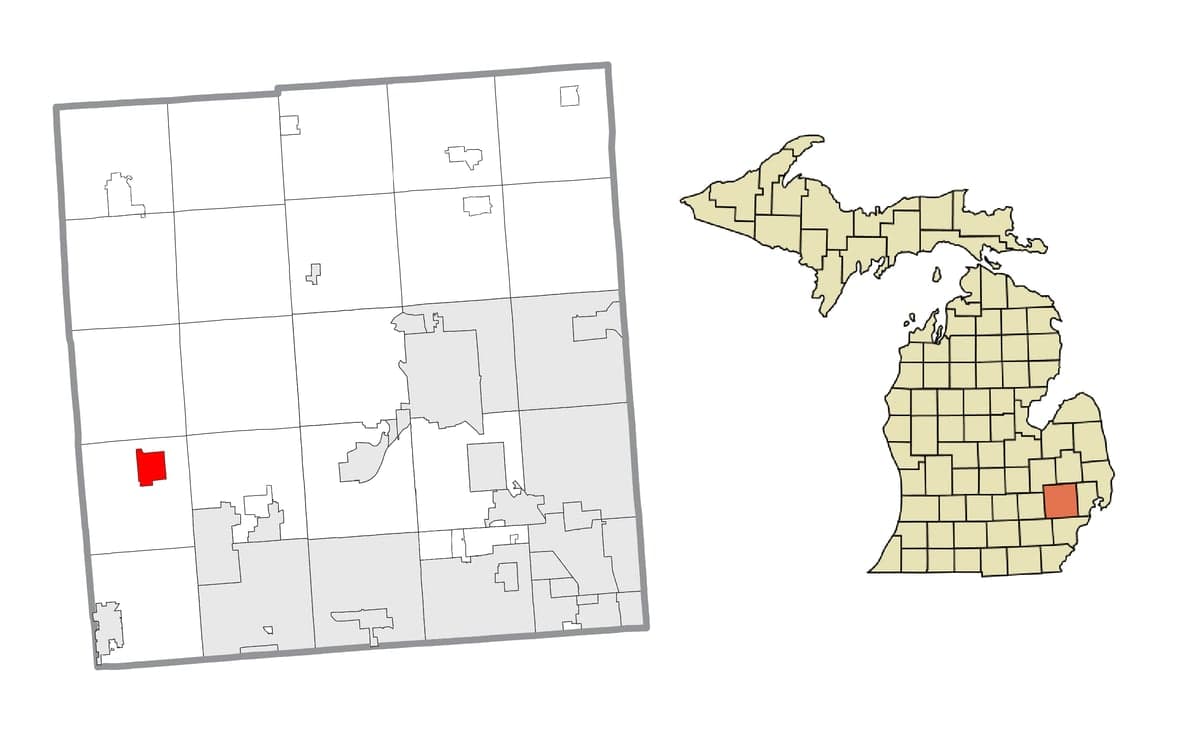
Photo: Wikipedia
Strategic Assessment of Milford, MI
Meaningful friction. Expect exposure to either population pressure, blast zones, or natural disaster risk. Consider buying a retreat property.
What does the Strategic Assessment tell us?
Our Strategic Assessment grades tactical survivability of an area. Major population centers, military targets, fallout zones, natural disasters, and border exposure all drive risk — lower exposure means a more defensible position in a crisis.
This is heavily inspired by Joel Skousen's Strategic Relocation book. Highly recommended you checkout the book ($)What does this tell us?
Our Strategic Assessment grades tactical survivability of an area. Major population centers, military targets, fallout zones, natural disasters, and border exposure all drive risk — lower exposure means a more defensible position in a crisis.
This is heavily inspired by Joel Skousen's Strategic Relocation book. Highly recommended you checkout the book ($)Strategic Pillars

Key Distances
Regional Safe Places
Below is our recommended "safe zones" in Michigan and the surrounding area based on our strategic heuristics. For most people, it's unrealistic to live in a “safe zone” full-time due to work, family or other personal reasons. They tend to be more rural. However, many of these areas are perfect for second homes and retreat properties that double as a vacation home or even a short-term rental.


Important Note: For informational purposes only. This does not mean nothing bad ever happens in the green zones. Please use common sense. This is based on public data and modeled with AI. We tried to take a conservative approach but mistakes happen. We update this regularly as new information becomes available.
Solar Generator Recommendations
Backup power matters more here than in safer locations. We've picked three solar generators across budgets and capacity tiers — start with the budget unit if you only need a few essentials, or step up if you want to run a fridge and HVAC for days at a time.

Jackery Portable Power Station Explorer 300
Budget OptionPower on the Go: Weighing only 11 lbs, it's convenient to set up and store with book-sized foldable solar panels

BLUETTI Portable Power Station AC180
Designed for both indoor and outdoor scenarios, AC180 is highly capable as it has a robost capacity and continuous output power.

EF ECOFLOW DELTA Pro Ultra Power Station
Upgraded PickEcoFlow DELTA Pro Ultra is a whole-home energy system designed to grow with your family. Integrated with the Smart Home Panel 2, it scales to meet your evolving energy needs — keeping your home powered, intelligent, and secure through every stage of life.
We earn a commission, at no additional cost to you.
Strategic Assessment Analysis
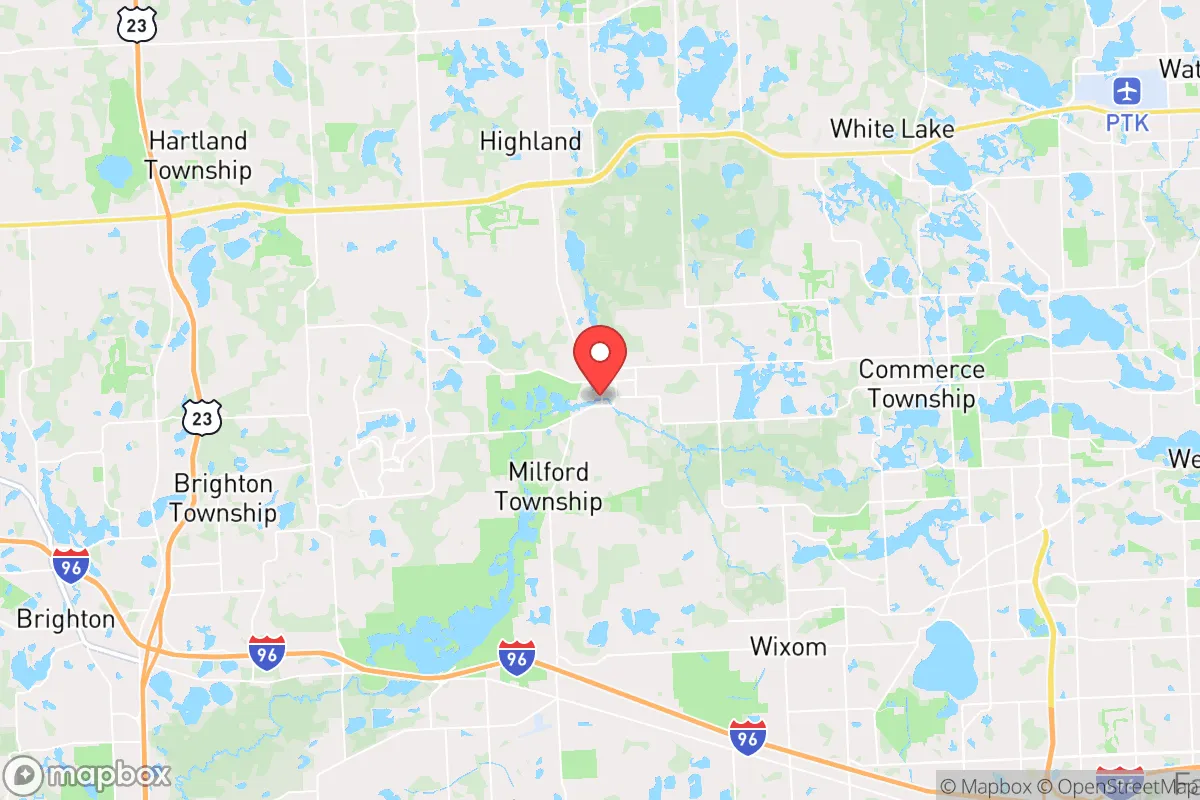
Milford, Michigan, occupies a strategic position in Oakland County that offers a meaningful blend of rural buffer and suburban access, making it a noteworthy option for relocators who prioritize disaster readiness and self-sufficiency. The village sits roughly 40 miles northwest of Detroit, placing it outside the immediate blast and fallout zones of a major metropolitan target while still within a reasonable distance of essential supply chains and medical infrastructure. Its location along the Huron River and within the chain of lakes that define the area provides natural water resources and defensible terrain, though the region's overall resilience is tempered by its proximity to several high-value man-made risks and the inherent vulnerabilities of the Great Lakes climate.
Geographic position and natural advantages for preparedness
Milford's geography is defined by its position within the Huron River watershed, a system of interconnected lakes, wetlands, and forested moraines that offer both natural beauty and practical advantages for a self-sufficient lifestyle. The village itself is nestled among several bodies of water, including Hubbard Lake, Kent Lake, and the Milford Mill Pond, which provide surface water access for non-potable uses and potential emergency supply. The surrounding terrain is gently rolling, with elevations around 1,000 feet above sea level, which is not mountainous but offers enough variation to create natural drainage and some microclimate buffering. The area's soils are predominantly loam and sandy loam, which are suitable for small-scale agriculture and gardening, a key consideration for anyone planning long-term food security. The region's climate is continental, with cold winters and warm summers, meaning a relocator must plan for a growing season of roughly 150 days and the need for robust heating and cold-weather infrastructure. The Huron River itself is a perennial water source, but it is not a large, navigable river; its flow is moderate and subject to seasonal variation, so any reliance on it for power generation or irrigation would require careful engineering. The area's position within the Oakland County park system also provides a network of public lands, including Kensington Metropark and Island Lake State Recreation Area, which could serve as buffer zones and potential foraging or timber resources in a prolonged disruption.
Risks, exposures, and proximity to fallout-relevant landmarks
The most significant risk for Milford in a disaster scenario is its proximity to the Detroit metropolitan area, a major population and industrial center that would be a high-priority target in any large-scale conflict or terrorist event. Detroit is roughly 40 miles southeast, and while that distance provides some protection from the immediate blast effects of a nuclear detonation, it places Milford within the moderate-to-heavy fallout plume zone depending on wind direction. The village is also within 30 miles of Ann Arbor, home to the University of Michigan and several research facilities that could be secondary targets, and within 20 miles of Pontiac, which has a history of industrial and automotive manufacturing. The presence of I-96 and M-59, major east-west corridors, means that any evacuation or panic-driven movement from Detroit would funnel through or near Milford, creating potential choke points and security concerns. Natural risks are less dramatic but more frequent: the area is subject to severe thunderstorms, tornadoes, and winter ice storms, with the 2023 ice storm causing widespread power outages across Oakland County for up to a week. Flooding is a localized risk along the Huron River and around the lakes, particularly during spring snowmelt and heavy rain events. The region is not seismically active, and the risk of wildfire is low due to the relatively moist climate and deciduous forest composition. For a relocator, the key takeaway is that Milford's primary exposure is man-made and proximity-based, not natural; the area is not a high-risk zone for earthquakes, hurricanes, or wildfires, but its location near a major city and its transportation corridors introduces a vulnerability that must be factored into any preparedness plan.
Practical resilience for a relocator: food, water, energy, and defensibility
For someone serious about self-sufficiency, Milford offers a mixed picture. Water availability is a strong point: the Huron River and the chain of lakes provide abundant surface water, and the groundwater table in the area is generally high, meaning wells are a viable option for most properties outside the village limits. However, the water quality in the Huron River is affected by agricultural runoff and upstream development, so any surface water used for drinking would require robust filtration or treatment. The village itself is served by the Milford Water Department, which draws from groundwater wells, but a relocator looking for off-grid capability should prioritize a property with an existing well or the ability to drill one. Food production is feasible but not effortless: the growing season is short, and the soil, while workable, benefits from amendment and raised beds. The area has a strong local farming community, with several farmers' markets and CSAs operating in Milford and nearby Highland and Commerce townships, which is a good sign for local food network resilience. For long-term storage, the climate's cold winters provide natural refrigeration for part of the year, but a root cellar or cold storage is advisable. Energy resilience is a weak point: the region is heavily dependent on the grid, with DTE Energy as the primary provider. Power outages are common during storms, and the infrastructure is aging. Solar potential is moderate, with the area receiving about 4.2 peak sun hours per day, which is enough for a well-designed off-grid system but not exceptional. Wood heating is a viable backup, as the area has abundant hardwood forests, but a relocator would need to secure a property with a woodlot or reliable access to firewood. Defensibility is moderate: the terrain is not mountainous, so there are no natural chokepoints or high ground to control. The village layout is compact, with a historic downtown and residential neighborhoods that are not easily fortified. However, the surrounding rural areas offer more privacy and buffer, with properties on larger lots (5-20 acres) that provide standoff distance. The presence of the Huron River and lakes creates natural barriers on some sides, but the area is not a natural fortress. For a relocator, the practical advice is to focus on property selection: a home with a well, south-facing roof for solar, a wood stove, and at least 5 acres of land will dramatically improve resilience. The community itself is tight-knit, with a strong sense of local identity, which is a social resilience factor that should not be underestimated.
Overall, Milford presents a viable but not exceptional option for the disaster-conscious relocator. Its strengths are its water resources, moderate distance from Detroit, and a supportive local community. Its weaknesses are its grid dependence, proximity to major transportation corridors, and the inherent risks of being within fallout range of a major city. For someone who wants a balance of rural self-sufficiency and access to urban amenities, Milford is a reasonable choice, but it is not a remote bug-out location. A relocator should plan for a minimum of two weeks of full self-sufficiency, with the expectation that any major event affecting Detroit would also stress Milford's infrastructure and potentially bring displaced populations. The area's resilience is best described as moderate with good potential for improvement through deliberate property selection and investment in off-grid systems. For the reader who is serious about preparedness, Milford is worth a look, but it should be evaluated with clear eyes on its proximity risks and the practical demands of the local climate.

* Values derived from national, state, county, city and local statistics and may differ in a specific area. Last updated: 2026-10-05T03:56:56.000Z
Narrative content on this page is AI-generated and may contain mistakes. Verify any details that matter before acting on them.
ReloMaps may earn a commission from affiliate links at no extra cost to you.

