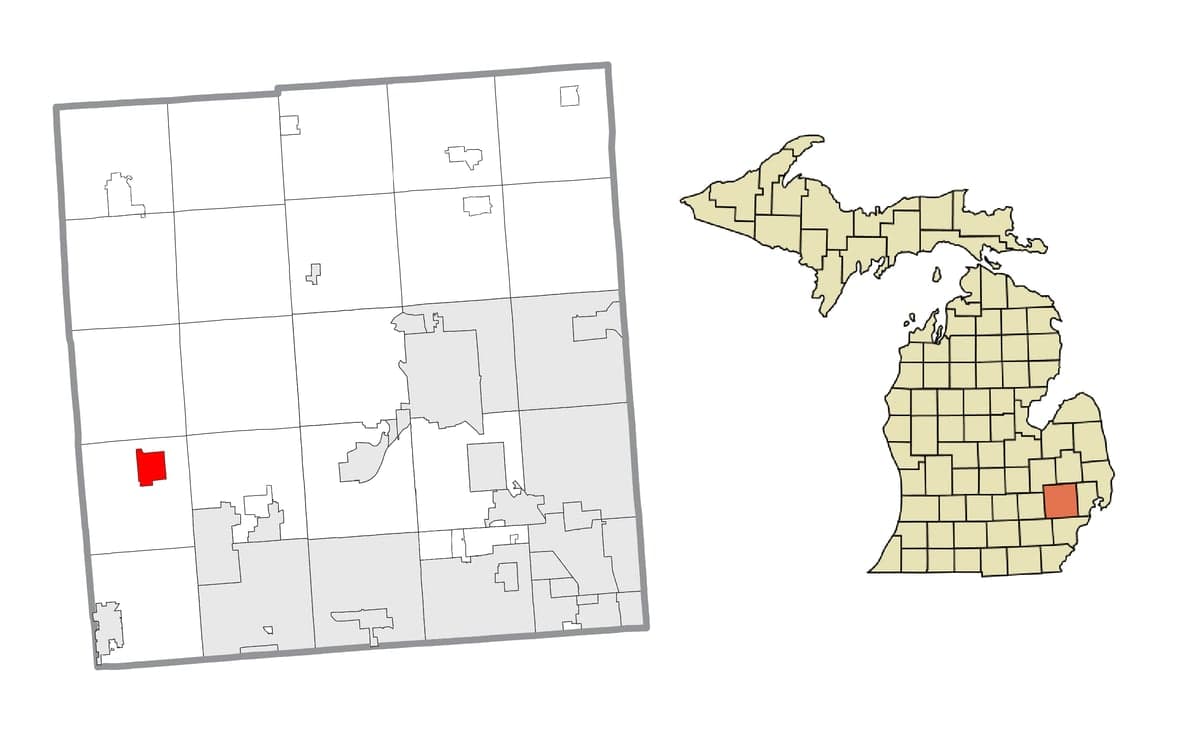
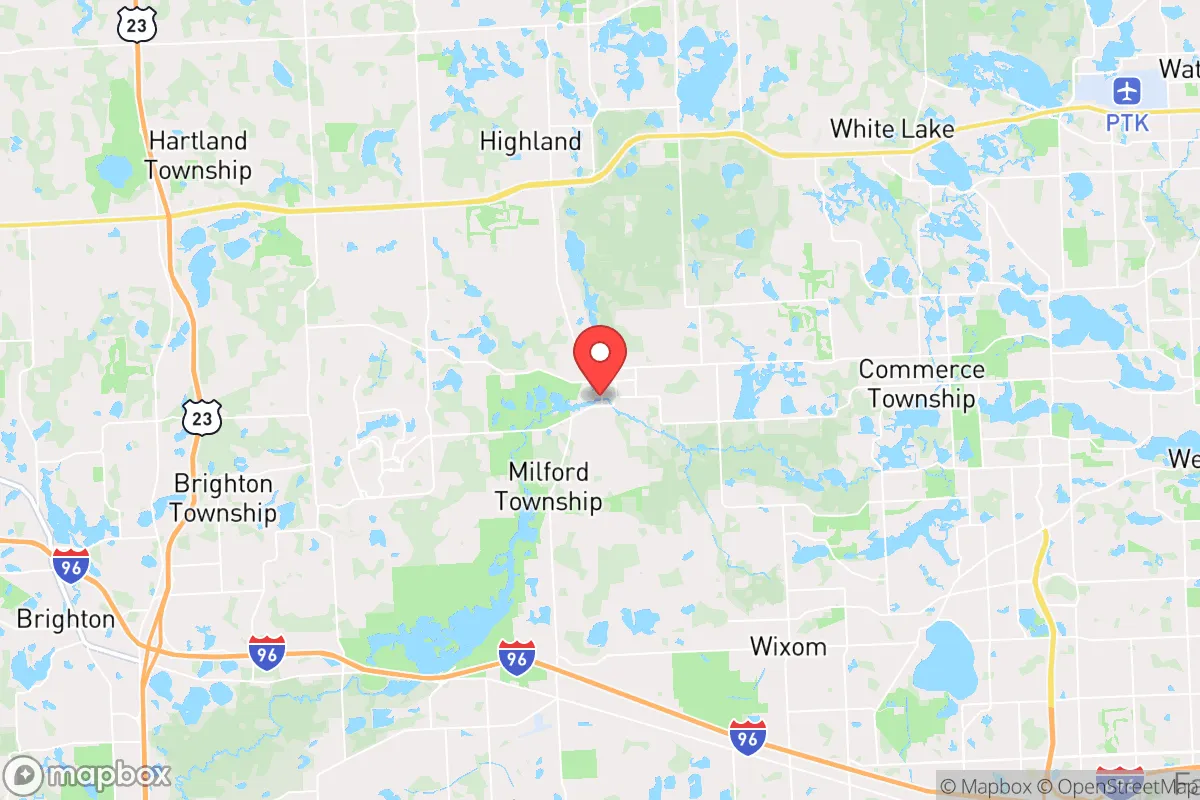
Photo: Wikipedia
Personal Sovereignty in Milford, MI
Strong independent fundamentals that actively favor personal liberty and low regulation.
What does Personal Sovereignty tell us?
Personal Sovereignty measures your capacity for self-reliance and independence with minimal government friction. Higher scores mean fewer barriers between you and the way you want to live... but it assumes you have the space you need and good neighbors.
What does this tell us?
Personal Sovereignty measures your capacity for self-reliance and independence with minimal government friction. Higher scores mean fewer barriers between you and the way you want to live... but it assumes you have the space you need and good neighbors.
State Policy
Energy independence: Importer (20% of energy produced in-state)
Personal Liberty
Homesteading

Personal Liberty Analysis
Milford, Michigan, offers a notably high degree of personal sovereignty for a suburban community, blending the self-reliance ethos of rural Michigan with the practical amenities of a small town. Located in Oakland County, the village and its surrounding township operate under Michigan’s relatively permissive state-level framework for gun rights, property use, and parental authority, while local ordinances impose a moderate but manageable regulatory touch. For single individuals and families who prioritize autonomy, Milford presents a balanced environment where personal freedom is the default, but not without some local constraints typical of a desirable, well-maintained community.
Tax burden and regulatory posture in Milford and Oakland County
Michigan’s tax structure is generally favorable for those seeking to keep more of their earnings, and Milford benefits from this state-level context. The state levies a flat 4.25% personal income tax and a 6% sales tax, with no local income tax in Milford itself. Property taxes in Milford Village and Milford Township are competitive for Oakland County, typically ranging from 30 to 45 mills depending on the specific parcel and any voter-approved millages for schools or local services. This is higher than rural northern Michigan but lower than many inner-ring Detroit suburbs. The regulatory posture is light-touch at the state level, with no state-level property tax on business equipment (personal property tax is being phased out) and no estate or inheritance tax. Locally, Milford enforces standard zoning and building codes, but the village’s planning department is known for being pragmatic rather than adversarial. There is no local rent control, no burdensome business licensing beyond standard requirements, and the township generally defers to property owners on land use decisions as long as they comply with the master plan. The overall tax burden is moderate, not oppressive, and the regulatory environment is predictable—a key factor for anyone valuing long-term financial autonomy.
Self-defense and gun law specifics in Milford and Michigan
Michigan is a shall-issue state for concealed pistol licenses (CPL), meaning that if a resident meets the statutory requirements—background check, fingerprinting, and an 8-hour training course—the county gun board must issue the license. Oakland County, including Milford, processes CPL applications efficiently, with typical turnaround times of 45-60 days. Open carry is legal without a permit for anyone 18 or older who can legally possess a firearm, though local ordinances in Milford Village do not restrict it. The state preempts local governments from enacting their own gun control ordinances, so Milford cannot ban firearms in parks, businesses, or public spaces beyond what state law allows. Stand-your-ground laws are in effect: Michigan law (MCL 780.972) provides that an individual has no duty to retreat before using deadly force if they are in a place they have a legal right to be and reasonably believe force is necessary to prevent imminent death, great bodily harm, or sexual assault. Castle doctrine protections extend to one’s home, vehicle, and occupied dwelling. There is no state-level magazine capacity ban, no assault weapons ban, and no universal background check requirement beyond federal law. For a resident of Milford, the legal framework for self-defense is robust and clear, with minimal local interference.
Self-reliance and homesteading viability: lot sizes, zoning, and off-grid feasibility
Milford’s zoning and lot size regulations create a mixed environment for self-reliance. Within the village, standard residential lots are typically 0.25 to 0.5 acres, which limits large-scale gardening, livestock, or off-grid infrastructure. However, in the surrounding Milford Township, agricultural and rural residential zoning allows for lots of 1 to 10 acres or more, where keeping chickens, goats, or even a small horse is permitted with a simple permit. The township’s zoning ordinance explicitly allows for “hobby farms” and “agricultural uses” on parcels of 5 acres or more, including the sale of produce and eggs from the property. Off-grid feasibility is moderate: Michigan’s building code requires connection to the electrical grid for new construction, but solar panels with net metering are allowed and encouraged. Rainwater collection is legal for non-potable uses, and composting toilets are permitted with a septic system variance. The village water and sewer system is mandatory within the village limits, but township properties on wells and septic systems have full autonomy over their water supply. There is no county-wide ban on backyard chickens or beekeeping, though the village does prohibit livestock within its boundaries. For a family seeking a self-reliant lifestyle, the township’s rural parcels offer genuine homesteading potential, while the village itself is better suited for those who prioritize convenience over land autonomy.
Personal liberties: parental rights, medical autonomy, speech, and property
Michigan law provides strong protections for parental rights. The state’s Revised School Code (MCL 380.10) affirms that parents have the right to direct the education and upbringing of their children, including the ability to homeschool without state oversight beyond a simple notification. Milford’s public schools, part of the Huron Valley Schools district, are generally responsive to parental input, and the district does not have a reputation for overreach on curriculum or medical matters. Medical autonomy is more nuanced: Michigan does not have a state-level vaccine mandate for adults, and religious or philosophical exemptions are available for school vaccine requirements. However, the state does have a prescription drug monitoring program and standard medical privacy laws. Free speech is fully protected under the First Amendment, and Milford has no local ordinances restricting political signage, leafleting, or public assembly beyond standard time-place-manner rules. Property rights are strong: Michigan is a “right-to-farm” state, meaning agricultural operations on properly zoned land are protected from nuisance lawsuits, and there is no state-level rent control. Eminent domain is rarely used for private development, and property owners have clear appeal rights. The overall legal climate in Milford respects individual decision-making in family, health, and expression, with the primary constraints coming from standard public health and safety regulations rather than ideological overreach.
Compared to other suburban communities in Southeast Michigan, Milford offers a notably high degree of personal sovereignty. The combination of Michigan’s permissive gun laws, moderate tax burden, and strong parental rights creates an environment where individuals and families can largely live as they see fit, provided they respect basic zoning and safety codes. While it lacks the near-total autonomy of rural northern Michigan counties, Milford compensates with excellent infrastructure, low crime, and a community that values self-reliance without isolation. For a relocation-minded reader who prioritizes freedom but also wants good schools and a vibrant downtown, Milford represents a strategic balance—a place where personal sovereignty is the rule, not the exception.

* Values derived from national, state, county, city and local statistics and may differ in a specific area. Last updated: 2026-10-05T03:56:56.000Z
Narrative content on this page is AI-generated and may contain mistakes. Verify any details that matter before acting on them.
ReloMaps may earn a commission from affiliate links at no extra cost to you.

