Photo: Wikipedia
Demographics of Milford, MI
Affluence Level in Milford, MI
An upper-middle-class area. Household wealth, education levels, and homeownership run ahead of national benchmarks.
People of Milford, MI
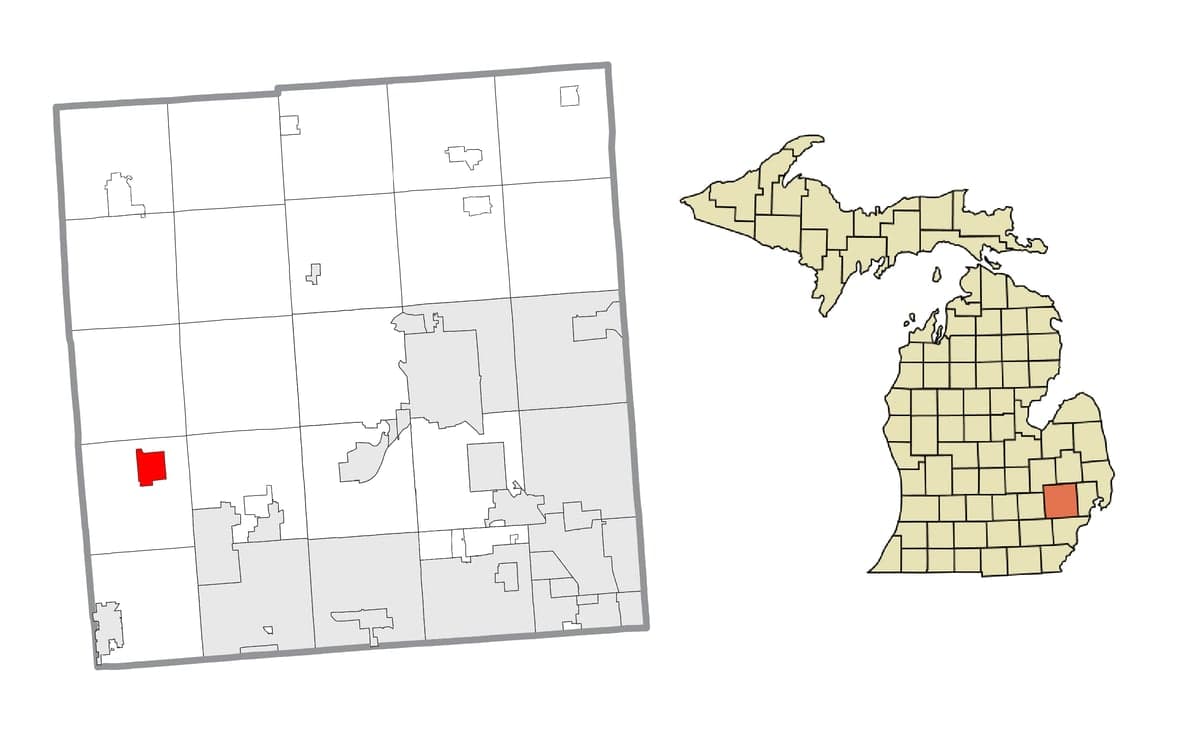
Milford, Michigan, is a small, tight-knit city of 6,467 residents that retains a distinctly historic, predominantly white character, with 88.5% of the population identifying as white alone. The city’s identity is shaped by its walkable downtown, its location along the Huron River, and a strong sense of local tradition that appeals to families and professionals seeking a quieter, community-oriented lifestyle. With a high college attainment rate of 49.2% and a very low foreign-born share of just 1.6%, Milford’s population is notably homogeneous and well-educated, reflecting a community that has changed slowly over generations.
How the city was settled and grew
Milford’s human history began with the Potawatomi and Ojibwe peoples, who used the Huron River as a travel corridor and seasonal fishing ground. The first permanent white settlers arrived in the 1830s, drawn by the river’s waterpower potential. The village was platted in 1836, and its early growth was driven by sawmills and gristmills along the river. The arrival of the Grand Trunk Railroad in the 1870s turned Milford into a small industrial and agricultural hub, attracting a wave of Irish and German immigrants who built homes in what is now the Historic District around Main Street and Commerce Road. These families worked in the mills, the railroad yards, and the surrounding farms. A smaller wave of Polish and Italian immigrants arrived in the early 1900s, settling in the South Milford area near the railroad tracks, where modest worker cottages still stand. By 1950, Milford was a stable, nearly all-white village of about 3,000 people, with a strong Catholic and Protestant church presence anchoring community life.
Modern era (post-1965)
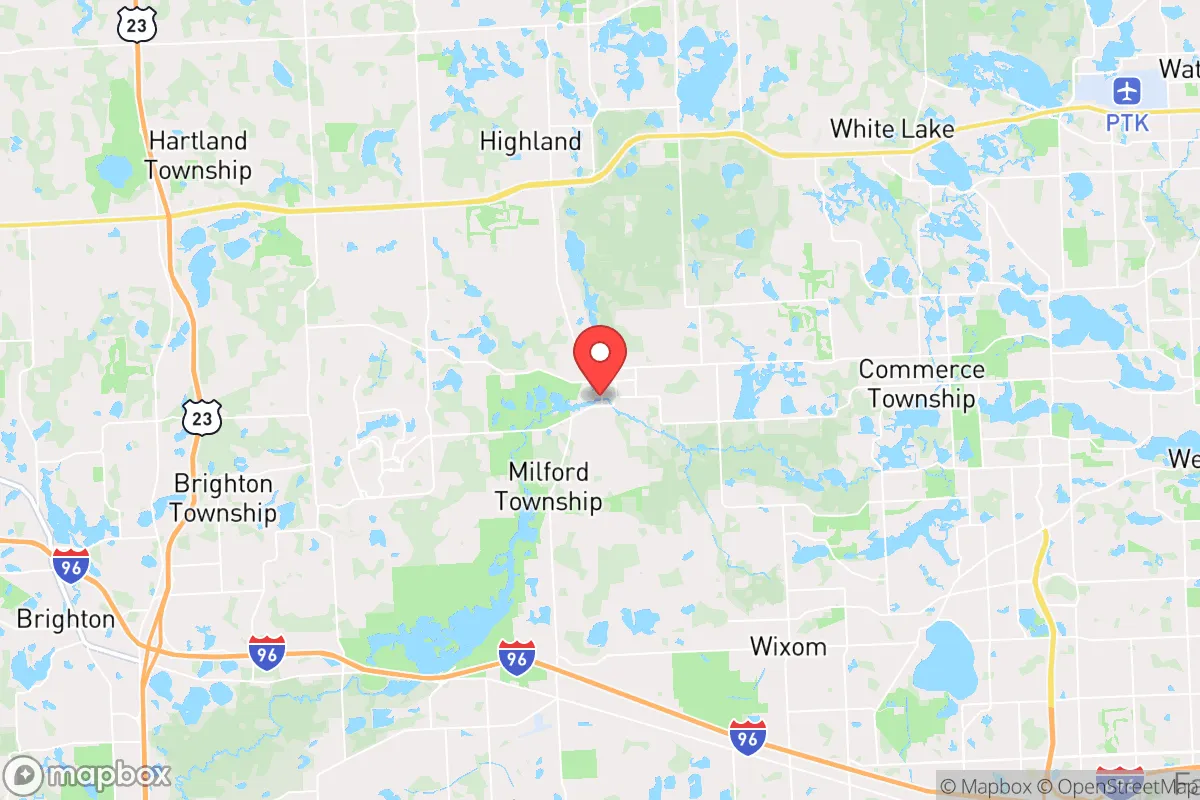
The post-1965 period brought no significant foreign-born influx to Milford; the city’s foreign-born population remains at just 1.6%, far below the national average. Instead, the major demographic shift was domestic: the expansion of Detroit’s suburbs. As auto industry jobs boomed, Milford became a bedroom community for engineers and managers at the nearby General Motors Milford Proving Ground (opened 1924, expanded significantly in the 1970s). This wave of white, college-educated professionals settled in newer subdivisions like Woodland Hills (off Highland Road) and Hickory Ridge (near the Proving Ground), which were developed in the 1970s and 1980s. These neighborhoods remain overwhelmingly white and affluent today. The city’s Black population grew modestly from near-zero in 1970 to 2.0% today, with most Black residents living in the Central Park area near the high school, a neighborhood of mid-century ranch homes. The Hispanic share (3.1%) and East/Southeast Asian share (1.1%) are small but visible in the downtown workforce and in newer subdivisions like Lake Forest, built in the 2000s. The Indian-subcontinent population is negligible at 0.2%. Overall, Milford’s modern era has been one of slow, selective growth, with new residents overwhelmingly drawn from within Michigan and the Midwest.
The future
Milford’s population is projected to remain stable or decline slightly over the next 10–20 years, as the city is nearly built out and land annexation is limited by surrounding Oakland County townships. The population is likely to become slightly older, as younger families are priced out by rising home values (median home price near $400,000). Diversity will increase only marginally: the Hispanic and East/Southeast Asian shares may each rise to 4–5% by 2040, driven by service-sector workers and professionals in healthcare and tech, but the city will remain predominantly white. New residential development is concentrated in the Milford Village area, where a few infill townhome projects are attracting empty-nesters and remote workers. The cultural identity is evolving from a blue-collar mill town to a white-collar historic village, with a growing emphasis on boutique retail, craft breweries, and river recreation. For a new resident, this means joining a community that values stability, tradition, and low crime, but offers limited racial or economic diversity.
Milford is becoming a carefully preserved historic enclave for educated, financially comfortable families and retirees who prioritize safety, schools, and a small-town feel. For someone moving in now, it offers a predictable, homogeneous environment with strong local institutions, but little of the demographic dynamism or cultural variety found in larger Michigan cities.

* Values derived from national, state, county, city and local statistics and may differ in a specific area. Last updated: 2026-10-05T03:56:56.000Z
Narrative content on this page is AI-generated and may contain mistakes. Verify any details that matter before acting on them.
ReloMaps may earn a commission from affiliate links at no extra cost to you.

