
Photo: Wikipedia
Political ClimatePolitical Climate in Middlefield, CT
District shown is the primary district for this city’s centroid. Cities may span multiple districts.
Local Political AnalysisPolitical Analysis of Middlefield, CT
Middlefield, Connecticut, is a reliably Democratic town in a reliably Democratic state, with a Cook Partisan Voting Index (PVI) of D+8—identical to Connecticut’s statewide PVI. That means the town’s political lean is essentially a mirror of the state’s overall tilt, not an outlier. In practice, Middlefield has voted for Democratic presidential candidates by margins similar to the state average in recent cycles, though it’s not a deep-blue stronghold like Hartford or New Haven. The town’s trajectory is stable: no dramatic swing left or right in the last decade, just a steady, moderate Democratic preference that reflects its mix of suburban commuters, rural landowners, and longtime families.
How it compares
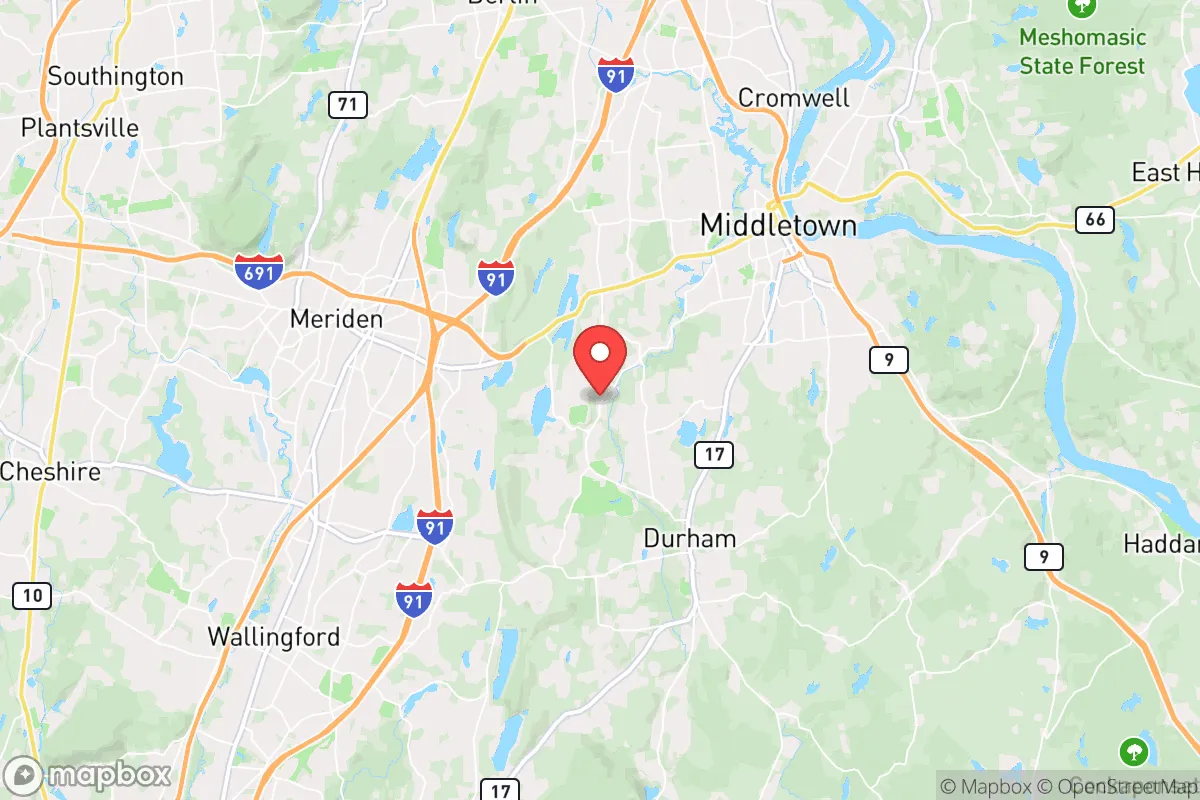
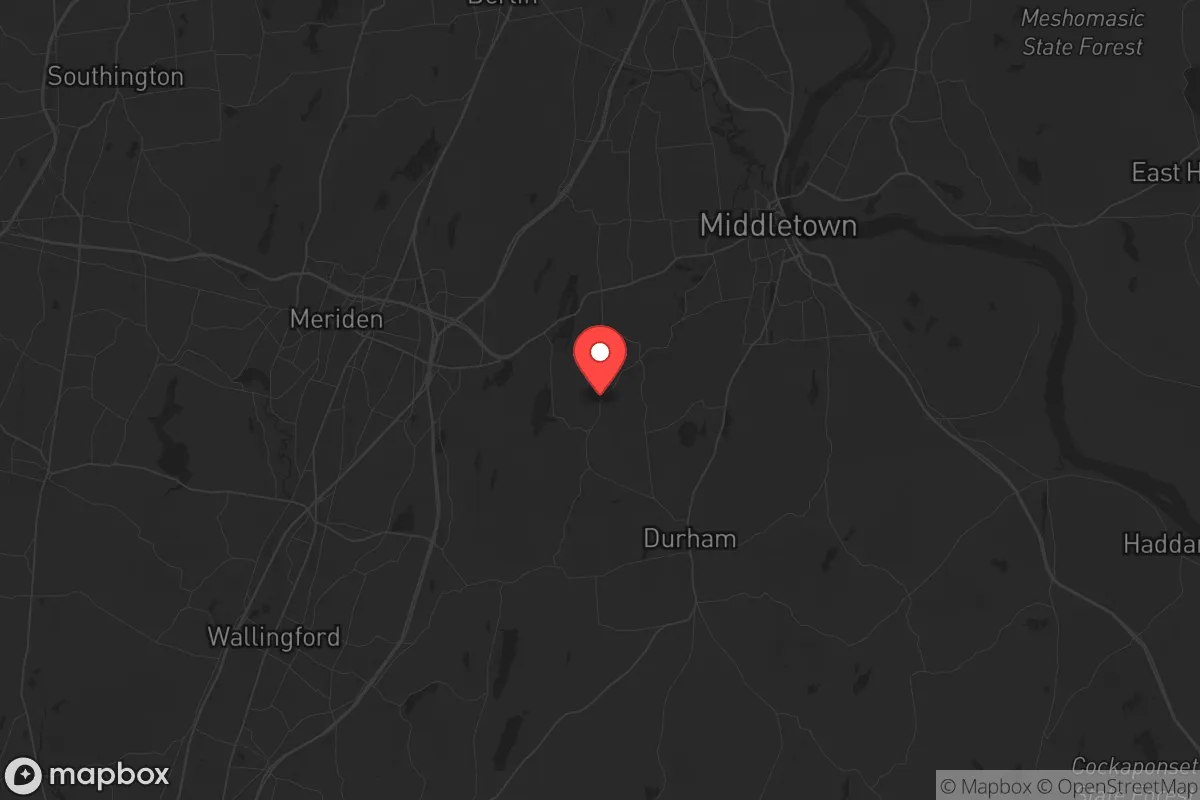
Middlefield’s D+8 PVI puts it squarely in the same political lane as Connecticut as a whole, but that masks some interesting local contrasts. Drive 10 minutes east to Durham, and you’ll find a slightly more conservative-leaning town—Durham voted for Trump in 2016 and 2020 by narrow margins, while Middlefield went for Biden by about 10 points. Head south to Middletown, a college town with Wesleyan University, and you’re in a D+20+ environment, with far more progressive activism and a younger, more transient population. To the north, Meriden is a working-class city that’s also Democratic but with a stronger populist streak—think union households and blue-collar voters who sometimes split tickets. So while Middlefield’s PVI matches the state, it’s actually a bit of a moderate middle ground: less liberal than Middletown, less conservative than Durham, and less economically anxious than Meriden. The town’s small size (about 1,500 voters) means local elections often hinge on personality and town issues rather than party labels, but the Democratic registration advantage is real and persistent.
What this means for residents
For liberal residents, Middlefield is a comfortable place to live politically. You’ll find Democratic town committees active, local candidates who align with state party platforms, and a general cultural acceptance of progressive policies like expanded public transit funding or renewable energy incentives. Conservative residents aren’t isolated, but they’re a clear minority—expect to be outvoted in most town-wide elections, though not silenced. The town’s small scale means local boards and commissions often have a mix of viewpoints, and a well-organized Republican candidate can still win a seat on the Board of Education or Planning and Zoning. In practice, the political climate is less about ideological battles and more about practical governance: road repairs, school budgets, zoning for new housing. The state-level D+8 environment means Middlefield’s state representatives and senators are almost always Democrats, so conservative residents may feel their voice is less heard in Hartford, but local issues rarely break down along strict party lines.
Culturally, Middlefield is a bit of a quiet outlier. It’s one of the few towns in Connecticut that still has a functioning agricultural base—think apple orchards, horse farms, and the famous Lyman Orchards—which gives it a more rural, land-use-focused political culture than the suburban or urban norm. That means debates over property taxes, open space preservation, and farm stand regulations often matter more than national hot-button issues. The town’s small population and low density also mean less visible political organizing: no big protests, no partisan billboards, just a steady, low-key Democratic majority that gets on with the business of running a small New England town. For both liberals and conservatives, the takeaway is that Middlefield’s politics are predictable, stable, and largely local—a place where the D+8 label tells you the baseline, but the real story is in the town meeting and the zoning board.

State Political ClimatePolitical Climate in Connecticut
State Political AnalysisPolitical Environment in the State
Connecticut is a solidly Democratic state with a Cook PVI of D+8, meaning it leans about eight points more Democratic than the national average in presidential elections. The state hasn't voted Republican for president since 1988, and Democrats control the governorship, both chambers of the legislature, and all five U.S. House seats. Over the past 10-20 years, the shift has been steady but not dramatic: the affluent, educated suburbs of New York City have become more Democratic, while the rural eastern and northwestern corners have grown more Republican, but the overall blue tint has deepened as the population has concentrated in the Democratic-leaning I-95 corridor.
Urban vs. rural divide
The political map breaks down along a clear urban-suburban-rural gradient. The Democratic strongholds are the state's three largest cities: Bridgeport, New Haven, and Hartford, which together deliver massive vote margins. The inner-ring suburbs of these cities — places like West Hartford, Hamden, and Milford — are also reliably blue, driven by well-educated professionals and public-sector workers. The real battleground is the outer suburbs and exurbs. Fairfield County, particularly towns like Greenwich, Stamford, and Darien, has trended sharply Democratic as wealthy commuters have moved left on social issues, even as they remain fiscally moderate. Meanwhile, the rural "Quiet Corner" in the northeast — towns like Killingly and Thompson — and the Litchfield Hills in the northwest have become increasingly Republican, with Trump winning some of these towns by 20-30 points. The state's political center of gravity is the I-95 corridor from Greenwich to New Haven, which is where the population and the Democratic votes are concentrated.
Policy environment
Connecticut's policy environment is among the most progressive in the Northeast, with a few notable exceptions. The state has a progressive income tax with rates from 3% to 6.99%, one of the highest property tax burdens in the nation (average effective rate around 2.1%), and a 6.35% sales tax. The regulatory posture is business-friendly in some sectors (insurance, finance, defense) but heavily regulated in others (energy, housing, environmental permitting). Education policy is a mixed bag: the state has some of the best public schools in the country in wealthy suburbs like Westport and Glastonbury, but urban districts in Bridgeport and Hartford are chronically underfunded and underperforming. Healthcare is heavily regulated, with a state-run exchange and strict insurance mandates. Election laws are among the most accessible in the country: no-excuse absentee voting, early voting (passed in 2023), and automatic voter registration at the DMV. The state also has a public campaign financing system for legislative races.
Recent policy direction
Over the past five years, Connecticut has moved decisively left on several fronts. In 2023, the legislature passed a sweeping gun control package that expanded the state's assault weapons ban, raised the purchasing age to 21, and required safe storage. Self-defense law is restrictive: the state has a "may-issue" concealed carry regime (though a 2022 Supreme Court ruling has forced some loosening), and there is no stand-your-ground law. On education, the state passed a law in 2022 requiring all public schools to offer free menstrual products in bathrooms, and in 2023 it banned the use of corporal punishment in private schools. Parental rights have been a flashpoint: the state passed a law in 2021 requiring schools to adopt policies on transgender student participation in sports and use of facilities, but it has not passed a parental notification requirement for name or pronoun changes. On privacy and surveillance, the state passed a data privacy law in 2022 giving residents the right to opt out of data collection, but it has not restricted police use of facial recognition. Medical and bodily autonomy is broadly protected: abortion is legal up to fetal viability, and the state passed a law in 2022 protecting providers and patients from out-of-state lawsuits. Property rights are relatively weak: the state has strong eminent domain powers and a statewide property tax cap, but no right-to-farm law. On voting, the state expanded early voting in 2023 and is considering same-day registration.
Civil unrest & political movements
Connecticut has seen relatively low levels of civil unrest compared to other states, but there have been notable flashpoints. The 2020 Black Lives Matter protests in New Haven and Hartford were large but mostly peaceful, with some property damage in downtown Hartford. The state has a vocal activist left centered around the Working Families Party, which has pushed for rent control, single-payer healthcare, and police reform. On the right, the state has a small but active Second Amendment movement, with regular rallies at the state capitol in Hartford. Immigration politics are relatively calm: Connecticut is a "sanctuary state" by practice, with a 2013 law limiting local police cooperation with ICE, but enforcement has been uneven. There has been no serious secession or nullification rhetoric. Election integrity has been a minor issue: the 2020 election was conducted mostly by mail due to COVID, and while there were no major fraud allegations, the state's Republican Party has pushed for stricter voter ID laws, which have not passed. The most visible political flashpoint for a new resident would likely be the high property taxes and the ongoing debate over the state's fiscal health, which dominates local news and town hall meetings.
Projection
Over the next 5-10 years, Connecticut is likely to remain solidly Democratic, but the margin may narrow slightly. The state's population is aging and slowly declining, with the biggest losses in rural and exurban areas that lean Republican. In-migration is mostly from New York and Massachusetts, which tends to reinforce the Democratic lean. The biggest wild card is the state's fiscal trajectory: if the state's pension obligations continue to crowd out spending on services and infrastructure, it could drive out more middle-class families, which would further concentrate the population in the Democratic-leaning urban and suburban cores. A new resident moving in now should expect to find a state where Democratic control is the baseline, but where the internal debate is between moderate and progressive wings of the party, not between Democrats and Republicans. The practical effect is that conservative residents will have limited influence on state policy, but will find that local control in many towns still allows for a degree of autonomy on issues like zoning, school curriculum, and policing.
For a new resident, the bottom line is this: Connecticut is a blue state where Democratic policies are the norm, but the intensity of that blue varies dramatically by town. If you're a conservative, you'll find like-minded neighbors in the rural corners and some outer suburbs, but you'll be voting against the state's majority on most issues. If you're a liberal, you'll find a state that is broadly aligned with your views, but you'll also encounter high taxes and a cost of living that can feel punishing. The state's political reality is one of stable, moderate-to-progressive Democratic control, with a healthy dose of local variation and a constant, grinding debate over fiscal sustainability.
* Values derived from national, state, county, city and local statistics and may differ in a specific area. Last updated: 2026-09-02T17:21:24.000Z
Narrative content on this page is AI-generated and may contain mistakes. Verify any details that matter before acting on them.
ReloMaps may earn a commission from affiliate links at no extra cost to you.

