
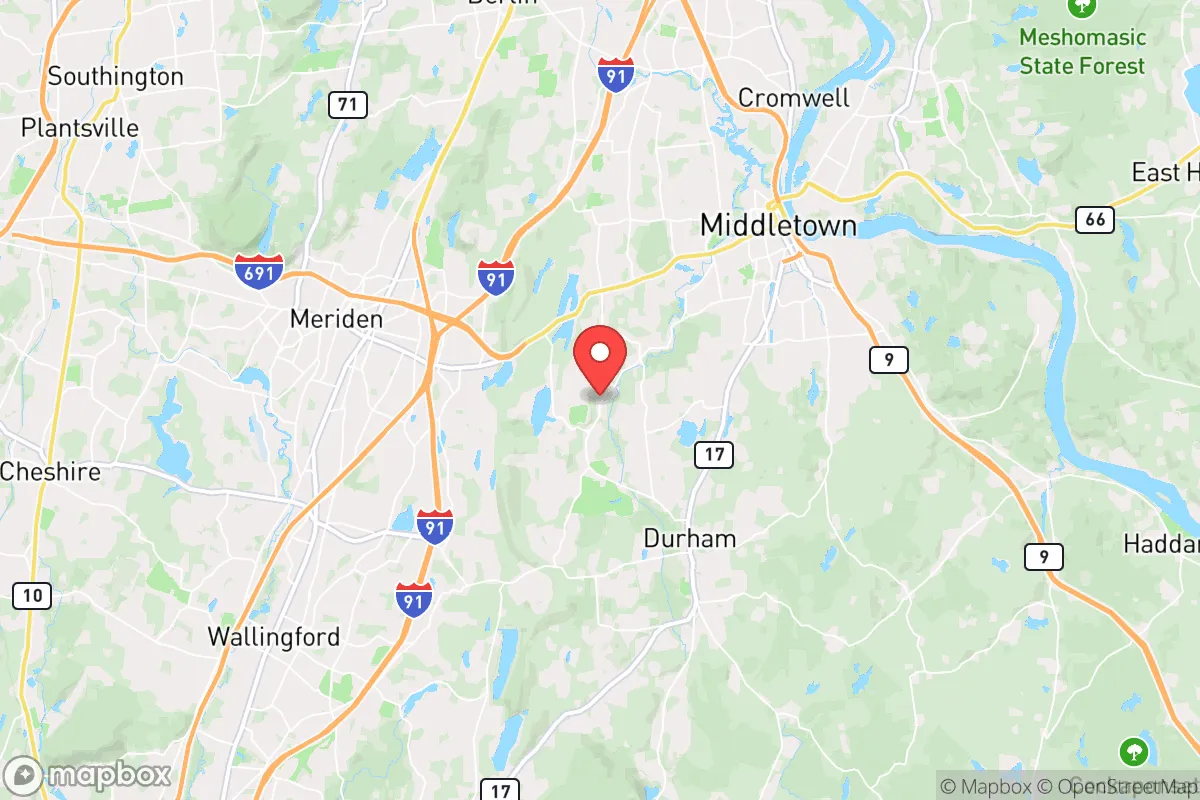
Photo: Wikipedia
Quality of Life in Middlefield, CT
Above-average quality of iife. The area offers a reasonable cost of living, decent mobility, and a mix of neighborhood amenities.
What does Quality of Life tell us?
Quality of Life blends cost of living, nearby amenities, socioeconomic signals, and neighborhood character. City-level scores represent the whole municipality; individual neighborhoods can differ.
What does this tell us?
Quality of Life blends cost of living, nearby amenities, socioeconomic signals, and neighborhood character. City-level scores represent the whole municipality; individual neighborhoods can differ.
Cost of Living
11% above national average
The Real Cost of Living in Middlefield, CT for 2026
| Tier | Individual | Family (4) |
|---|---|---|
| Survival | $22k | $42k |
| Comfortable | $54k | $80k |
| Luxury | $134k+ | $207k+ |
| Elite (Top 5%) | $164k+ | $254k+ |
93%
The Area Signal
A metric tracking the socioeconomic signals of the area.
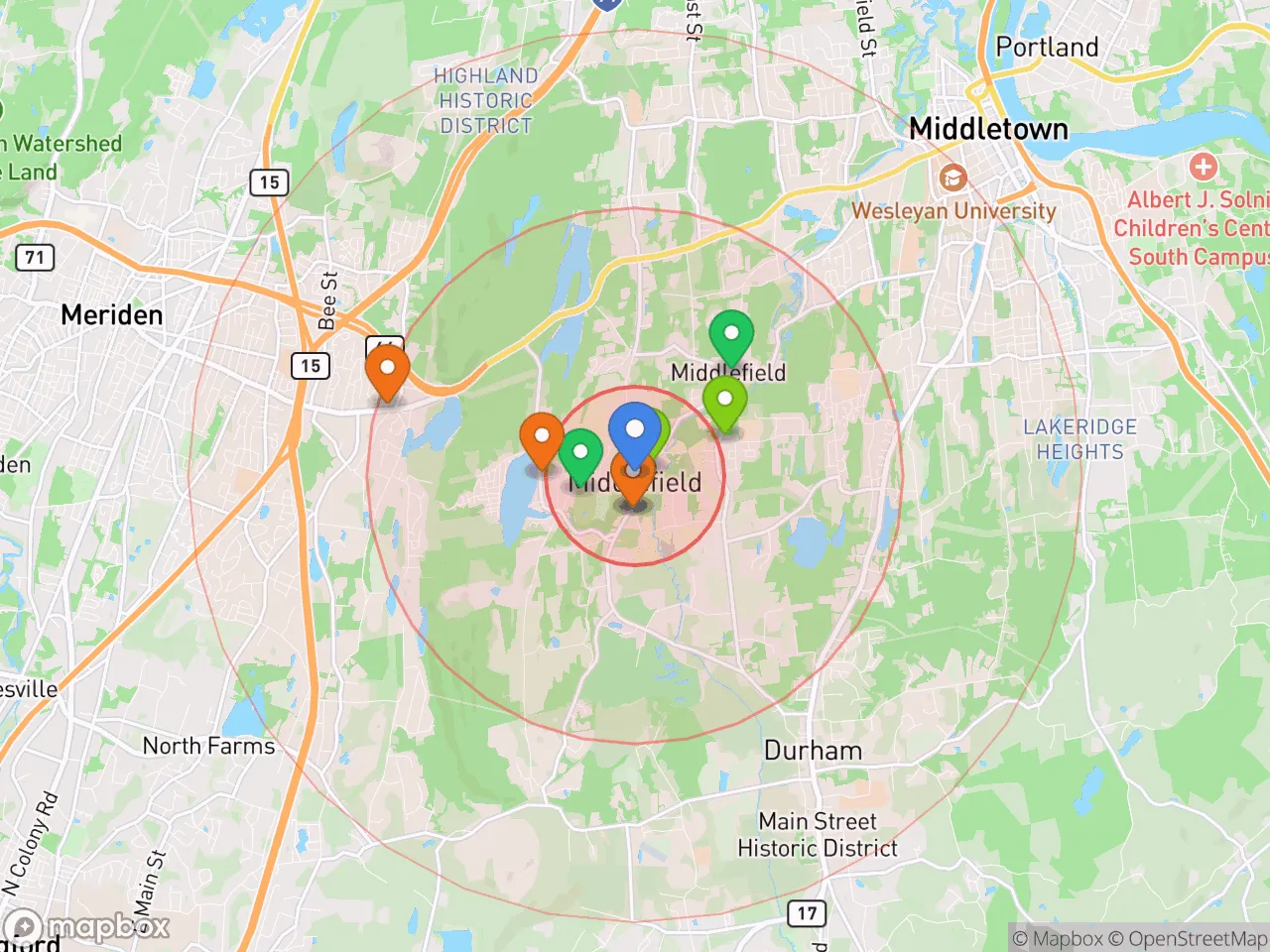
Hobbies
Explore the areaGroceries
7 within 10 miles
Gas
20 within 10 miles
Hospital
20 within 20 miles
Airport
JFK — John F. Kennedy International
Post Office
USPS — Middlefield, CT
Critical Amenities
Quality-of-Life Analysis
Middlefield, Connecticut, presents a quality of life defined by quiet affluence and a strong sense of community, appealing primarily to families and professionals seeking a slower pace within reach of Hartford and New Haven. With a cost of living index of 111 (11% above the national average), the town balances higher-than-average expenses with a housing market that remains more accessible than many nearby Fairfield County suburbs. Residents are typically long-term homeowners, commuters to regional employment hubs, and those who prioritize school quality and open space over urban nightlife.
Cost of living and housing affordability compared to nearby towns
Middlefield’s cost of living is driven largely by housing, though it remains a relative bargain compared to the pricier communities of Middlesex County. The median home value sits at $279,500, notably lower than the Connecticut state median of roughly $340,000 and far below towns like Durham or Madison, where medians often exceed $400,000. Median rent is $1,392, which is competitive for the region, though renters face a limited inventory of apartments. Property taxes in Middlefield are moderate for the state, but Connecticut’s overall tax burden means homeowners should budget carefully. The average commute of 22.2 minutes is shorter than the national average of 26 minutes, a practical advantage for those working in Middletown (10 minutes), Meriden (12 minutes), or Hartford (25 minutes). This commute efficiency offsets some of the higher COL, as residents spend less on fuel and vehicle wear than peers in longer-commute suburbs.
Schools, amenities, and what daily life is like for families
Daily life in Middlefield revolves around its highly rated public schools, part of Regional School District 13, which serves Middlefield and Durham. Memorial School (K-5) and Frank Ward Strong Middle School (6-8) consistently earn above-average test scores, and Coginchaug Regional High School offers a strong college-prep track with small class sizes. The town’s amenities are modest but functional: the Middlefield Community Center hosts youth sports and senior programs, while the nearby Wadsworth Falls State Park provides hiking, swimming, and picnicking along the Coginchaug River. For shopping and dining, residents drive 5–10 minutes to Middletown’s Main Street or the Westfield Meriden mall. The rhythm of life is suburban and family-oriented—weekends often involve youth soccer at the town fields, library story time at the Levi E. Coe Library, or errands at the local Big Y supermarket. There is no downtown core; instead, the town is a collection of residential streets and rural roads, which appeals to those seeking privacy but may feel isolating for singles or empty-nesters without a car.
Middlefield is best suited for families and professionals who value strong schools, short commutes, and a low-key, nature-adjacent lifestyle over urban amenities. The town’s affordability relative to neighboring suburbs makes it a practical choice for buyers priced out of Durham or Madison, while its commute times appeal to Hartford and New Haven workers. Retirees may find the lack of walkable services and entertainment limiting, but those seeking a quiet, safe, and well-maintained community will find Middlefield a solid fit. For renters or first-time buyers, the key trade-off is limited housing stock—homes here sell quickly, and rental options are scarce, so acting fast is essential.

Crime in Middlefield, CT
Generally safer than 71% of comparable U.S. locations.
Violent CrimeViolent Crime Analysis
Property CrimeProperty Crime Analysis
Crime Analysis
Middlefield, Connecticut, reports a violent crime rate of 110.9 per 100,000 residents and a property crime rate of 1,158.6 per 100,000, figures that position it as a relatively safe community compared to national averages. However, the town’s location within the broader Hartford metro area and its proximity to Middlesex County’s justice system introduce important considerations for prospective residents. The overall safety picture is one of low violent crime but moderate property crime, with the effectiveness of local law enforcement and prosecutorial policies playing a key role in maintaining public security.
Crime in context
Middlefield’s violent crime rate of 110.9 per 100,000 is roughly 70% lower than the national average of 380 per 100,000, making it a standout for safety in this category. Property crime, at 1,158.6 per 100,000, sits about 20% below the national rate of 1,450 per 100,000, though it is slightly above the Connecticut state average of approximately 1,100 per 100,000. These numbers place Middlefield in a favorable position relative to larger urban centers, but the town is not immune to the regional dynamics of Middlesex County. The county’s judicial district, which includes Middletown, has seen progressive prosecutorial policies in recent years, including reduced bail requirements and diversion programs for property offenses. While these policies aim to reduce incarceration, they can result in repeat offenders cycling through the system, a pattern that residents should monitor as it may affect long-term property crime trends.
What residents experience
In practice, Middlefield residents report a strong sense of security in their daily lives, with violent incidents being rare and typically isolated. The town’s police department maintains a visible presence, and community policing efforts are active. However, property crimes—such as theft from vehicles, burglary, and vandalism—occur with enough regularity to warrant precaution. Larceny accounts for the majority of property crime incidents, often targeting unlocked cars or unattended items on residential properties. Residents should also be aware that Middlefield’s location near Route 66 and I-91 provides easy access for transient criminals from the broader Hartford metro area, where progressive district attorneys in Hartford and New Haven counties have been criticized for lenient sentencing. This regional dynamic means that offenders apprehended in Middlefield may face reduced consequences if their cases are transferred to larger jurisdictions, potentially undermining local deterrence.
Neighborhood-level variation
Crime in Middlefield is not evenly distributed. The town’s more rural and sparsely populated areas, particularly those east of Route 147, experience virtually no violent crime and very low property crime rates. In contrast, neighborhoods closer to the Middletown border, especially around the Main Street corridor and near the Coginchaug Regional High School, see higher rates of property crime, including vehicle break-ins and minor thefts. The Lake Beseck area, a popular recreational spot, also reports seasonal increases in theft from vehicles during summer months. For those considering a move, properties with off-street parking, good lighting, and proximity to neighbors tend to have fewer incidents. Overall, Middlefield offers a safe environment for families and retirees, but the influence of progressive justice policies in the surrounding metro area means that residents should remain vigilant about property security and advocate for strong local law enforcement support.
* Values derived from national, state, county, city and local statistics and may differ in a specific area. Last updated: 2026-09-02T17:21:24.000Z
Narrative content on this page is AI-generated and may contain mistakes. Verify any details that matter before acting on them.
ReloMaps may earn a commission from affiliate links at no extra cost to you.

