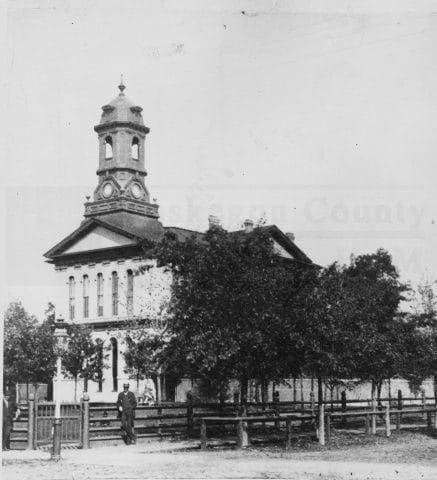
Photo: Wikipedia
Political ClimatePolitical Climate in Muskegon County
Showing district-level results — no local-only data available.
Local Political AnalysisPolitical Analysis of Muskegon County
Muskegon County leans reliably Republican, with a Cook PVI of R+15, making it one of the more conservative corners of a state that itself is a pure toss-up (Michigan’s PVI is EVEN). That R+15 number isn’t just a statistic—it means the county votes about 15 points more Republican than the national average in presidential elections. But if you’ve spent any time here, you know that’s not the whole story. The county’s politics are split right down the middle geographically, and the trajectory over the last decade has been a slow but steady shift rightward, especially in the rural townships, even as the city of Muskegon itself has become a reliable blue anchor.
How it compares
Compared to Michigan as a whole, Muskegon County is a deep red outlier. The state’s EVEN PVI reflects its status as a perennial battleground, where Detroit, Ann Arbor, and Grand Rapids suburbs cancel each other out. Muskegon County, however, is more like the western side of the state’s conservative spine. The real action is inside the county lines. The city of Muskegon and the lakeshore communities of Norton Shores and Muskegon Heights lean Democratic, with Muskegon Heights often voting 80%+ blue. Drive east or north, though, and the landscape changes fast. Townships like Fruitland, Dalton, and Holton are deep red, often voting 70%+ Republican. The swing precincts—the ones that decide local races—tend to cluster around the suburban fringe of Muskegon Township and the more mixed-income areas of Roosevelt Park. These aren’t purple counties; they’re sharp blue islands in a red sea. The county’s R+15 rating is a weighted average of that split, but it masks the fact that a Republican candidate can win the county by 15 points while losing the city by 30.
What this means for residents
For conservative residents, this means local government—county commission, sheriff, road commission—is reliably in their hands. Tax policy tends to be lean, with a focus on keeping millage rates low and resisting new spending. For liberal residents, it means your vote in countywide races is usually a minority one, but your voice is loud in city council and school board elections, especially in Muskegon proper. Practical effects: the county has not adopted a county-wide transit authority, and zoning laws in the rural townships remain very permissive for agriculture and light industry. Both sides can point to wins and losses. Conservatives appreciate the low property tax burden relative to neighboring Ottawa County; liberals point to the city’s successful investment in the Muskegon Lake shoreline redevelopment, which passed with strong bipartisan support at the state level but was a local fight.
If you’re moving here, the political climate is less about daily friction and more about knowing which coffee shop conversations will be comfortable. In the city, you’ll hear plenty of talk about union jobs, environmental cleanup of the lake, and housing affordability. In the townships, it’s more about school funding, deer management, and opposition to state-level mandates. The cultural distinction that matters most: Muskegon County is not Grand Rapids. It’s less corporate, more blue-collar, and the politics reflect that—more populist on both sides, less polished. The long-time residents I know say the biggest shift they’ve seen isn’t in party registration but in the decline of straight-ticket voting; more people now split their ballots, especially in local races. That’s the real Muskegon story: a deeply red county where the blue parts are stubborn, and the middle is shrinking but still decisive in close elections.

State Political ClimatePolitical Climate in Michigan
State Political AnalysisPolitical Environment in the State
Michigan is the ultimate swing state, carrying a Cook PVI of EVEN and a political identity that has seesawed dramatically over the past two decades. After voting for Obama twice, the state flipped to Trump in 2016 by a razor-thin 0.2% margin, then swung back to Biden in 2020 by 2.8%, and in 2024 Trump reclaimed it by roughly 1.5 points. This 10-20 year arc shows a state that is deeply competitive, with its outcome often decided by a few thousand votes in Wayne County (Detroit) and Kent County (Grand Rapids). For a conservative-leaning relocator, Michigan offers a genuine battleground where your vote carries weight, but the policy environment is a mixed bag that depends heavily on which party holds the governor’s mansion and the legislature.
Urban vs. rural divide
The political map of Michigan is a textbook study in geographic polarization. The Democratic stronghold is Southeast Michigan, anchored by Detroit and its inner-ring suburbs like Southfield and Dearborn, where large minority populations and union households produce lopsided margins. Ann Arbor (Washtenaw County) is the state’s most liberal city, driven by the University of Michigan, and routinely delivers 75%+ Democratic votes. The other major blue engine is Grand Rapids (Kent County), which flipped from red to purple to blue over the last decade as educated professionals and suburban women shifted left — Biden won Kent County in 2020, a major shift from its longtime Republican lean. On the flip side, rural and exurban Michigan is deeply red. The Thumb region, the Upper Peninsula (especially west of Marquette), and the western Lower Peninsula counties like Muskegon and Oceana are reliably Republican. The most dramatic flip in recent cycles is Macomb County, north of Detroit — a classic Reagan Democrat stronghold that went heavily for Trump in 2016 and 2024, cementing its reputation as the bellwether of working-class white voters. The divide is stark: drive 30 minutes outside any major city, and you’ll see Trump signs still planted in yards, while downtown Detroit and Ann Arbor fly Pride flags and Harris-Walz placards.
Policy environment
Michigan’s policy landscape is a patchwork that reflects its swing-state status. The state income tax is a flat 4.25%, which is moderate compared to neighboring Ohio (3.5% flat) but higher than Indiana (3.15%). Property taxes are relatively high, with an average effective rate around 1.5%, though the Proposal A system (1994) caps annual increases for primary residences at the rate of inflation or 5%, whichever is lower — a boon for long-term homeowners but a shock for new buyers who reset the taxable value. Sales tax is 6%, and there is no tax on groceries or prescription drugs. The regulatory posture is mixed: Michigan is a right-to-work state (2012 law), but that law was repealed by the Democratic legislature in 2023, effective 2024, meaning union security agreements are again legal. Education policy is a flashpoint: the state has a robust school choice system with charter schools and inter-district open enrollment, but the Detroit Public Schools Community District remains chronically underfunded and underperforming. Election laws are relatively accessible: no-excuse absentee voting was approved by voters in 2018 via Proposal 3, and early voting was expanded in 2022. Voter ID is required at the polls, but an affidavit option exists for those without ID. For conservatives, the lack of strict voter ID and the ease of absentee voting are ongoing concerns; for liberals, these are celebrated as access measures.
Recent policy direction
The last two years (2023-2025) under Governor Gretchen Whitmer and a Democratic-controlled legislature have produced a sharp leftward shift. Key legislation includes the repeal of the 2012 right-to-work law, the expansion of the Elliott-Larsen Civil Rights Act to include sexual orientation and gender identity, and the repeal of the 1931 abortion ban (replaced with the Reproductive Health Act, codifying abortion access). On gun policy, Michigan passed universal background checks and safe storage laws in 2023, and a red flag (extreme risk protection order) law took effect in 2024. For conservatives, these are significant restrictions on the Second Amendment. On parental rights, the state has not passed a Parents’ Bill of Rights akin to Florida’s, but the Democratic majority has resisted such measures. On education, the state eliminated the “read by grade three” retention law and expanded LGBTQ+ inclusive curriculum mandates. On property rights, the state has not adopted broad zoning reform, but some local governments (like Ann Arbor) have upzoned for density. On privacy and surveillance, Michigan has no comprehensive data privacy law, though a bill is pending. On voting, the legislature passed a bill in 2024 to allow same-day voter registration, which was signed into law. The net effect: Michigan has moved decisively left on social and labor issues, while remaining moderate on taxes and property rights. A conservative relocator should expect a state where their vote matters, but where the policy pendulum can swing hard depending on the election cycle.
Civil unrest & political movements
Michigan has been a flashpoint for political activism on both sides. The most visible recent event was the 2020 Whitmer kidnapping plot, in which a group of anti-government extremists planned to kidnap the governor, leading to federal convictions and a lasting sense of tension. The COVID-19 period saw massive protests at the state capitol in Lansing, including the “Operation Gridlock” rally in April 2020, where armed protesters entered the capitol building to oppose Whitmer’s stay-at-home orders — a defining image of the national lockdown debate. On the left, the “Rise Up Michigan” coalition has organized large rallies for abortion rights and union causes. Immigration politics are relatively low-key compared to border states, but Dearborn and Hamtramck have become sanctuary cities, with local policies limiting cooperation with ICE. Election integrity remains a live issue: the 2020 election in Michigan was subject to numerous audits and lawsuits, with Trump’s legal team alleging irregularities in Detroit’s absentee ballot counting. The Republican-led Senate Oversight Committee found no evidence of widespread fraud, but the controversy has energized grassroots election integrity groups on the right. A new resident will notice the political intensity in the air — bumper stickers, yard signs, and local news coverage are relentlessly partisan. The state is not experiencing civil unrest in the sense of riots, but the political temperature is high, and both sides are well-organized.
Projection
Over the next 5-10 years, Michigan is likely to remain a swing state, but with a slight rightward tilt driven by demographic shifts. The in-migration pattern is notable: people are moving from high-cost, high-tax states like California and Illinois to the Grand Rapids and Traverse City areas, drawn by lower housing costs and a more conservative cultural vibe. Grand Rapids is growing fast, and its suburbs (like Holland and Rockford) are becoming more Republican as new arrivals seek a family-friendly, faith-infused environment. Meanwhile, Detroit’s population continues to decline slowly, reducing the Democratic base. The Upper Peninsula is aging and shrinking, but remains reliably red. The wild card is the suburban shift: if the trend of college-educated white women moving left continues, places like Oakland County (a wealthy Detroit suburb) could become solidly blue, offsetting rural gains. The 2024 election results suggest the state is still a toss-up, but the margin is thin enough that a strong Republican candidate can win it. For a conservative relocator, the projection is cautiously optimistic: Michigan is not turning into Illinois or California, but it will require sustained political engagement to keep it from drifting left on social issues. The tax environment is likely to remain moderate, as both parties fear driving away businesses and residents.
Bottom line for a new resident: Michigan offers a genuine swing-state experience where your vote matters, your property taxes are manageable but not low, and your local community’s political character varies dramatically by zip code. If you move to Grand Rapids or its exurbs, you’ll find a conservative-friendly environment with strong churches and schools. If you land in Ann Arbor or Detroit, you’ll be in a liberal bubble. The state’s policy direction is currently left-leaning on social issues, but the pendulum can swing back with a single election cycle. For a conservative family, the key is to choose your county wisely — and be ready to vote in every election, because your vote will actually decide the outcome.
* Values derived from national, state, county, city and local statistics and may differ in a specific area. Last updated: 2026-08-14T21:22:23.000Z
Narrative content on this page is AI-generated and may contain mistakes. Verify any details that matter before acting on them.
ReloMaps may earn a commission from affiliate links at no extra cost to you.

