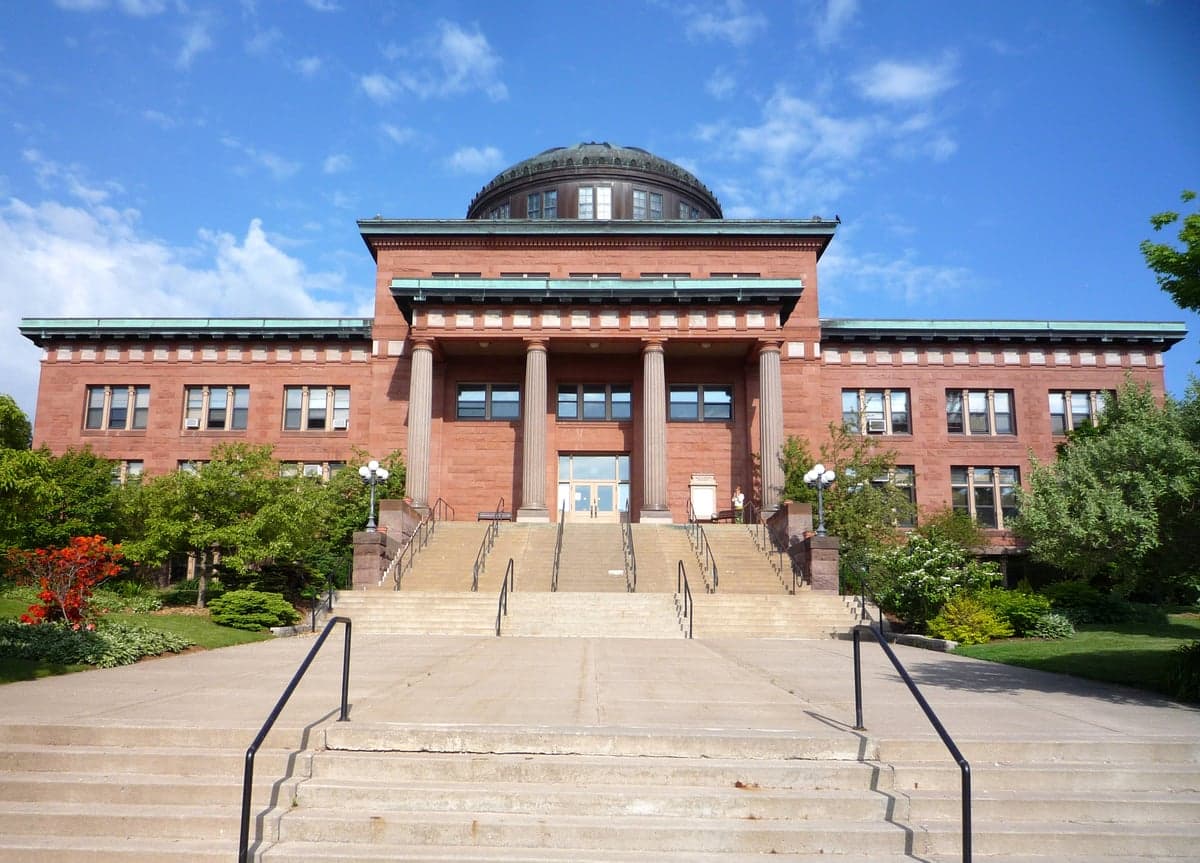
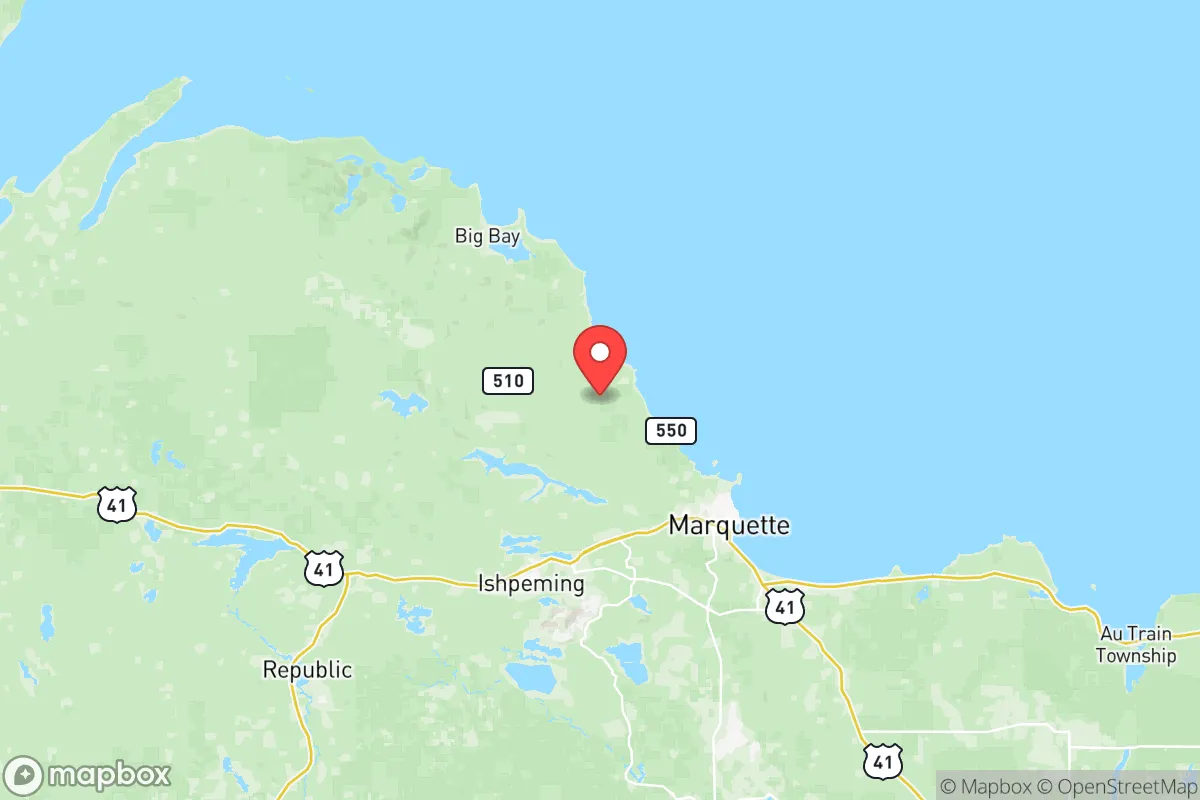
Photo: Wikipedia
Quality of Life in Marquette County
A livable area that tracks near national norms for affordability, walkability, and neighborhood health.
What does Quality of Life tell us?
Quality of Life measures an area by evaluating factors like cost of living, nearby amenities, country club access, airport proximity, socioeconomic signals and neighborhood character. For large states, this is a general average — quality of life can vary dramatically between metro areas, suburbs, and rural communities within the same state.
What does this tell us?
Quality of Life measures an area by evaluating factors like cost of living, nearby amenities, country club access, airport proximity, socioeconomic signals and neighborhood character. For large states, this is a general average — quality of life can vary dramatically between metro areas, suburbs, and rural communities within the same state.
Cost of Living
24% below national average
112%
The Real Cost of Living in Marquette County for 2026
| Tier | Individual | Family (4) |
|---|---|---|
| Survival | $15k | $28k |
| Comfortable | $39k | $58k |
| Luxury | $102k+ | $157k+ |
| Elite (Top 5%) | $119k+ | $185k+ |
Quality-of-Life Analysis
Marquette County, Michigan, offers a quality-of-life spectrum that ranges from the urban amenities of a regional college town to the quiet isolation of Lake Superior shoreline hamlets and deep-forest homesteads. The county’s character is shaped by its 1,821 square miles of mixed terrain—bluffs, inland lakes, and national forest—and a population of roughly 67,000, with nearly half concentrated in the city of Marquette. People are drawn to the county’s different parts based on their tolerance for winter snow (averaging over 120 inches annually in the higher elevations), their need for employment and services, and their preference for walkable density versus land and privacy.
Largest town(s) & population centers
The city of Marquette (pop. ~20,700) is the county’s undisputed hub and the economic and cultural anchor of Michigan’s Upper Peninsula. Daily life here revolves around Northern Michigan University (NMU), the UP Health System hospital, and a downtown district along Lake Superior that supports a mix of independent restaurants, breweries, and retail. The city’s median home value of $202,000 and median rent of $923 are notably higher than the rest of the county, reflecting demand for walkable neighborhoods near the lake and campus. Ishpeming (pop. ~6,400), six miles west, functions as a secondary center with a more working-class, mining-history feel; it offers lower home prices (often 15–20% below Marquette city) and a strong sense of community around its ski hill and downtown. Negaunee (pop. ~4,500), adjacent to Ishpeming, shares a similar character and is seeing modest infill development along its historic main street. These three towns form a contiguous urban corridor along US-41, providing the county’s densest concentration of jobs, schools, and services.
Smaller towns & rural pockets
Beyond the US-41 corridor, the county’s smaller communities offer distinctly different lifestyles. Harvey (pop. ~1,400), a census-designated place just south of Marquette, is a residential and light-commercial strip along US-41 that feels suburban but lacks a traditional downtown. Gwinn (pop. ~1,900), 15 miles south of Marquette, is a former mining company town that now serves as a low-cost bedroom community with its own K-12 school and a small grocery. Champion (pop. ~300) and Michigamme (pop. ~250) are unincorporated hamlets in the county’s western interior, where homes are often seasonal cabins or older single-family houses on acreage, with no full-service grocery and limited internet. Along the Lake Superior shoreline north of Marquette, Big Bay (pop. ~200) is a remote village with a historic lighthouse and a single general store; it attracts second-home owners and year-round residents who prioritize solitude and lake access over convenience. The Powell Township area (including Big Bay and surrounding forest) has some of the county’s lowest property tax rates due to minimal municipal services.
Cost & lifestyle range
The county’s overall cost of living index of 76 (100 = U.S. average) masks a wide internal spread. At the high end, Marquette’s lakefront neighborhoods and the Presque Isle area command home prices above $350,000 for single-family homes with water views, while the average commute of 18.6 minutes is among the shortest in the Upper Peninsula. At the low end, Gwinn and Champion offer homes under $150,000, but residents face a 25–35 minute drive to Marquette for most shopping, healthcare, and employment. Renters see the widest gap: a one-bedroom in Marquette averages $923, while comparable units in Ishpeming or Negaunee can be found for $700–$800. Amenities follow the same gradient—Marquette has a full-service hospital, a university performing arts center, and a regional airport; Gwinn has a gas station and a Dollar General; Big Bay has a seasonal diner and a post office. Property taxes vary by township, with rural townships like Ely and Champion often having lower millage rates than Marquette city, offset by the absence of municipal water, sewer, and snowplowing to private roads.
Who thrives in Marquette County depends heavily on lifestyle tolerance. Outdoor enthusiasts who can handle nine months of potential snow and value immediate access to skiing, mountain biking, and Lake Superior paddling will find the county’s range of settings—from the walkable city of Marquette to the off-grid quiet of Michigamme—accommodating. Remote workers and retirees with reliable internet (available in most towns but spotty in rural townships) are increasingly drawn to the lower-cost pockets of Gwinn and Champion. Families needing schools and pediatric care will gravitate to the Marquette-Ishpeming-Negaunee corridor, where the county’s three public school districts and the NMU-affiliated charter school are located. The county is less suited to those seeking warm-weather recreation, dense urban nightlife, or a short commute to a major metro area—the nearest city with a population over 100,000 (Green Bay, WI) is a 2.5-hour drive. For those who value a four-season outdoor lifestyle, low crime rates, and a cost of living well below the national average, Marquette County offers a genuine spectrum of choices within a single, rugged landscape.

Crime in Marquette County
Crime rates similar to the national median for U.S. locations.
Violent CrimeViolent Crime Analysis
Property CrimeProperty Crime Analysis
Crime Analysis
Marquette County, Michigan, presents a mixed safety profile, with violent crime rates slightly above the national average but property crime rates significantly higher, driven largely by the urban core of the City of Marquette. The county's overall violent crime rate of 414.7 per 100,000 residents is about 18% higher than the U.S. average, while its property crime rate of 1,249.9 per 100,000 is roughly 30% higher, reflecting challenges common to small cities with a transient student population and a growing tourism economy.
Crime in context
When compared to Michigan's statewide averages, Marquette County's violent crime rate is nearly double the state figure of approximately 220 per 100,000, while property crime is about 25% higher than the Michigan average of 1,000 per 100,000. The disparity is most pronounced in the City of Marquette itself, which accounts for the majority of reported incidents. Neighboring communities like Negaunee, Ishpeming, and Gwinn report substantially lower crime rates, with violent crime in these towns often falling below 200 per 100,000. The county's largest employer, Northern Michigan University, contributes to a transient population of about 7,000 students, which correlates with seasonal spikes in theft and alcohol-related incidents. The Marquette County Sheriff's Office and the Marquette City Police Department share jurisdiction, with the city's force handling the bulk of urban crime while the sheriff covers the more rural townships.
What residents experience
For daily life, the most common safety concern is property crime, particularly vehicle break-ins and theft from porches, which are concentrated in the downtown and university-adjacent neighborhoods of Marquette. Violent crime, while statistically elevated, is largely non-random: most incidents involve domestic disputes, acquaintance assaults, or alcohol-fueled altercations near bars on Third Street and Washington Street. The county's judicial system, overseen by the Marquette County Prosecuting Attorney's Office and the 25th Circuit Court, has faced criticism from some residents for what they perceive as a lenient approach to repeat property offenders. Progressive diversion programs and a focus on restorative justice, while intended to reduce recidivism, have led to frustration among victims who see the same individuals cycling through the system. This is particularly notable in the City of Marquette, where the district court's policies are seen as more offender-focused than in the more conservative townships of Chocolay and Forsyth, where judges tend to impose stricter sentences.
Neighborhood-level variation is significant. The most problematic areas are the blocks immediately surrounding NMU's campus (especially along Lincoln Avenue and Fair Avenue) and the downtown core near the Marquette Commons. In contrast, the safest residential areas include the Harvey and Sands Township neighborhoods, the wooded subdivisions of Negaunee Township, and the lakeside communities of Big Bay and Little Lake. These areas see violent crime rates below 100 per 100,000 and property crime rates comparable to the state's safest suburbs. The county's progressive district attorney, elected in 2020, has implemented policies that prioritize treatment over incarceration for non-violent offenders, which has drawn both praise from reform advocates and sharp criticism from residents who argue it emboldens criminals. For families and retirees, the safest bet is to choose a home in the outlying townships or the smaller towns of Ishpeming and Negaunee, where the justice system's approach is more traditional and community policing is stronger.
* Values derived from national, state, county, city and local statistics and may differ in a specific area. Last updated: 2026-07-24T06:01:11.000Z
Narrative content on this page is AI-generated and may contain mistakes. Verify any details that matter before acting on them.
ReloMaps may earn a commission from affiliate links at no extra cost to you.

