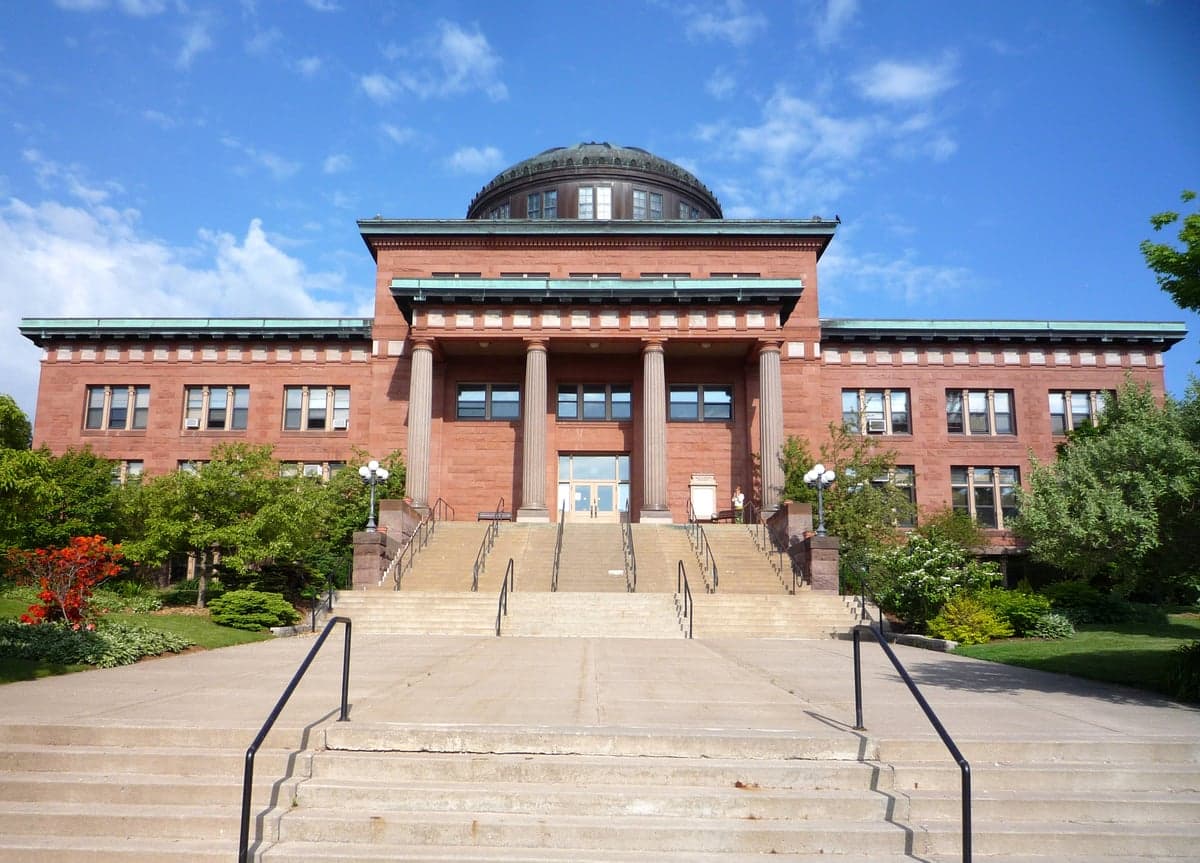
Photo: Wikipedia
Personal Sovereignty in Marquette County
Strong independent fundamentals that actively favor personal liberty and low regulation.
What does Personal Sovereignty tell us?
Personal Sovereignty measures your capacity for self-reliance and independence with minimal government friction. Higher scores mean fewer barriers between you and the way you want to live... but it assumes you have the space you need and good neighbors.
What does this tell us?
Personal Sovereignty measures your capacity for self-reliance and independence with minimal government friction. Higher scores mean fewer barriers between you and the way you want to live... but it assumes you have the space you need and good neighbors.
State Policy
Energy independence: Importer (20% of energy produced in-state)
Personal Liberty
Homesteading

Personal Liberty Analysis
Marquette County, Michigan, offers a notably high degree of personal sovereignty, blending a strong rural self-reliance ethos with a legal framework that generally respects individual autonomy, though it operates within the broader constraints of a blue state. The county’s regulatory posture is lighter than in downstate urban centers, and its gun culture is deeply ingrained, while the vast public lands and relatively permissive zoning create genuine opportunities for homesteading and off-grid living. For a relocation-minded individual or family prioritizing freedom, the trade-offs are clear: lower taxes and less bureaucracy than in the Lower Peninsula, but with state-level limitations on certain liberties like medical autonomy and firearm preemption.
Tax burden and regulatory posture in Marquette County
Marquette County’s tax burden is moderate by national standards but favorable compared to much of Michigan, especially the southeastern corner. The county’s property tax rate averages around 1.5% of assessed value, with a state-mandated cap on annual increases (the Proposal A system) that keeps taxes predictable for long-term owners. Michigan’s state income tax is a flat 4.25%, and sales tax is 6%, with no local add-ons. The regulatory environment is light-touch in unincorporated areas and smaller towns like Ishpeming, Negaunee, and Gwinn, where building permits are straightforward and business licensing is minimal. However, the city of Marquette itself has a more active municipal code, including rental registration and stricter short-term rental ordinances, reflecting its university-town character. The county’s planning department generally defers to landowners on land use, with no countywide zoning in many townships—a significant advantage for those seeking to build or modify property without extensive red tape. The state’s regulatory footprint is heavier in environmental areas (wetlands, inland lakes, and mining reclamation), but for most residential and small-scale agricultural pursuits, the county’s posture is permissive.
Self-defense and gun law specifics in Marquette County
Michigan is a “shall-issue” state for concealed pistol licenses (CPLs), and Marquette County’s gun culture is robust, with a strong tradition of hunting, sport shooting, and personal defense. The county sheriff’s office processes CPL applications efficiently, typically within the 45-day statutory window. Open carry is legal without a permit for anyone 18 or older who can legally possess a firearm, and concealed carry is legal with a CPL. However, Michigan’s state-level gun laws have tightened in recent years: a 2023 law requires universal background checks for all firearm sales, including private transactions, and a 2024 law mandates safe storage of firearms when a minor is likely to be present. These laws are enforced in Marquette County, but local sentiment generally opposes further restrictions. The county has no local ordinances that exceed state law on firearms, meaning that in towns like Champion, Harvey, and Sands Township, gun owners face no additional local barriers. The Marquette County Sportsmen’s Club and numerous public shooting ranges on state land provide ample space for practice. For self-defense, the state’s “stand your ground” law (codified in MCL 780.972) applies, with no duty to retreat in any place where the individual is lawfully present. Castle doctrine protections are also strong, covering homes and vehicles. The practical reality is that in Marquette County, carrying a firearm for self-defense is socially normal and legally straightforward, though the state-level background check requirement is a notable constraint for private sellers.
Self-reliance and homesteading viability in Marquette County
Marquette County is one of the most viable areas in Michigan for homesteading and off-grid living, thanks to large lot sizes, minimal zoning, and abundant natural resources. In unincorporated townships like Ely, Forsyth, and Turin, minimum lot sizes for residential use are often 1 to 5 acres, with no countywide subdivision regulations that would force small parcels. Off-grid systems—solar panels, wind turbines, rainwater collection, and composting toilets—are generally permitted without special permits, provided they meet basic state health codes for septic and well water. The county’s building code applies only to new construction and major renovations, and enforcement is complaint-driven in rural areas. The Michigan Right to Farm Act provides strong protections for agricultural activities, including livestock and crop production, even in areas that later become more developed. This means a family on 10 acres near Skandia can keep chickens, goats, or a few cattle without fear of nuisance lawsuits. The growing season is short (roughly 100 frost-free days), but cold-hardy crops and high tunnels extend it. The county’s extensive state and national forest land (over 40% of the county) offers public access for foraging, hunting, and timber harvesting, though private land ownership is the foundation of true self-reliance. The main constraint is the cost of drilling a well (typically $5,000–$10,000) and installing a septic system ($8,000–$15,000), but these are one-time investments. For those willing to live with seasonal road access and limited services, townships like Michigamme offer some of the cheapest land in the Upper Peninsula, with parcels under $2,000 per acre.
Personal liberties in Marquette County: parental rights, medical autonomy, speech, and property
Parental rights in Michigan are generally strong, with a legal presumption that parents have the right to direct their children’s upbringing, education, and healthcare. Marquette County has a mix of public, private, and homeschool options; homeschooling is lightly regulated, requiring only a brief notification and an annual assessment (which can be a standardized test or portfolio review). The county’s school districts, including Marquette Area Public Schools and Negaunee Public Schools, are generally responsive to parental input, though the state’s mandatory vaccination requirements for school attendance apply. Medical autonomy is more constrained: Michigan has a state-level vaccine mandate for schoolchildren (with medical and religious exemptions), and the state’s 2023 expansion of the “red flag” law (extreme risk protection orders) allows for temporary firearm seizure based on a court petition. The county’s health department enforces these laws, but local resistance is visible in the form of a strong alternative medicine community and a network of independent healthcare providers. Free speech is fully protected, and the county’s political climate is a mix of conservative rural towns and a liberal university hub in Marquette city, creating a robust public discourse. Property rights are well-protected under Michigan law, with no county-level rent control or inclusionary zoning. The state’s Private Property Rights Protection Act limits eminent domain to public uses with just compensation. The main property-rights friction point is the state’s environmental regulations on shoreline development and wetland filling, which can delay projects near Lake Superior and inland lakes. Overall, the county offers a high degree of personal liberty in daily life, with the primary constraints coming from state-level mandates rather than local ordinances.
Compared to other regions in the Upper Midwest, Marquette County offers a strong balance of personal sovereignty and practical self-reliance. Its tax burden is lower than in Minnesota or Wisconsin, its gun laws are more permissive than in Illinois or Colorado, and its homesteading opportunities are superior to most of the Lower Peninsula. The trade-offs are the state-level restrictions on medical autonomy and firearm private sales, and the short growing season, but for a freedom-oriented individual or family, the county’s light regulatory touch, deep-rooted self-defense culture, and abundant land make it one of the most attractive areas in Michigan for those prioritizing independence. The key is choosing the right township—opting for Ely, Forsyth, or Turin over the city of Marquette—to maximize the autonomy that the county’s geography and local governance already provide.

* Values derived from national, state, county, city and local statistics and may differ in a specific area. Last updated: 2026-07-24T06:01:11.000Z
Narrative content on this page is AI-generated and may contain mistakes. Verify any details that matter before acting on them.
ReloMaps may earn a commission from affiliate links at no extra cost to you.

