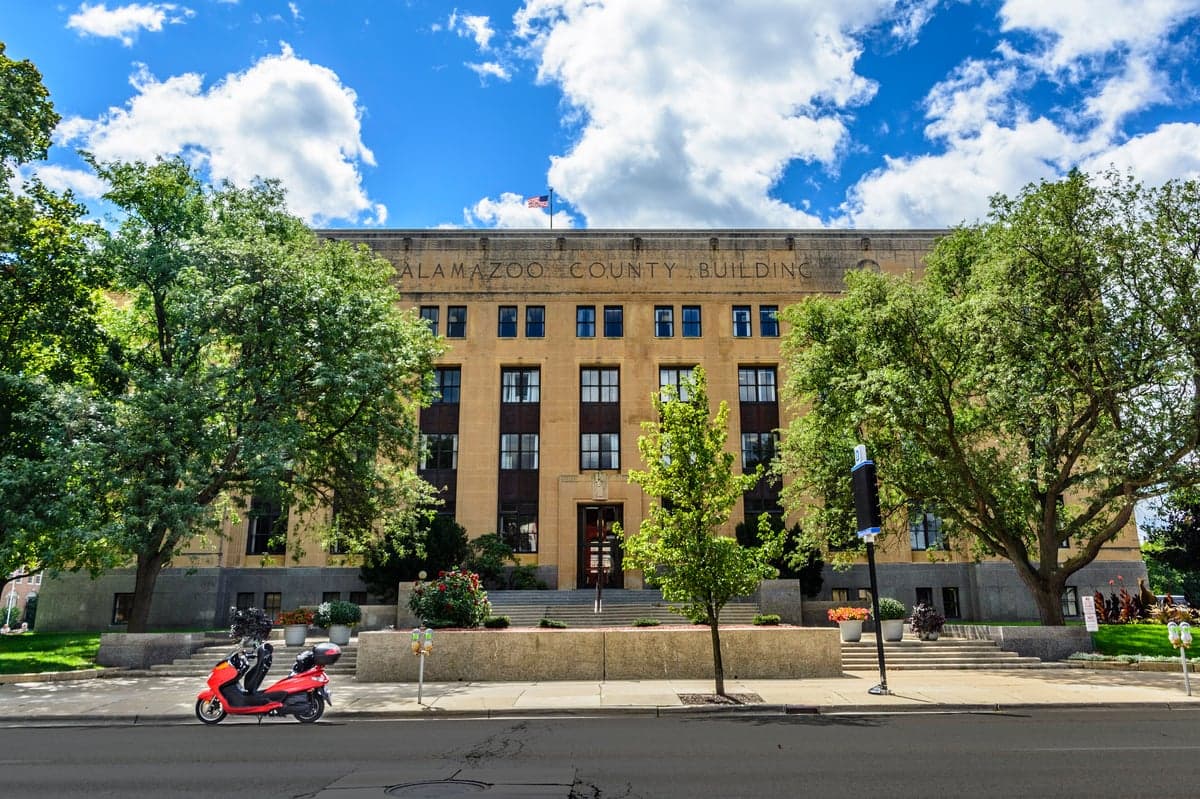
Photo: Wikipedia
Personal Sovereignty in Kalamazoo County
Strong independent fundamentals that actively favor personal liberty and low regulation.
What does Personal Sovereignty tell us?
Personal Sovereignty measures your capacity for self-reliance and independence with minimal government friction. Higher scores mean fewer barriers between you and the way you want to live... but it assumes you have the space you need and good neighbors.
What does this tell us?
Personal Sovereignty measures your capacity for self-reliance and independence with minimal government friction. Higher scores mean fewer barriers between you and the way you want to live... but it assumes you have the space you need and good neighbors.
State Policy
Energy independence: Importer (20% of energy produced in-state)
Personal Liberty
Homesteading

Personal Liberty Analysis
Kalamazoo County presents a nuanced personal sovereignty environment where state-level constraints mix with local variations, creating a landscape that demands careful navigation for those prioritizing autonomy. While Michigan’s overall regulatory framework leans moderately interventionist in areas like taxation and public health mandates, Kalamazoo County itself offers pockets of greater freedom, particularly in its rural townships and smaller communities. The county’s political geography is split: the city of Kalamazoo and its immediate suburbs trend progressive, while outlying areas like Oshtemo Township, Texas Township, and the village of Climax maintain a more hands-off, self-reliant ethos. For a relocation-minded individual or family, the key is understanding where within the county the regulatory burden lightens and where it tightens.
Tax burden and regulatory posture across Kalamazoo County
Michigan’s state-level tax burden is moderate compared to high-tax states like California or New York, but it’s not negligible. The state income tax is a flat 4.25%, and sales tax is 6%. Property taxes in Kalamazoo County average around 1.5% of assessed value, though this varies significantly by municipality. The city of Kalamazoo itself imposes a 1% city income tax on residents and 0.5% on non-residents who work within city limits — a notable disincentive for those seeking to minimize tax exposure. In contrast, townships like Oshtemo, Texas, and Prairie Ronde have no local income tax, making them more attractive for tax-conscious relocators. Regulatory posture also diverges: Kalamazoo city has a more active code enforcement and zoning regime, while rural townships tend to be less intrusive. For example, short-term rental regulations are stricter within city limits, whereas Cooper Township and Alamo Township allow more flexibility. The county’s overall regulatory environment is best described as moderate — not oppressive, but not libertarian either. Those seeking minimal government interference should prioritize unincorporated areas and smaller townships over the city core.
Self-defense and gun law specifics in Kalamazoo County
Michigan is a shall-issue state for concealed pistol licenses (CPL), meaning applicants who meet basic criteria — background check, fingerprinting, and an 8-hour training course — must be issued a permit. There is no discretionary denial by local sheriffs, which provides a baseline of predictability. Kalamazoo County’s gun culture is mixed: the city of Kalamazoo has a more restrictive local ordinance regarding open carry in certain public spaces, but the county as a whole is generally firearm-friendly. Texas Township and Oshtemo Township have no additional local restrictions beyond state law, and gun ranges and sporting goods stores are plentiful. Stand-your-ground laws apply statewide, and Michigan does not require registration of long guns or handguns. However, the state does have a universal background check requirement for private sales, which some autonomy-minded individuals view as an infringement. For those prioritizing self-defense rights, the rural townships of Climax and Fulton offer the most permissive environment, with minimal local interference and a strong hunting and sport-shooting culture. The Kalamazoo County Sheriff’s Office generally processes CPL applications efficiently, though wait times can vary. Overall, the county provides a solid foundation for Second Amendment rights, but the city of Kalamazoo itself is less accommodating than the surrounding townships.
Self-reliance and homesteading viability: lot sizes, zoning, and off-grid feasibility
Homesteading and off-grid living are viable in Kalamazoo County, but only in specific areas. The county’s zoning regulations vary dramatically: the city of Kalamazoo and its inner suburbs have minimum lot sizes of 6,000 to 10,000 square feet, with strict building codes that make off-grid systems like composting toilets or solar arrays difficult to implement legally. In contrast, rural townships like Climax, Fulton, and Prairie Ronde allow minimum lot sizes of 1 to 5 acres, and some have no minimum at all in agricultural zones. Off-grid water systems (wells) and septic are standard in these areas, and solar panels are generally permitted without special permits. However, Michigan’s building code requires connection to the electrical grid for new construction in most townships, though some rural areas allow exceptions if the system meets safety standards. Rainwater collection is legal statewide, but large-scale cisterns may require a permit. For those seeking true self-reliance, Alamo Township and Cooper Township offer the best balance of large lot availability and minimal zoning interference. The county’s agricultural heritage means that livestock, beekeeping, and market gardening are common and accepted in rural zones. The main constraint is the state’s property tax structure, which can be burdensome for large landholdings, but the Michigan Agricultural Preservation Fund offers tax relief for qualifying farms. Overall, Kalamazoo County is a solid choice for homesteaders who choose their township carefully.
Personal liberties: parental rights, medical autonomy, speech, and property
Michigan’s legal framework for personal liberties is a mixed bag. Parental rights are generally respected, but the state has a mandatory vaccination requirement for school attendance (with medical and religious exemptions available). The COVID-19 era saw significant tension, with the governor’s emergency orders overriding local control, but those powers have since reverted. In Kalamazoo County, school districts vary: the Kalamazoo Public Schools district has a more progressive approach to curriculum and health mandates, while rural districts like Climax-Scotts and Schoolcraft tend to be more deferential to parental input. Medical autonomy is constrained by state licensing and insurance regulations, but alternative medicine practitioners are available, and the county has a robust network of chiropractors, naturopaths, and holistic health providers. Speech and assembly rights are protected under the First Amendment, and Kalamazoo County has a history of active civic engagement. Property rights are generally strong, but the city of Kalamazoo has a rental inspection program and stricter landlord-tenant regulations that some property owners find burdensome. In the townships, property use is more flexible, with fewer restrictions on home-based businesses and accessory dwellings. For those prioritizing maximum personal liberty, the rural townships of Texas and Oshtemo offer the most permissive environment, while the city of Kalamazoo imposes more constraints in the name of public health and urban planning.
Compared to other regions in the Midwest, Kalamazoo County offers a moderate-to-high level of personal sovereignty for those who choose their specific location wisely. The county is far more freedom-friendly than urban centers like Ann Arbor or Grand Rapids, but less permissive than deeply rural counties in the Upper Peninsula or northern Lower Michigan. The key differentiator is township-level governance: Climax, Fulton, and Prairie Ronde provide a near-libertarian environment for homesteaders and self-reliance advocates, while the city of Kalamazoo and its inner suburbs impose more regulation. For a conservative-leaning individual or family seeking a balance of economic opportunity and personal autonomy, the county’s rural townships represent a strong option — provided one is willing to navigate the state-level constraints on taxation and medical mandates. Overall, Kalamazoo County is a place where personal sovereignty is achievable, but it requires deliberate location selection and a willingness to engage with local governance.

* Values derived from national, state, county, city and local statistics and may differ in a specific area. Last updated: 2026-06-15T23:40:36.000Z
Narrative content on this page is AI-generated and may contain mistakes. Verify any details that matter before acting on them.
ReloMaps may earn a commission from affiliate links at no extra cost to you.

