
Photo by Joris Beugels on Unsplash
Political ClimatePolitical Climate in McCarthy, AK
District shown is the primary district for this city’s centroid. Cities may span multiple districts.
Inherited from parent state — no local data available.
Local Political AnalysisPolitical Analysis of McCarthy, AK
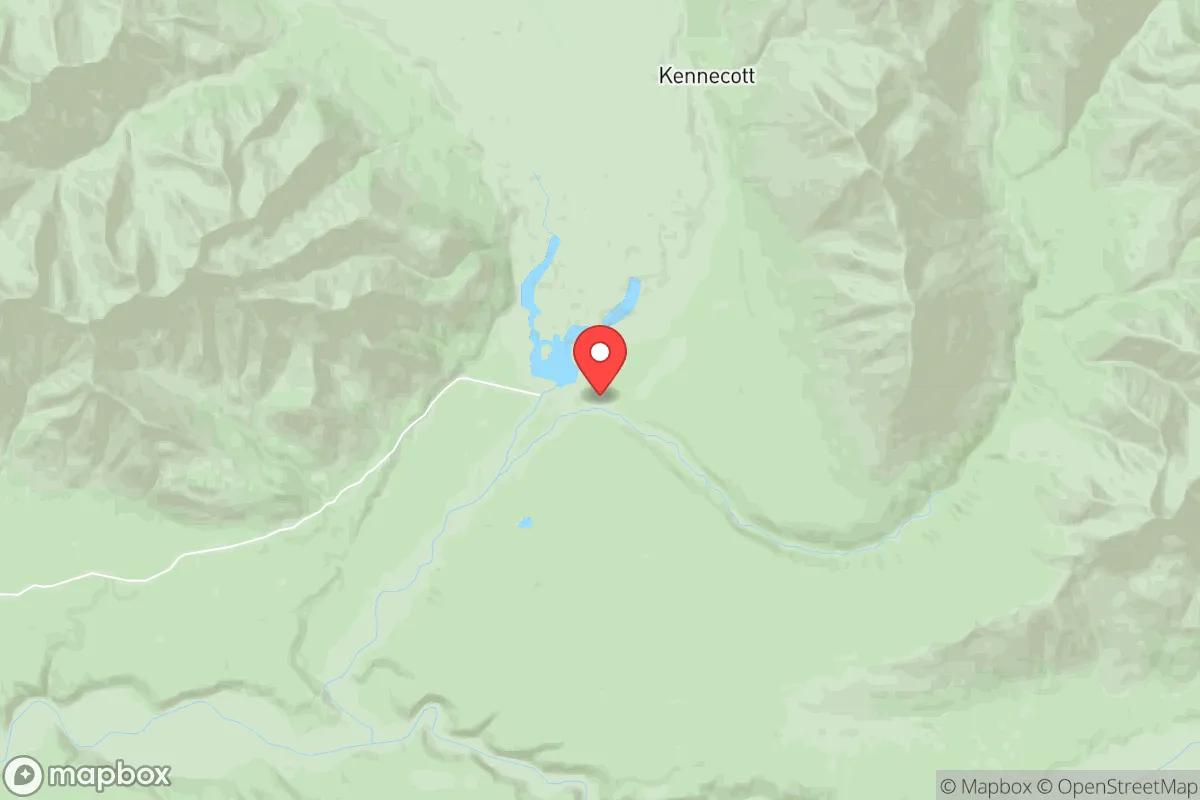
McCarthy, Alaska, is a tiny, remote community deep in the Wrangell-St. Elias National Park, and its political lean is a fascinating outlier. While the surrounding state of Alaska carries a Cook Partisan Voting Index (PVI) of R+6, McCarthy itself is a fiercely independent, libertarian-leaning enclave that often votes more liberally than its neighbors, though it still sits within that R+6 framework. The area’s political trajectory has been remarkably stable for decades, shaped by a deep-seated distrust of federal land management and a live-and-let-live ethos that transcends party lines. You won’t find a “typical” Alaska voter here; instead, you’ll find a mix of back-to-the-landers, seasonal guides, and old-time prospectors who agree on little except that the government should stay out of their valley.
How it compares
Compared to the rest of Alaska, McCarthy is a political island. The state as a whole leans Republican, with Anchorage and the Mat-Su Valley (home to Wasilla and Palmer) reliably voting red. In contrast, McCarthy’s precincts have historically split tickets, often favoring Democratic or third-party candidates for president while supporting conservative state legislators who oppose federal overreach. For example, in the 2020 election, the McCarthy area voted for Joe Biden by a narrow margin, while nearby Glennallen and Copper Center went heavily for Donald Trump. This makes McCarthy one of the few blue dots in a sea of red in the Copper River Basin. The R+6 PVI for both the area and the state masks this local divergence: McCarthy’s politics are less about party affiliation and more about a fierce commitment to self-sufficiency and environmental protection, a combination that doesn’t fit neatly into national categories.
What this means for residents
For conservative residents, McCarthy offers a place where gun rights are respected, property taxes are virtually nonexistent, and the federal government is kept at arm’s length—though the National Park Service’s presence is a constant source of tension. Liberal residents appreciate the community’s strong environmental ethic, support for subsistence lifestyles, and tolerance of alternative living arrangements. In practice, this means that political debates are less about national culture wars and more about local issues: how to manage tourism, whether to allow more commercial development, and how to balance access with preservation. Both sides can find common ground in opposing large-scale mining projects, like the proposed Pebble Mine in the Bristol Bay region, which unites McCarthyites against corporate extraction. The downside? Services are minimal—no police force, no hospital, and a short road season—so residents must be self-reliant regardless of their politics.
Culturally, McCarthy stands apart from the rest of Alaska in its embrace of a slower, more communal pace of life. While Anchorage buzzes with chain stores and suburban sprawl, McCarthy has no grid power, no cell service, and a population that swells from 30 in winter to a few hundred in summer. The local bar, the Golden Saloon, serves as a de facto town hall where debates over bear safety and trail maintenance matter more than presidential politics. This isolation fosters a unique brand of politics: fiercely anti-authoritarian, skeptical of outside influence, and deeply pragmatic. For a liberal, it’s a place where you can live off-grid and vote your conscience without judgment. For a conservative, it’s a bastion of freedom from regulation. The key takeaway is that McCarthy’s political climate is less about red versus blue and more about a shared commitment to keeping the community weird, wild, and self-determined—a rare thing in an increasingly polarized state.

State Political ClimatePolitical Climate in Alaska
State Political AnalysisPolitical Environment in the State
Alaska has long been a politically unique state, leaning Republican with a Cook PVI of R+6, but its brand of conservatism is fiercely independent and libertarian-leaning, far removed from the partisan orthodoxy of the Lower 48. Over the last 20 years, the state has shifted from reliably red to a more volatile swing territory, driven by a growing urban-liberal bloc in Anchorage and a shrinking but deeply conservative rural and exurban base. The 2022 special election for the U.S. House, won by Democrat Mary Peltola in a ranked-choice voting system, was a stark signal that the old GOP dominance is no longer a given, though the state still votes Republican in most statewide races.
Urban vs. rural divide
The political map of Alaska is a story of three distinct regions. Anchorage, home to roughly 40% of the state's population, is the epicenter of Democratic and moderate Republican strength; its Assembly is often split, and the city's west side (e.g., Spenard, Turnagain) leans blue while the Hillside and Eagle River areas are solidly red. Fairbanks is a conservative stronghold, with the Interior's military and resource-extraction workforce driving a reliably Republican vote, though the University of Alaska campus injects a small but vocal progressive minority. Juneau, the capital, is the most consistently Democratic city in the state, powered by state government employees and a strong environmentalist presence. Outside these three population centers, the vast rural and bush areas—places like Wasilla, Palmer, Kenai, and the Mat-Su Borough—are among the most conservative regions in the nation, often voting 70-80% Republican. The divide isn't just partisan; it's cultural, pitting urbanites who prioritize public services and environmental protection against rural residents who value resource development, gun rights, and minimal government interference.
Policy environment
Alaska's policy environment is defined by its unique fiscal and geographic realities. There is no state income tax and no statewide sales tax, making it one of the most tax-friendly states in the country—a huge draw for conservatives. Revenue comes overwhelmingly from oil and gas production taxes and the Alaska Permanent Fund, which pays an annual dividend to every resident (the PFD, typically $1,000–$2,000 per person). This creates a powerful pro-resource-development consensus, even among many Democrats. Education policy is locally controlled, with no statewide school choice program, though homeschooling is popular and lightly regulated. Healthcare is a mixed bag: the state expanded Medicaid under the Affordable Care Act in 2015, a move that was controversial among conservatives, but the system remains strained by rural access issues. Election laws are notably progressive: Alaska adopted ranked-choice voting and open primaries in 2020 via ballot initiative, a reform that has weakened the GOP's grip and empowered moderate and independent candidates. Gun laws are among the most permissive in the nation—constitutional carry, no permit required, no waiting periods, and no magazine capacity limits—a bedrock issue for the state's libertarian identity.
Recent policy direction
The last five years have seen Alaska lurch between its conservative roots and reformist impulses. On gun and self-defense law, the state has held firm: no new restrictions, and in 2023, the legislature passed a preemption law barring local governments from enacting their own gun ordinances, a direct response to a short-lived Anchorage ban on firearms in municipal buildings. Parental and education rights have been a flashpoint: in 2024, Governor Mike Dunleavy signed a bill requiring schools to notify parents of any changes to a student's health or emotional well-being, effectively a "parental rights" law that has drawn praise from conservatives and criticism from LGBTQ+ advocates. Medical and bodily autonomy is a mixed picture: abortion remains legal up to viability, with no trigger laws, but the state has not expanded access either. Property rights are fiercely protected, with strong eminent domain protections and a pro-mineral-rights legal framework. Taxation remains the crown jewel of conservative policy—no income or sales tax, though the state has debated a modest income tax to address budget deficits, a proposal that has repeatedly failed. Voting and ballot access is the most contested arena: ranked-choice voting survived a 2024 repeal attempt, but the battle is ongoing, with conservatives arguing it dilutes their influence and liberals defending it as a moderation tool.
Civil unrest & political movements
Alaska's political activism is less about street protests and more about organized movements around resource extraction and election reform. The Permanent Fund dividend is the state's most potent political issue—there have been small but vocal protests in Juneau and Anchorage when the dividend was cut or delayed, with activists on both the left and right arguing for a full payout. The secessionist and nullification rhetoric is more muted than in some Western states, but the Alaska Independence Party, which advocates for a vote on secession, still fields candidates and polls around 2-5% in statewide races. Immigration politics are a non-issue in practical terms—the state has a tiny foreign-born population—but the rhetoric mirrors national trends, with conservative lawmakers pushing for border security resolutions. Election integrity controversies have been intense: after the 2020 and 2022 elections, conservative groups challenged ranked-choice voting and mail-in ballot procedures, leading to the 2024 repeal attempt. The most visible flashpoint for a new resident would be the Mat-Su Borough, where local politics are dominated by fierce debates over property taxes, school funding, and the role of government—a microcosm of the state's broader tensions.
Projection
Over the next 5-10 years, Alaska's political trajectory points toward continued volatility and a slow moderation of its Republican lean. In-migration is a wild card: the state is losing population overall, but the Anchorage and Mat-Su areas are seeing an influx of remote workers and retirees from the Lower 48, many of whom are fiscally conservative but socially moderate or liberal. This demographic shift will likely strengthen the urban-liberal vote in Anchorage and Juneau, while the rural conservative base continues to shrink due to out-migration and an aging population. The ranked-choice voting system is here to stay for the foreseeable future, which will keep the state competitive and force candidates to appeal to the center. Expect continued battles over the PFD, oil taxes, and education funding, but no dramatic shifts on guns, taxes, or property rights. A new resident moving in now should expect a state where conservative values on fiscal policy and personal liberty are deeply entrenched, but where the political landscape is increasingly unpredictable and shaped by a small number of swing voters in Anchorage's suburbs.
For a new resident, the bottom line is this: Alaska offers a uniquely libertarian political environment with low taxes, strong gun rights, and a resource-driven economy, but it is not a reliably red state in the way Texas or Idaho are. You'll find a deeply conservative rural culture in places like Wasilla and Kenai, a progressive urban core in Juneau and parts of Anchorage, and a growing moderate middle that decides elections. If you value personal freedom and low taxes above all, you'll feel at home. If you're looking for a place where your party always wins, you'll be disappointed—Alaska rewards independence, not orthodoxy.
* Values derived from national, state, county, city and local statistics and may differ in a specific area. Last updated: 2026-09-07T01:31:31.000Z
Narrative content on this page is AI-generated and may contain mistakes. Verify any details that matter before acting on them.
ReloMaps may earn a commission from affiliate links at no extra cost to you.

