
Photo by Joris Beugels on Unsplash
Find The Best Places To Live
in McCarthy
PRO TIP! You can paste a Zillow or Redfin link to get info on that property.
What It's Like Living in McCarthy, AK
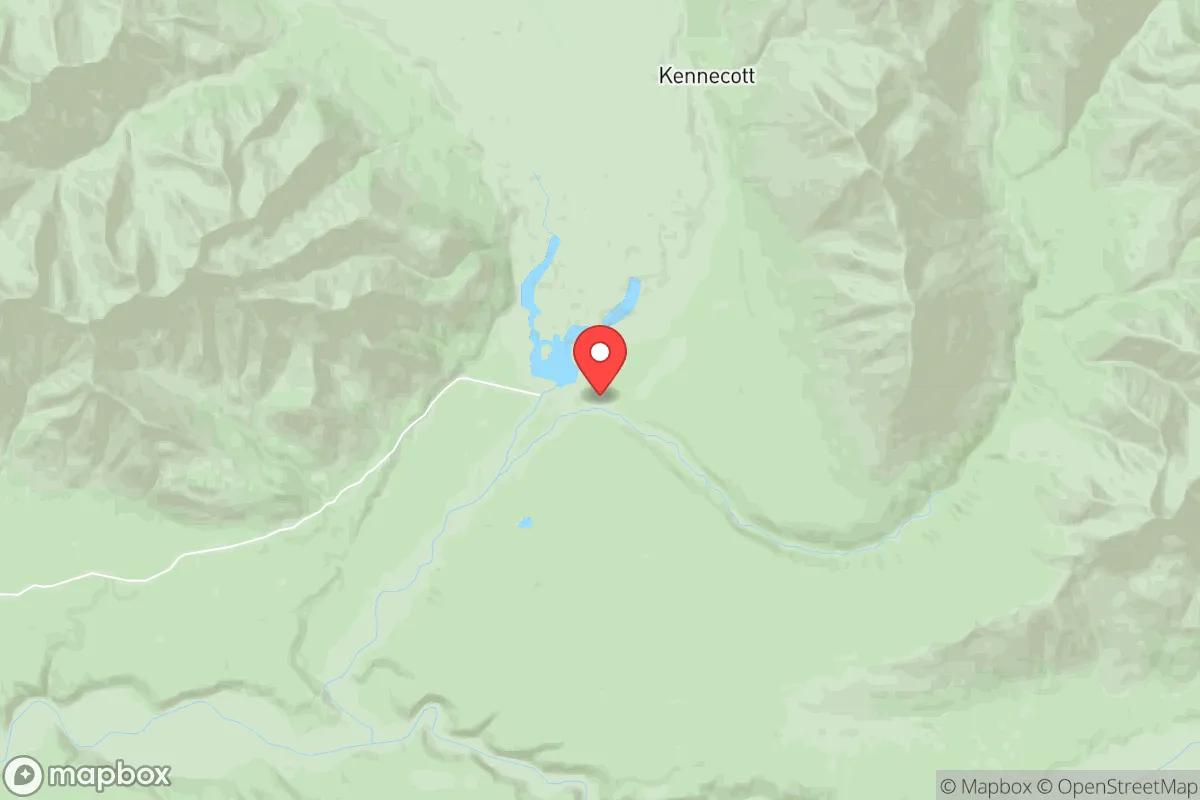
Living in McCarthy, Alaska, is less like moving to a town and more like joining a remote outpost where the nearest road connection is a 60-mile gravel railroad bed and the year-round population hovers around two people. This is a place that doesn’t just feel off the grid—it practically defines it. For the handful of summer residents and the rare winter holdout, McCarthy offers a life stripped of convenience, heavy on self-reliance, and surrounded by some of the most dramatic wilderness in North America.
The Daily Rhythm: Life on Wrangell-St. Elias Time
Daily life in McCarthy revolves around the seasons. In summer, the population swells to a few hundred as seasonal workers, guides, and tourists arrive. People shop at the McCarthy Lodge for basics or the Golden Saloon for a meal, but there’s no grocery store—residents stock up in Glennallen or Anchorage, a 4- to 6-hour drive each way. Weekends are spent hiking the Root Glacier, fishing the Kennicott River, or fixing gear. In winter, the population drops to near zero, and the silence is absolute. The average commute of about 19 minutes is a statistical oddity—most people walk or bike the dirt paths between cabins, and the only traffic is the occasional ATV or bush plane.
The kind of person who fits here is someone who doesn’t mind isolation, has a high tolerance for cold and darkness, and values raw nature over amenities. There are no schools, no hospitals, and no police force—just a state trooper who flies in occasionally. Families are virtually nonexistent; the median income of $89,336 is high for Alaska, but it’s almost entirely earned by seasonal guides, lodge operators, and remote workers who can tolerate the lack of services. The median home value of $333,300 reflects the cost of building in a place where every nail and board must be flown or barged in.
What There Is to Do: Glacier Hikes, Ghost Towns, and the Golden Saloon
Entertainment in McCarthy is defined by the landscape. The main draw is Wrangell-St. Elias National Park, the largest national park in the U.S., where you can walk on the Root Glacier, explore the abandoned Kennecott copper mill, or raft the Kennicott River. The McCarthy-Kennicott area has a handful of bars and restaurants—the Golden Saloon is the social hub, serving burgers and beer to a mix of tourists and guides. There’s no movie theater, no gym, and no sports teams. The only “local sports” are the informal volleyball games behind the lodge or the annual footrace up the old railroad grade. Festivals are rare, but the McCarthy Summer Solstice party is a genuine community event, complete with live music and bonfires.
For outdoor enthusiasts, the pros are unmatched: you’re steps from world-class hiking, ice climbing, and wildlife viewing (bears, moose, wolves). The cons are equally stark: the cost of living index is 119, meaning everything from gas to canned goods costs 19% more than the U.S. average. The violent crime rate of 732.8 per 100,000 is alarmingly high on paper, but in practice, it reflects a few isolated incidents among seasonal workers—most residents leave doors unlocked and feel safe. The real frustration is the isolation: medical emergencies require a medevac, and the nearest full-service town is 200 miles away.
Pros and Cons of Living Here: What Locals Love and Loathe
- What locals love: The profound quiet, the absence of crowds, the ability to step out your door and be alone in a glacier-carved valley. The community, though tiny, is tight-knit and resourceful—everyone helps with snow removal, generator repairs, and supply runs.
- What frustrates them: The cost and difficulty of getting supplies, the short summer season (June to August), and the long, dark winters where temperatures drop to -40°F. The lack of a school means families with children must homeschool or move—which is why the population is almost entirely childless adults.
- Practical realities: No cell service in most of the valley, no reliable internet (satellite only), and no paved roads. The nearest airport is in McCarthy itself—a gravel strip served by small bush planes. The 0.0% college-educated statistic isn’t a knock on intelligence; it’s a reflection that formal degrees are irrelevant when your job is guiding, cooking, or fixing engines.
Cultural Quirks and Local Identity
McCarthy’s identity is built on its history as a copper mining boomtown that went bust in 1938. The abandoned Kennecott mill is a National Historic Landmark, and the town’s few permanent residents are fiercely protective of its uncommercialized character. There are no chain stores, no stoplights, and no streetlights. The local tradition is self-sufficiency: everyone knows how to operate a chainsaw, fix a snowmachine, and pack a raft. The biggest cultural quirk is the “McCarthy time” mindset—nothing happens on a schedule, and plans are always flexible. If the weather’s good, you drop everything to hike. If the river’s high, you wait. It’s a place that rewards patience and punishes impatience.
For a conservative-leaning audience, McCarthy aligns with values of independence, self-reliance, and low government interference—but it’s not a place for anyone who wants schools, churches, or a sense of civic order. The community is libertarian by default, not by ideology. If you’re a single person who craves solitude and can handle the logistics of remote living, McCarthy is a unique experiment. For families, it’s nearly impossible. The pros are the raw, unfiltered Alaska experience; the cons are the constant grind of survival. Most people visit for a week and leave grateful for modern plumbing. A few stay for a season and never want to leave.

Similar small towns to McCarthy

* Values derived from national, state, county, city and local statistics and may differ in a specific area. Last updated: 2026-09-07T01:31:31.000Z
Narrative content on this page is AI-generated and may contain mistakes. Verify any details that matter before acting on them.
ReloMaps may earn a commission from affiliate links at no extra cost to you.

