
Photo by Joris Beugels on Unsplash
Personal Sovereignty in McCarthy, AK
Strong independent fundamentals that actively favor personal liberty and low regulation.
What does Personal Sovereignty tell us?
Personal Sovereignty measures your capacity for self-reliance and independence with minimal government friction. Higher scores mean fewer barriers between you and the way you want to live... but it assumes you have the space you need and good neighbors.
What does this tell us?
Personal Sovereignty measures your capacity for self-reliance and independence with minimal government friction. Higher scores mean fewer barriers between you and the way you want to live... but it assumes you have the space you need and good neighbors.
State Policy
Energy independence: Net exporter (350% of energy produced in-state)
Personal Liberty
Homesteading

Personal Liberty Analysis
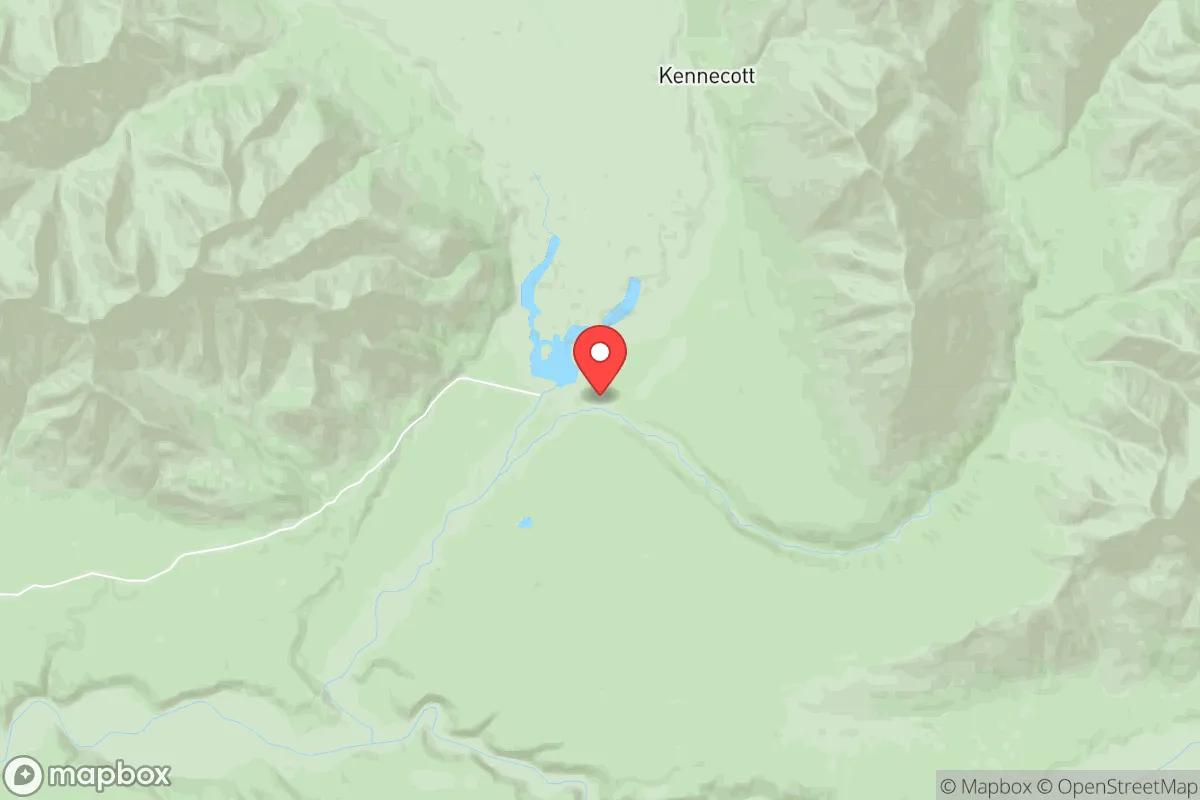
McCarthy, Alaska, offers one of the most uncompromising personal sovereignty environments in the United States, a place where the absence of road access and the presence of vast, unincorporated territory create a de facto autonomy that few other locations can match. This is not a community where government oversight is heavy; it is a place where the state’s reach is thin, and the expectation is that individuals and families will handle their own affairs. For a relocation researcher assessing personal freedom, McCarthy represents a near-maximum expression of self-reliance within the bounds of American law, though that freedom comes with the trade-off of extreme isolation and a complete lack of conventional services.
Tax burden and regulatory posture in a remote, unincorporated setting
Alaska’s state-level tax environment is already among the most favorable in the nation for those prioritizing personal sovereignty, and McCarthy sits within that framework with no additional local overlay. There is no state income tax, no state sales tax, and no state property tax; the primary revenue source is the Permanent Fund Dividend, which pays residents an annual share of oil revenues. McCarthy itself is an unincorporated community within the Copper River Census Area, meaning there is no municipal government to impose local sales or property taxes. The regulatory posture is correspondingly light: there are no zoning ordinances, no building codes enforced by a local authority, and no business licensing requirements beyond what the state mandates for specific professions. The practical effect is that a resident can buy land, build a structure, and operate a small enterprise with virtually no bureaucratic friction. However, this freedom is bounded by state-level environmental and fish-and-game regulations, which do apply—subsistence fishing and hunting, while central to life here, require state permits and adherence to seasons. The overall tax burden is effectively zero at the local level, and the state’s regulatory footprint is minimal, making McCarthy one of the least-taxed and least-regulated places in the country for a self-directed lifestyle.
Self-defense and gun law specifics in a frontier environment
Alaska is a constitutional carry state, meaning no permit is required to carry a concealed firearm for anyone legally allowed to possess one, and McCarthy’s remote setting makes firearm ownership a practical necessity rather than a political statement. The state has no firearm registration, no waiting periods, and no restrictions on magazine capacity or weapon types beyond federal law. Stand-your-ground principles apply: there is no duty to retreat in any place where a person has a legal right to be, and the use of deadly force is justified when a person reasonably believes it is necessary to prevent death, serious physical injury, or a forcible felony. In McCarthy, where encounters with brown bears and moose are routine, carrying a large-caliber sidearm or a long gun is standard practice, and the community’s ethos strongly supports individual responsibility for personal safety. The nearest law enforcement presence is in Glennallen, roughly 60 miles away by gravel road or air, so response times to any incident are measured in hours, not minutes. This effectively means that self-defense is a personal responsibility, and the legal framework supports that reality. For a reader prioritizing the right to keep and bear arms without government interference, McCarthy is as permissive as any location in the United States.
Self-reliance and homesteading viability: lot sizes, zoning, and off-grid feasibility
McCarthy’s land use environment is defined by the absence of zoning and the availability of large, undeveloped parcels, making it a prime candidate for off-grid homesteading. Most land in the area is either private inholdings within Wrangell-St. Elias National Park or state-owned parcels available through remote-cabin permits or private sales. Lot sizes vary widely, but it is common to find parcels of 5 to 40 acres or more, with no minimum square footage requirements for dwellings. There are no building codes enforced by any local authority, so structures can be built from logs, shipping containers, or canvas wall tents, as long as they meet basic state health and safety standards for things like septic systems. Off-grid feasibility is high: there is no municipal power grid, water system, or sewer service, so solar panels, micro-hydro systems, propane generators, and rainwater collection are standard. Internet access is via satellite or limited cellular, and the nearest grocery store is in Glennallen. The practical reality is that a family moving to McCarthy must be prepared to generate their own power, haul their own water, and manage waste independently. The regulatory environment does not hinder this—it simply does not address it. For someone seeking to live with minimal government involvement in their daily infrastructure, McCarthy offers a blank slate, but the trade-off is that every aspect of daily life requires significant capital, skill, and physical labor.
Personal liberties: parental rights, medical autonomy, speech, and property
Alaska’s legal framework generally supports broad personal liberties, and McCarthy’s isolation amplifies that freedom in practice. Parental rights are strong: Alaska law does not require parental consent for a minor to obtain an abortion, but the state does not mandate specific curricula in private or homeschool settings, and the remote nature of McCarthy means that most families who live here year-round homeschool or use correspondence programs with minimal state oversight. Medical autonomy is a mixed picture: Alaska has no state-level restrictions on alternative or complementary medicine, and there are no local health departments in McCarthy to enforce treatment mandates, but the nearest hospital is in Glennallen, and emergency medical evacuation by air is the only option for serious conditions. Speech and assembly are protected under the First Amendment, and there is no local government to impose restrictions on signage, public gatherings, or political expression. Property rights are robust: there is no zoning, no rent control, and no local ordinances governing land use, so a property owner can use their land for virtually any purpose that does not violate state law, including commercial operations, agriculture, or simply leaving it wild. The overall environment is one where the state’s presence is felt primarily through fish-and-game regulations and the Permanent Fund Dividend system, but local governance is effectively nonexistent. This makes McCarthy one of the most liberty-oriented communities in the United States for those who value minimal government interference in family, medical, and property decisions.
In terms of overall personal sovereignty, McCarthy, Alaska, ranks among the most autonomous places a person can live within the United States, comparable to other remote Alaskan communities like Chicken or Bettles, but with the added distinction of being a historic, off-grid settlement with a small but established year-round population. The combination of no local taxes, no zoning, constitutional carry, and a culture of self-reliance creates an environment where the individual is the primary decision-maker for nearly every aspect of life. The trade-offs are severe: extreme isolation, harsh winters, no emergency services, and a complete dependence on personal capability for survival. For a conservative-leaning individual or family who prioritizes freedom over convenience and is willing to accept the risks of frontier living, McCarthy offers a sovereignty that few other locations can match. It is not a place for those who want a light-touch government with modern amenities—it is a place for those who want government to be almost entirely absent, and who are prepared to handle everything else themselves.

* Values derived from national, state, county, city and local statistics and may differ in a specific area. Last updated: 2026-09-07T01:31:31.000Z
Narrative content on this page is AI-generated and may contain mistakes. Verify any details that matter before acting on them.
ReloMaps may earn a commission from affiliate links at no extra cost to you.

