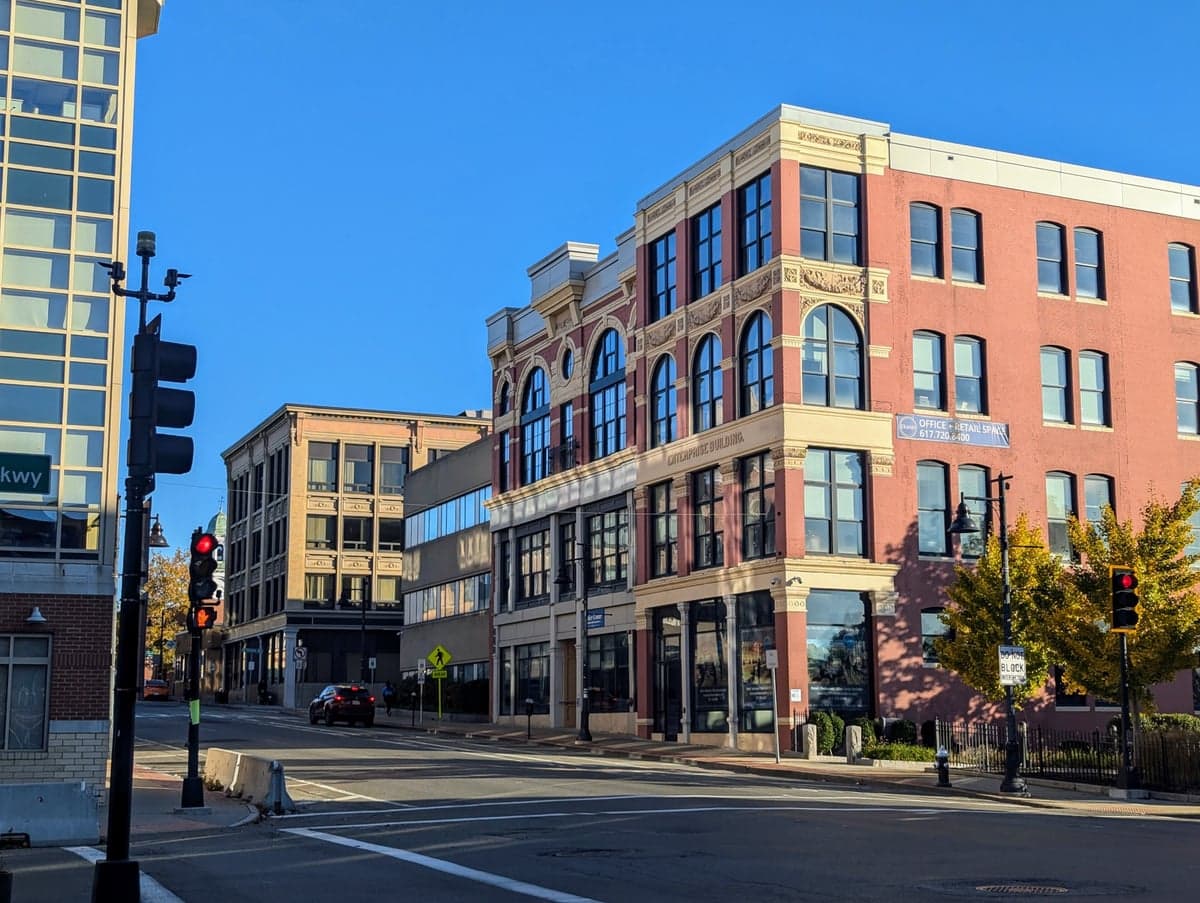
Photo: Wikipedia
Quality of Life in Plymouth County
A livable area that tracks near national norms for affordability, walkability, and neighborhood health.
What does Quality of Life tell us?
Quality of Life measures an area by evaluating factors like cost of living, nearby amenities, country club access, airport proximity, socioeconomic signals and neighborhood character. For large states, this is a general average — quality of life can vary dramatically between metro areas, suburbs, and rural communities within the same state.
What does this tell us?
Quality of Life measures an area by evaluating factors like cost of living, nearby amenities, country club access, airport proximity, socioeconomic signals and neighborhood character. For large states, this is a general average — quality of life can vary dramatically between metro areas, suburbs, and rural communities within the same state.
Cost of Living
58% above national average
75%
The Real Cost of Living in Plymouth County for 2026
| Tier | Individual | Family (4) |
|---|---|---|
| Survival | $26k | $50k |
| Comfortable | $100k | $147k |
| Luxury | $198k+ | $307k+ |
| Elite (Top 5%) | $238k+ | $369k+ |
Quality-of-Life Analysis
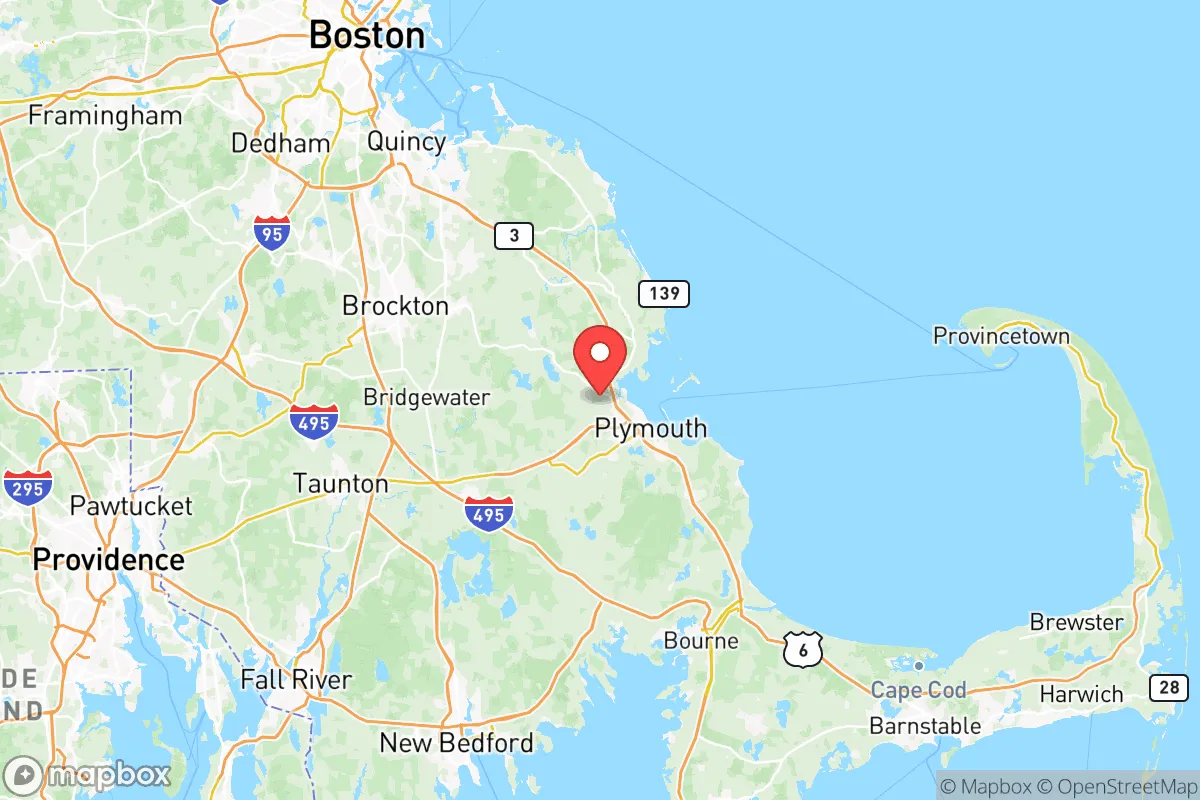
Plymouth County, Massachusetts, offers a broad quality-of-life spectrum that spans dense, amenity-rich towns along the South Shore, historic coastal villages, and deeply rural inland communities, drawing everyone from Boston commuters and young families to retirees and agricultural workers. The county’s character shifts noticeably from the bustling Route 3 corridor to the cranberry bogs and conservation lands of its western and southern reaches, making it one of the most internally diverse counties in the state. With a cost-of-living index of 158 (well above the U.S. average of 100), a median home value of $513,000, and a median rent of $1,655, the county demands a premium for its coastal access and proximity to Boston, yet still contains pockets where housing is comparatively attainable.
Largest town(s) & population centers
The county’s largest population centers are Brockton (roughly 105,000 residents) and Plymouth (the county seat, with about 63,000 residents). Brockton functions as the county’s urban core, with a diverse, working-class population, a growing Cape Verdean and Haitian community, and a more affordable housing stock relative to the rest of the county. Daily life in Brockton centers on its downtown commercial corridors, the Westgate Mall area, and a network of public schools and community colleges. Plymouth, by contrast, blends historic tourism (Plymouth Rock, Plimoth Patuxet Museums) with suburban sprawl along Route 3 and the coast; its residents enjoy a mix of waterfront recreation, retail, and a commute averaging 32.85 minutes to Boston. Other notable population hubs include Bridgewater (home to Bridgewater State University), Marshfield (a coastal bedroom community with strong schools), and Hanover (a family-oriented town with a popular shopping district).
Smaller towns & rural pockets
Venture inland or south, and Plymouth County reveals its quieter side. Carver, Halifax, and Plympton are small towns dominated by cranberry bogs, pine forests, and conservation land such as Myles Standish State Forest. These communities offer a distinctly rural lifestyle — few sidewalks, large lots, and a slower pace — while still being within a 40-minute drive of Brockton or Plymouth. Duxbury and Scituate, though coastal and more affluent, retain a village feel with historic town centers and working harbors. Hingham, on the county’s northern edge, is a commuter-heavy town with a ferry to Boston and some of the region’s highest property values. Unincorporated areas like North Plymouth and South Carver provide even more affordable, less developed options within the broader town boundaries.
Cost & lifestyle range
The cost-of-living spread across Plymouth County is significant. At the high end, Hingham and Duxbury routinely see median home values exceeding $800,000, with Hingham’s waterfront properties often topping $1 million; these towns offer top-rated schools, commuter rail access, and upscale shopping. At the more moderate end, Brockton and Bridgewater have median home values closer to the countywide $513,000 figure, with Brockton’s multi-family homes and condos sometimes falling below $400,000. Carver and Halifax sit in the middle, with home values typically between $450,000 and $550,000, but with lower property taxes than coastal towns. Rent follows a similar pattern: a two-bedroom in Hingham or Scituate can run $2,500+, while similar units in Brockton or Middleborough often rent for $1,500–$1,800. Lifestyle amenities also diverge — coastal towns emphasize boating, beaches, and historic tourism, while inland towns prioritize outdoor recreation (hiking, fishing, off-road vehicle trails) and agricultural traditions like cranberry harvesting.
Plymouth County is best suited for those who want a mix of urban, suburban, and rural living within a single county, but who can absorb the high baseline cost of living. Commuters to Boston, Providence, or Cape Cod will find the average 32.85-minute commute manageable from most towns, though Brockton and Plymouth offer the most direct transit options. Families seeking strong school systems should target Hingham, Duxbury, or Scituate, while those prioritizing affordability and space may prefer Carver, Halifax, or Brockton. Retirees and second-home buyers gravitate toward the coastal villages, while agricultural workers and outdoor enthusiasts find value in the county’s rural interior. No single lifestyle dominates — the county’s strength is its ability to accommodate a wide range of preferences within a relatively compact geography.

Crime in Plymouth County
Generally safer than 67% of comparable U.S. locations.
Violent CrimeViolent Crime Analysis
Property CrimeProperty Crime Analysis
Crime Analysis
Plymouth County, Massachusetts, presents a mixed safety profile for prospective residents, with violent crime rates significantly below national averages but property crime rates that demand attention. The county recorded a violent crime rate of 284.3 per 100,000 residents and a property crime rate of 993.9 per 100,000 in the most recent reporting period. These figures place the county in a relatively favorable position compared to the rest of the country, though the experience of safety varies considerably depending on which of the county's 27 municipalities one calls home.
Crime in context
Plymouth County's violent crime rate of 284.3 per 100,000 is notably lower than the national average of approximately 380 per 100,000, though it sits slightly above the Massachusetts state average of roughly 260 per 100,000. The property crime rate of 993.9 per 100,000 is substantially below the national figure of around 1,950 per 100,000, placing the county in a more secure position than many regions across the United States. However, these aggregate numbers mask significant disparities between communities. The county's proximity to Boston and its status as part of the Greater Boston metropolitan area means that crime patterns are influenced by urban spillover effects, particularly in towns with commuter rail access and highway corridors. The Plymouth County District Attorney's office, which prosecutes cases across the county, has maintained a generally tough-on-crime posture, though the influence of progressive prosecutorial policies emanating from the Suffolk County DA's office in Boston has raised concerns among residents about potential spillover effects on regional justice standards.
What residents experience
Daily life in Plymouth County's safer communities feels markedly different from the statistical averages. Towns such as Norwell, Hanover, and Duxbury consistently report violent crime rates well below the county average, often in the range of 50-100 per 100,000, making them among the safest places in Massachusetts. These communities benefit from well-funded local police departments, engaged neighborhood watch programs, and demographics that correlate with lower crime. In contrast, Brockton, the county's largest city, pulls the county averages upward significantly. Brockton's violent crime rate has historically been three to four times the county average, with property crime also elevated. The city has struggled with gang-related violence and drug trafficking, issues that have persisted despite various intervention efforts. Plymouth town itself falls somewhere in the middle, with crime rates generally tracking close to the county averages, though certain neighborhoods near the waterfront and downtown areas experience higher property crime, particularly vehicle break-ins and theft from parked cars. The progressive policies of the Plymouth County District Attorney's office have been a point of contention, with critics arguing that diversion programs and reduced sentencing for property crimes have contributed to repeat offending patterns in communities like Brockton and Middleborough.
Neighborhood-level variation
The most significant safety disparities in Plymouth County are between the suburban communities along the South Shore and the more urbanized areas inland. The coastal towns of Scituate, Marshfield, and Cohasset (the latter technically in Norfolk County but closely tied to Plymouth County's safety ecosystem) enjoy some of the lowest crime rates in the state, with property crime often limited to seasonal issues like beach parking lot break-ins. Meanwhile, Wareham and Middleborough have experienced property crime rates that occasionally exceed the county average, driven in part by their positions along major transportation routes like Route 495 and the commuter rail lines. Residents considering relocation should examine crime data at the neighborhood level rather than relying solely on county-wide statistics, as a move from one Plymouth County town to another can represent a difference of 400% or more in the likelihood of experiencing property crime. The county's overall safety profile remains favorable for those who choose communities with strong local law enforcement presence and limited exposure to the urban crime patterns that affect Brockton and its immediate surroundings.
* Values derived from national, state, county, city and local statistics and may differ in a specific area. Last updated: 2026-07-15T16:23:25.000Z
Narrative content on this page is AI-generated and may contain mistakes. Verify any details that matter before acting on them.
ReloMaps may earn a commission from affiliate links at no extra cost to you.

