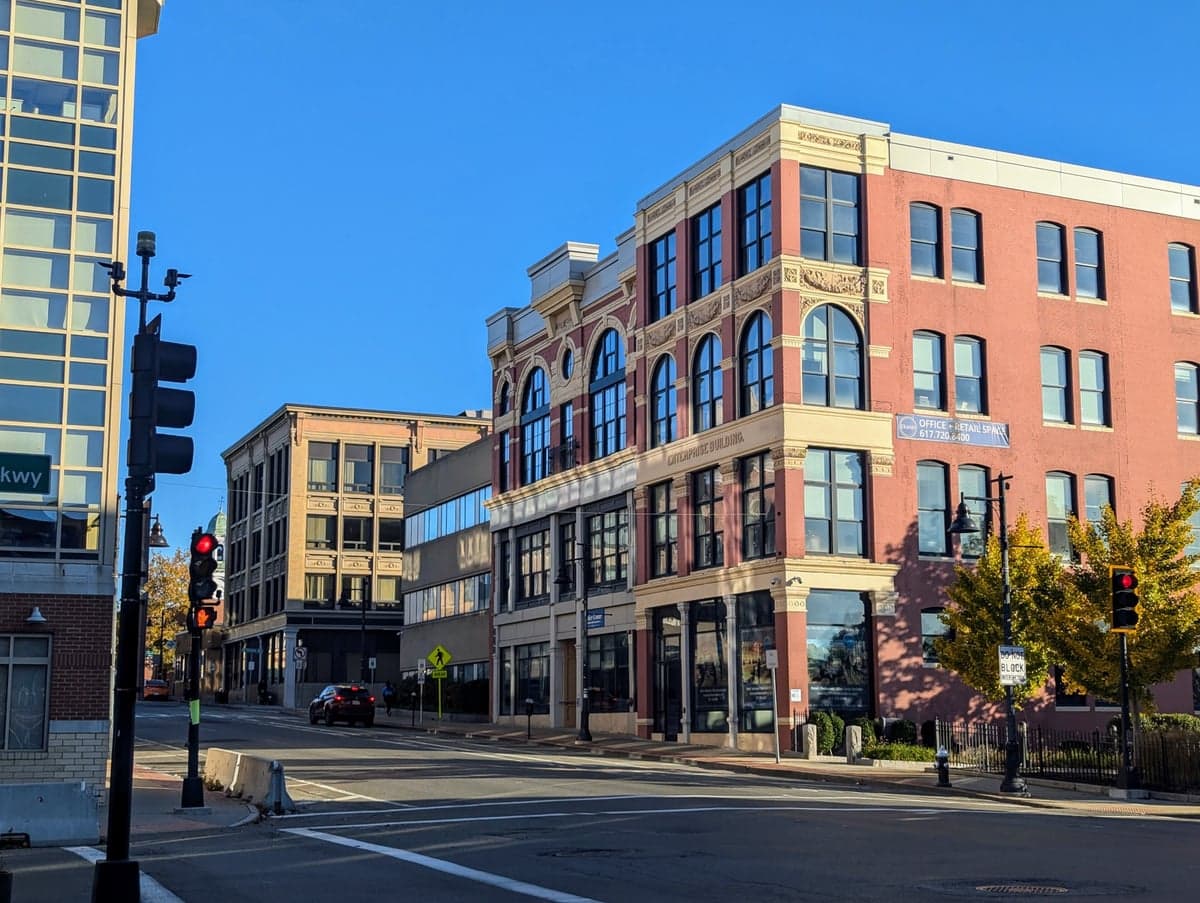
Photo: Wikipedia
Demographics of Plymouth County
Affluence Level in Plymouth County
An upper-middle-class area. Household wealth, education levels, and homeownership run ahead of national benchmarks.
People of Plymouth County
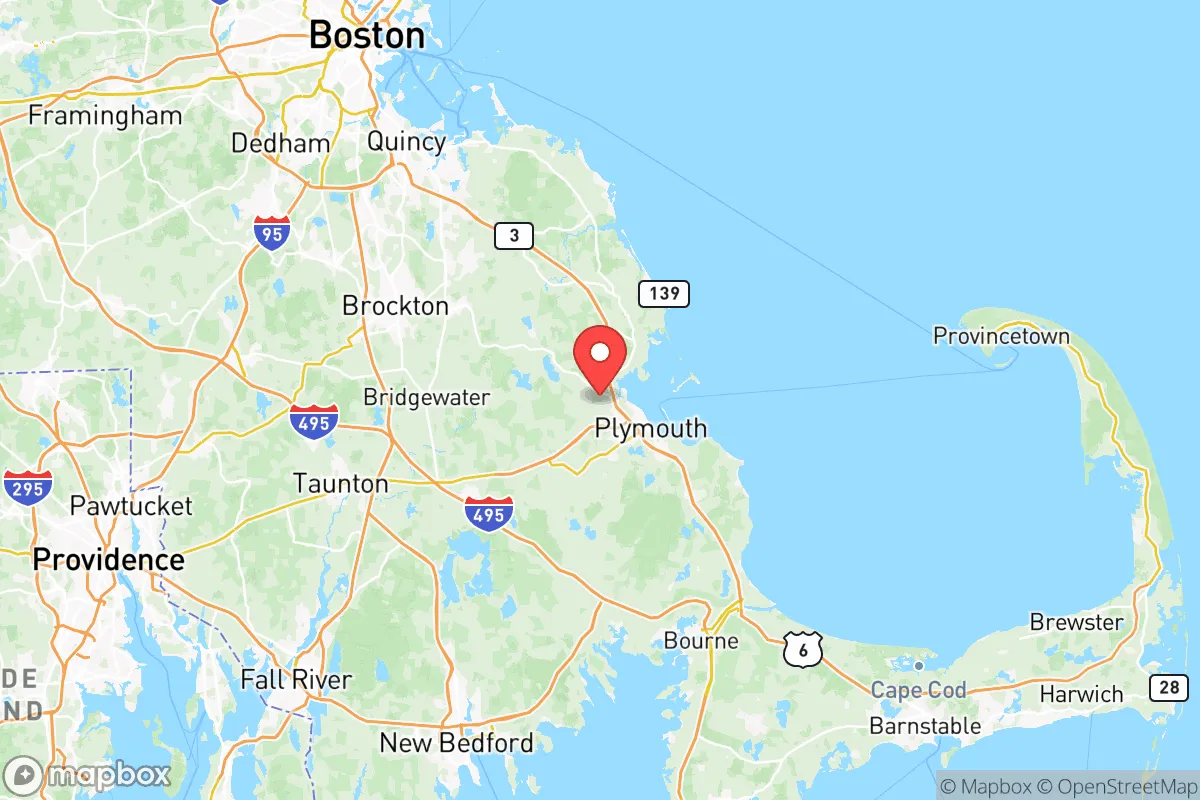
Plymouth County, Massachusetts, is home to 531,889 residents who live in a region that blends deep-rooted New England tradition with steady suburban growth. The county’s population is predominantly white (76.8%), with a notable Black community (8.4%) and a growing Hispanic presence (4.7%), while the foreign-born share remains low at 4.0%. Residents often describe the area as a place where historic Pilgrim settlements coexist with modern commuter towns, and where a strong sense of local identity—shaped by centuries of maritime, industrial, and agricultural life—still defines daily experience.
Settlement & growth (pre-1960)
The human history of Plymouth County begins long before European arrival. The Wampanoag people, including the Pokanoket and Massachusett tribes, inhabited the coastal and inland areas for thousands of years, living in seasonal villages along the shores of Plymouth Harbor, Cape Cod Bay, and the Taunton River. Their presence shaped the land through controlled burns and shellfish harvesting, and their interactions with English settlers—most famously at Plymouth in 1620—set the stage for the region’s colonial transformation.
The first major European wave was English, arriving aboard the Mayflower in 1620 and establishing Plymouth Colony. These Pilgrims, seeking religious freedom, settled in what is now Plymouth and quickly spread to Duxbury, Marshfield, and Scituate. By the mid-1600s, additional English settlers—many from the Massachusetts Bay Colony—pushed into Hingham, Cohasset, and Hanover, drawn by fertile coastal plains and access to cod fisheries. The region remained overwhelmingly English and Protestant through the 18th century, with small numbers of Scots-Irish arriving in the 1720s and settling in Pembroke and Kingston.
The 19th century brought industrialization and new immigrant groups. The rise of shipbuilding, rope-making, and ironworks in Brockton and Bridgewater attracted Irish immigrants fleeing the Great Famine of the 1840s. By 1860, Irish-born residents made up roughly 15% of Brockton’s population, working in shoe factories and as laborers on the Old Colony Railroad. French-Canadians arrived in the 1870s and 1880s, drawn to textile mills in Wareham and Middleborough, where they formed tight-knit parishes and maintained French-language schools. Italian immigrants followed in the 1890s and early 1900s, settling in Plymouth and Rockland, working in granite quarries and the cranberry bogs that dotted the county’s interior.
The early 20th century saw a smaller but notable wave of Portuguese immigrants, primarily from the Azores, who established fishing communities in Plymouth and Marshfield. By 1920, Plymouth County’s population had grown to roughly 200,000, with a mix of Yankee Protestants, Irish Catholics, French-Canadians, Italians, and Portuguese. The Great Depression slowed growth, but World War II brought a temporary influx of workers to shipyards and military installations along the coast. Suburbanization began in earnest after 1945, as returning veterans used GI Bill mortgages to buy homes in new developments in Norwell, Hanson, and Whitman, transforming farmland into bedroom communities for Boston commuters.
Modern era (post-1965)
The 1965 Hart-Cellar Act had a modest impact on Plymouth County compared to gateway cities like Boston or New York. The foreign-born share remains low at 4.0%, but the composition of that small group has shifted. Since the 1980s, immigrants from Brazil and Cape Verde have arrived, settling in Brockton and Taunton (the latter in neighboring Bristol County but drawing Plymouth County residents for work and services). Brazilian immigrants, many working in construction and cleaning services, have established small commercial corridors along Main Street in Brockton. Cape Verdean immigrants, who began arriving in larger numbers after 1990, have concentrated in Brockton and Plymouth, where they have formed community organizations and churches.
Domestic migration has reshaped the county more than international immigration. Since the 1970s, families have moved from Boston and the inner suburbs to Plymouth County’s more affordable towns, seeking larger lots and better schools. This trend accelerated after 2000, with Plymouth, Marshfield, and Scituate seeing significant growth as coastal commuter towns. The Black population, which stood at 3.2% in 1980, rose to 8.4% by 2020, driven largely by African American families moving from Boston’s Roxbury and Dorchester neighborhoods to Brockton and Randolph (the latter partly in Norfolk County but closely tied to Plymouth County’s housing market). The Hispanic population, now 4.7%, has grown through both immigration from Puerto Rico and the Dominican Republic and through natural increase, with concentrations in Brockton and Wareham.
Suburbanization has continued into the 21st century, with new subdivisions and 55+ communities spreading across Carver, Plympton, and Halifax. The county’s college-educated share has risen to 41.2%, reflecting the influx of professionals who work in Boston’s tech and healthcare sectors but prefer Plymouth County’s lower cost of living and access to the South Shore beaches. The Asian population, at 1.2%, remains small and is concentrated in Brockton and Plymouth, with Chinese and Vietnamese families forming the largest subgroups. The Indian-subcontinent population, at 0.4%, is even smaller and dispersed, with no single enclave.
The future
Plymouth County is projected to grow slowly but steadily over the next decade, with the population expected to reach roughly 560,000 by 2035. The county is becoming slightly more diverse, driven by natural increase among Hispanic and Black residents and continued domestic migration from Boston. The foreign-born share is likely to remain below 5%, as the county lacks the large immigrant-employing industries—meatpacking, agriculture, hospitality—that drive higher foreign-born shares in other parts of Massachusetts. New immigrant arrivals will likely continue to concentrate in Brockton, which already has the county’s most diverse population and the infrastructure to support newcomers.
The white population, while still the majority, is aging and declining slightly as younger white families move to more affordable regions in the South and West. The Black and Hispanic populations are younger and growing, which will gradually shift the county’s cultural and political dynamics. The college-educated share is expected to rise further, as remote work allows more professionals to live in coastal towns like Marshfield and Scituate while keeping Boston jobs. The county’s cultural identity—rooted in Pilgrim history, cranberry farming, and small-town New England life—will likely persist, but with an increasingly multiethnic character in its larger towns.
For someone moving to Plymouth County now, the region offers a stable, family-oriented environment with good schools, low crime relative to the national average, and access to both Boston and Cape Cod. The population is becoming more diverse, but slowly, and the county remains one of the more affordable coastal areas in Massachusetts. The key trade-off is between the historic charm and slower pace of towns like Plymouth and Duxbury and the greater diversity and urban amenities of Brockton. The county’s future is one of gradual change, not transformation—a place where tradition and suburban growth coexist, and where new residents can find both community and opportunity.

* Values derived from national, state, county, city and local statistics and may differ in a specific area. Last updated: 2026-07-15T16:23:25.000Z
Narrative content on this page is AI-generated and may contain mistakes. Verify any details that matter before acting on them.
ReloMaps may earn a commission from affiliate links at no extra cost to you.

