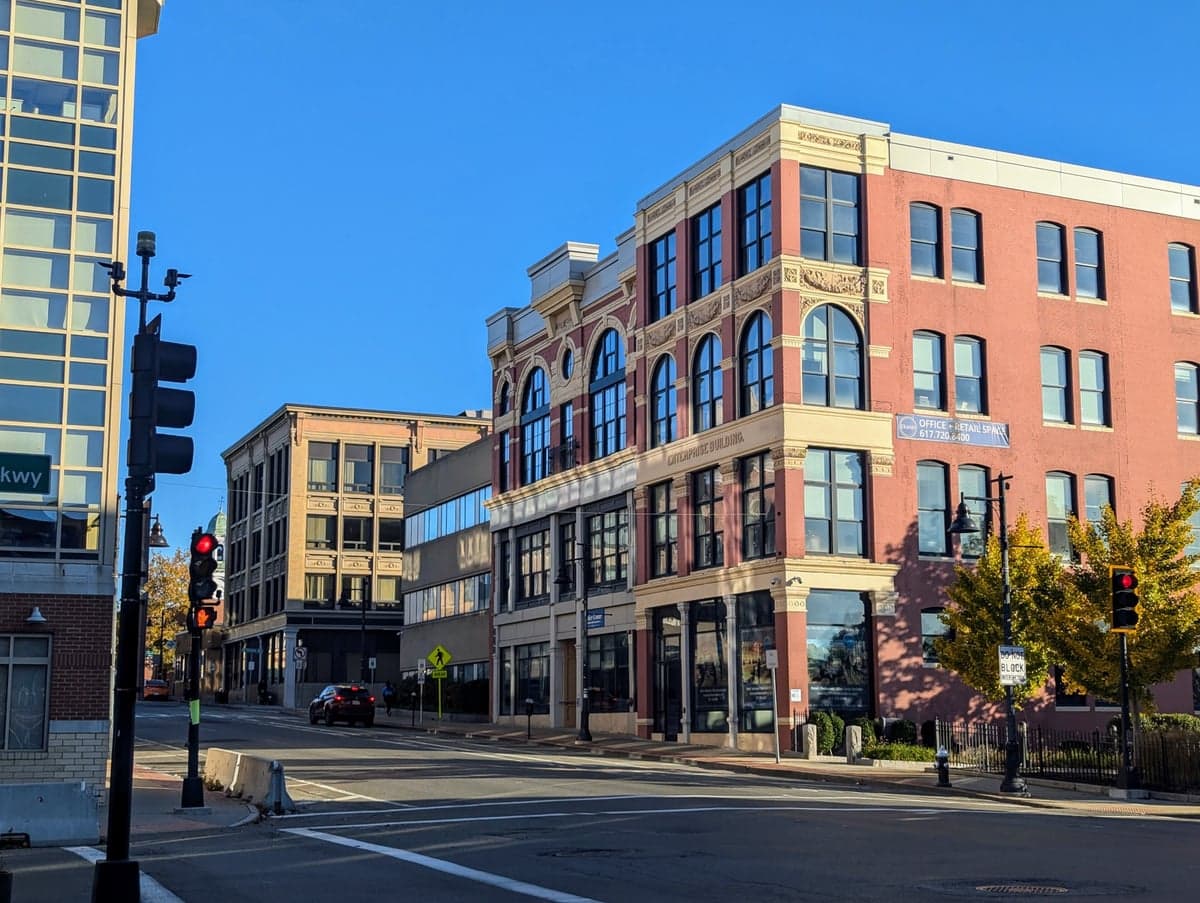
Photo: Wikipedia
Political ClimatePolitical Climate in Plymouth County
Showing district-level results — no local-only data available.
Local Political AnalysisPolitical Analysis of Plymouth County
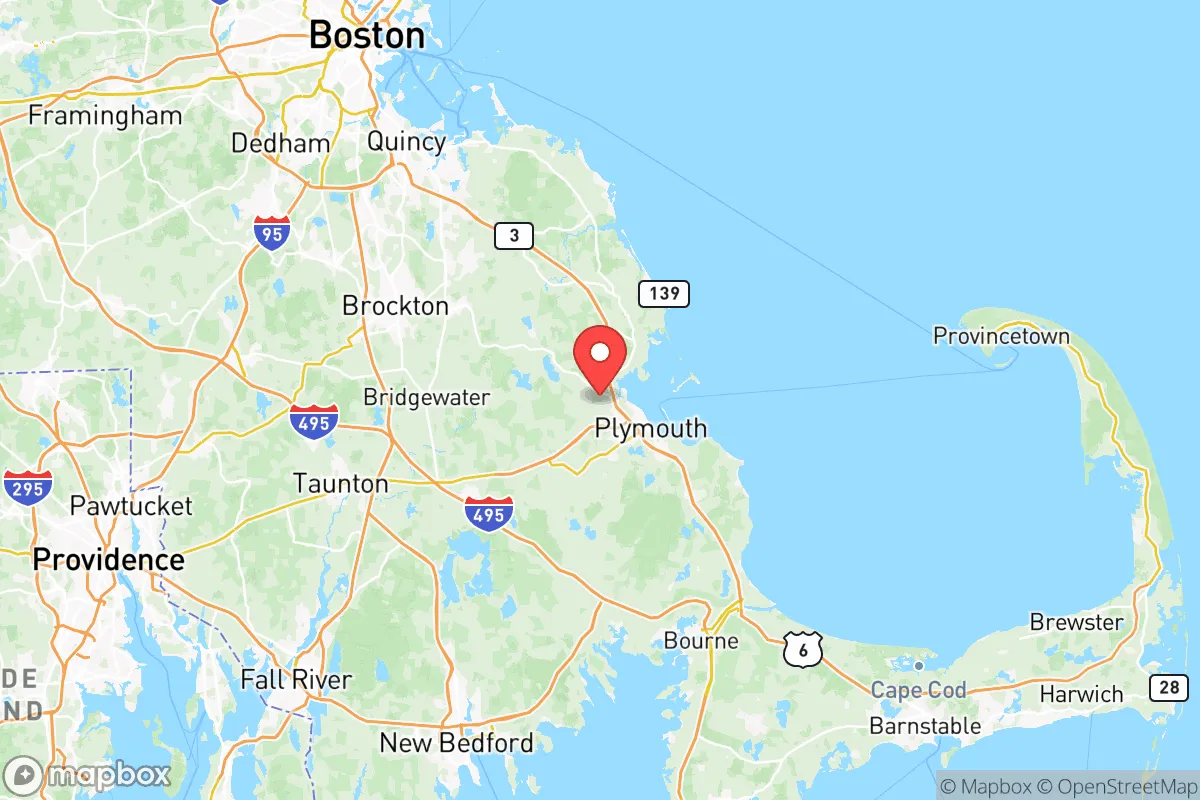
Plymouth County sits in a fascinating political middle ground within deep-blue Massachusetts. While the state as a whole carries a Cook PVI of D+15, Plymouth County is notably more moderate at D+6, making it one of the more politically competitive areas in the commonwealth. This isn't a county that swings wildly between parties, but it has enough conservative and independent voters to keep local elections interesting and to give Republican candidates a fighting chance in certain towns, especially compared to the reliably progressive strongholds west of Boston.
How it compares
The D+6 rating means Plymouth County is about nine points more conservative than Massachusetts as a whole. That gap plays out clearly on the ground. The county's southern and western towns — places like Plymouth itself, Middleborough, and Carver — tend to lean more Republican, with precincts in these areas regularly voting for GOP candidates in state and federal races. In contrast, the northern and coastal communities, particularly Hingham, Cohasset, and Scituate, are solidly blue, driven by higher education levels and proximity to Boston's economic and cultural orbit. The real swing action happens in towns like Marshfield, Hanover, and Norwell, where precinct-level results can flip between parties depending on the candidate and the year. This internal variation is what makes Plymouth County distinct from the rest of Massachusetts — it's not uniformly liberal, and local candidates often have to appeal to a broader ideological range than they would in, say, Cambridge or Newton.
What this means for residents
For conservative residents, Plymouth County offers a more comfortable environment than most of Massachusetts. You'll find Republican town committees that are active and organized, especially in the southern half of the county, and conservative viewpoints are a normal part of local discourse rather than a fringe position. That said, statewide policies — like the state's strict gun laws, high income taxes, and progressive social legislation — still apply everywhere, so conservatives here are used to living under a Democratic state government while feeling more at home in their immediate community. For liberal residents, the county's moderate lean means they're often in the majority in their own towns but may encounter more political diversity than they would in Boston proper. This can lead to genuinely mixed neighborhoods and friend groups where political differences are a normal part of conversation, not a source of tension. In practice, most day-to-day life in Plymouth County isn't dominated by partisan conflict — people are more focused on local issues like school funding, road repairs, and coastal management.
Culturally, Plymouth County has a distinct identity that sets it apart from the rest of Massachusetts. The county's deep historical roots — it's home to Plymouth Rock, Plimoth Patuxet, and a strong maritime heritage — foster a sense of local pride that transcends party lines. There's also a noticeable split in policy priorities: the northern, wealthier towns tend to focus on environmental conservation and smart growth, while the southern, more rural areas prioritize property rights, lower taxes, and Second Amendment access. This internal diversity means Plymouth County doesn't speak with one political voice, but that very fact makes it one of the most interesting and representative slices of Massachusetts political life.

State Political ClimatePolitical Climate in Massachusetts
State Political AnalysisPolitical Environment in the State
Massachusetts is one of the most reliably Democratic states in the country, with a Cook Partisan Voting Index of D+15, meaning it votes about 15 points more Democratic than the national average in presidential elections. The state hasn't voted for a Republican presidential candidate since Ronald Reagan in 1984, and the Democratic grip on the legislature is a supermajority in both chambers. Over the last 20 years, the state has shifted further left, driven by the consolidation of liberal voters in the Boston metro area and the exodus of moderate Republicans from the suburbs, though the 2022 gubernatorial election of Republican moderate Charlie Baker (who didn't run for reelection) showed that a centrist Republican can still win statewide office in the right environment.
Urban vs. rural divide
The political map of Massachusetts is a classic story of a deep blue urban core surrounded by increasingly red rural and exurban areas. The Boston metro area, including Cambridge, Somerville, and Brookline, is the engine of the state's Democratic dominance, with precincts routinely voting 80-90% Democratic. The western part of the state, particularly Berkshire County, is also reliably blue, though less intensely so. The real Republican strongholds are in the central and southeastern parts of the state, with Plymouth County and Bristol County showing more competitive races. The town of Carver in Plymouth County voted for Trump in 2020, a pattern repeated in many small towns along the South Shore and in the central part of the state. The Cape Cod region, including Barnstable, is a mix of liberal vacation towns and more conservative year-round communities, making it a swing area in local races. The divide isn't just urban vs. rural; it's also about education and income, with college-educated voters in the suburbs like Lexington and Newton trending heavily Democratic, while working-class towns like Taunton and Fall River are more competitive.
Policy environment
Massachusetts has a progressive policy environment that reflects its Democratic supermajority. The state has a flat income tax rate of 5%, but a 2022 ballot question added a 4% surtax on income over $1 million, making the top rate 9%. Property taxes are high, averaging about 1.2% of home value, but vary widely by town. The state has a robust regulatory posture, with strict environmental regulations, a strong renewable energy mandate, and a healthcare system that achieved near-universal coverage before the Affordable Care Act. Education policy is a point of pride, with Massachusetts consistently ranking first in the nation for K-12 performance, but the system is heavily funded by local property taxes, creating disparities between wealthy and poor districts. Election laws are among the most accessible in the country, with no-excuse mail-in voting, same-day registration, and early voting. The state also has a strong public records law and a relatively transparent government, though critics argue that the supermajority can stifle debate.
Recent policy direction
Recent legislation in Massachusetts has pushed the state further left on a range of issues. In 2022, the state passed the Work and Family Mobility Act, allowing undocumented immigrants to obtain driver's licenses. In 2023, the legislature overrode Governor Maura Healey's veto to pass a law expanding abortion access, including protections for providers and patients from out-of-state lawsuits. On gun policy, the state passed a comprehensive gun safety law in 2024 that bans the sale of certain semi-automatic rifles, requires safe storage, and expands the state's "red flag" law. On education, the state has moved toward a more progressive curriculum, including a 2023 law requiring public schools to teach LGBTQ+ history. On property rights, the state has a strong tenant protection framework, including rent control in some cities like Boston and Cambridge, though a statewide rent control measure failed in 2024. On privacy, the state has a data privacy law that is less comprehensive than California's but stronger than most. On voting, the state has expanded access, including automatic voter registration and no-excuse mail-in voting, which was made permanent in 2022.
Civil unrest & political movements
Massachusetts has a history of active political movements on both sides. The state was a focal point of the 2020 Black Lives Matter protests, with large demonstrations in Boston and Worcester. The state's sanctuary city policies, particularly in Boston and Cambridge, have been a flashpoint, with the state legislature passing a 2017 law limiting local police cooperation with federal immigration enforcement. On the right, the state has a small but active conservative movement, with groups like the Massachusetts Fiscal Alliance and the Massachusetts Republican Party organizing around tax and spending issues. The 2020 election integrity debate was less intense here than in many states, but there were still protests outside the State House in 2021. The state has also seen a rise in school board activism, particularly around curriculum and parental rights, with conservative parents in towns like Wrentham and Franklin pushing back against progressive policies. The secession or nullification rhetoric is minimal, though there is a small "New England independence" movement that has little mainstream support.
Projection
Over the next 5-10 years, Massachusetts is likely to become even more Democratic, driven by the continued in-migration of young, college-educated professionals to the Boston metro area and the out-migration of older, more conservative residents to lower-tax states like Florida and New Hampshire. The state's demographic trends, including a growing Asian and Hispanic population, are likely to reinforce the Democratic lean. However, the state's high cost of living and housing crisis could slow in-migration, and there is a growing backlash against the state's progressive policies, particularly around taxes and education, that could lead to more competitive races in the suburbs. The 2024 election saw some Republican gains in the state legislature, suggesting that the supermajority may not be permanent. A new resident moving in now should expect a state that is deeply blue but with pockets of red, a high cost of living, and a policy environment that is actively moving left on most issues.
For a new resident, the bottom line is that Massachusetts is a state where progressive policies are the norm, and conservative residents will find themselves in the minority, particularly in the Boston metro area. The state's high taxes and cost of living are offset by excellent public services, including top-tier schools and healthcare. If you're a conservative, you'll find like-minded communities in the central and southeastern parts of the state, but you'll need to be comfortable with a political environment that is often hostile to your views. If you're a liberal, you'll find a state that is actively implementing your preferred policies, but you'll also face a high cost of living and a housing market that is among the most competitive in the country. Either way, Massachusetts is a state where politics is a central part of daily life, and you'll need to be engaged to navigate it.
* Values derived from national, state, county, city and local statistics and may differ in a specific area. Last updated: 2026-07-15T16:23:25.000Z
Narrative content on this page is AI-generated and may contain mistakes. Verify any details that matter before acting on them.
ReloMaps may earn a commission from affiliate links at no extra cost to you.

