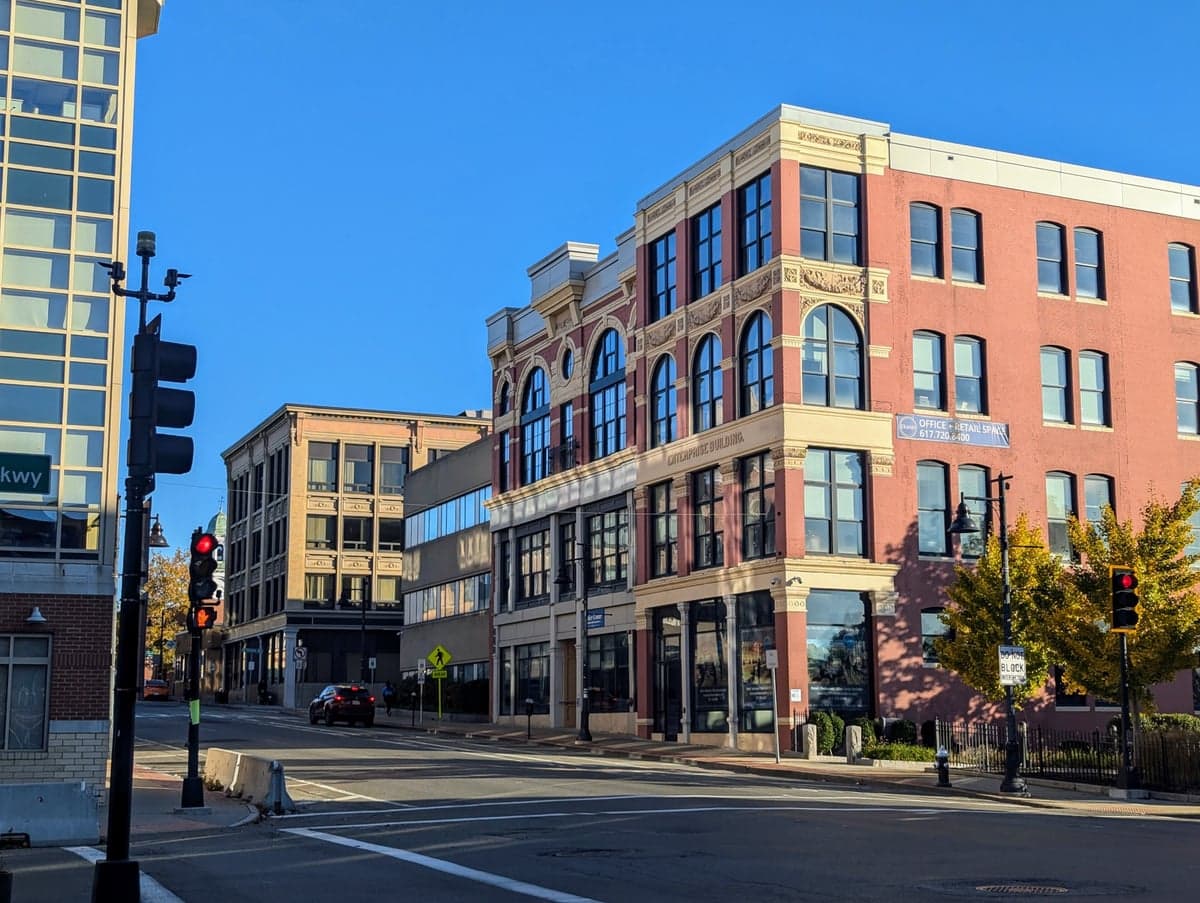
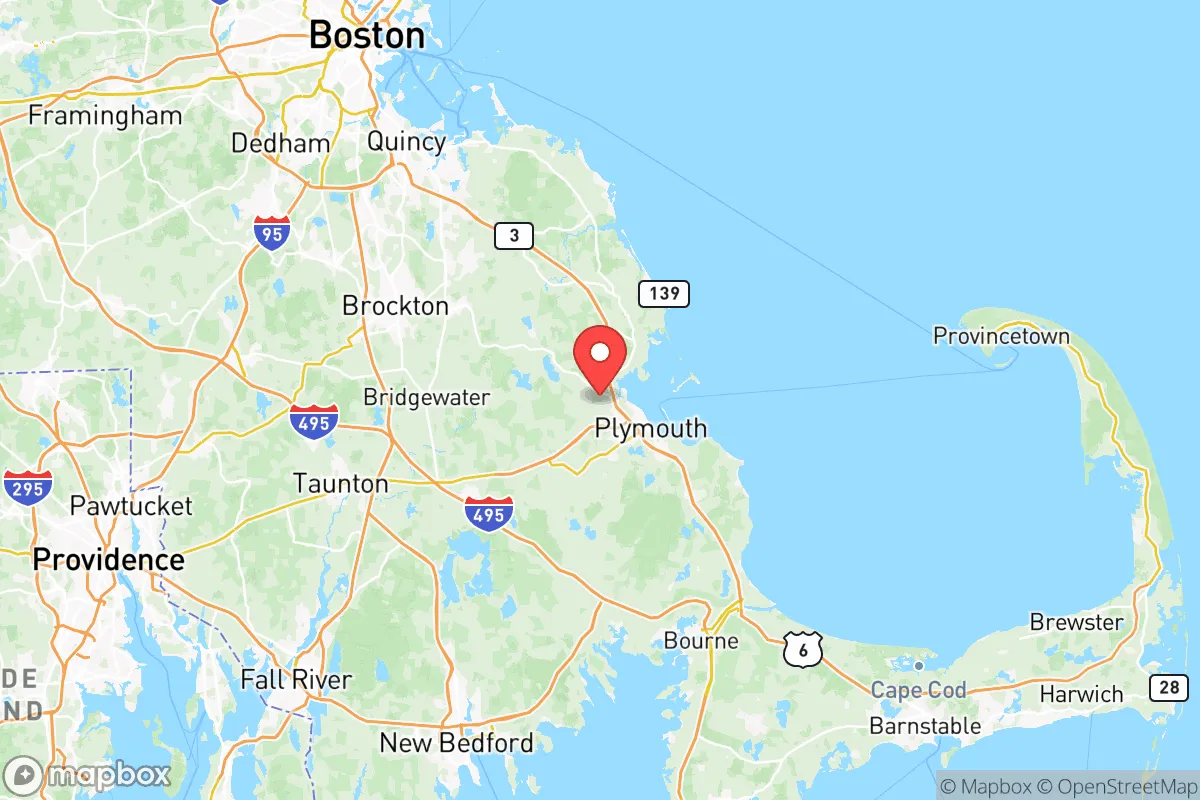
Photo: Wikipedia
Personal Sovereignty in Plymouth County
Viable for self-reliance. Generally workable, though some barriers may limit total independence.
What does Personal Sovereignty tell us?
Personal Sovereignty measures your capacity for self-reliance and independence with minimal government friction. Higher scores mean fewer barriers between you and the way you want to live... but it assumes you have the space you need and good neighbors.
What does this tell us?
Personal Sovereignty measures your capacity for self-reliance and independence with minimal government friction. Higher scores mean fewer barriers between you and the way you want to live... but it assumes you have the space you need and good neighbors.
State Policy
Energy independence: Importer (5% of energy produced in-state)
Personal Liberty
Homesteading

Personal Liberty Analysis
Plymouth County, Massachusetts presents a nuanced personal sovereignty environment where state-level regulatory density is partially offset by local variation, particularly in its more rural towns. While Massachusetts as a whole ranks among the most heavily regulated states in the Northeast, Plymouth County's mix of coastal suburbs, historic towns, and agricultural communities creates meaningful differences in how autonomy feels day-to-day. A single individual or family prioritizing personal freedom will find the strongest alignment with self-reliance values in the county's western and southern towns, such as Carver, Middleborough, and Plympton, where larger lots, lower population density, and a more independent local culture contrast sharply with the denser, more regulated eastern communities like Hingham, Cohasset, and Scituate.
Tax burden and regulatory posture in Plymouth County
Massachusetts imposes a flat state income tax of 5.0% (as of 2026) and a state sales tax of 6.25%, neither of which is among the nation's highest but both are above the national median. Property taxes in Plymouth County vary significantly by municipality: Brockton has a rate of roughly $17.50 per $1,000 of assessed value, while Plymouth sits around $14.50, and Duxbury near $12.00. These rates are moderate by Massachusetts standards but high relative to many southern and western states. The regulatory posture in Plymouth County is shaped heavily by state-level mandates, particularly in environmental permitting, building codes, and land use. Towns like Carver and Wareham have more permissive local zoning boards and less aggressive enforcement of state wetland and septic regulations compared to affluent coastal towns like Marshfield or Pembroke, where conservation commissions are more active. For a reader weighing tax burden, the key takeaway is that Plymouth County's overall tax load is moderate for Massachusetts but high nationally, and local property tax rates vary enough to shift annual costs by several thousand dollars depending on town choice.
Self-defense and gun law specifics in Plymouth County
Massachusetts has some of the strictest firearm laws in the United States, and Plymouth County operates entirely within that framework. A License to Carry (LTC) is required for both open and concealed carry, and issuance is "may-issue" at the local police chief's discretion. In practice, most Plymouth County towns issue LTCs to qualified applicants without major hurdles, but processing times and interview requirements vary. Middleborough and Lakeville are known for relatively straightforward LTC processes, while Brockton and Taunton (though Taunton is in Bristol County) have historically been more restrictive. The state bans "assault weapons" by feature and name, limits magazine capacity to 10 rounds, and requires a firearms safety course. Self-defense law in Massachusetts does not have a "stand your ground" statute; instead, a duty to retreat applies when safely possible. For a reader prioritizing self-defense rights, Plymouth County is not a permissive jurisdiction, but the practical experience of obtaining and using a firearm for home defense is feasible with proper licensing, particularly in the county's more rural towns where police chiefs are generally more accommodating.
Self-reliance and homesteading viability in Plymouth County
Homesteading and off-grid living are possible in Plymouth County but are constrained by state and local regulations. Minimum lot sizes vary dramatically: Plympton requires 2-acre minimums, Carver has 1-acre minimums in many zones, and Middleborough allows half-acre lots in denser areas. These larger lots in the western towns provide space for gardens, small livestock, and even limited poultry or goats, subject to local bylaws. Off-grid feasibility is limited because Massachusetts requires connection to the electrical grid for new construction in most towns, and septic systems must meet Title 5 standards, which are strict. Rainwater collection is legal but regulated, and solar panels are permitted but must comply with building codes. Wareham and Rochester have more permissive agricultural zoning that allows for small-scale farming and animal husbandry with fewer bureaucratic hurdles. For a reader serious about self-reliance, the best bet is a property in Carver, Plympton, or Rochester on at least 2 acres, where gardening, chickens, and limited livestock are practical, though full off-grid independence is not realistic under current state law.
Personal liberties in Plymouth County for families and individuals
Parental rights in Massachusetts are generally strong, with parents retaining authority over education, healthcare, and religious upbringing. The state does not have a universal school choice program, but inter-district transfers are possible in some cases, and homeschooling is legal with annual notification and standardized testing requirements. Medical autonomy is limited by state vaccine mandates for school attendance and healthcare facility workers, though exemptions exist for medical and religious reasons. Free speech is protected under the First Amendment, and Plymouth County has a mix of political viewpoints, with coastal towns like Duxbury and Hingham leaning more liberal and inland towns like Middleborough and Carver trending conservative. Property rights are constrained by state wetland protection laws, which can restrict development and even landscaping near water bodies, a significant factor for waterfront property owners. For a family, the personal liberty environment in Plymouth County is moderate: parental rights are intact but not absolute, medical autonomy faces state-level limits, and property use is regulated more heavily than in many parts of the country.
Overall, personal sovereignty in Plymouth County is a trade-off between the benefits of a high-quality public infrastructure and the constraints of a densely regulated state. The county's rural towns offer a noticeably lighter touch than the Boston suburbs or the state's urban cores, but no municipality can fully escape Massachusetts' comprehensive regulatory framework. For a reader comparing regions, Plymouth County sits somewhere between the heavy regulation of the Northeast corridor and the greater autonomy found in states like New Hampshire or Texas. The most freedom-aligned choice within the county is a rural property in Carver, Plympton, or Middleborough, where lower density, more permissive zoning, and a conservative local culture provide the best environment for self-reliance and personal independence.

* Values derived from national, state, county, city and local statistics and may differ in a specific area. Last updated: 2026-07-15T16:23:25.000Z
Narrative content on this page is AI-generated and may contain mistakes. Verify any details that matter before acting on them.
ReloMaps may earn a commission from affiliate links at no extra cost to you.

