
Photo: Wikipedia
Personal Sovereignty in Middlesex County
Viable for self-reliance. Generally workable, though some barriers may limit total independence.
What does Personal Sovereignty tell us?
Personal Sovereignty measures your capacity for self-reliance and independence with minimal government friction. Higher scores mean fewer barriers between you and the way you want to live... but it assumes you have the space you need and good neighbors.
What does this tell us?
Personal Sovereignty measures your capacity for self-reliance and independence with minimal government friction. Higher scores mean fewer barriers between you and the way you want to live... but it assumes you have the space you need and good neighbors.
State Policy
Energy independence: Importer (5% of energy produced in-state)
Personal Liberty
Homesteading

Personal Liberty Analysis
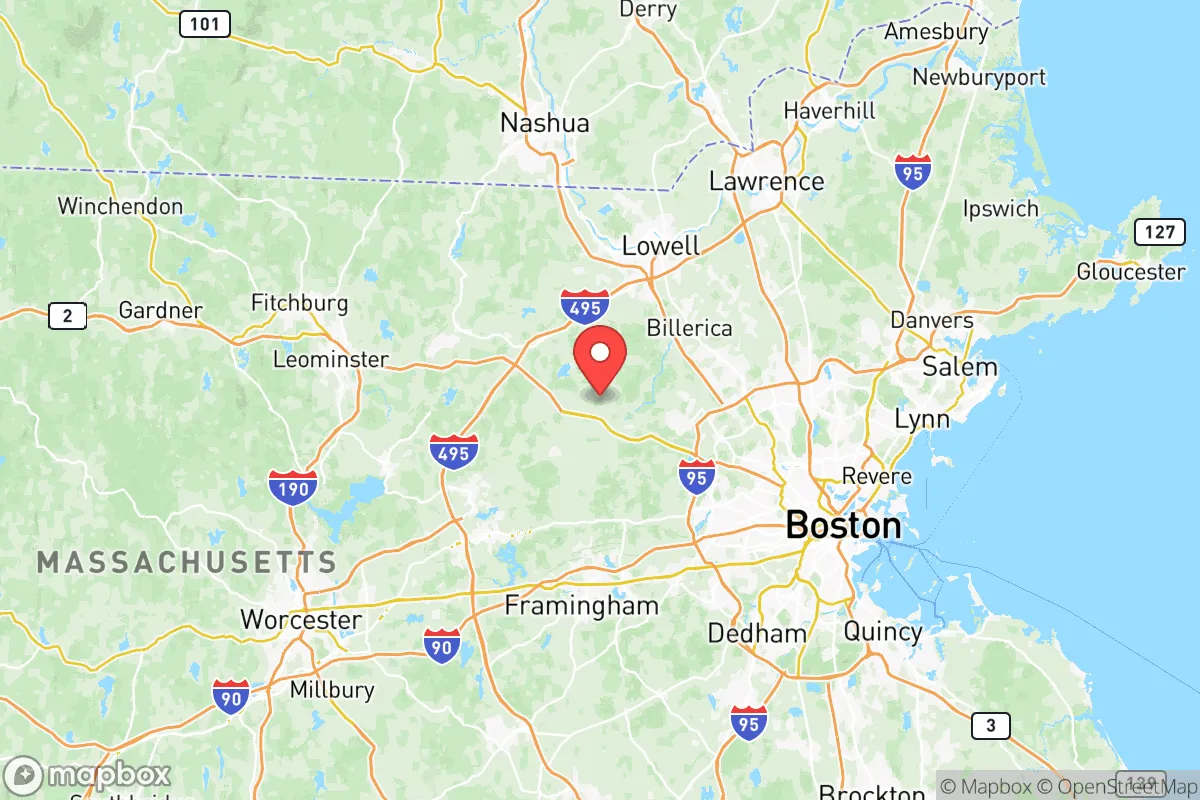
Middlesex County, Massachusetts presents a complex and often contradictory environment for personal sovereignty, where individual autonomy is simultaneously protected by strong civil liberties traditions and constrained by some of the nation's most extensive state-level regulations. As the most populous county in New England, stretching from the New Hampshire border to the western suburbs of Boston, it encompasses a wide spectrum of local governance cultures—from the relatively libertarian-leaning towns of Pepperell and Townsend to the more progressive, highly regulated cities of Cambridge and Somerville. For a relocation-minded individual or family prioritizing personal freedom, understanding these internal divisions is critical, as the county's overall character is defined less by a single regulatory posture and more by a patchwork of municipal codes and state mandates that can significantly impact daily life.
Tax burden and regulatory posture: what residents actually pay and face
Massachusetts carries a reputation for high taxation, and Middlesex County is no exception, though the burden is not uniform. The state's income tax is a flat 5.0% as of 2026, with no local income taxes, while the state sales tax sits at 6.25%—both moderate by national standards but notable for a region with a high cost of living. Property taxes are the primary local revenue source, and they vary dramatically across the county. In Lowell, the effective property tax rate hovers around 1.7% of assessed value, while in affluent Lexington, it can exceed 1.9%, reflecting high property values and generous school funding. The regulatory posture is decidedly heavy-touch at the state level: Massachusetts has a strict building code, extensive environmental review requirements under the Massachusetts Environmental Policy Act (MEPA), and a notoriously complex permitting process for new construction or major renovations. However, towns like Westford and Littleton are known for more business-friendly zoning and faster permit approvals compared to the notoriously slow processes in Cambridge or Somerville. For a family seeking to build or renovate, the difference in timeline and cost between a town like Acton (moderate regulation) and Arlington (dense, highly regulated) can be measured in months and thousands of dollars.
Self-defense and gun law specifics: what is and isn't allowed
Massachusetts has some of the most restrictive gun laws in the United States, and Middlesex County residents must navigate a dense legal framework. The state requires a License to Carry (LTC) for both open and concealed carry, which is issued by local police chiefs—a system that creates significant variation. In more conservative-leaning towns like Pepperell and Townsend, LTC applications are typically processed efficiently and denied only for statutory disqualifiers, while in Cambridge and Somerville, applicants may face longer wait times and more subjective scrutiny. The state bans "assault weapons" by name and feature, limits magazine capacity to 10 rounds, and requires a 7-day waiting period for handgun purchases. "Stand your ground" laws do not exist; Massachusetts imposes a "duty to retreat" in public spaces before using deadly force, though the Castle Doctrine applies inside one's home. For self-defense-minded individuals, the practical reality is that owning and carrying a firearm is legally possible but requires significant administrative effort, and the legal environment is not friendly to defensive gun use. The county's gun culture is strongest in its northwestern towns, where hunting and sport shooting are common, and weakest in the urban core near Boston.
Self-reliance and homesteading viability: lot sizes, zoning, and off-grid feasibility
Homesteading and off-grid living in Middlesex County are feasible only in specific pockets, and even then, state and local regulations impose significant constraints. Minimum lot sizes vary widely: in Carlisle, a famously rural town, the minimum is 2 acres, while in Boxborough it's 1 acre, and in Pepperell it can be as low as 0.5 acres in some zones. However, most towns require connection to municipal water and sewer where available, and off-grid systems like solar panels with battery storage are permitted but subject to strict building codes and historic district reviews in older towns. Raising livestock is generally allowed on parcels of 1 acre or more in most rural towns, but chickens, goats, and bees are often restricted by local bylaws—for example, Acton allows up to 6 hens but no roosters, while Littleton permits goats on lots over 2 acres. Rainwater harvesting is legal but regulated, and composting toilets are rarely approved for new construction. For a family seeking true self-reliance, the northwestern towns of Pepperell, Townsend, and Ashby offer the most permissive environment, but even there, the state's Title 5 septic system requirements and wetland protection laws make independent living a bureaucratic undertaking. The county is not a place for off-grid minimalism; it is a place for suburban homesteading within a regulated framework.
Personal liberties: parental rights, medical autonomy, speech, and property
Massachusetts generally protects civil liberties strongly, but with notable exceptions that affect personal sovereignty. Parental rights are robust in theory—parents have broad authority over their children's education, healthcare, and upbringing—but the state mandates school attendance until age 16, requires homeschoolers to submit annual curriculum plans for approval by local school districts, and has a mandatory vaccination law for school entry with only medical exemptions. Medical autonomy is mixed: the state protects reproductive rights and gender-affirming care, but it also mandates health insurance coverage and has a strict prescription drug monitoring program. Free speech is strongly protected under the state constitution, which is more expansive than the First Amendment in some areas, though local noise ordinances and public assembly permits can create friction in dense urban areas. Property rights are constrained by strong zoning powers, historic preservation commissions in towns like Concord and Lexington, and a statewide rent control ban that was repealed in 1994 but remains a political flashpoint. For a conservative-leaning family, the most significant limitation on personal liberty is likely the state's mandatory vehicle emissions inspection and its gasoline-powered leaf blower bans in several towns, which directly restrict property use. The county's overall posture is one of managed liberty: many freedoms are protected, but they come with paperwork, fees, and compliance requirements.
Compared to other regions of the United States, Middlesex County offers a moderate-to-low level of personal sovereignty for those prioritizing tax freedom, gun rights, and off-grid independence. It is far more restrictive than states like New Hampshire (just 30 miles north) or Texas, but significantly less restrictive than New York City or California's Bay Area. For a relocation-minded individual or family, the key takeaway is that personal sovereignty in Middlesex County is highly localized: choose Pepperell or Townsend for a more permissive environment, or Cambridge or Somerville for a more regulated one. The county's strength lies in its civil liberties protections and strong property rights in rural towns, but its weakness is a state-level regulatory apparatus that touches nearly every aspect of daily life. For those willing to navigate the bureaucracy, a high degree of personal freedom is achievable—but it requires active engagement with local government and a tolerance for rules that would be unthinkable in less regulated states.

* Values derived from national, state, county, city and local statistics and may differ in a specific area. Last updated: 2026-07-03T03:30:06.000Z
Narrative content on this page is AI-generated and may contain mistakes. Verify any details that matter before acting on them.
ReloMaps may earn a commission from affiliate links at no extra cost to you.

