 Popular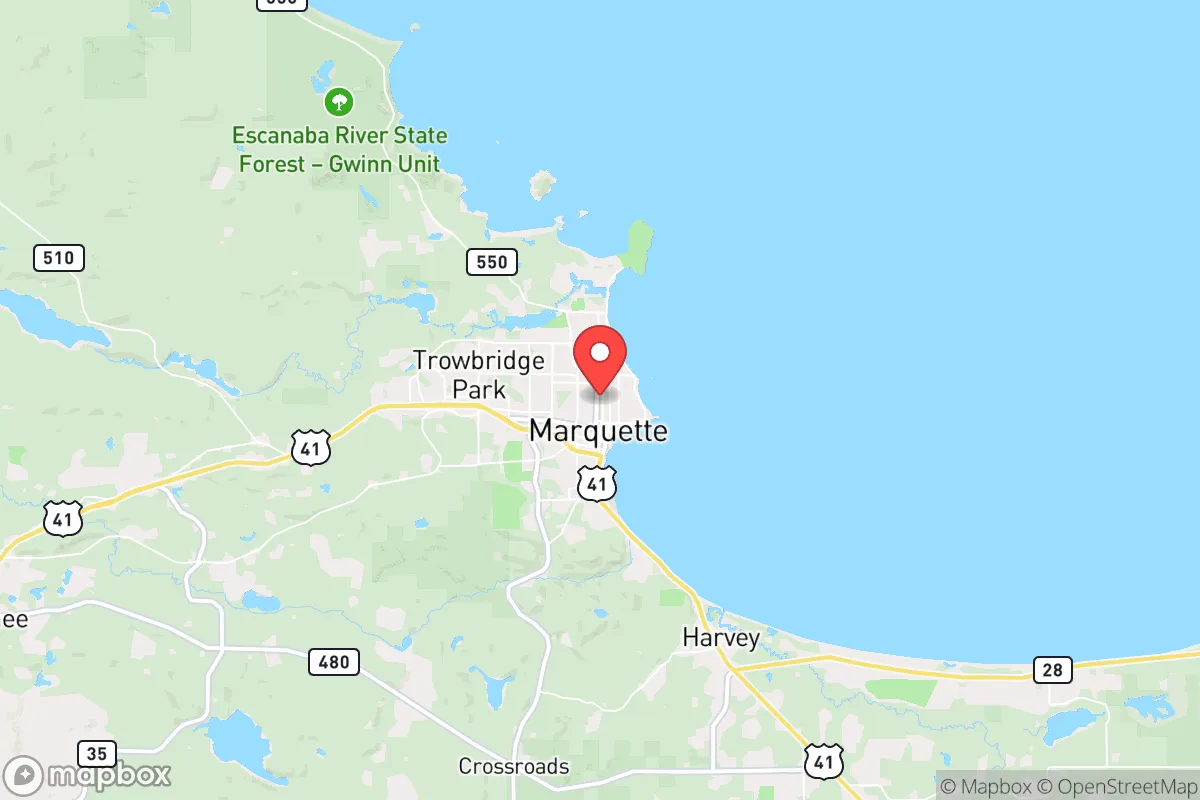
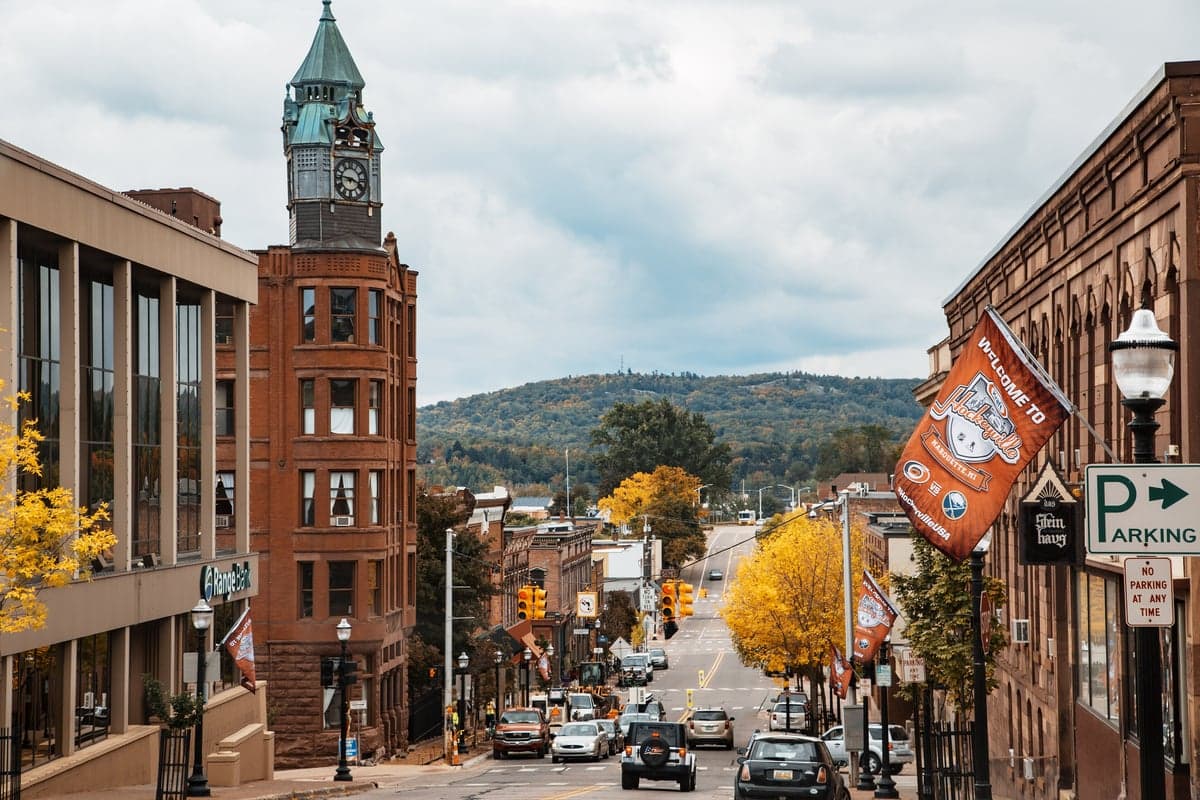
Photo: Wikipedia
Political ClimatePolitical Climate in Marquette, MI
District shown is the primary district for this city’s centroid. Cities may span multiple districts.
Local Political AnalysisPolitical Analysis of Marquette, MI
Marquette is a fascinating political outlier in Michigan’s Upper Peninsula. While the surrounding county, Marquette County, has historically leaned Democratic, the city itself has shifted noticeably rightward in recent cycles, now carrying a Cook Partisan Voting Index of R+11. That’s a stark contrast to the state of Michigan as a whole, which sits at EVEN, and it reflects a realignment that’s been brewing for about a decade. You’ll hear locals say the old union-Democrat stronghold has given way to a more mixed, often conservative-leaning electorate, especially in the outer townships and rural stretches.
How it compares
Michigan’s statewide PVI of EVEN means it’s a true battleground—think close presidential races and split legislative control. Marquette’s R+11, by contrast, places it in reliably Republican territory, similar to many rural Upper Peninsula counties. But the city of Marquette itself is a blue dot in a red sea: the downtown precincts and neighborhoods near Northern Michigan University often vote Democratic, while the surrounding townships—like Chocolay, Negaunee, and Ishpeming—tend to go strongly Republican. Drive 20 minutes south to Gwinn, and you’re in deep-red country. This urban-rural split is sharper here than in most of Michigan, where suburbs often moderate the extremes. In Marquette, the contrast between the university crowd and the year-round residents who work in mining, logging, or tourism creates a palpable political tension.
What this means for residents
For conservative residents, the R+11 lean means their views are broadly represented in county commission races, state House districts, and federal elections. You’ll find plenty of “Trump 2024” signs on lawns in Harvey and Sands Township, and local gun rights and anti-regulation sentiment are mainstream. For liberal residents, especially those near campus or downtown, the political climate can feel isolating—progressive policies on climate, housing, or social issues often stall at the county level. But the city council itself is more balanced, and local elections can flip depending on turnout. In practice, this means both sides have to engage in coalition-building. A conservative might find common ground with a liberal on opposing a new mine that threatens Lake Superior, while a liberal might ally with a conservative on keeping property taxes low. It’s not a place where either side can coast.
What daily life is like for families
For families, the political climate shapes everyday decisions. School board meetings in Marquette Area Public Schools can get heated over curriculum and funding, mirroring national debates but with a local twist—many parents prioritize outdoor education and vocational trades. The cost of living is moderate, but housing is tight, and zoning debates often pit growth advocates against preservationists. You’ll see bumper stickers for both major parties at the same grocery store, and neighbors might disagree on mask mandates or renewable energy without it ruining a fishing trip. The key distinction from the rest of Michigan is the pace: Marquette feels less polarized than downstate suburbs like Grand Rapids or Detroit, partly because the economy is more resource-based and less tied to corporate or tech sectors.
Culturally, Marquette stands apart from Michigan’s Lower Peninsula. The U.P. identity—independent, self-reliant, skeptical of Lansing—transcends party lines. You’ll hear locals grumble about state regulations on snowmobiling or deer hunting regardless of their voting record. Policy-wise, the city has embraced some progressive measures, like a plastic bag ban and a climate action plan, but these coexist with a strong hunting and fishing culture. The trajectory? I’d expect Marquette to stay R+11 for the near future, but the growing university population and remote-worker influx could nudge it toward EVEN over the next decade. For now, it’s a place where you can have a beer with someone who voted differently than you, and that’s rarer than you’d think in Michigan.

State Political ClimatePolitical Climate in Michigan
State Political AnalysisPolitical Environment in the State
Michigan is the ultimate swing state, with a Cook PVI of EVEN, meaning it sits dead center on the national political map. Over the last 20 years, it’s flipped from reliably blue in presidential elections (voting for Obama twice, then Clinton) to a razor-thin Trump win in 2016, back to Biden in 2020, and then a decisive Trump victory in 2024. That 2024 result wasn’t a fluke — it reflected a realignment where working-class voters in the southeast and west shifted hard toward the GOP, while the suburbs around Detroit and Grand Rapids moved left. For a relocator, this means you’re moving into a state where your vote genuinely matters, but where the political culture is deeply split between a progressive urban core and a conservative rural and exurban expanse.
Urban vs. rural divide
The political map of Michigan is a story of three distinct regions. Wayne County (Detroit) and Washtenaw County (Ann Arbor) are the Democratic strongholds, delivering massive margins for the party — Detroit alone accounts for roughly 15% of the state’s Democratic vote. Oakland County, once a Republican bastion, has flipped decisively blue over the past decade, driven by college-educated professionals moving into suburbs like Royal Oak, Ferndale, and Novi. Meanwhile, Macomb County (Warren, Sterling Heights) is the classic bellwether — it went for Trump in 2016 and 2024, but backed Biden in 2020, reflecting its working-class, union-heavy, culturally conservative but economically populist tilt. Outstate, Kent County (Grand Rapids) has become a fascinating microcosm: the city of Grand Rapids is now solidly Democratic, but the surrounding townships like Ada and Caledonia remain deeply Republican. Ottawa County, just west of Grand Rapids, is one of the most conservative counties in the Midwest, with a strong Dutch Reformed influence that drives social conservatism. Up north, counties like Emmet and Grand Traverse (Traverse City) are trending purple as second-home owners and retirees from downstate move in, while the rural Upper Peninsula and northern Lower Peninsula remain reliably red.
Policy environment
Michigan’s policy landscape is a mixed bag that reflects its swing-state status. The state income tax is a flat 4.25%, with no tax on Social Security benefits — a big plus for retirees. Property taxes are moderate, but the Headlee Amendment and Proposal A cap annual increases, which keeps them predictable. Sales tax is 6%. On regulation, Michigan is a right-to-work state — but that status is fragile. The 2012 right-to-work law was repealed by the Democratic legislature in 2023, though a ballot initiative to reinstate it is likely in 2026. Education policy is contentious: the state has a robust school choice system with charter schools and inter-district open enrollment, but the Detroit Public Schools Community District remains chronically underfunded and underperforming. Healthcare is a flashpoint — Michigan expanded Medicaid under the ACA, and the state has a strong public health infrastructure, but rural hospital closures are a growing concern. Election laws are relatively open: no-excuse absentee voting was approved by voters in 2022 via Proposal 2, and same-day voter registration is available. Gun laws are moderate — the state requires a purchase license for handguns and has a red-flag law (enacted in 2023), but no permit is needed for open carry of long guns.
Recent policy direction
The 2023-2024 legislative session under Democratic control was a whirlwind of progressive legislation that has reshaped the state’s policy landscape. Gun laws: The package included universal background checks for all firearm purchases, a 10-day waiting period for handguns, and a red-flag law (Extreme Risk Protection Order Act). Parental and education rights: The state repealed the 1931 abortion ban (now codified in the state constitution via Proposal 3 in 2022), and passed a comprehensive LGBTQ+ nondiscrimination law (the Elliott-Larsen Civil Rights Act expansion). School curriculum battles are ongoing — the state board of education has pushed for inclusive history standards, while conservative parents’ groups have organized against critical race theory and gender identity instruction. Speech and privacy: Michigan has no broad shield law for journalists, and the state’s surveillance laws are relatively weak — police can access cell-site location data without a warrant in some cases. Medical and bodily autonomy: Recreational marijuana is legal (since 2018), and the state has a robust medical marijuana program. Abortion is protected by the state constitution. Property rights: The state has strong eminent domain protections, but the 2023 energy siting law (PA 233) gives the state Public Service Commission authority to override local zoning for renewable energy projects — a major flashpoint in rural areas. Taxation: The 2023 budget included a temporary income tax rollback to 4.05% (triggered by surplus revenue), but the legislature is debating whether to make it permanent. Voting and ballot access: Proposal 2 (2022) enshrined nine days of early voting, no-excuse absentee voting, and drop boxes in the state constitution. This has made voting easier, but also fueled election integrity concerns among conservatives, particularly in Detroit where absentee ballot processing has been a source of controversy.
Civil unrest & political movements
Michigan has been a national flashpoint for political activism. The 2020 Whitmer kidnapping plot and the armed protests at the state capitol over COVID-19 restrictions put Michigan on the map for right-wing militia activity. The Michigan Liberty Militia and other groups remain active, though less visible. On the left, the Michigan Democratic Party has been energized by the 2022 midterms, with strong grassroots organizing in Detroit and Ann Arbor. Immigration politics are relatively quiet — Michigan is not a border state, but there are sanctuary city policies in Detroit, Ann Arbor, and Kalamazoo, which limit local cooperation with ICE. The 2020 election integrity controversy centered on Detroit’s absentee ballot counting process, leading to Republican calls for stricter verification. The 2024 election saw a smoother process, but the issue remains live. Secession or nullification rhetoric is minimal — Michigan is too integrated into the national economy for that. What you’ll notice as a resident is the constant hum of political organizing: door-knocking, yard signs, and local party meetings are a year-round activity, especially in swing counties like Macomb and Kent.
Projection
Over the next 5-10 years, Michigan is likely to remain a competitive swing state, but the demographic trends are shifting. In-migration from Illinois and California is bringing more moderate and conservative-leaning residents to western Michigan (Grand Rapids, Holland, Traverse City), while the Detroit suburbs continue to diversify and trend left. The aging population in the Upper Peninsula and northern Lower Peninsula will keep those areas red, but the growing Hispanic population in southwest Michigan (around Holland and Grand Rapids) could shift the calculus. The 2026 gubernatorial race will be a key test — if a Republican wins, expect a rollback of the 2023 gun laws and a push for school choice expansion. If Democrats hold, the progressive agenda will continue. The right-to-work repeal is likely to be a defining issue in 2026, with unions pouring money into the state. For a relocator, the bottom line is that Michigan will not become a deep blue or deep red state anytime soon — it will remain a place where your vote counts, where policy can swing dramatically with each election, and where the political culture is shaped by the tension between Detroit’s urban liberalism and the rest of the state’s rural and suburban conservatism.
For a new resident, the practical takeaway is this: Michigan offers a genuinely competitive political environment where your voice matters. If you’re conservative, you’ll find strong communities in places like Ottawa County, Macomb County, and the Upper Peninsula, but you’ll need to accept that the state government will occasionally swing left. If you’re liberal, you’ll feel at home in Ann Arbor, Detroit, and Grand Rapids, but you’ll have to contend with a legislature that can flip back. The state’s tax structure is friendly to retirees and middle-class families, but the policy environment is volatile — expect major changes every two to four years. The best advice: pick your local community carefully, because the political culture of your township or county will shape your daily life far more than the state government will.
* Values derived from national, state, county, city and local statistics and may differ in a specific area. Last updated: 2026-06-16T09:16:45.000Z
Narrative content on this page is AI-generated and may contain mistakes. Verify any details that matter before acting on them.
ReloMaps may earn a commission from affiliate links at no extra cost to you.

