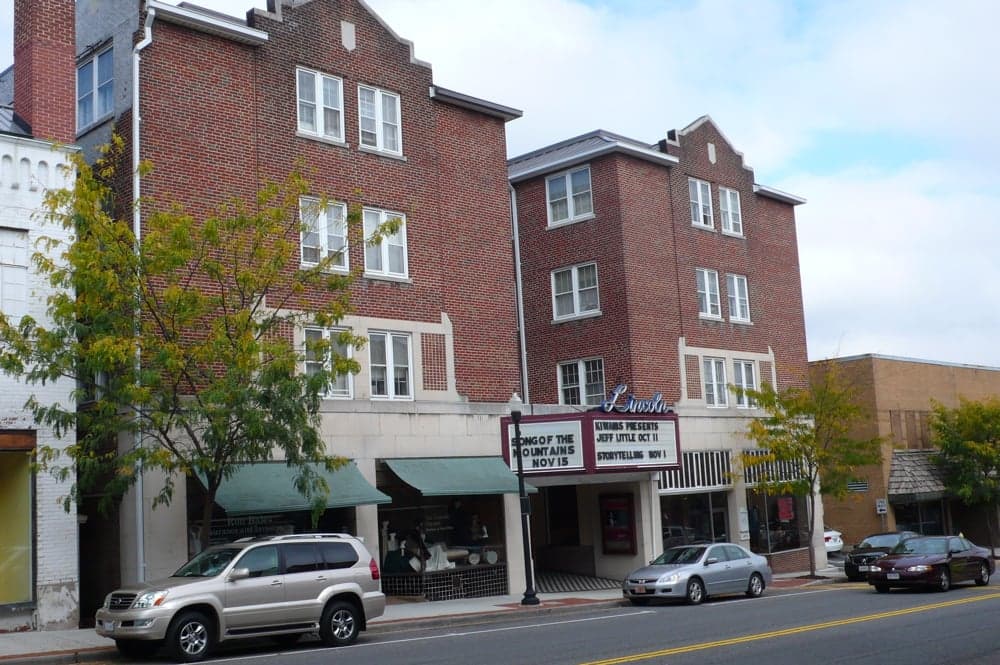
Photo: Wikipedia
Personal Sovereignty in Marion, VA
Viable for self-reliance. Generally workable, though some barriers may limit total independence.
What does Personal Sovereignty tell us?
Personal Sovereignty measures your capacity for self-reliance and independence with minimal government friction. Higher scores mean fewer barriers between you and the way you want to live... but it assumes you have the space you need and good neighbors.
What does this tell us?
Personal Sovereignty measures your capacity for self-reliance and independence with minimal government friction. Higher scores mean fewer barriers between you and the way you want to live... but it assumes you have the space you need and good neighbors.
State Policy
Energy independence: Importer (20% of energy produced in-state)
Personal Liberty
Homesteading

Personal Liberty Analysis
Marion, Virginia, offers a notably high degree of personal sovereignty, rooted in the broader autonomy-friendly culture of Southwest Virginia and the state's relatively light-touch regulatory framework. For individuals and families who prioritize independence, the area provides a practical environment where self-reliance is not just a value but a viable lifestyle, supported by low taxes, permissive gun laws, and ample space for homesteading. While Virginia's state-level politics have shifted in recent years, Marion's local governance and the surrounding Smyth County's rural character preserve a strong sense of personal freedom that appeals to conservative-leaning residents.
Tax burden and regulatory posture: How light is the government footprint?
Marion's tax burden is among the most favorable in the nation for those seeking to keep more of their earnings. Virginia's state income tax is a flat 5.75% as of 2026, which is moderate, but the real advantage lies in property taxes. Smyth County's real estate tax rate is approximately $0.58 per $100 of assessed value, one of the lowest in the state. A home valued at $200,000 would incur an annual property tax bill of roughly $1,160, compared to over $3,000 in Northern Virginia or many Mid-Atlantic states. The regulatory posture at the county level is decidedly hands-off. There is no county-wide zoning in many unincorporated areas surrounding Marion, meaning residents have significant latitude in how they use their land—whether for a workshop, livestock, or a small business. Business and professional occupational license (BPOL) taxes are minimal, and the town government generally avoids the kind of overreach seen in more urbanized jurisdictions. For a family or individual, this translates into a lower cost of compliance and more disposable income to direct toward personal goals.
Self-defense and gun law specifics: What are your rights to carry and protect?
Virginia is a "shall-issue" state for concealed handgun permits, and Marion residents enjoy strong protections for firearm ownership. As of 2026, Virginia does not require a permit to openly carry a handgun, and the state preempts local governments from enacting their own gun restrictions—meaning Marion cannot pass ordinances stricter than state law. For concealed carry, the application process through the Smyth County Circuit Court is straightforward, with permits typically issued within 45 days. Virginia law also recognizes the "stand your ground" doctrine, meaning there is no duty to retreat before using deadly force in self-defense if you are lawfully present. This is a critical factor for those who prioritize personal security. Additionally, Virginia has a "castle doctrine" that provides a legal presumption that a person who uses force against an intruder in their home or vehicle had a reasonable fear of death or great bodily harm. The local sheriff's office in Smyth County is known for its pro-Second Amendment stance, and gun culture is deeply embedded in the community, with multiple shooting ranges and gun shops within a short drive.
Self-reliance and homesteading viability: Lot sizes, zoning, and off-grid feasibility
Marion and its surrounding areas are a stronghold for homesteading and self-reliance. In the unincorporated parts of Smyth County, there is no county-wide zoning ordinance, which removes a major barrier for those wanting to keep chickens, goats, or even larger livestock on their property. Minimum lot sizes in the county are generally one acre for a single-family home with a septic system, but many parcels available for purchase are 5 to 20 acres or more, offering ample space for gardening, orchards, or small-scale farming. Off-grid living is legally feasible: Virginia has no state law prohibiting rainwater collection, and the county does not require connection to municipal water or sewer if you have a well and septic system. Solar panels are permitted without special county-level restrictions, though you must comply with the Virginia Statewide Building Code for structural safety. The local climate, with a growing season of roughly 150-170 days, supports a wide variety of crops. For those seeking energy independence, the area's mountainous terrain provides good solar exposure, and wood heat is a common and practical supplement. The only notable regulatory hurdle is that any permanent dwelling must meet basic health and safety codes, but these are not onerous for a competent DIY builder.
Personal liberties: Parental rights, medical autonomy, speech, and property
In Marion, personal liberties extend beyond firearms and taxes into daily life. Parental rights are strongly protected under Virginia law, with a statutory presumption that parents have the right to direct the upbringing, education, and healthcare of their children. The Smyth County school board has generally resisted controversial curriculum mandates, and local schools emphasize parental involvement. Medical autonomy is a mixed picture: Virginia does not have a state-level religious or philosophical exemption for vaccine mandates in private settings, but in practice, the rural healthcare system in Smyth County is less aggressive about enforcement than in urban areas. The state does protect the right to refuse medical treatment, and there are no local health ordinances that override this. Free speech is robustly protected, and Marion's community is small enough that residents can voice opinions at town council meetings without the chilling effect of large, polarized crowds. Property rights are a standout: Virginia's "right to farm" law protects agricultural operations from nuisance lawsuits, which is a significant benefit for homesteaders who might worry about neighbors complaining about noise or smells. Eminent domain abuse is rare in Smyth County, and property taxes are reassessed only when a property is sold or every four years, providing predictability.
Overall, Marion, VA, offers a level of personal sovereignty that is increasingly rare in the United States. The combination of low property taxes, permissive gun laws, minimal zoning, and a culture that values self-reliance creates an environment where individuals and families can live largely on their own terms. Compared to areas like Northern Virginia or the Pacific Northwest, where regulations and taxes are heavier, Marion provides a tangible sense of autonomy. For a conservative-leaning reader who prioritizes freedom over convenience, this small town in the Blue Ridge Mountains represents a strong option—not perfect, but far more aligned with personal sovereignty than most of the country.

* Values derived from national, state, county, city and local statistics and may differ in a specific area. Last updated: 2026-10-24T15:51:45.000Z
Narrative content on this page is AI-generated and may contain mistakes. Verify any details that matter before acting on them.
ReloMaps may earn a commission from affiliate links at no extra cost to you.

