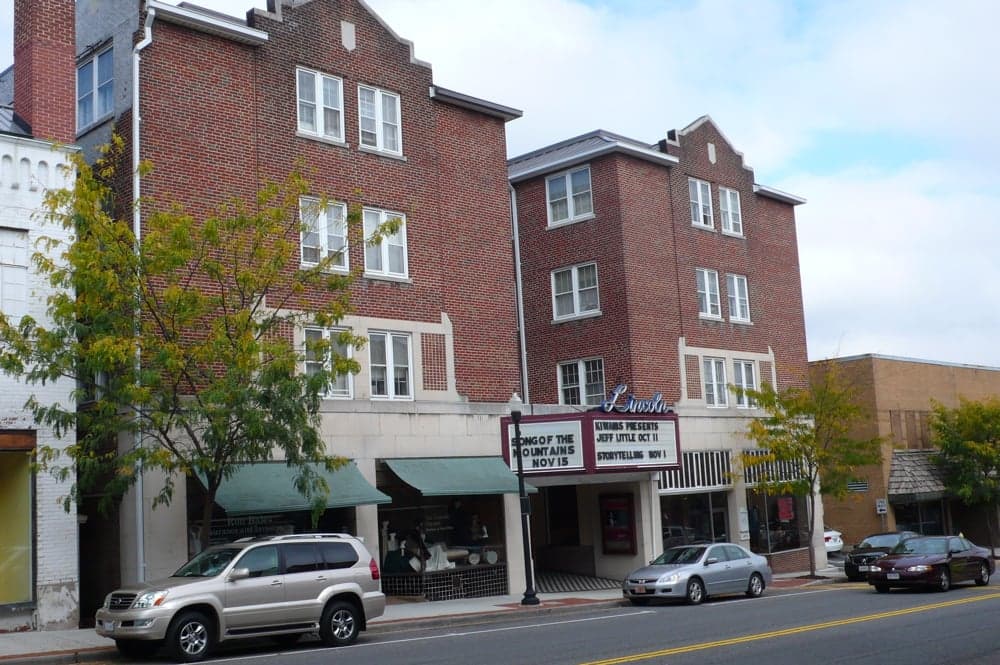
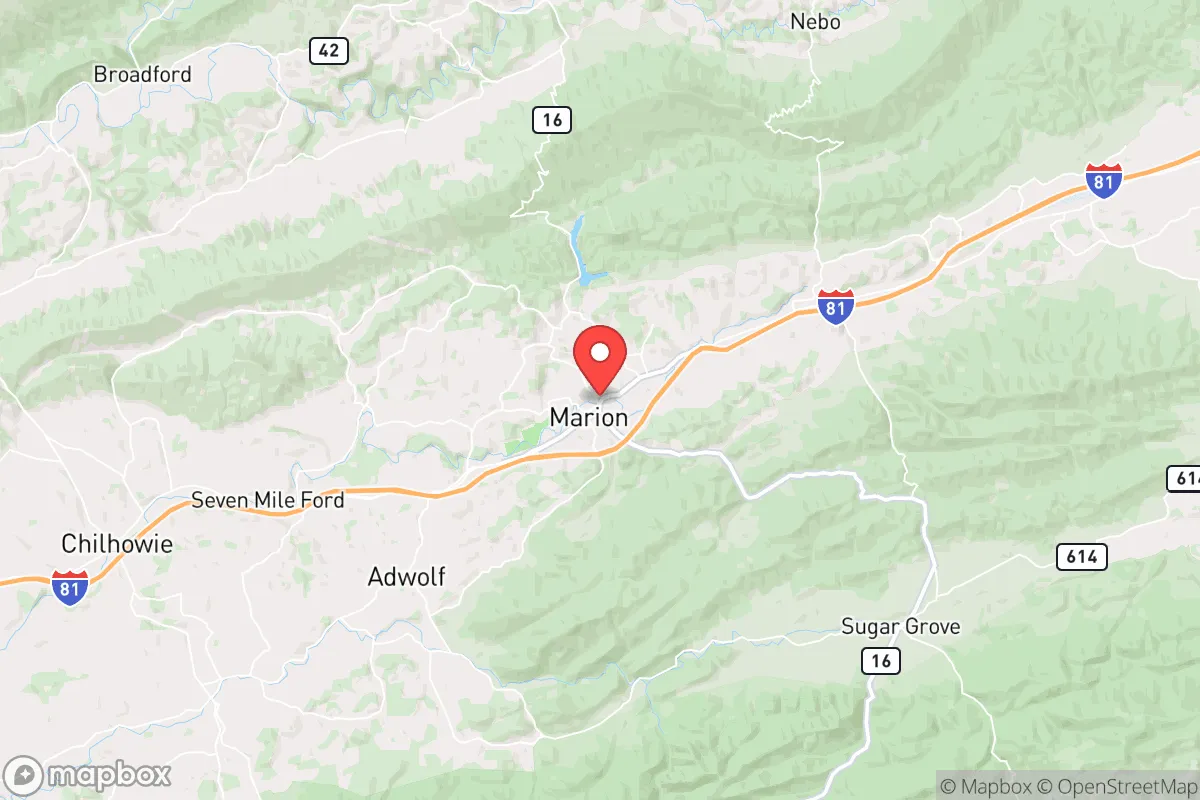
Photo: Wikipedia
Demographics of Marion, VA
Affluence Level in Marion, VA
A low-income area with significant economic hardship. Household wealth and educational attainment are well below national averages.
People of Marion, VA
The people of Marion, Virginia, today form a small, tight-knit community of 5,694 residents, characterized by its overwhelming racial and ethnic homogeneity. With a population that is 86.6% White and a foreign-born share of just 0.3%, Marion is one of the least diverse small cities in Southwest Virginia. The city’s identity is rooted in a stable, historically Appalachian culture, with a notable 22.5% of adults holding a college degree, reflecting a modest but present professional class tied to local healthcare, education, and manufacturing sectors.
How the city was settled and grew
Marion’s human history begins with the Cherokee and Shawnee peoples who inhabited the fertile valleys of the Middle Fork of the Holston River before European contact. The first permanent white settlers arrived in the mid-18th century, primarily Scots-Irish and German farmers migrating down the Great Wagon Road from Pennsylvania. These families, such as the Sevier and Preston clans, established homesteads along the river bottoms and on the surrounding ridges. The town itself was formally founded in 1832 as the county seat of Smyth County, named after Revolutionary War hero Francis Marion. Its early growth was driven by the saltworks and lead mines in the region, which drew a wave of laborers in the 1840s and 1850s. The arrival of the Norfolk and Western Railway in the 1850s cemented Marion as a commercial hub, attracting merchants and tradesmen who built the historic Main Street district and the surrounding Chilhowie Street neighborhoods. These areas remain the historic core, with many original 19th-century homes still occupied by descendants of those early families.
Modern era (post-1965)
The post-1965 era brought only modest demographic change to Marion. The city’s Black population, which had been present since the 19th century—largely descendants of enslaved laborers on area farms—peaked in the 1970 census at roughly 12% before declining to its current 6.2%. This decline mirrors a broader out-migration of Black families from rural Southwest Virginia to larger cities like Roanoke and Charlotte. The Hispanic population, now at 3.0%, began to grow slowly in the 1990s, driven by a small number of workers in the poultry and furniture industries. These newer residents have concentrated in the North Church Street area and along the Lee Highway corridor, where affordable housing stock is more available. The Asian and Indian populations remain effectively zero, reflecting the area’s limited draw for immigrant communities. Suburbanization in Marion has been minimal; the city’s boundaries are largely fixed, and new residential development has occurred primarily in the Riverside Drive and West Main Street extensions, where single-family homes on larger lots have attracted families seeking a quieter, more rural lifestyle.
The future
Marion’s population trajectory points toward continued stability with slight decline. The city lost roughly 5% of its population between 2010 and 2020, and projections suggest a further 2-3% decrease by 2030 as younger adults leave for urban job markets. The population is aging, with a median age of 44.3, well above the national average. Diversity is unlikely to increase significantly; the foreign-born share is negligible, and the Hispanic population, while growing slowly, remains a small fraction of the total. The Black population is expected to hold steady or decline slightly. New residents are most likely to be retirees or remote workers drawn by the area’s low cost of living and mountain scenery, settling in the Hungry Mother State Park area or along the Old Saltworks Road corridor. The cultural identity of Marion is likely to remain deeply rooted in its Appalachian heritage, with little pressure toward the kind of demographic diversification seen in Virginia’s larger cities.
For someone moving in now, Marion offers a stable, culturally conservative community where nearly all residents share a common background and values. The city is not becoming more diverse or cosmopolitan; it is becoming quieter and older. Newcomers should expect a place where neighborly familiarity and local traditions—like the annual Hungry Mother Festival and high school football at Marion Senior High—define daily life, and where the pace of change is measured in decades, not years.

* Values derived from national, state, county, city and local statistics and may differ in a specific area. Last updated: 2026-10-24T15:51:45.000Z
Narrative content on this page is AI-generated and may contain mistakes. Verify any details that matter before acting on them.
ReloMaps may earn a commission from affiliate links at no extra cost to you.

