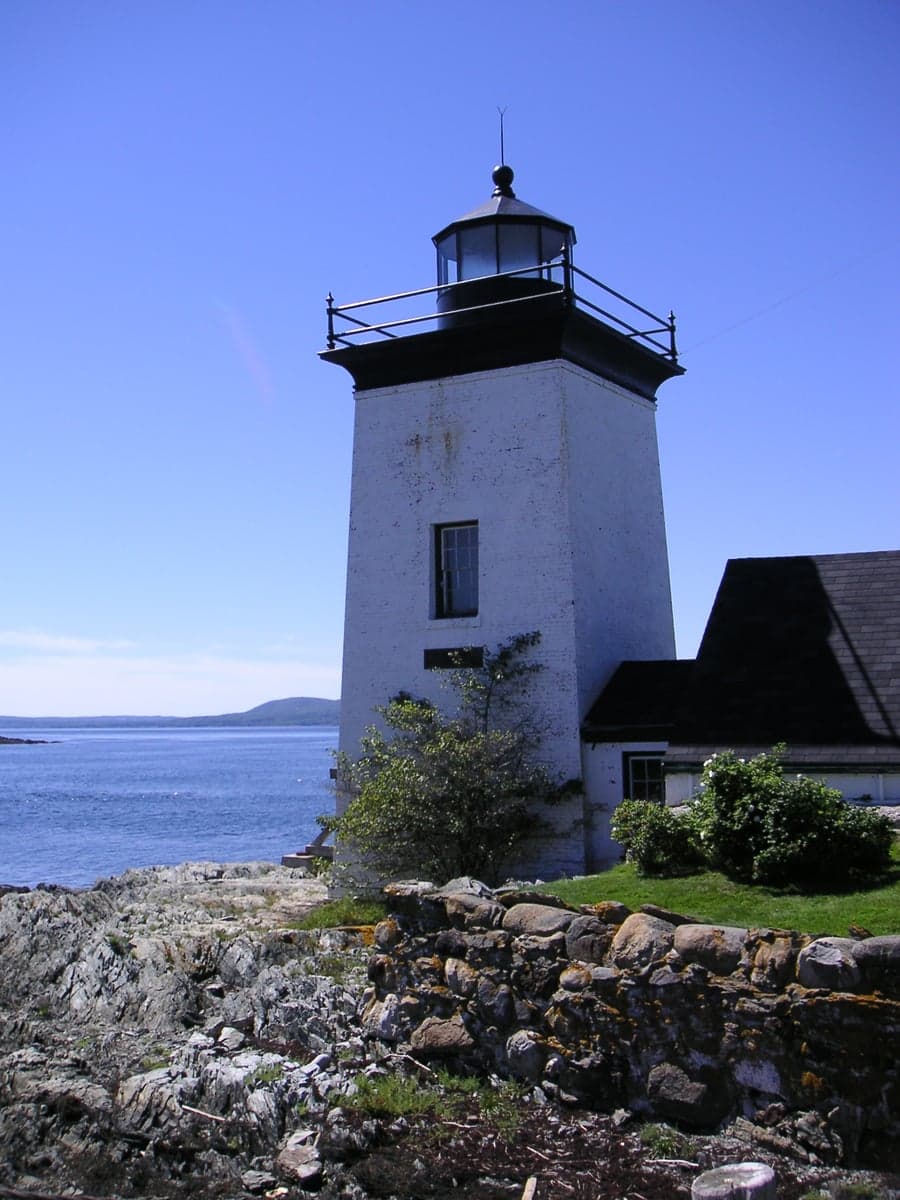
Photo: Wikipedia
Political ClimatePolitical Climate in Waldo County
Showing district-level results — no local-only data available.
Local Political AnalysisPolitical Analysis of Waldo County
Waldo County, Maine, has a Cook Partisan Voting Index of R+4, meaning it leans about four points more Republican than the national average, but that number masks a deeply divided local landscape. The county has been trending rightward in presidential races since 2016, yet it remains a patchwork of deep-blue college towns, red rural hamlets, and a few genuine swing precincts that can flip between parties depending on turnout. For a long-time resident, the political reality here is less about a single label and more about navigating the everyday friction between neighbors who see the same landscape through very different lenses.
How it compares
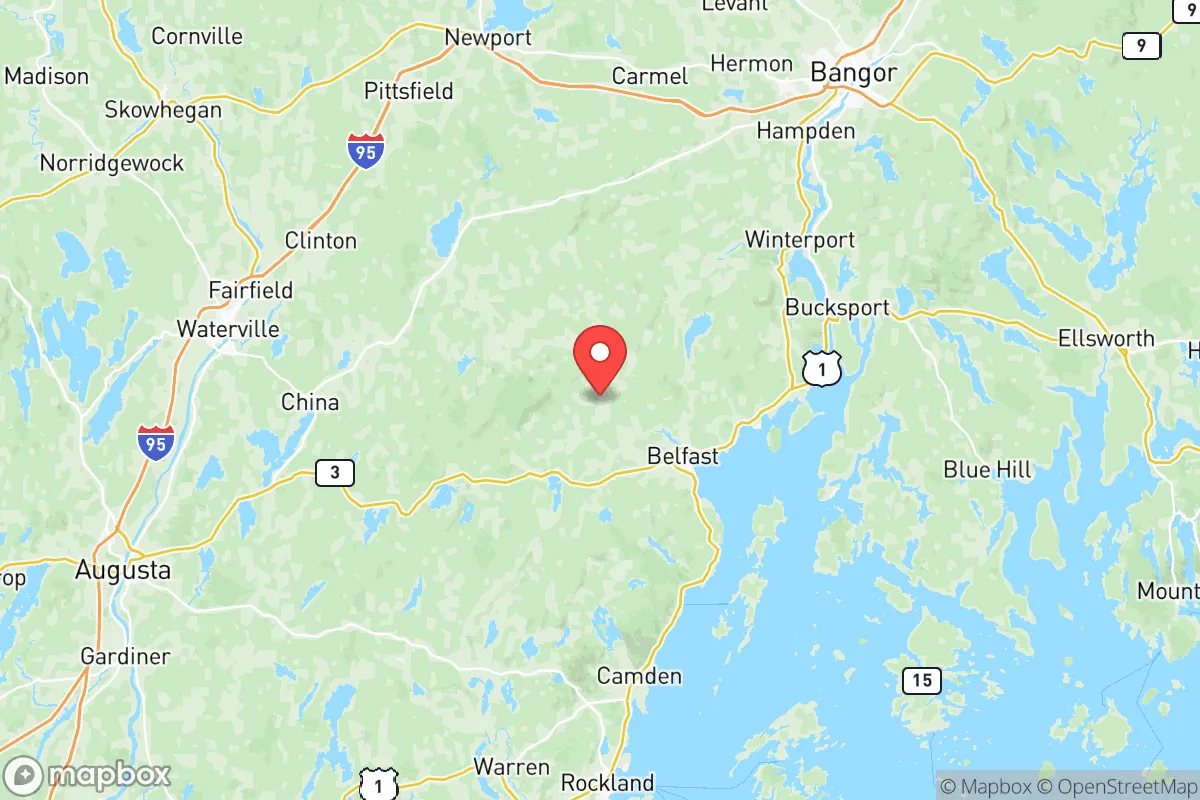
Compared to the rest of Maine, Waldo County is noticeably more conservative than the coastal and southern parts of the state, but it's not as uniformly red as some inland counties like Piscataquis or Somerset. The county's R+4 PVI puts it to the right of Maine's statewide average (which leans Democratic in presidential years due to the 1st Congressional District), but it's a far cry from the deep-blue strongholds of Portland or even Bangor. Within Waldo County itself, the political variation is stark: Belfast, the county seat and a hub for artists and retirees, consistently votes Democratic by double digits, often mirroring Portland's liberal lean. In contrast, Winterport and Frankfort are reliably Republican, with margins often exceeding 20 points. The real battlegrounds are towns like Lincolnville and Northport, where a mix of old farming families and newer coastal transplants create swing precincts that can tip either way in a close race. Waldo town itself, despite the county's name, is a small, conservative-leaning community that rarely breaks for Democrats.
What this means for residents
For conservative residents, the county's lean means local offices—county commissioners, sheriff, and school boards—are often held by Republicans or independents who align with them on taxes and property rights. The county's strong Second Amendment culture is a given, and you'll find few restrictions on hunting or firearms in unincorporated areas. For liberal residents, especially in Belfast and along the coast, the political climate means they can live in a bubble of progressive values—farmers markets, climate activism, and local food co-ops—but they'll still encounter conservative neighbors at town meetings and county-level decisions. The practical effect is that property taxes remain a perennial flashpoint, with conservatives pushing for lower rates and liberals advocating for more spending on schools and social services. The county's trajectory suggests this divide will persist, with in-migration from out-of-state liberals slowly shifting Belfast and coastal towns bluer, while the interior remains red.
Culturally, Waldo County stands out for its fierce independence—a trait that transcends party lines. You'll see "Don't Tread on Me" flags next to "Black Lives Matter" signs on the same road, and both groups will unite to oppose a large wind farm or a new landfill. The county's policy distinctions are subtle: it has no county-wide zoning, which appeals to libertarian-leaning residents, but it also has a robust network of nonprofits and land trusts that reflect liberal priorities. For anyone moving here, the key is understanding that political labels matter less than knowing your neighbors—and that the real divide is often between those who want to preserve the county's rural character and those who want to grow it. That tension, not any party registration, is what defines Waldo County today.

State Political ClimatePolitical Climate in Maine
State Political AnalysisPolitical Environment in the State
Maine has a reputation as a swing state, but in practice it leans reliably Democratic at the presidential level, having voted blue in every election since 1992 except 2000. However, that headline masks a deeply split electorate: the state’s two congressional districts operate almost as separate political planets, with the more rural, conservative 2nd District flipping to Donald Trump in 2016 and 2020 while the 1st District, anchored by Portland and its suburbs, has become solidly Democratic. Over the past 20 years, the overall trajectory has been a slow leftward drift driven by in-migration to the southern coast, but the rural interior has hardened its Republican identity, making Maine one of the most geographically polarized states in the country.
Urban vs. rural divide
The political map of Maine is essentially a story of two corridors. The southern coastal strip—from Kittery up through Portland, Brunswick, and Bath—is the Democratic stronghold. Portland itself is the engine of the state’s leftward lean, with its dense population of young professionals, artists, and out-of-state transplants. The 1st Congressional District, which covers this area, routinely gives Democrats 55-60% of the vote. In contrast, the 2nd District, which covers the vast, forested interior and the northern coast, is one of the most conservative districts in New England. Cities like Bangor and Lewiston are more moderate, but the surrounding towns—places like Presque Isle in Aroostook County and Dover-Foxcroft in Piscataquis County—vote heavily Republican. The divide isn’t just about population density; it’s cultural. The rural north is dominated by logging, farming, and hunting traditions, while the southern coast is driven by tourism, tech, and healthcare. A telling detail: in 2020, the 2nd District voted for Trump by 7 points, while the 1st District voted for Biden by 23 points. That 30-point gap is one of the largest intrastate divides in the nation.
Policy environment
Maine’s state-level policy leans left, but with a pragmatic, small-state twist. The state has a progressive income tax with rates from 5.8% to 7.15%, and a 5.5% corporate tax rate. Property taxes are high—among the top 10 in the nation—which is a major pain point for conservative relocators. The regulatory posture is generally business-friendly for small operations but burdensome for larger industries, especially environmental permitting. Education policy is a mixed bag: Maine has strong public schools in the south, but rural districts struggle with consolidation and funding. The state has a universal school choice program through charter schools and open enrollment, but it’s limited compared to states like Florida or Arizona. Healthcare is dominated by MaineHealth, a large nonprofit system, and the state expanded Medicaid under the Affordable Care Act in 2019 via a ballot initiative. Election laws are among the most accessible in the country: same-day voter registration, no-excuse absentee voting, and ranked-choice voting for federal and state offices. That last one—ranked-choice voting—was adopted by referendum in 2016 and has been a flashpoint, with Republicans arguing it disenfranchises voters in close races.
Recent policy direction
Over the past five years, Maine has moved decisively left on several fronts. In 2023, the legislature passed a strict gun safety package that includes a 72-hour waiting period for all gun purchases, expanded background checks for private sales, and a “red flag” law allowing courts to temporarily seize firearms from individuals deemed a risk. This was a major shift for a state with a deep hunting culture, and it sparked significant backlash in rural areas. On education, the state passed a law in 2022 requiring schools to adopt policies on transgender student participation in sports and bathroom access, aligning with the Biden administration’s Title IX guidance. Parental rights groups have pushed back, but the legislature has not moved on school choice expansion. On privacy and surveillance, Maine has one of the strongest internet privacy laws in the country, requiring ISPs to get opt-in consent before selling customer data. On medical and bodily autonomy, the state has codified abortion rights into law and expanded access to gender-affirming care for minors, making it a destination for families from more restrictive states. Property rights are generally strong, but the state’s Land Use Planning Commission imposes strict regulations on development in the unorganized territories (the vast northern forest). Taxation remains a sore spot: in 2024, voters rejected a ballot measure to lower the income tax rate, signaling that the progressive tax structure has broad support. Voting access continues to expand, with automatic voter registration now in place.
Civil unrest & political movements
Maine is not a hotbed of civil unrest, but there are visible political flashpoints. The most organized movement on the right is the Maine Gun Owners Association, which has held large rallies at the State House in Augusta and successfully challenged some gun laws in court. On the left, the Maine People’s Alliance is a powerful grassroots group that has driven minimum wage increases and the Medicaid expansion. Immigration politics are relatively low-key compared to other states, but there have been tensions in Lewiston, which saw a significant influx of Somali refugees starting in the early 2000s. The city has become a microcosm of national debates, with some long-time residents expressing frustration over cultural changes and resource strain, while others champion the diversity. There is no serious secession or nullification movement in Maine, though the 2nd District has occasionally flirted with the idea of joining New Hampshire or forming a separate state. Election integrity controversies have been minimal; Maine’s ranked-choice voting system has been challenged in court but upheld, and there is broad trust in the state’s paper ballot system. A notable flashpoint in 2023 was a series of protests in Portland over a proposed homeless shelter, which pitted progressive advocates against neighborhood groups and exposed tensions within the city’s left-leaning coalition.
Projection
Over the next 5-10 years, Maine’s political trajectory is likely to continue its slow leftward drift, but the pace will be moderated by demographic realities. The southern coast is growing, driven by remote workers from Massachusetts and New York, and these newcomers tend to vote Democratic. The rural north is shrinking, as young people leave for jobs in Portland or out of state. This means the 1st District will become even more Democratic, while the 2nd District will remain Republican but with a shrinking population. The state’s overall partisan lean will likely shift from “lean Democratic” to “solid Democratic” at the presidential level, but the legislature will remain competitive, with Republicans holding a structural advantage in the Senate due to the rural weighting of districts. A relocator moving in now should expect a state where the cultural and political center of gravity is increasingly in the southern coast, but where rural areas will continue to fight for their interests. The gun debate will remain a flashpoint, and property taxes will likely continue to rise, driving some conservative families to consider leaving. However, the state’s strong sense of community, low crime rates, and natural beauty will continue to attract a diverse mix of people.
For a new resident, the bottom line is this: if you’re a conservative moving to Maine, you’ll find a welcoming community in the rural north and interior, but you’ll be living in a state where the political winds are blowing left. You’ll pay higher taxes than in many red states, and you’ll see gun laws tighten. If you’re a liberal, you’ll find a state that aligns with your values on healthcare, education, and privacy, but you’ll also encounter a stubborn, independent streak in the rural areas that can frustrate progressive ambitions. Either way, Maine is a place where local politics still matter more than national trends, and your experience will depend heavily on which town you choose. The state’s motto, “Dirigo” (I lead), is apt: Maine often leads the nation on progressive policy, but it does so at a pace that respects its deep-rooted traditions.
* Values derived from national, state, county, city and local statistics and may differ in a specific area. Last updated: 2026-06-18T00:50:42.000Z
Narrative content on this page is AI-generated and may contain mistakes. Verify any details that matter before acting on them.
ReloMaps may earn a commission from affiliate links at no extra cost to you.

