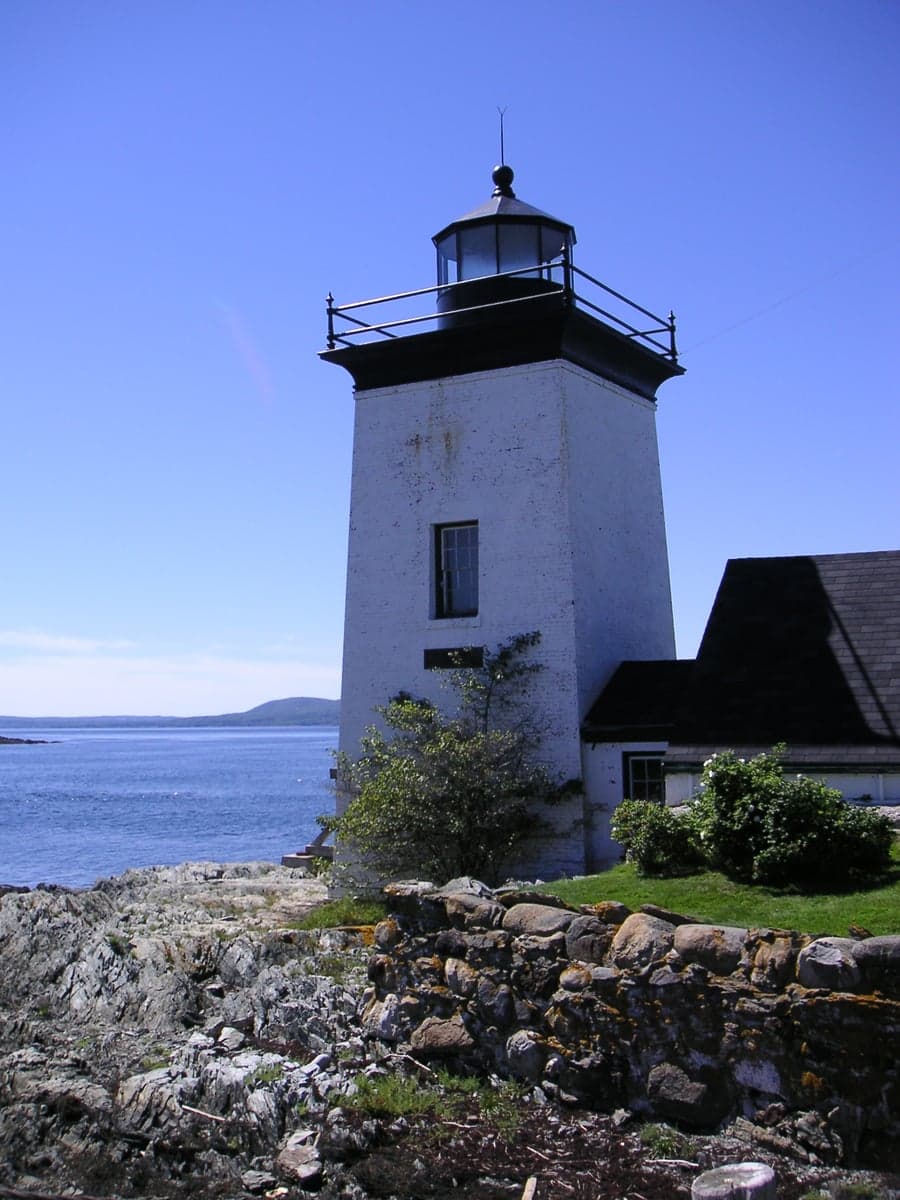
Photo: Wikipedia
Personal Sovereignty in Waldo County
Viable for self-reliance. Generally workable, though some barriers may limit total independence.
What does Personal Sovereignty tell us?
Personal Sovereignty measures your capacity for self-reliance and independence with minimal government friction. Higher scores mean fewer barriers between you and the way you want to live... but it assumes you have the space you need and good neighbors.
What does this tell us?
Personal Sovereignty measures your capacity for self-reliance and independence with minimal government friction. Higher scores mean fewer barriers between you and the way you want to live... but it assumes you have the space you need and good neighbors.
State Policy
Energy independence: Importer (30% of energy produced in-state)
Personal Liberty
Homesteading

Personal Liberty Analysis
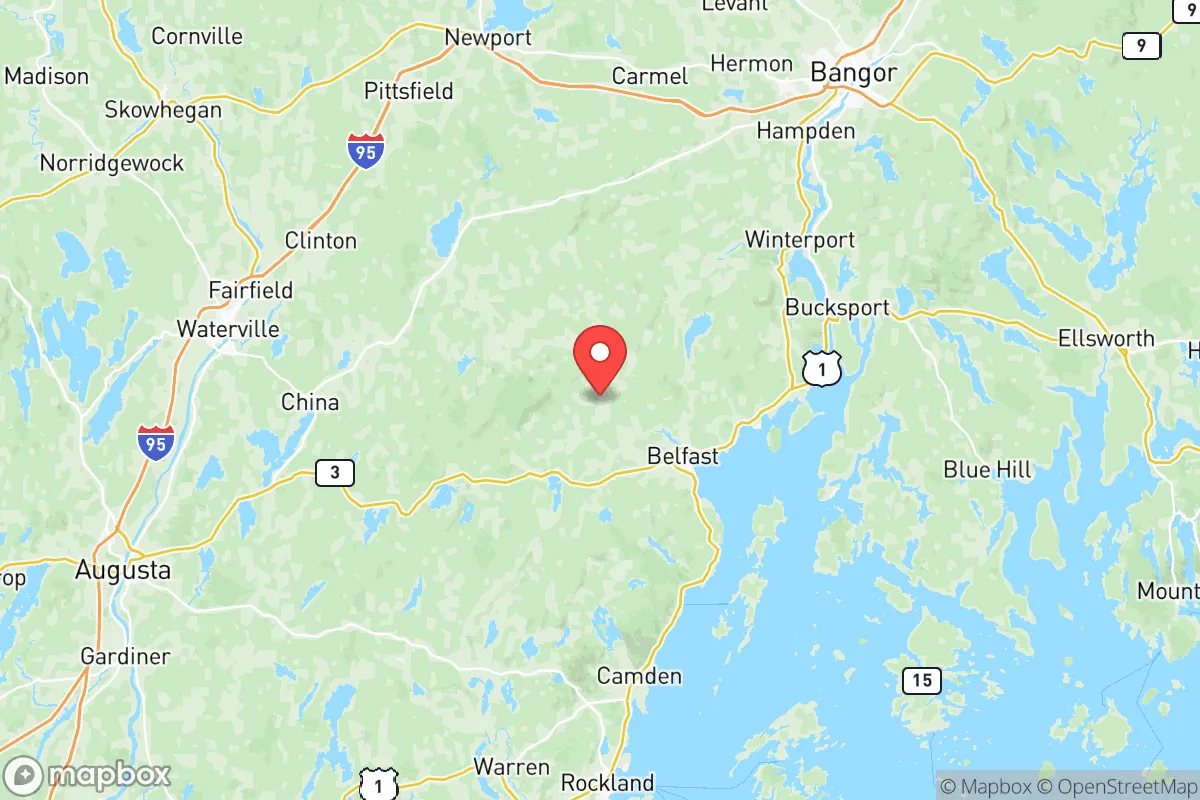
Waldo County, Maine, offers a notably high degree of personal sovereignty compared to many coastal New England areas, driven by a combination of low population density, a historically independent rural culture, and state-level legal frameworks that generally favor individual autonomy. The county’s regulatory environment is light-touch relative to southern Maine, with towns like Belfast and Winterport representing the more structured end of the spectrum, while Brooks, Liberty, and Montville lean heavily toward minimal oversight. For a relocation-minded individual or family prioritizing self-reliance, the key variables are local zoning, tax burden, and the practical feasibility of off-grid living, all of which vary significantly across the county’s 20 towns and unorganized territories.
Tax burden and regulatory posture in Waldo County towns
Maine’s state income tax is a flat 5.8% on most income, and its sales tax is 5.5%, both moderate by national standards. Property taxes in Waldo County are the primary local burden, averaging around 1.2% of assessed value — lower than coastal counties like Cumberland or Knox, but higher than inland Aroostook. The county itself has no county-level sales or income tax. Regulatory posture varies sharply by town: Belfast, the county seat and largest town (population ~6,900), has a comprehensive zoning code, building permits, and a planning board that reviews subdivisions and commercial projects. In contrast, Brooks (population ~1,100) and Liberty (population ~900) have minimal zoning, no building codes beyond state minimums, and a “live and let live” ethos that attracts homesteaders. Winterport and Frankfort sit in the middle, with some subdivision review but generally permissive attitudes toward accessory dwellings, workshops, and home-based businesses. The unorganized territories in the northern part of the county — such as Marshfield and Montville — have virtually no local ordinances, only state-level building and environmental rules. For a reader seeking low regulatory friction, the smaller inland towns offer the clearest path.
Self-defense and gun law specifics in Waldo County
Maine is a “shall-issue” state for concealed carry permits, with no permit required for open carry. Waldo County’s sheriff’s office processes permits efficiently, typically within 30 days, and there is no local waiting period or magazine capacity restriction. The state does not require registration of firearms, and private sales between individuals are legal without a background check. Belfast and Winterport have no local ordinances restricting firearms beyond state law, though some residents report that Belfast’s more progressive city council has occasionally discussed symbolic resolutions — none have passed. In Brooks and Liberty, gun ownership is near-universal among rural households, and shooting on private property is common and accepted, provided it’s done safely and not within 300 feet of a dwelling. Maine’s “stand your ground” law (Title 17-A, §108) allows the use of deadly force without a duty to retreat if the person is in a place they have a legal right to be. There is no state-level red flag law as of 2026, though a “yellow flag” law exists for extreme risk protection orders, requiring a medical professional’s evaluation before a petition can be filed. For a conservative-leaning reader, Waldo County’s gun culture is permissive and non-intrusive, with the only practical constraint being the 300-foot discharge buffer near occupied structures.
Self-reliance and homesteading viability: lot sizes, zoning, and off-grid feasibility
Homesteading and off-grid living are highly viable in Waldo County, especially outside the coastal corridor. Minimum lot sizes vary: Belfast requires 1 acre for a single-family home with septic, while Brooks and Liberty allow building on as little as 1/2 acre if soil conditions permit. Many parcels in Montville and Marshfield are sold as 5- to 20-acre lots with no subdivision review, ideal for timber, gardening, or small-scale livestock. Off-grid feasibility is strong: Maine has no state law prohibiting rainwater collection, and composting toilets are legal with a licensed installer. Solar panels are common, and net metering is available through Central Maine Power, though many homesteaders choose fully off-grid battery systems to avoid utility fees. Wells are required for drinking water, and drilling costs range from $5,000 to $15,000 depending on depth. Zoning for livestock is permissive: Brooks and Liberty allow chickens, goats, and pigs on lots as small as 1 acre, while Belfast restricts larger animals to parcels over 2 acres and requires a permit for more than 4 goats. The county’s agricultural soils are thin and rocky, but raised beds and hoop houses are widely used. For a family seeking to build a self-sufficient homestead, the inland towns — particularly Brooks, Liberty, and Montville — offer the best combination of low land costs ($1,500–$4,000 per acre), minimal zoning, and a culture that values self-reliance.
Personal liberties: parental rights, medical autonomy, speech, and property
Maine’s state-level policies on personal liberties are mixed, but Waldo County’s local culture leans toward individual discretion. Parental rights are strong in practice: there is no state-level mandate for vaccine passports or school mask requirements as of 2026, and parents can opt children out of sex education with a written request. Homeschooling is legal with a simple notice of intent and an annual assessment, and the county has several active homeschool co-ops, particularly in Liberty and Brooks. Medical autonomy is more constrained: Maine has a state-run health insurance exchange and mandates that all residents have health coverage, but there is no state income tax penalty for non-compliance. Alternative medicine practitioners — naturopaths, herbalists, and functional medicine providers — operate openly in Belfast and Winterport, though they cannot prescribe controlled substances. Free speech is protected under the First Amendment, and local town meetings in Brooks and Liberty are famously unfiltered, with residents regularly challenging selectmen on spending and zoning. Property rights are robust: there is no county-level rent control, no inclusionary zoning, and no local historic district overlay outside of Belfast’s small downtown historic zone. Eminent domain is rarely used, and the county’s tax lien process allows owners a 18-month redemption period after a tax sale. For a reader prioritizing personal autonomy, Waldo County’s smaller towns offer a high degree of freedom from government intrusion in daily life, with the main trade-off being limited access to specialized medical care and legal services.
Overall, Waldo County ranks among the more sovereignty-friendly areas in New England for a conservative-leaning individual or family. Compared to southern Maine’s Portland suburbs or coastal Massachusetts, the regulatory burden is light, the gun culture is permissive, and the homesteading infrastructure is well-established. The primary constraint is the state-level tax structure and health insurance mandate, which are moderate but not oppressive. For a reader seeking a balance between rural self-reliance and access to a regional hub (Belfast offers grocery stores, a hospital, and a library), the county’s inland towns provide a practical, low-friction environment for building an independent life. The key is choosing the right town: Brooks and Liberty for maximum autonomy, Winterport for a middle ground, and Belfast for those who want some services with fewer restrictions than a city.

* Values derived from national, state, county, city and local statistics and may differ in a specific area. Last updated: 2026-06-18T00:50:42.000Z
Narrative content on this page is AI-generated and may contain mistakes. Verify any details that matter before acting on them.
ReloMaps may earn a commission from affiliate links at no extra cost to you.

