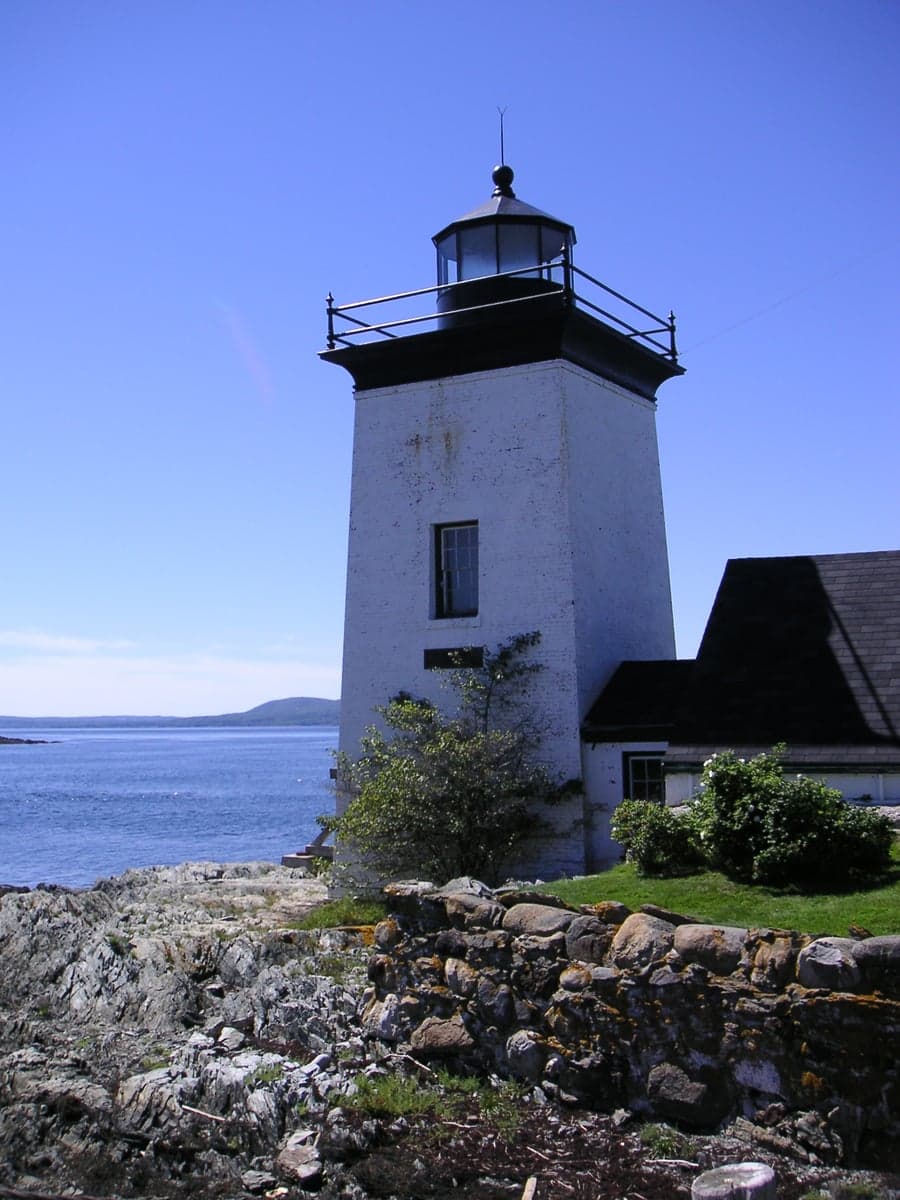
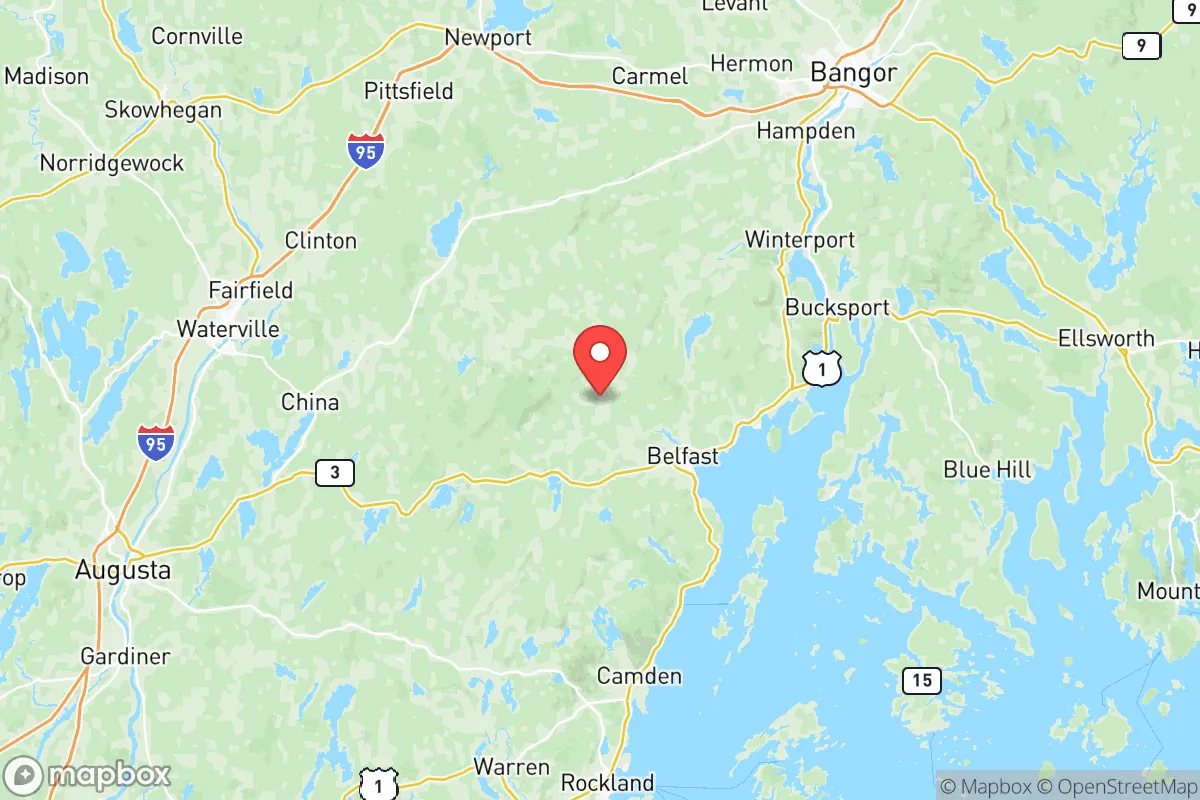
Photo: Wikipedia
Demographics of Waldo County
Affluence Level in Waldo County
A middle-class area roughly in line with national averages across income, home values, education, and employment.
People of Waldo County
Waldo County, Maine, is home to roughly 40,000 residents, making it one of the state's more sparsely populated areas, with a population density of just 34 people per square mile. The county is overwhelmingly white (93.0%) and native-born (only 1.0% foreign-born), with a character shaped by deep Yankee roots, a strong sense of local independence, and a working landscape of coastal villages, inland farms, and small mill towns. Its distinctive identity is a blend of maritime heritage, rural self-reliance, and a growing but still modest influx of newcomers seeking affordable land and a quieter life away from southern Maine's congestion.
Settlement & growth (pre-1960)
The original inhabitants of the Waldo County area were the Wabanaki Confederacy, particularly the Penobscot and Passamaquoddy peoples, who used the coastal rivers and bays for fishing, hunting, and seasonal travel. European contact began with French explorers and missionaries in the early 1600s, but permanent settlement by English colonists did not take hold until after the French and Indian War, when the region was opened for land grants. The county itself was formed in 1827 from a portion of Hancock County, named after General Samuel Waldo, a land speculator who had acquired vast tracts in the mid-1700s.
The first major wave of English-speaking settlers arrived between the 1760s and 1790s, largely from southern New England (Massachusetts, New Hampshire, and Connecticut) and the British Isles. These were predominantly of English and Scots-Irish stock, drawn by the promise of cheap land and the opportunity to farm, fish, and build small communities. Towns like Belfast, the county seat, were settled in 1770 and quickly became a shipbuilding and maritime hub. Searsport, just east of Belfast, grew into one of the most famous shipbuilding and captain-producing towns in the world, with its deep harbor and abundant timber. Other early settlements included Unity (founded 1776), Thorndike (1789), and Montville (1800), which were primarily agricultural communities.
Throughout the 19th century, the population grew steadily, fueled by natural increase and a trickle of additional settlers from the British Isles and Maritime Canada. The county's economy diversified: Belfast and Searsport remained maritime centers, while inland towns like Brooks and Monroe supported farming, lumbering, and small-scale manufacturing. A notable but small influx of French-Canadian laborers arrived in the late 1800s, drawn by jobs in the region's sawmills and, later, the shoe factories that emerged in Belfast and Winterport. By 1900, the county's population had peaked at roughly 35,000, but it began a long decline as young people left for industrial cities in southern New England and the Midwest. The Great Depression and the decline of coastal shipping and shipbuilding accelerated this trend, and by 1960 the population had fallen to about 22,000.
Modern era (post-1965)
The post-1965 era brought no major wave of foreign immigration to Waldo County. The 1965 Hart-Cellar Act, which dramatically reshaped U.S. immigration patterns, had almost no effect here: the county's foreign-born population remains at just 1.0%, and the small non-white population is composed almost entirely of domestic migrants. The county's demographic story since the 1970s has been one of slow, steady repopulation driven by two domestic trends: back-to-the-land migration and coastal flight from southern Maine.
The first significant modern influx began in the late 1960s and 1970s, when counterculture and back-to-the-land seekers—often young, college-educated people from urban areas in the Northeast—bought cheap farmland in towns like Liberty, Palermo, and Montville. This wave was small but culturally influential, bringing a new emphasis on organic farming, alternative education, and environmentalism. Many of these newcomers were from out of state, and they gradually integrated into the existing Yankee and French-Canadian population. A second, larger wave began in the 1990s and accelerated after 2000, as retirees and remote workers from southern Maine, Massachusetts, and beyond discovered the county's lower housing costs and scenic beauty. Towns like Belfast and Searsport saw a revival of their downtowns, with new restaurants, galleries, and boutique shops catering to this demographic.
Today, the county's racial and ethnic makeup remains overwhelmingly white (93.0%). The Hispanic population is 1.5%, Black 0.5%, East/Southeast Asian 0.3%, and Indian (subcontinent) 0.1%. These small minority populations are concentrated almost entirely in Belfast, the county's largest town (population roughly 6,700), where a handful of Hispanic and Asian families have settled, often working in the service industry or healthcare. The county's college-educated share is 34.8%, a figure that has risen steadily as the back-to-the-land and retiree waves brought more educated residents. Suburbanization has been minimal; the county has no large suburbs, and most new housing is scattered on rural lots or in small subdivisions on the edges of Belfast and Winterport.
The future
Waldo County's population is projected to grow slowly, perhaps reaching 42,000-44,000 by 2040, driven primarily by domestic in-migration of retirees and remote workers. The county is not becoming more diverse in any meaningful sense: the white share is likely to remain above 90% for the foreseeable future, as the small non-white population grows only through a trickle of new arrivals, mostly in Belfast. The county's cultural identity is evolving from a purely Yankee and French-Canadian rural society into a more mixed one, where longtime locals coexist with ex-urbanites, artists, and homesteaders. This has created some tension over land use, taxes, and development, but the overall trajectory is toward a slow, managed growth that preserves the county's rural character. The next 10-20 years will likely see continued growth in Belfast and the coastal towns, while inland communities like Thorndike and Brooks remain stable or decline slightly as their populations age.
For someone moving in now, Waldo County offers a place that is still deeply rooted in its Yankee and maritime past, but is gradually opening to new people and ideas. It is not a diverse or rapidly changing region, but it is a place where a newcomer can find affordable land, a strong sense of community, and a slower pace of life—provided they are willing to adapt to the local culture and the long, quiet winters.

* Values derived from national, state, county, city and local statistics and may differ in a specific area. Last updated: 2026-06-18T00:50:42.000Z
Narrative content on this page is AI-generated and may contain mistakes. Verify any details that matter before acting on them.
ReloMaps may earn a commission from affiliate links at no extra cost to you.

